Artwork
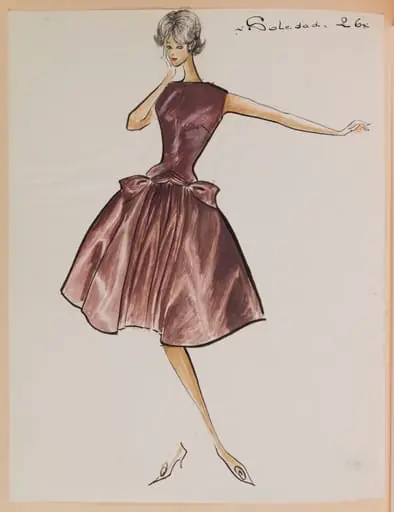
Robe rose pâle à jupe bouffante
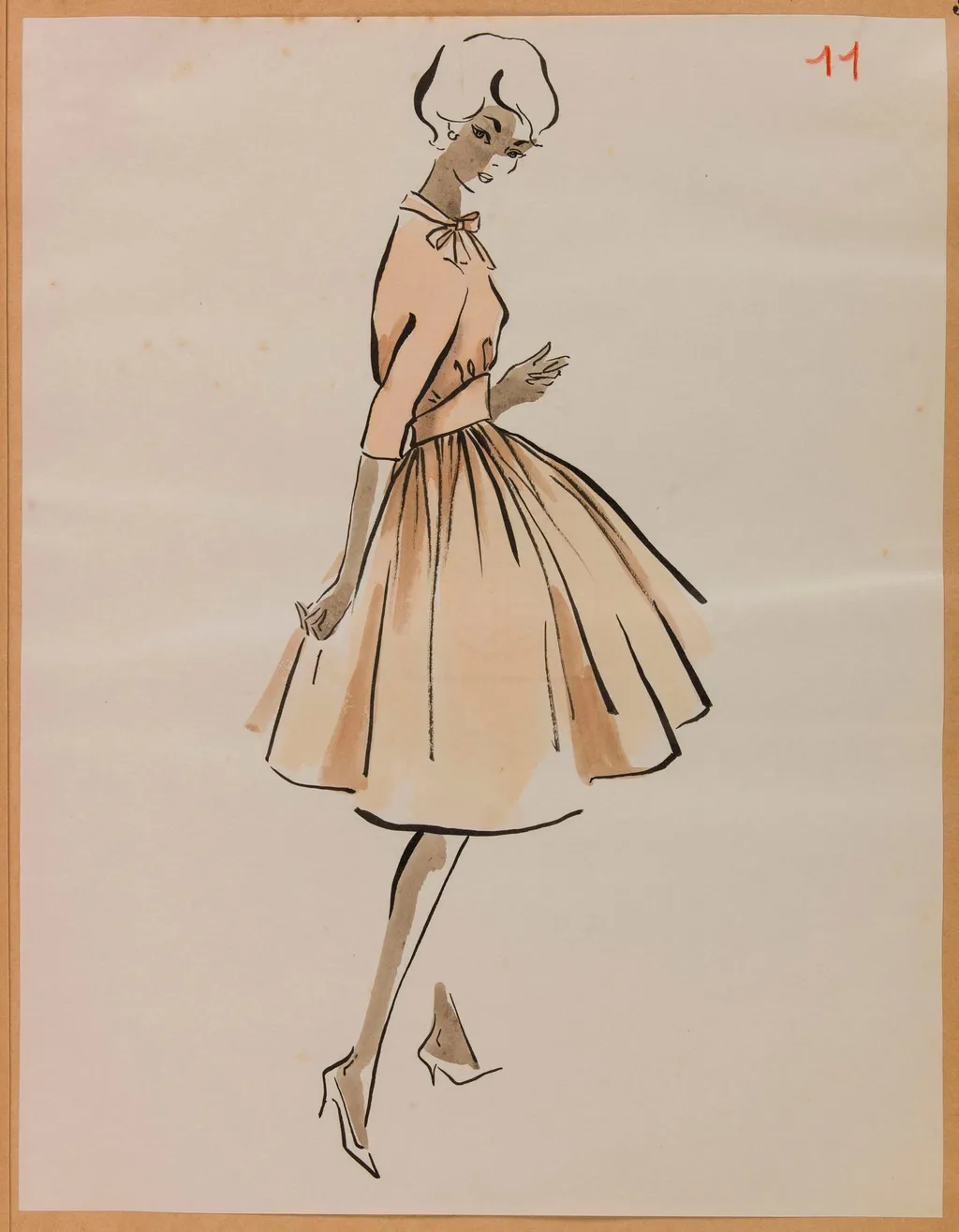
Robe rose pâle à jupe bouffante is a drawing by Marie-Louise Carven. It dates from 1957 and is held in the collection of the Palais Galliera - Musée de la Mode de la Ville de Paris.
About this work
Overview
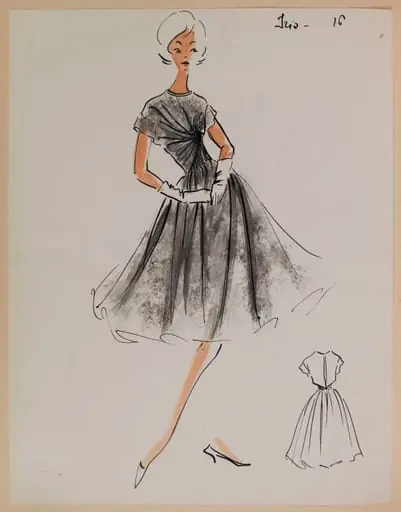
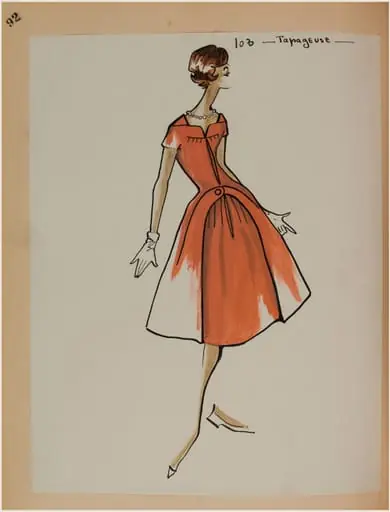
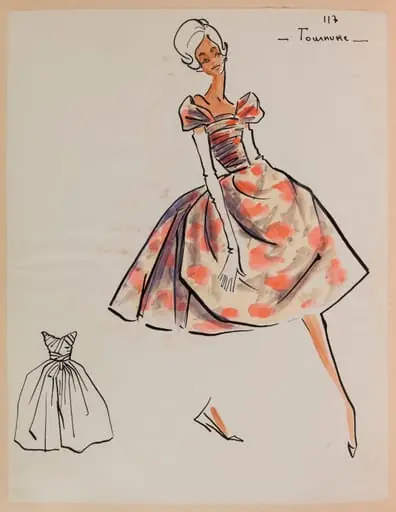
Created around 1957, this pencil sketch depicts a lightweight dress designed by Marie-Louise Carven. The garment, characterized by its pale pink tone and voluminous skirt, exemplifies the designer’s focus on youthful, wearable silhouettes. Rendered with fluid, uncluttered lines, the drawing captures movement and form without decorative embellishment, emphasizing the dress’s structure and ease.
Subject & Meaning
The figure is shown in a quiet, forward stride, suggesting everyday elegance rather than ceremonial display. The neat hairstyle and low-heeled shoes reinforce practicality, aligning with Carven’s philosophy of dressing the modern, active woman. The bow at the neckline adds a subtle touch of refinement without compromising the design’s simplicity, reflecting a balance between charm and function.
Technique & Style
The sketch employs loose, assured strokes to convey the soft drape of fabric and the fullness of the skirt. Minimal detail is used—no background, no facial features—allowing the garment’s form to dominate. This restrained approach highlights Carven’s design sensibility: clarity of line, attention to proportion, and an emphasis on how fabric moves with the body.
History & Provenance
Marie-Louise Carven founded her fashion house in Paris in 1945 and was among the first French couturiers to develop a ready-to-wear collection.
Marie-Louise Carven founded her fashion house in Paris in 1945 and was among the first French couturiers to develop a ready-to-wear collection. This drawing likely originated from her studio’s design process, serving as a conceptual record for tailors and clients. While the exact provenance of this sketch is undocumented, it aligns with the aesthetic and production methods of her mid-century atelier.
Context
In the late 1950s, Parisian fashion was shifting toward accessibility and youth-oriented styles. Carven’s designs responded to this change by prioritizing light fabrics, petite fits, and casual sophistication. Her use of gingham and lace, alongside streamlined silhouettes, distinguished her from more ornate contemporaries, positioning her as a voice for understated modernity in postwar dress.
Legacy
Carven’s emphasis on wearable, well-proportioned clothing influenced the evolution of ready-to-wear as a legitimate domain of high fashion. Her sketches, like this one, reveal a design process rooted in observation and restraint. Though less celebrated than some peers, her work laid groundwork for later designers who valued simplicity, movement, and the female form over theatricality.
Artist & collection
Artist
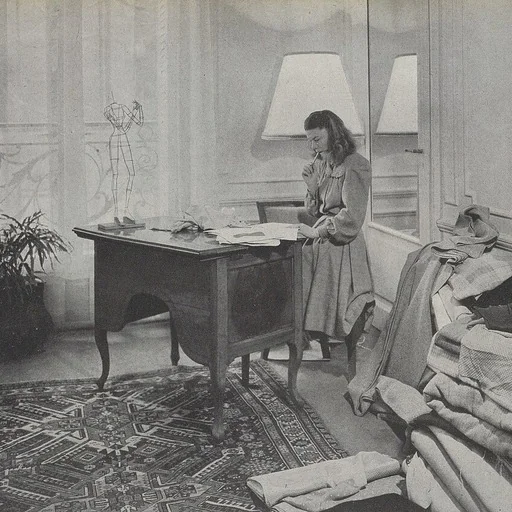
Marie-Louise Carven (31 August 1909 – 8 June 2015), born Carmen de Tommaso, was a French fashion designer who founded the house of Carven in 1945.
Museum
Palais Galliera - Musée de la Mode de la Ville de Paris
Continue through works from the same source collection.
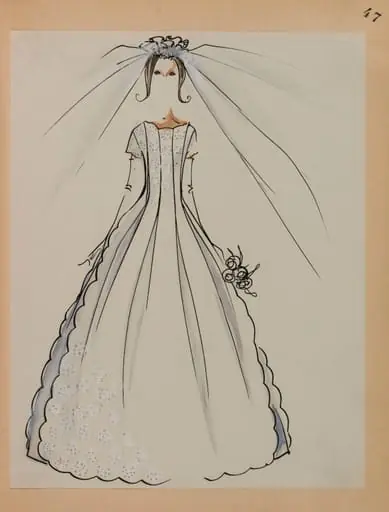 Robe de mariée festonnée et son voile
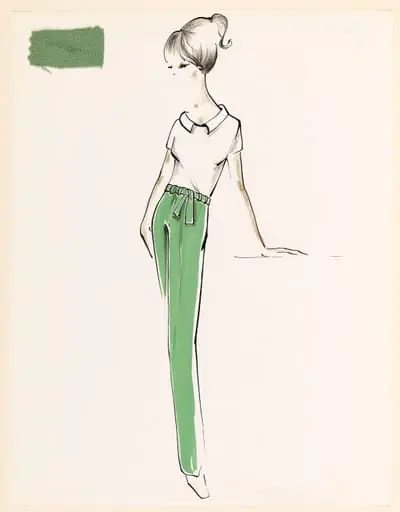 Haut blanc à manches courtes et pantalon vert à ceinture nouée
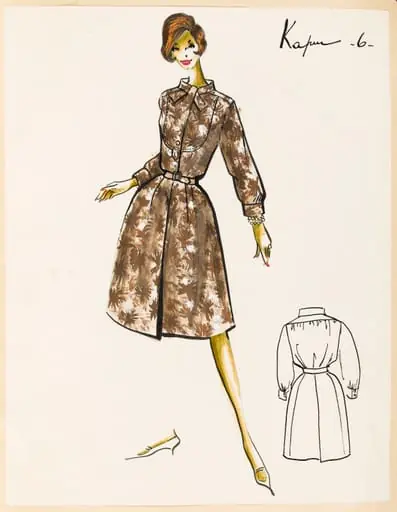 Kapur
Kapur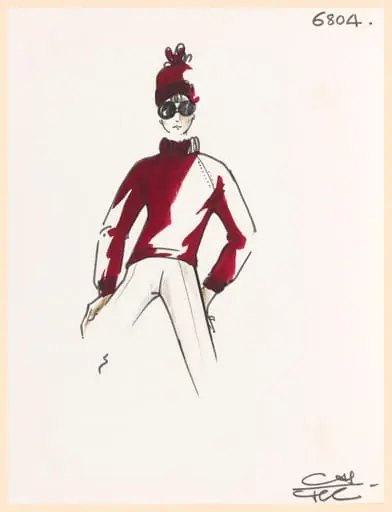 Pull-over à manches longues pourpre, bonnet assorti, pantalon et lunettes de soleil
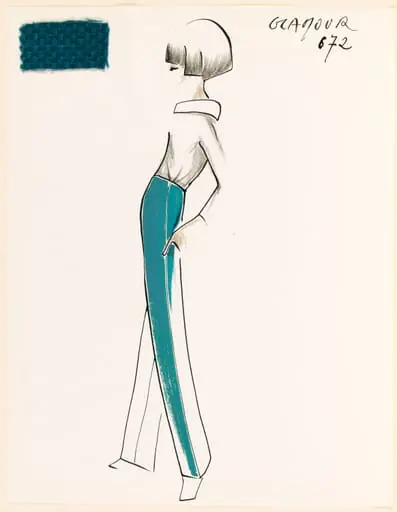 GLAMOUR
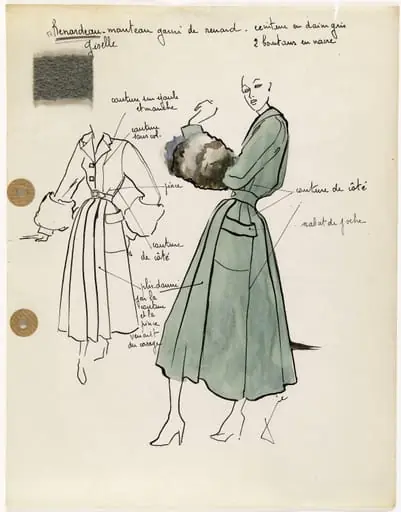 'Renardeau'
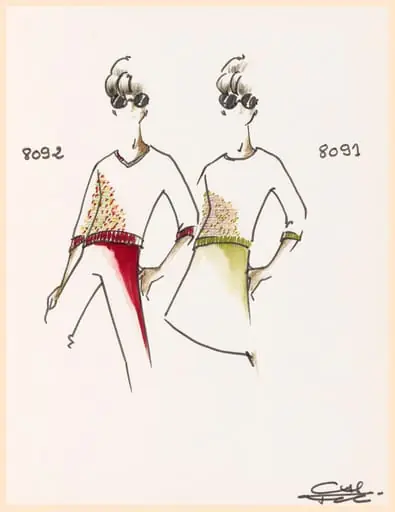 Pull-over à manches trois quarts et à encolure V à motifs multicolores, pantalon cerise et lunettes de soleil
 Béguinage