Artwork
Sampan
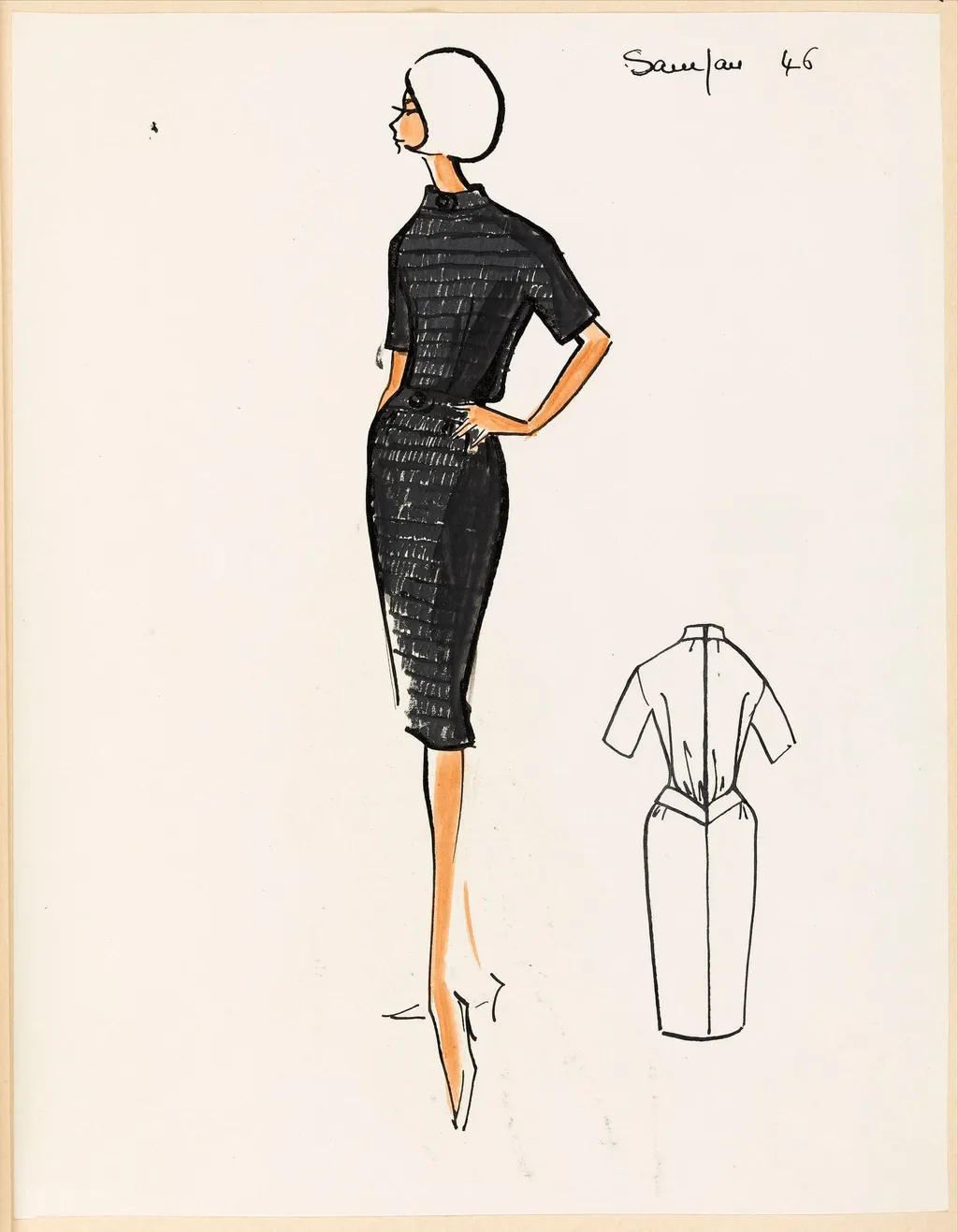
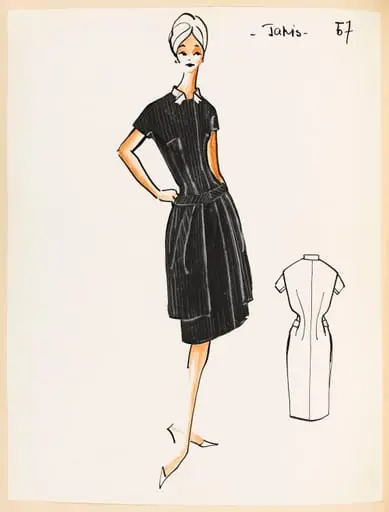
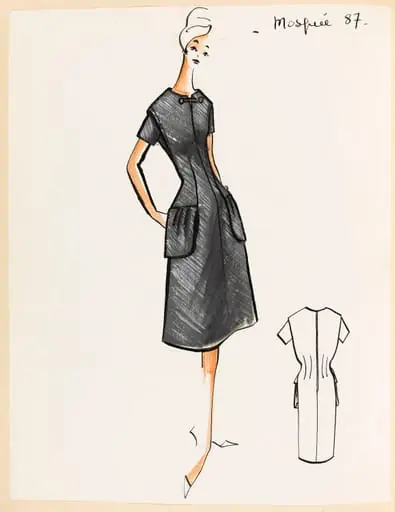
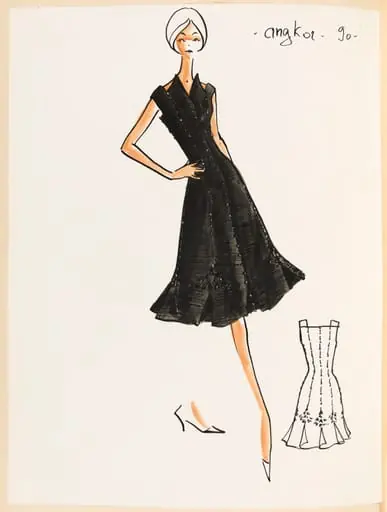
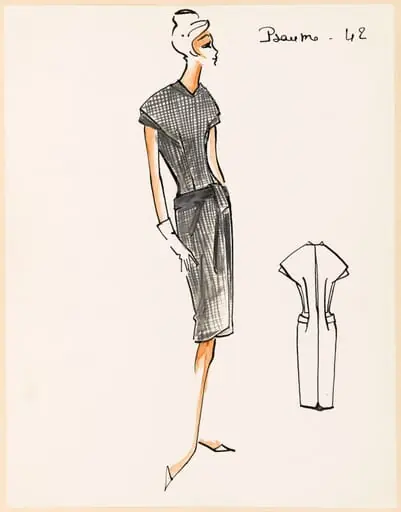
Sampan is a drawing by Marie-Louise Carven. It dates from 1959 and is held in the collection of the Palais Galliera - Musée de la Mode de la Ville de Paris.
About this work
Overview
The design combines practicality with subtle ornamentation, embodying postwar European ideals of understated elegance and wearable art.
Created around 1959 by French designer Marie-Louise Carven, *Sampan* is a garment from her prêt-à-porter collection, reflecting her focus on accessible, refined clothing for smaller frames. Though often categorized as fashion, the piece is preserved in the Museum of Ethnography as a cultural artifact. The design combines practicality with subtle ornamentation, embodying postwar European ideals of understated elegance and wearable art.
Subject & Meaning
The garment, likely a dress, presents a structured yet light silhouette with a high neckline, short sleeves, and a fitted waist, suggesting modesty and poise. Its gingham and lace elements evoke domestic craftsmanship, while the overall formality of the cut aligns with mid-century ideals of feminine decorum. The accompanying sketch of the back reveals an emphasis on clean construction, indicating the designer’s attention to both appearance and wearability.
Technique & Style
Carven employed fine cotton lace and checked gingham fabric, materials that balanced delicacy with durability. The dress’s tailored fit and knee-length hem reflect a minimalist aesthetic, avoiding excess while emphasizing proportion. The inclusion of a line drawing of the garment’s rear in the visual record underscores a design process rooted in clarity and functional precision, typical of Carven’s approach to ready-to-wear.
History & Provenance
Marie-Louise Carven founded her fashion house in 1945, becoming one of the earliest couturiers to transition into prêt-à-porter. *Sampan* emerged during the late 1950s, a period when her brand expanded beyond haute couture to reach a broader clientele. The garment entered the Museum of Ethnography’s collection as part of an effort to document everyday fashion as cultural expression, rather than solely as high art.
Context
In postwar France, fashion was shifting toward democratization and practicality. Carven’s designs responded to women’s changing roles, offering stylish yet manageable clothing for urban life. *Sampan* fits within this movement, blending traditional textile techniques with modern cuts. Its preservation in an ethnographic museum signals recognition of everyday dress as a reflection of social norms and material culture.
Legacy
Carven’s early adoption of ready-to-wear paved the way for future designers who prioritized accessibility without sacrificing design integrity. *Sampan* remains a quiet example of how mid-century fashion bridged artisanal detail with mass production. Its presence in an ethnographic context ensures its continued study as a marker of evolving gender norms and consumer habits in 20th-century Europe.
Artist & collection
Artist
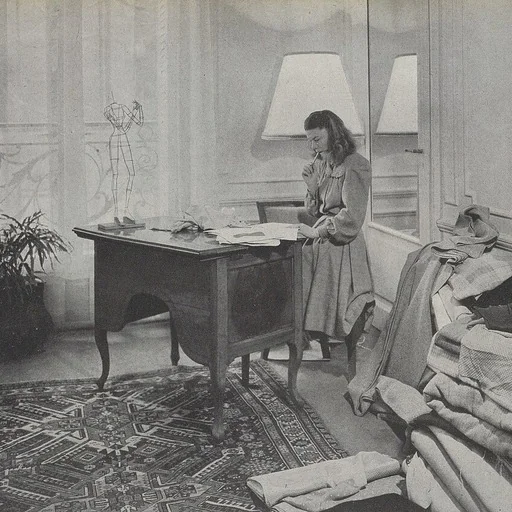
Marie-Louise Carven (31 August 1909 – 8 June 2015), born Carmen de Tommaso, was a French fashion designer who founded the house of Carven in 1945.
Museum
Palais Galliera - Musée de la Mode de la Ville de Paris
Continue through works from the same source collection.
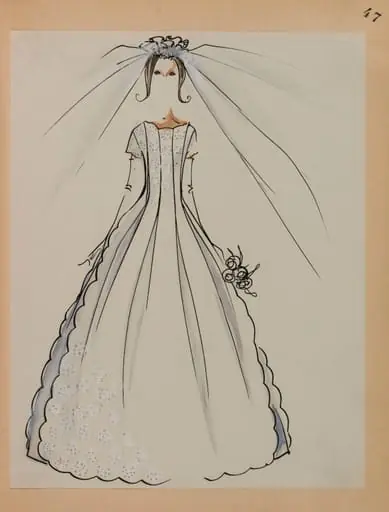 Robe de mariée festonnée et son voile
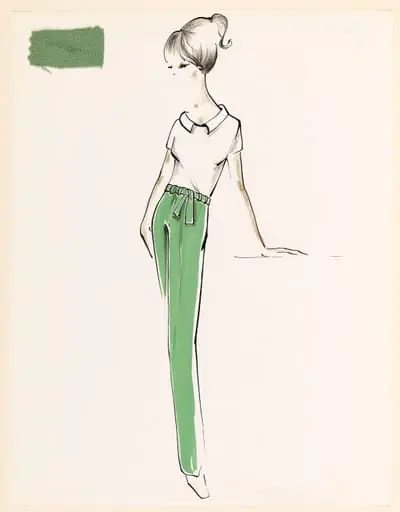 Haut blanc à manches courtes et pantalon vert à ceinture nouée
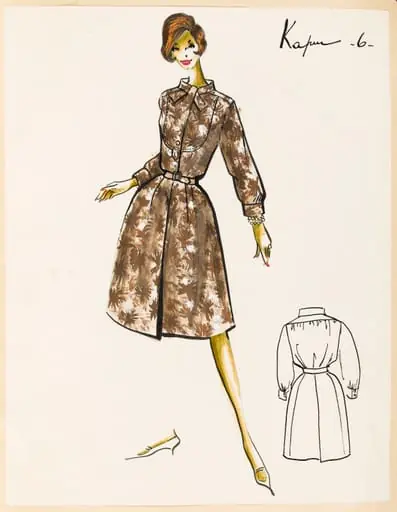 Kapur
Kapur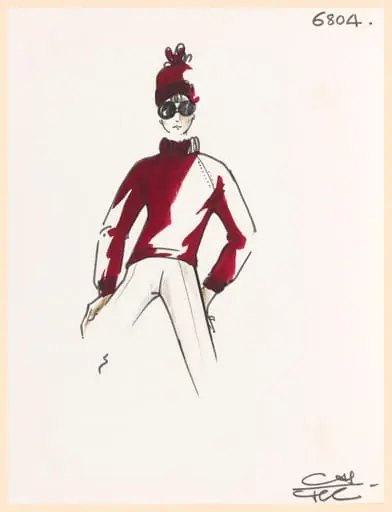 Pull-over à manches longues pourpre, bonnet assorti, pantalon et lunettes de soleil
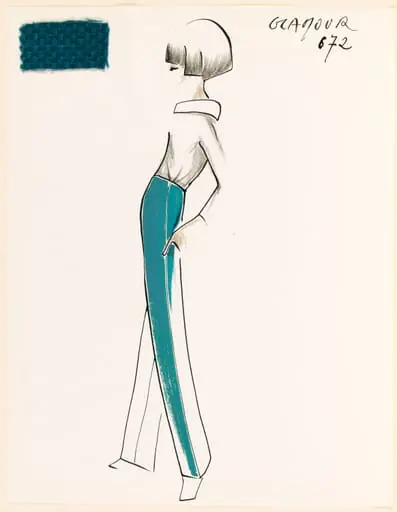 GLAMOUR
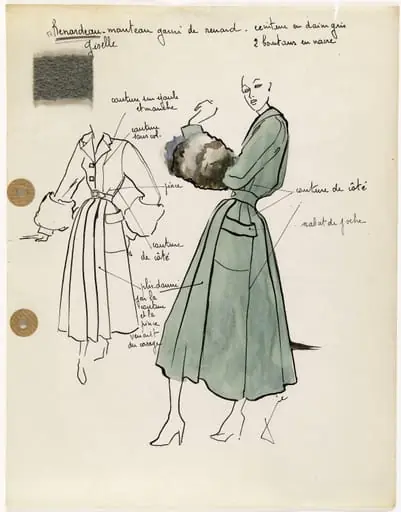 'Renardeau'
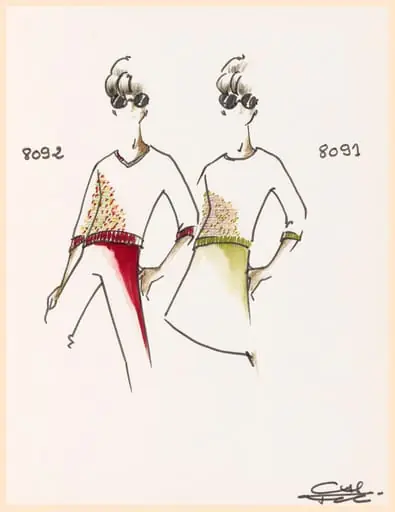 Pull-over à manches trois quarts et à encolure V à motifs multicolores, pantalon cerise et lunettes de soleil
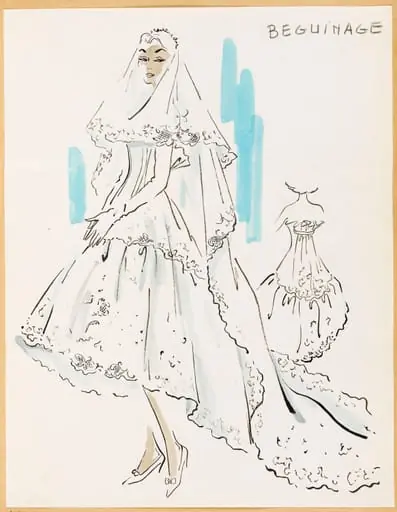 Béguinage