Artwork
Sucre d'orge
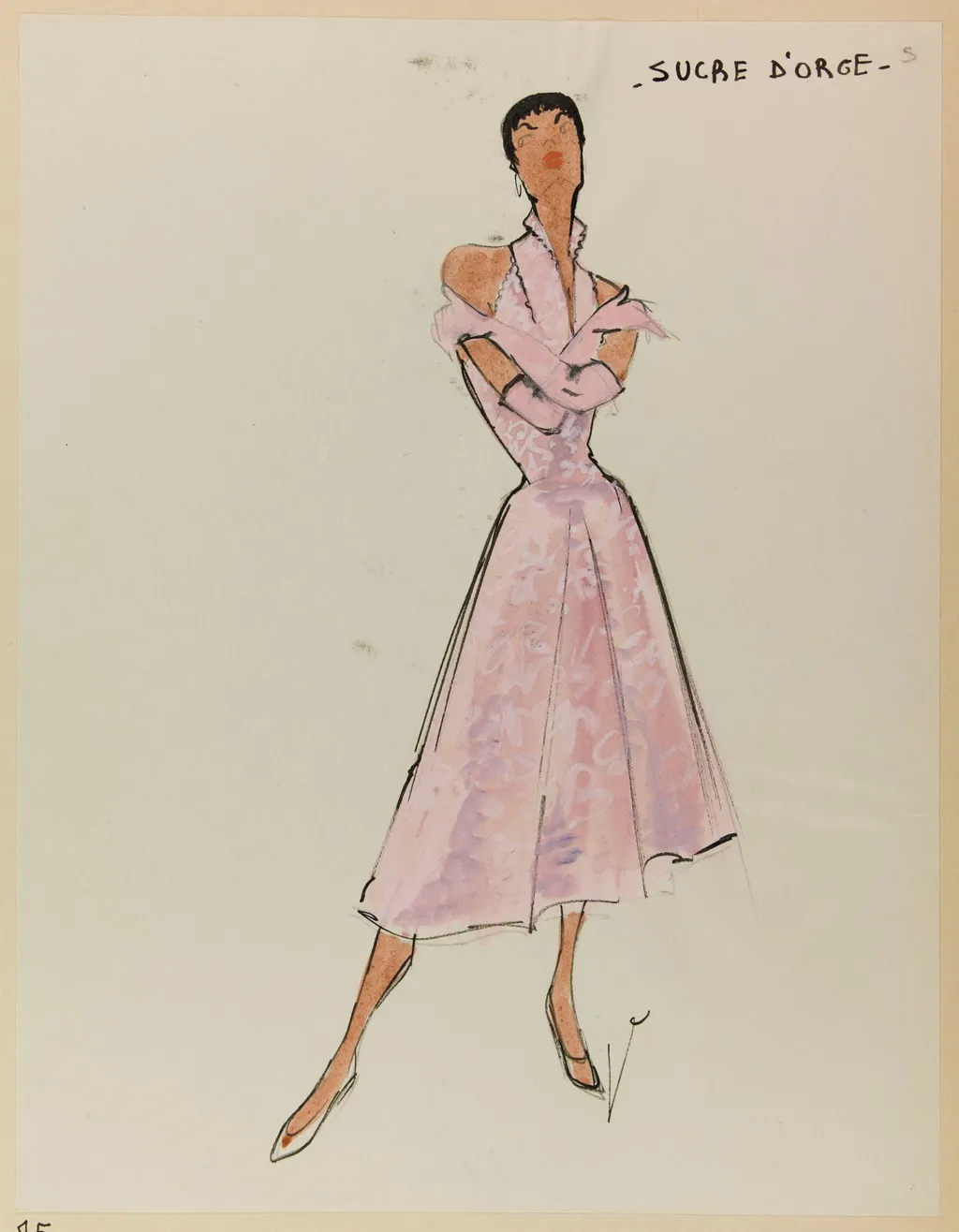
Sucre d'orge is a drawing by Marie-Louise Carven. It dates from 1953 and is held in the collection of the Palais Galliera - Musée de la Mode de la Ville de Paris.
About this work
Overview
The piece resides in the Museum of Ethnography, where it is preserved as part of a broader collection of 20th-century dress design.
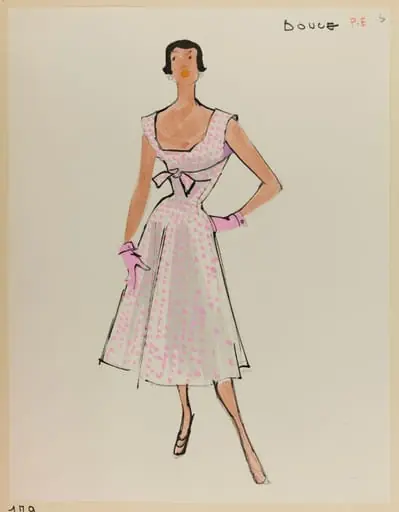
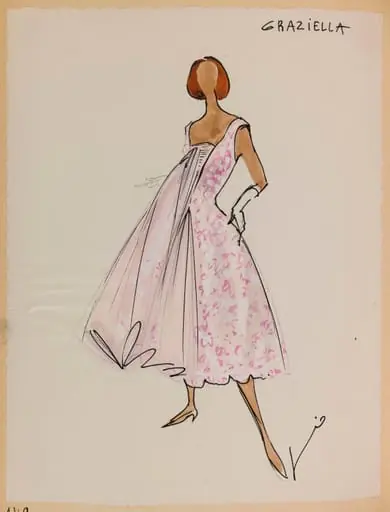
Created around 1953, *Sucre d'orge* is a fashion sketch by Marie-Louise Carven, founder of the Parisian house Carven. The drawing captures a lightweight, feminine dress in soft pink with a floral motif, rendered in a spontaneous, fluid style. Though presented as a design study, it reflects Carven’s focus on wearable elegance for smaller frames. The piece resides in the Museum of Ethnography, where it is preserved as part of a broader collection of 20th-century dress design.
Subject & Meaning
The figure in the sketch stands sideways, arms crossed, suggesting a moment of quiet self-containment. The dress, named *Sucre d'orge*—a reference to barley sugar candy—evokes delicacy and sweetness, aligning with Carven’s aesthetic of playful refinement. The rolled sleeves and simple footwear imply practicality, reinforcing the design’s suitability for everyday life rather than ceremonial wear. The title subtly ties fashion to domestic, almost nostalgic, pleasures.
Technique & Style
Carven rendered the sketch with loose, confident lines and gentle tonal shading to suggest the drape and texture of lightweight fabric. The absence of rigid detail emphasizes movement and form over precision, characteristic of design studies meant for internal use. The soft pink hue and floral pattern are indicated with minimal wash, allowing the viewer’s imagination to complete the textile. The drawing’s immediacy reveals Carven’s intuitive grasp of silhouette and proportion.
History & Provenance
Marie-Louise Carven established her fashion house in 1945 and was among the earliest French designers to develop a ready-to-wear line, democratizing couture. *Sucre d'orge* likely originated as a design concept during the early 1950s, a period when her brand expanded beyond haute couture. The sketch entered the Museum of Ethnography’s collection as part of a curated effort to document the evolution of everyday dress in postwar Europe.
Context
In the early 1950s, Parisian fashion was transitioning from wartime austerity to renewed femininity, with designers like Carven emphasizing lightness and comfort. Her work stood apart by catering to petite figures often overlooked by mainstream couture. *Sucre d'orge* reflects this niche focus, blending charm with functionality. The sketch also aligns with broader trends in postwar design that valued accessibility and personal expression over grandeur.
Legacy
Carven’s approach to design—prioritizing wearability, proportion, and subtle detail—helped shape modern ready-to-wear. Though *Sucre d'orge* was never mass-produced, its sketch endures as evidence of her design philosophy: elegance rooted in daily life. The drawing contributes to a growing recognition of female designers who redefined fashion not through spectacle, but through thoughtful, intimate innovation.
Artist & collection
Artist
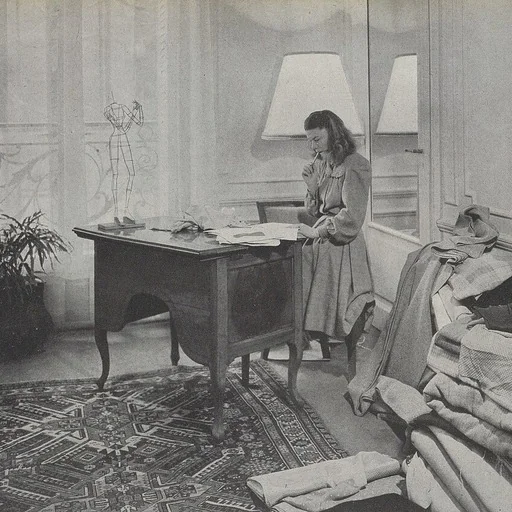
Marie-Louise Carven (31 August 1909 – 8 June 2015), born Carmen de Tommaso, was a French fashion designer who founded the house of Carven in 1945.
Museum
Palais Galliera - Musée de la Mode de la Ville de Paris
Continue through works from the same source collection.
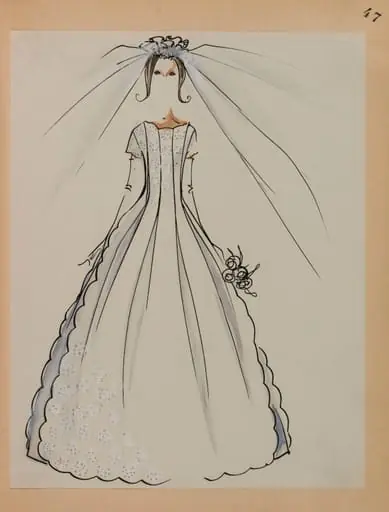 Robe de mariée festonnée et son voile
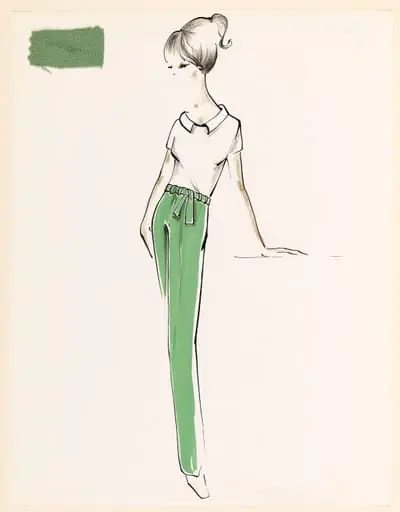 Haut blanc à manches courtes et pantalon vert à ceinture nouée
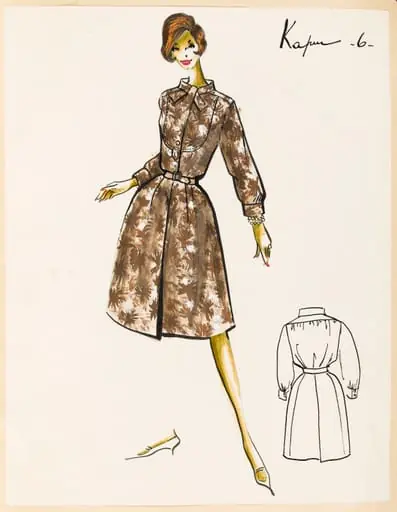 Kapur
Kapur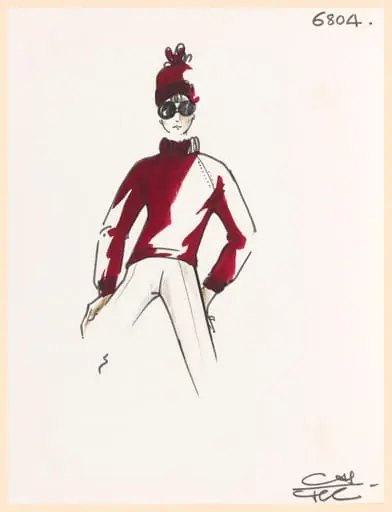 Pull-over à manches longues pourpre, bonnet assorti, pantalon et lunettes de soleil
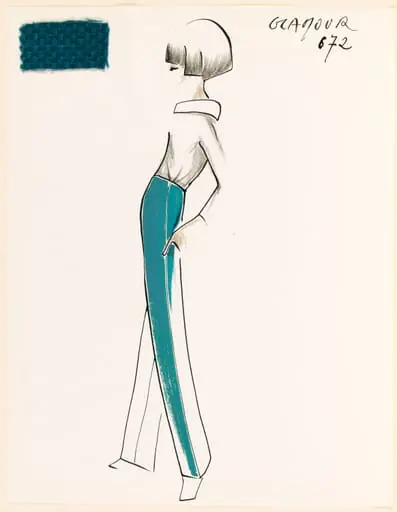 GLAMOUR
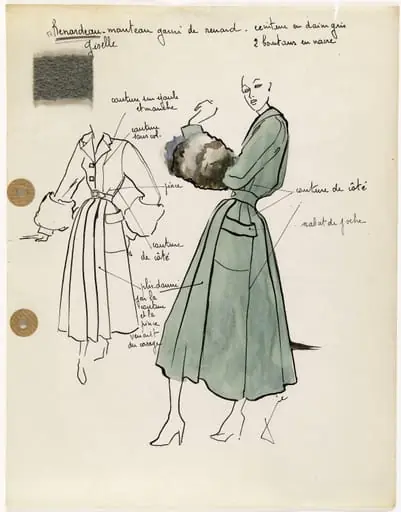 'Renardeau'
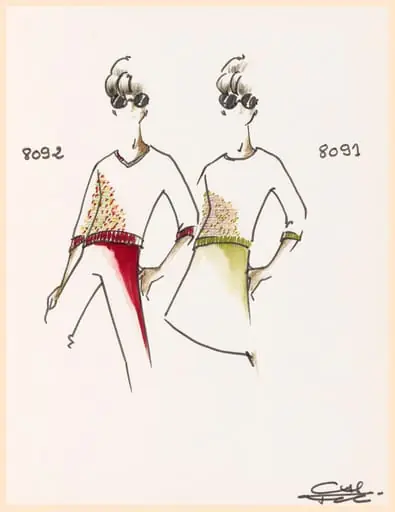 Pull-over à manches trois quarts et à encolure V à motifs multicolores, pantalon cerise et lunettes de soleil
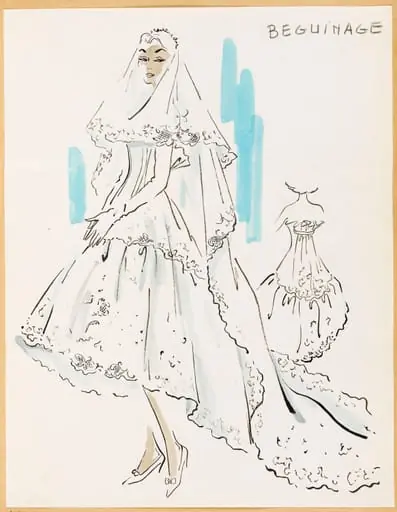 Béguinage