Artwork
Sycomore
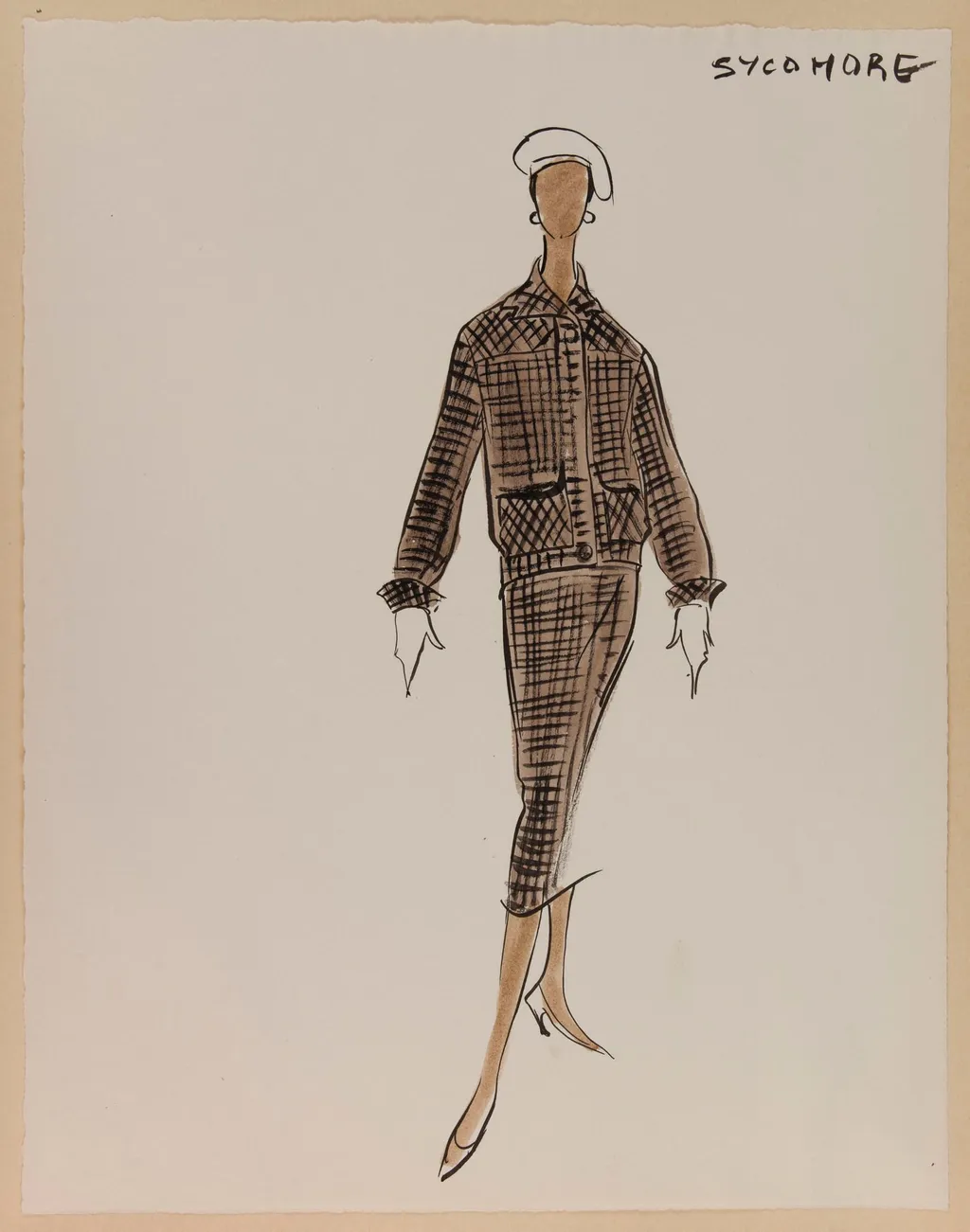
Sycomore is a drawing by Marie-Louise Carven. It dates from 1956 and is held in the collection of the Palais Galliera - Musée de la Mode de la Ville de Paris.
About this work
Overview
The drawing resides in the Museum of Ethnography’s collection, where it serves as a record of postwar French fashion development rather than a finished garment.
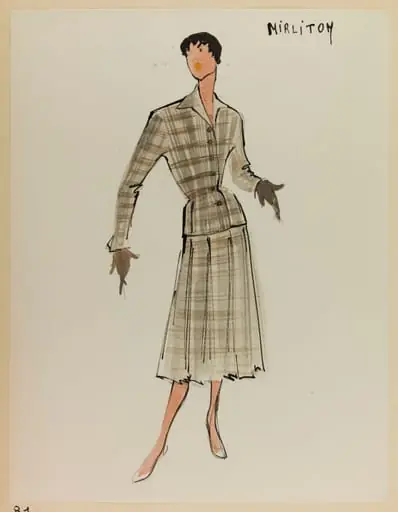
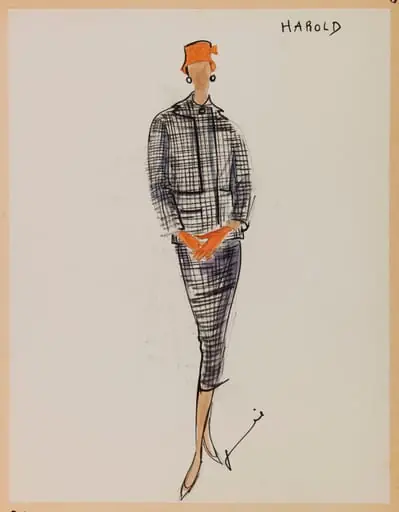
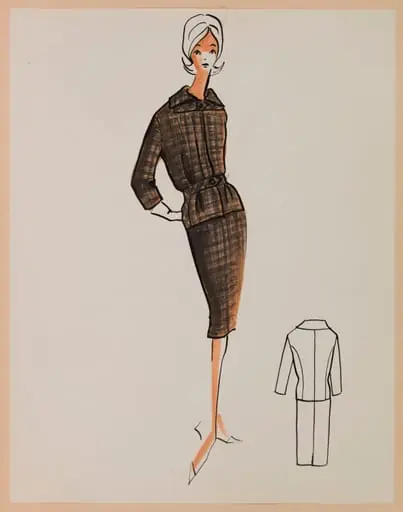
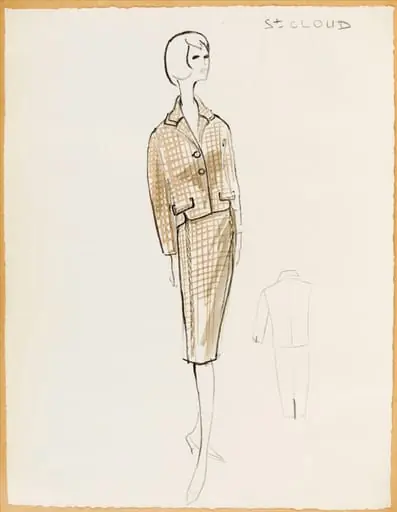
Created around 1956 by French designer Marie-Louise Carven, *Sycomore* is a pencil sketch on paper that captures an early design concept for a matching jacket and trousers. Executed in a spontaneous, fluid hand, it reflects Carven’s approach to wearable, modestly scaled clothing. The drawing resides in the Museum of Ethnography’s collection, where it serves as a record of postwar French fashion development rather than a finished garment.
Subject & Meaning
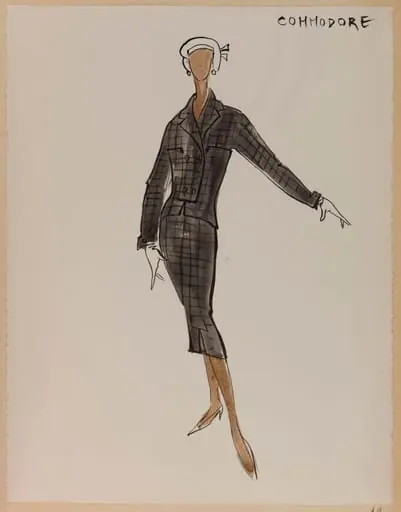
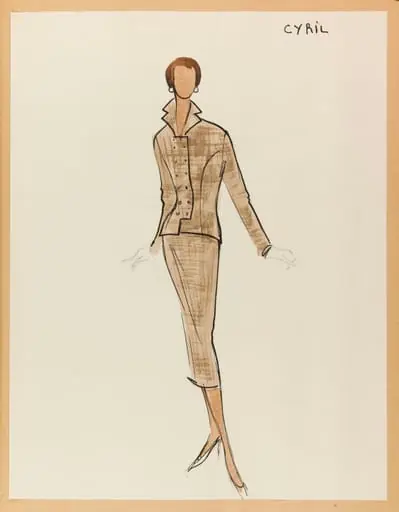
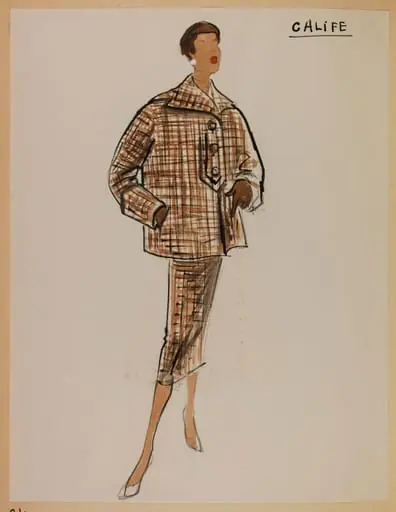
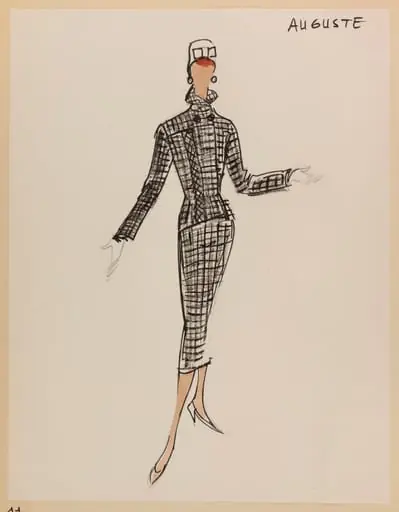
The figure depicted wears a simple, unstructured ensemble of checkered fabric, suggesting comfort and ease. The relaxed posture and minimal detail imply functionality over ornamentation. Carven’s focus on petite silhouettes and practical forms is evident, aligning with her broader mission to design for everyday women. The sketch conveys intention rather than spectacle, prioritizing wearability in postwar society.
Technique & Style
Rendered in swift, unrefined pencil lines, the drawing avoids precision in favor of immediacy. The checkered pattern appears hand-sketched, with irregular, almost scribbled strokes rather than geometric accuracy. Subtle shading suggests volume without heavy modeling. The figure’s short, rounded hair and neutral stance reinforce the sketch’s role as a working idea—unpolished, yet purposeful in its clarity.
History & Provenance
Marie-Louise Carven founded her fashion house in 1945 and was among the first French couturiers to launch a ready-to-wear line. *Sycomore* emerged during this transitional period in fashion, when design processes shifted from exclusive atelier work toward more accessible production. The sketch entered the Museum of Ethnography’s collection as documentation of evolving design practices in mid-century France.
Context
In the 1950s, Parisian fashion was redefining itself amid economic recovery and changing social roles for women. Carven’s designs responded to demands for practical, affordable clothing without sacrificing elegance. *Sycomore* reflects this shift, embodying the move from haute couture’s exclusivity toward a more democratic approach to dress, aligned with the rise of prêt-à-porter.
Legacy
Though not a finished garment, *Sycomore* preserves the creative process behind Carven’s influential ready-to-wear designs. It stands as a testament to how fashion innovation often begins in informal sketches rather than polished presentations. The drawing contributes to broader narratives about the democratization of fashion and the role of women designers in reshaping postwar aesthetics.
Artist & collection
Artist
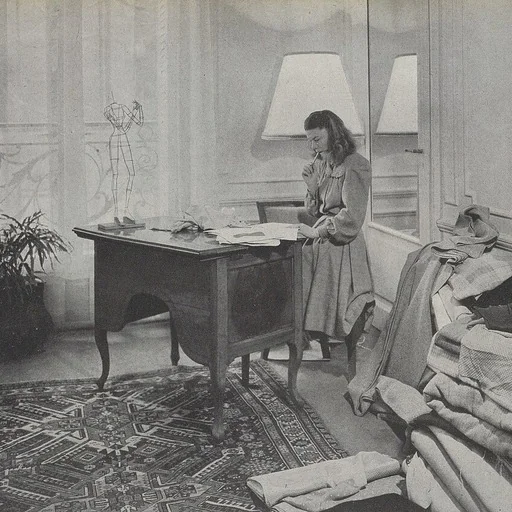
Marie-Louise Carven (31 August 1909 – 8 June 2015), born Carmen de Tommaso, was a French fashion designer who founded the house of Carven in 1945.
Museum
Palais Galliera - Musée de la Mode de la Ville de Paris
Continue through works from the same source collection.
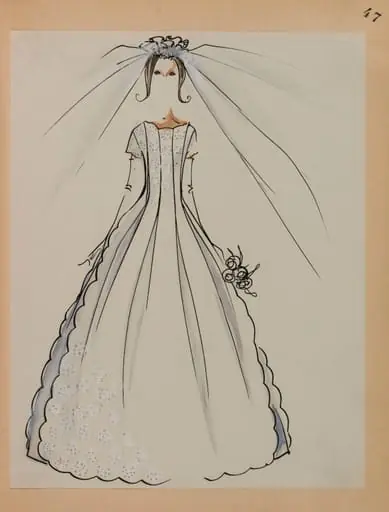 Robe de mariée festonnée et son voile
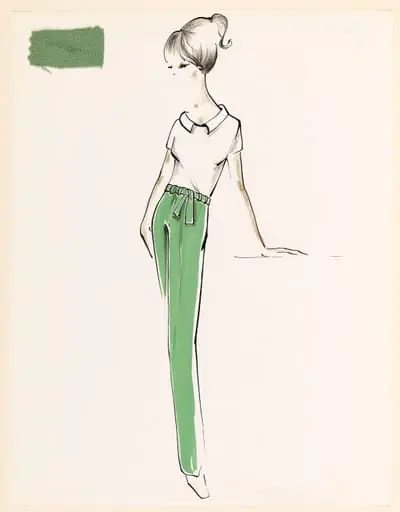 Haut blanc à manches courtes et pantalon vert à ceinture nouée
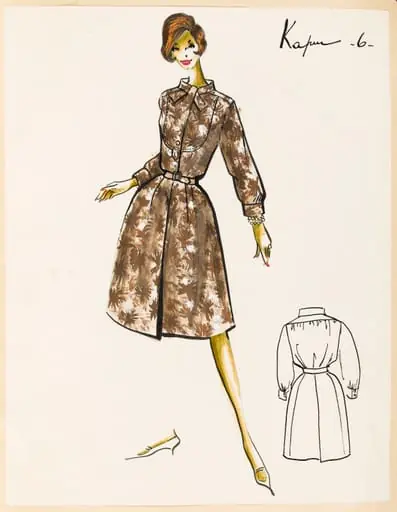 Kapur
Kapur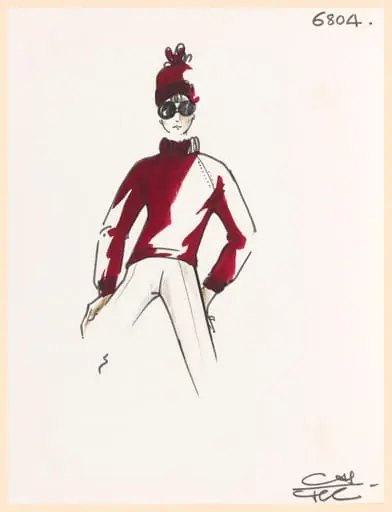 Pull-over à manches longues pourpre, bonnet assorti, pantalon et lunettes de soleil
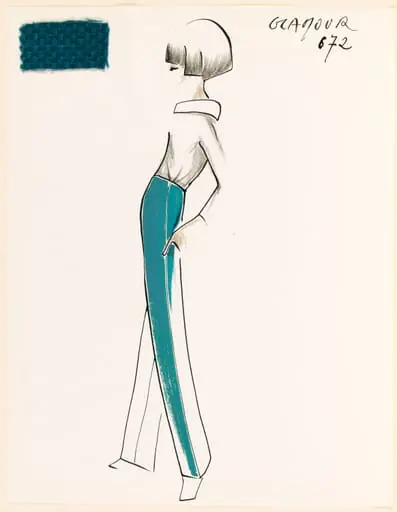 GLAMOUR
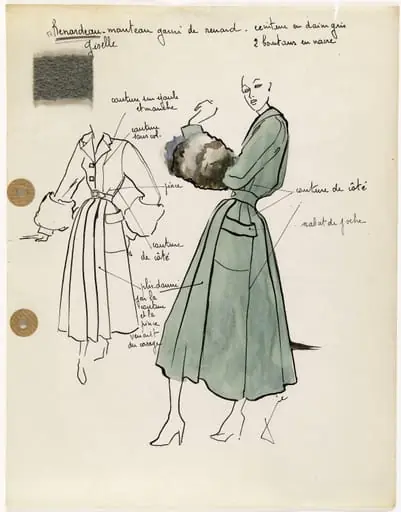 'Renardeau'
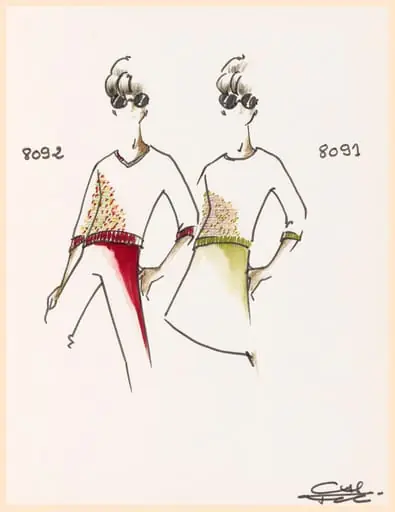 Pull-over à manches trois quarts et à encolure V à motifs multicolores, pantalon cerise et lunettes de soleil
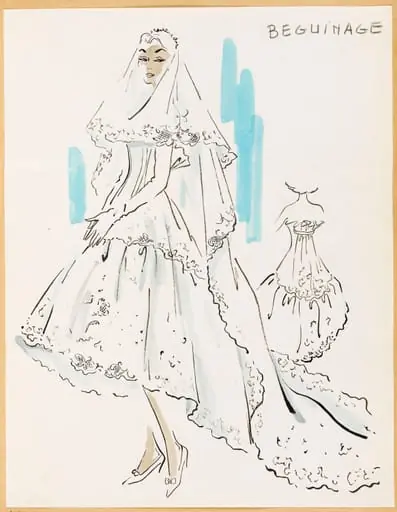 Béguinage