Artwork
Talapat
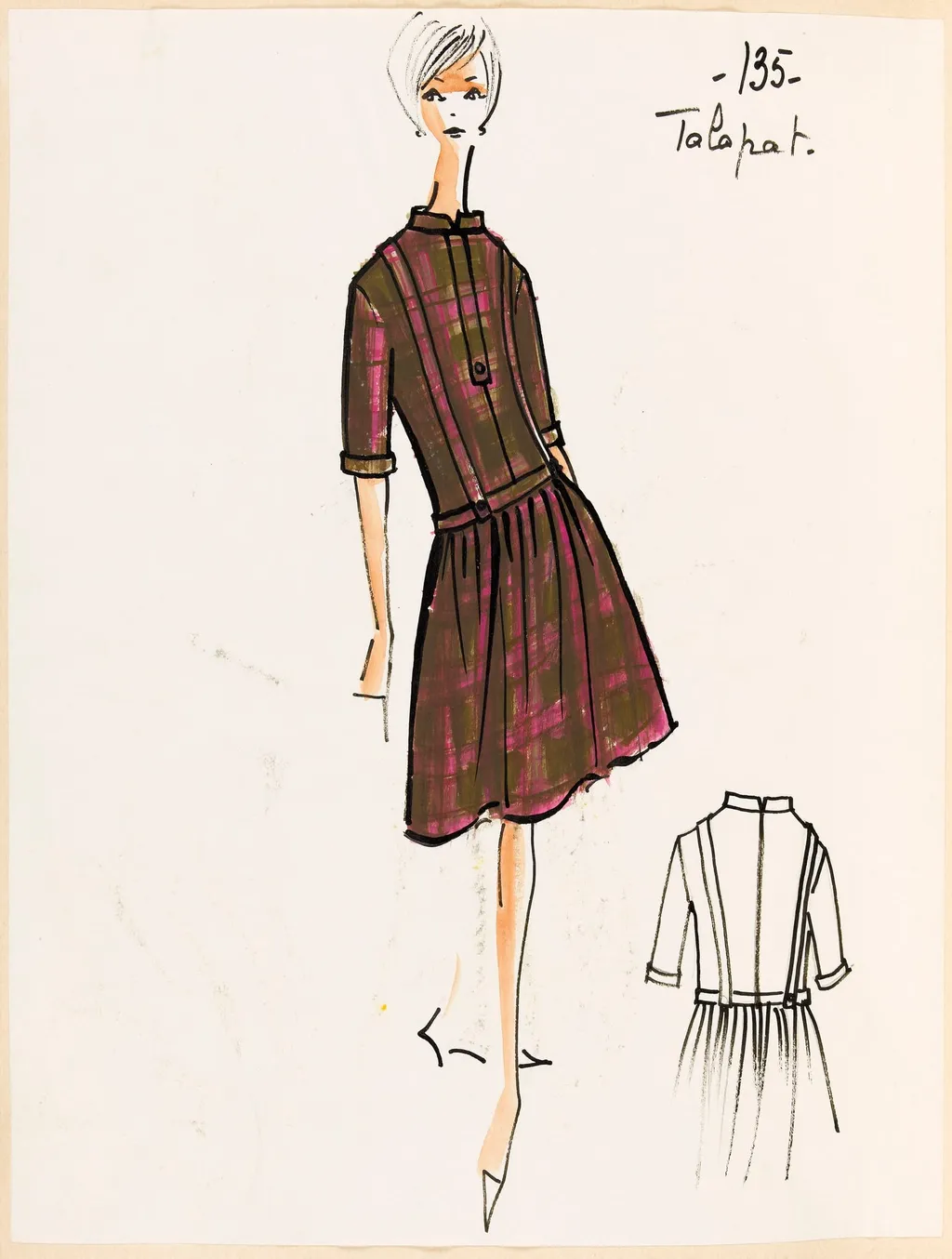
Talapat is a drawing by Marie-Louise Carven. It dates from 1959 and is held in the collection of the Palais Galliera - Musée de la Mode de la Ville de Paris.
About this work
Overview
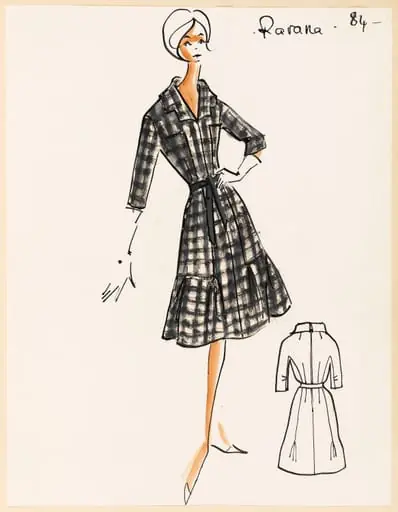
Created around 1959, *Talapat* is a fashion illustration by Marie-Louise Carven, founder of the Parisian label Carven established in 1945.
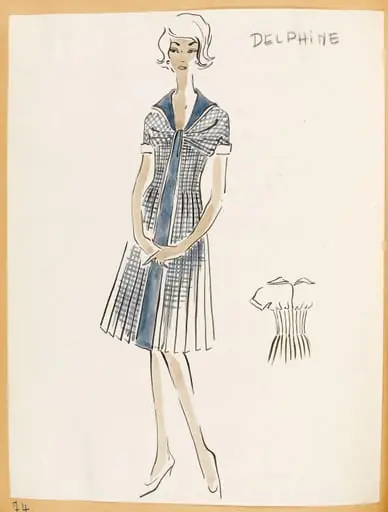
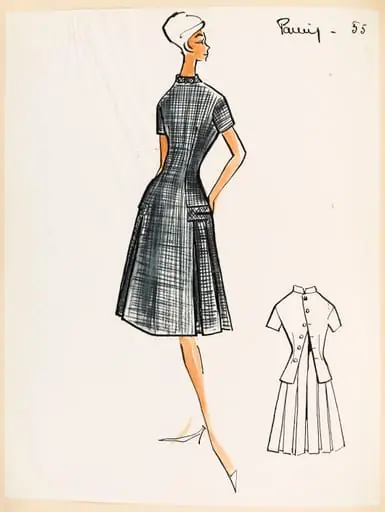
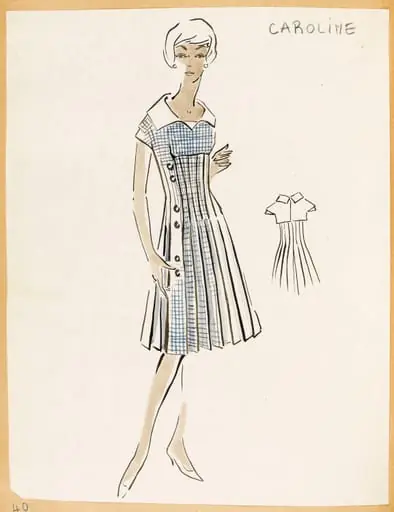
Created around 1959, *Talapat* is a fashion illustration by Marie-Louise Carven, founder of the Parisian label Carven established in 1945. The work captures a woman in a mid-length A-line dress with a plaid pattern, rendered in delicate line and wash. It reflects Carven’s interest in accessible, well-tailored clothing for smaller frames and was produced as part of her broader shift toward ready-to-wear design. The illustration is preserved in the Museum of Ethnography’s collection.
Subject & Meaning
The figure is a poised, middle-aged woman with short white hair, depicted in a three-quarter view facing left. Her posture—left arm bent, right arm relaxed—suggests quiet composure. The dress, with its folded collar and waist belt, emphasizes structure and proportion, aligning with Carven’s design philosophy of elegance suited to everyday life. The illustration serves as both a garment study and a portrait of the modern woman she aimed to dress.
Technique & Style
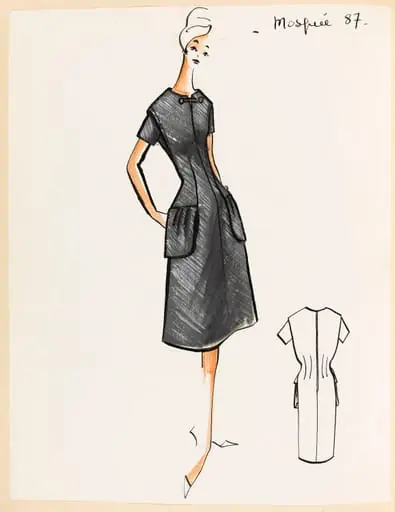
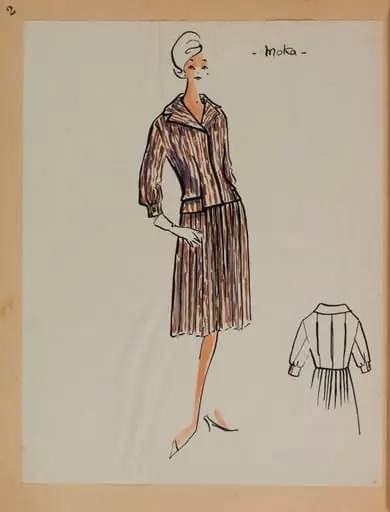
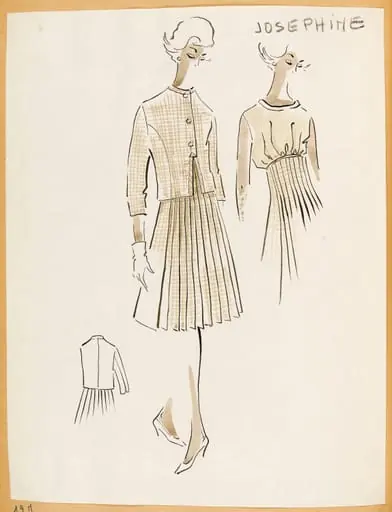
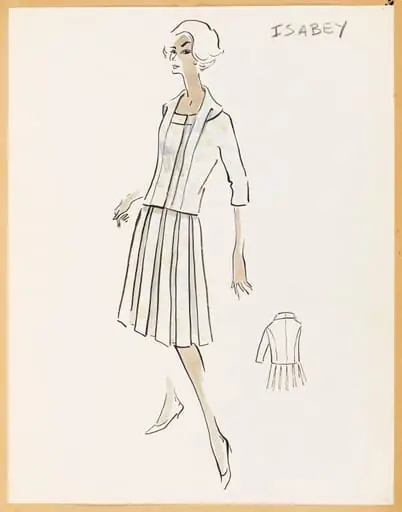
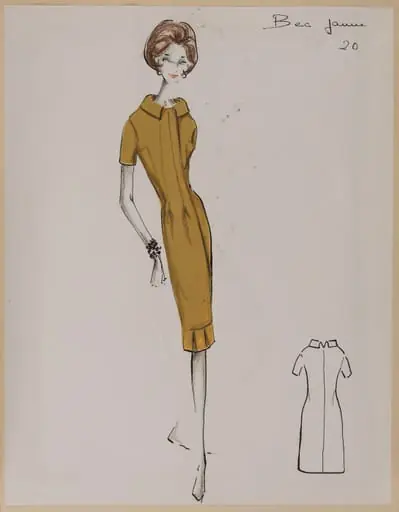
The drawing employs fine ink lines and soft washes to define form and pattern. The plaid fabric is rendered in muted tones of brown, pink, and green, with attention to directional flow in the skirt’s flare. A smaller inset shows the dress’s back construction, revealing Carven’s focus on technical detail. The off-white background isolates the figure, directing focus to silhouette and textile, typical of fashion presentation drawings of the era.
History & Provenance
Produced during Carven’s active years as a couturier transitioning into prêt-à-porter, *Talapat* likely originated as a design reference or promotional image. It entered the Museum of Ethnography’s collection as part of a broader effort to document 20th-century fashion as cultural artifact. The institution’s acquisition underscores the work’s value beyond aesthetics, as a record of postwar French design practices.
Context
In the late 1950s, Parisian couture houses began adapting to changing consumer habits, with ready-to-wear gaining prominence. Carven was among the first to embrace this shift, designing garments that balanced craftsmanship with affordability. *Talapat* reflects this moment: a hand-drawn design that bridges haute couture precision and the emerging demands of a mass market, capturing a shift in how fashion was conceived and consumed.
Legacy
Though Carven’s name is less widely recognized today than some contemporaries, her contributions to democratizing fashion remain significant. *Talapat* exemplifies her commitment to thoughtful, wearable design for non-idealized bodies. As a preserved artifact, it offers insight into the quiet revolution of postwar French fashion—where elegance was redefined not through spectacle, but through practicality and proportion.
Artist & collection
Artist
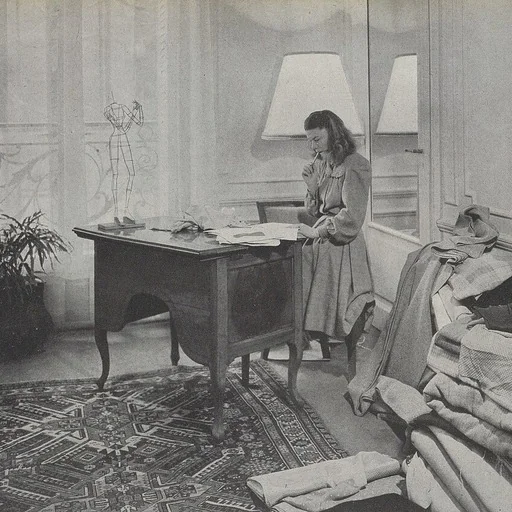
Marie-Louise Carven (31 August 1909 – 8 June 2015), born Carmen de Tommaso, was a French fashion designer who founded the house of Carven in 1945.
Museum
Palais Galliera - Musée de la Mode de la Ville de Paris
Continue through works from the same source collection.
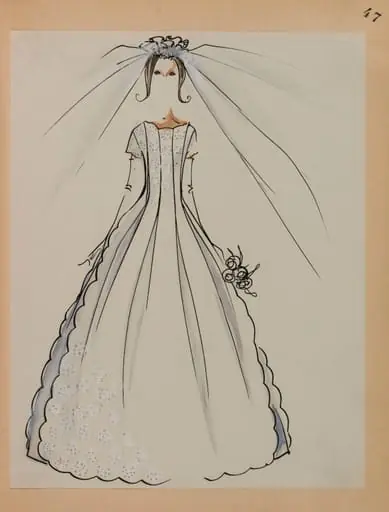 Robe de mariée festonnée et son voile
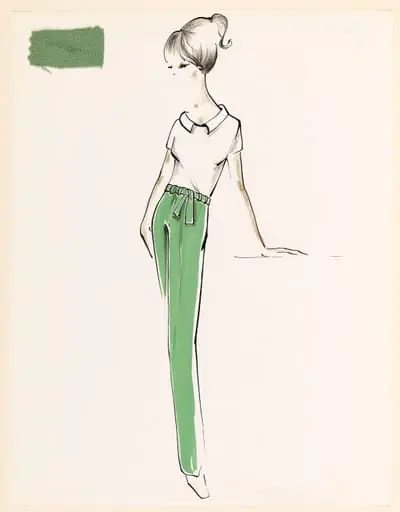 Haut blanc à manches courtes et pantalon vert à ceinture nouée
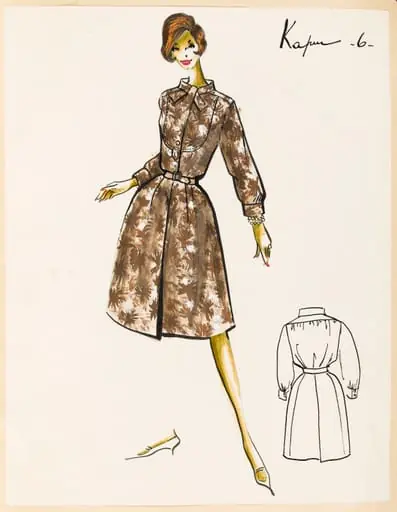 Kapur
Kapur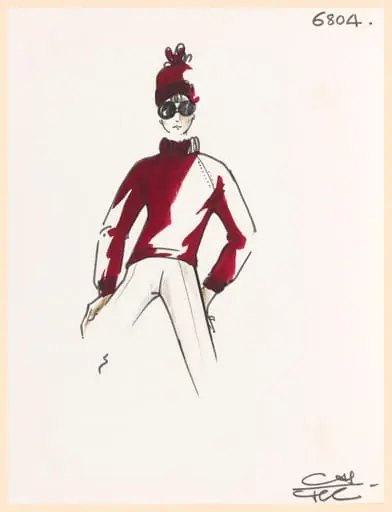 Pull-over à manches longues pourpre, bonnet assorti, pantalon et lunettes de soleil
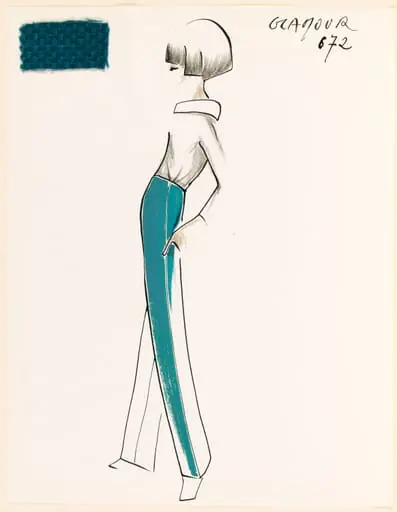 GLAMOUR
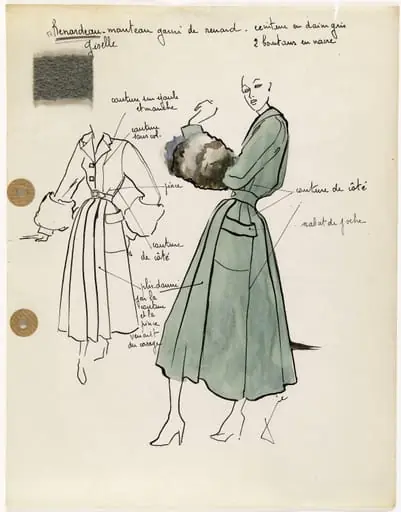 'Renardeau'
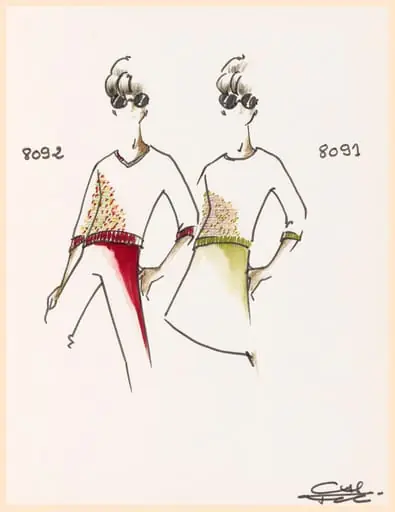 Pull-over à manches trois quarts et à encolure V à motifs multicolores, pantalon cerise et lunettes de soleil
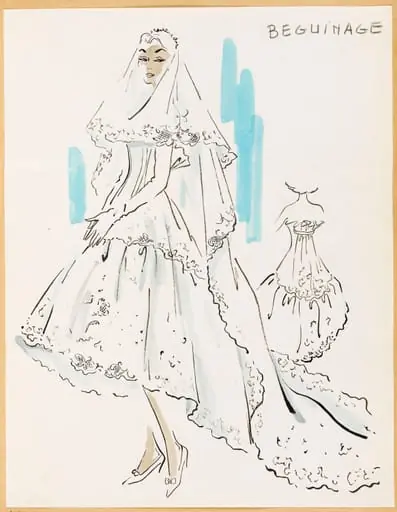 Béguinage