Artwork
Trotteur
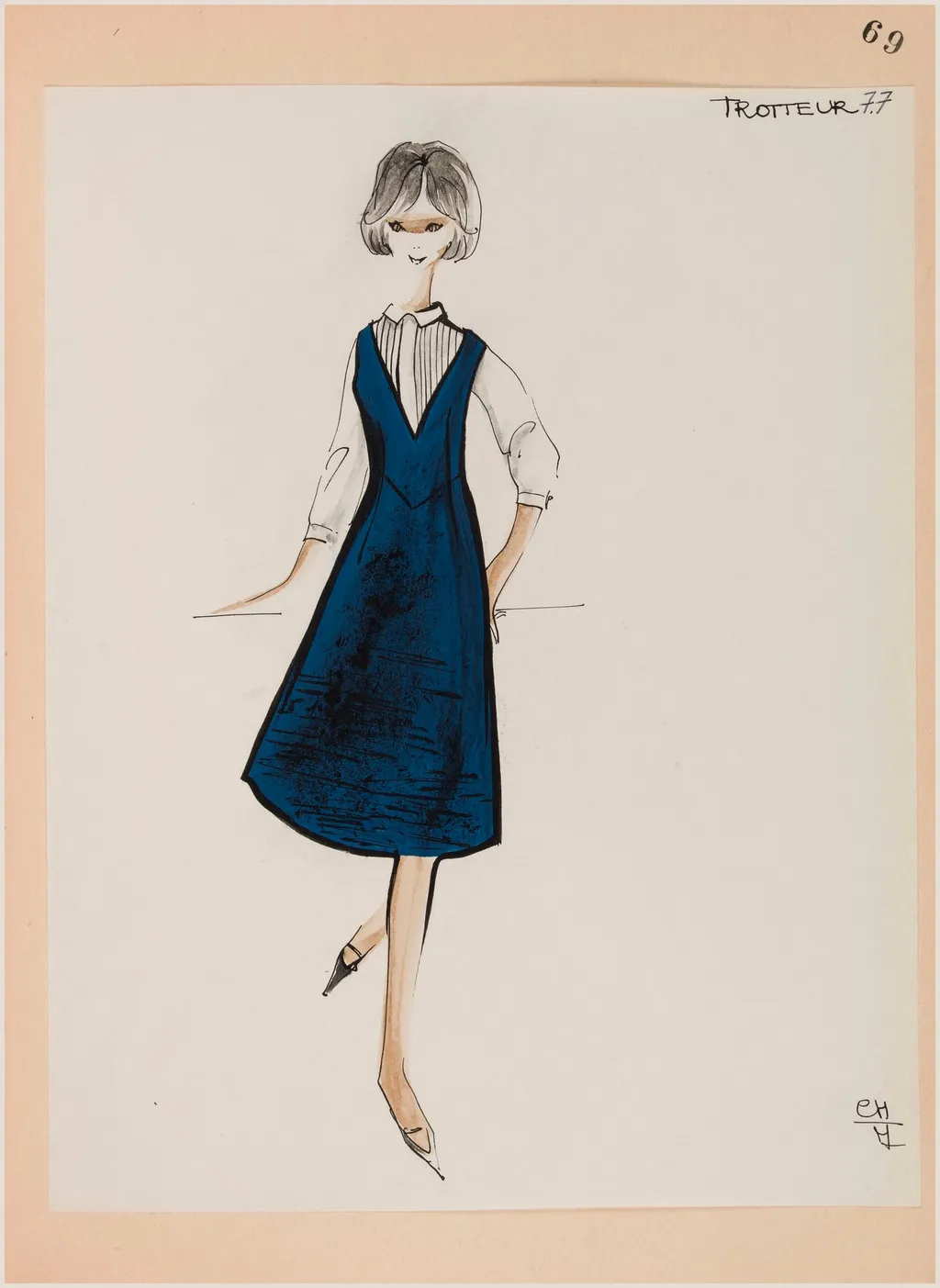
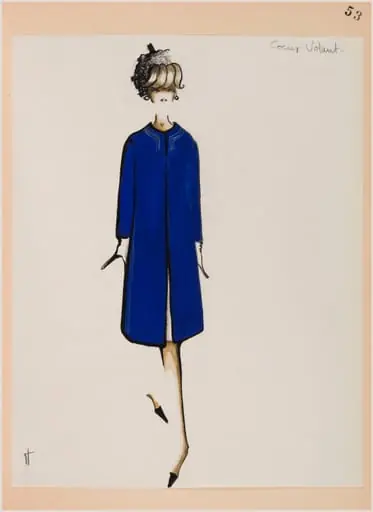
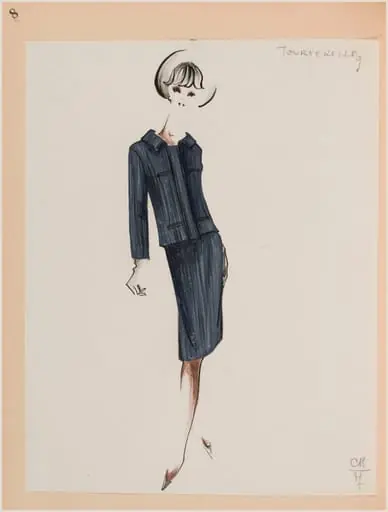
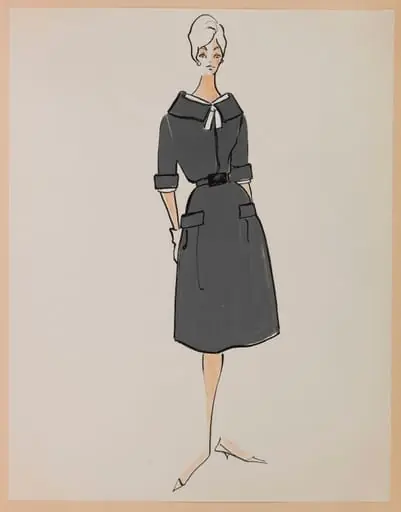
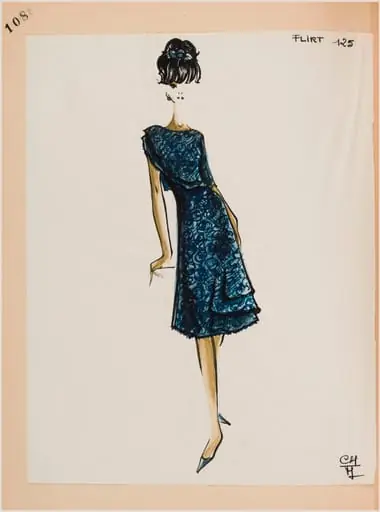
Trotteur is a drawing by Marie-Louise Carven. It dates from 1963 and is held in the collection of the Palais Galliera - Musée de la Mode de la Ville de Paris.
About this work
Overview
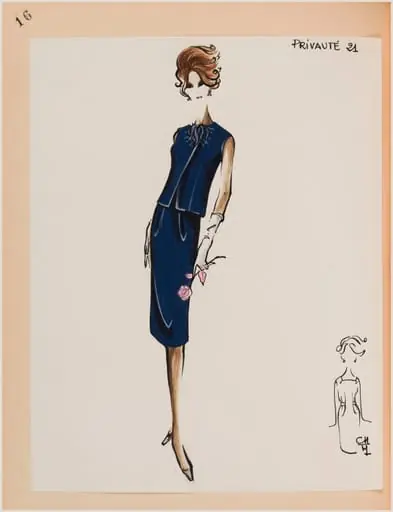
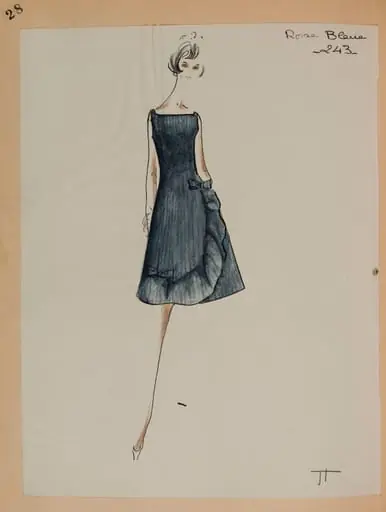
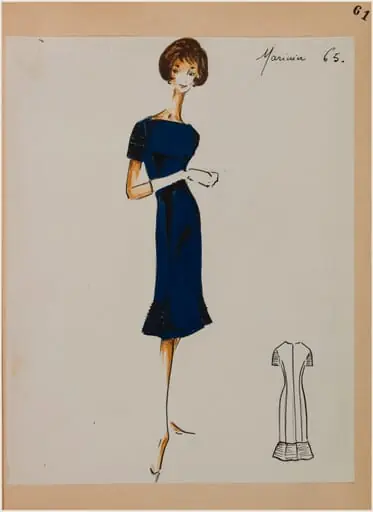
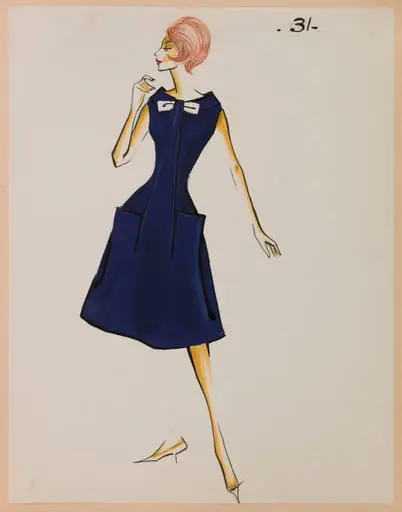
Created in 1963, *Trotteur* is a pencil sketch by French designer Marie-Louise Carven, capturing a figure in a minimalist dark blue dress.
Created in 1963, *Trotteur* is a pencil sketch by French designer Marie-Louise Carven, capturing a figure in a minimalist dark blue dress. The work belongs to a series of fashion studies produced during her tenure as founder of the Carven label, established in 1945. Unlike finished garments, this drawing serves as a conceptual record—unadorned, immediate, and focused on silhouette and posture. It is preserved in the Museum of Ethnography’s collection, reflecting its role as both design artifact and cultural document.
Subject & Meaning
The figure in *Trotteur* stands with quiet composure, one hand resting naturally, the other poised slightly forward—suggesting motion without action. The dress, with its deep V-neck and A-line cut, reflects Carven’s preference for understated elegance tailored to smaller frames. The title, meaning 'walker' or 'stroller' in French, implies ease of movement, aligning with her philosophy of clothing that supports daily life rather than theatrical display. The plain background isolates the form, emphasizing functionality over ornament.
Technique & Style
Carven rendered the figure with swift, fluid pencil strokes that avoid heavy shading or detail, preserving a sense of spontaneity. The loose lines convey volume and structure without precision, characteristic of preparatory fashion sketches. Hair is suggested with minimal strokes, and the dress’s contours are defined by subtle shifts in pressure rather than outline. The signature 'CH' and the word *Trotteur* are inscribed with casual authority, reinforcing the drawing’s role as a personal, working note rather than a polished presentation.
History & Provenance
Marie-Louise Carven, who launched her fashion house in 1945, was among the first French couturiers to develop a ready-to-wear line, democratizing design for everyday women. *Trotteur* emerged during a period when her studio increasingly focused on practical, wearable forms. The sketch entered the Museum of Ethnography’s collection as part of a broader effort to document 20th-century fashion as cultural practice, rather than solely as high art. Its preservation underscores its value as a record of design thinking in postwar France.
Context
In the early 1960s, Parisian fashion was shifting from rigid haute couture toward accessible, functional design. Carven’s work aligned with this trend, emphasizing light fabrics, modest silhouettes, and comfort for the active woman. *Trotteur* reflects a broader cultural movement toward practicality in women’s clothing, influenced by changing social roles and postwar economic realities. Unlike the exaggerated forms of contemporaries, her sketches favored restraint, mirroring a quieter, more personal vision of femininity.
Legacy
Though Carven’s name is less prominent today than some of her peers, her contributions to ready-to-wear and tailored simplicity influenced later generations of designers focused on wearable elegance. *Trotteur* remains a quiet testament to her method: design as an extension of lived experience. The sketch’s preservation in an ethnographic context signals its recognition not as fashion spectacle, but as a meaningful artifact of everyday life and material culture in mid-century Europe.
Artist & collection
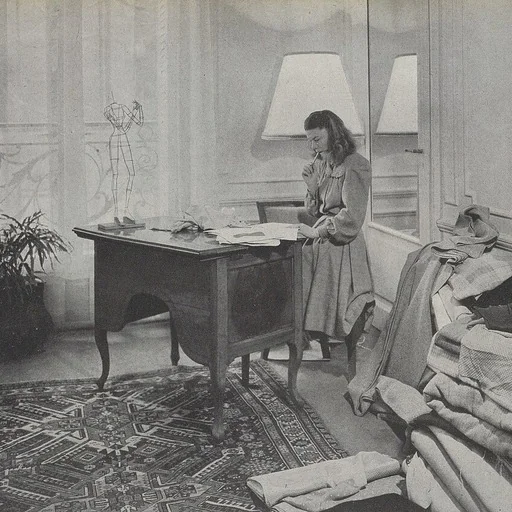
Artist
Marie-Louise Carven (31 August 1909 – 8 June 2015), born Carmen de Tommaso, was a French fashion designer who founded the house of Carven in 1945.
Museum
Palais Galliera - Musée de la Mode de la Ville de Paris
Continue through works from the same source collection.
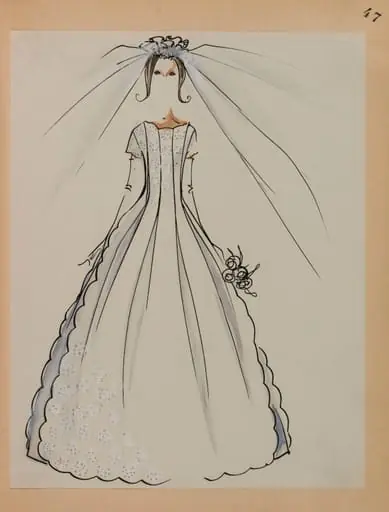 Robe de mariée festonnée et son voile
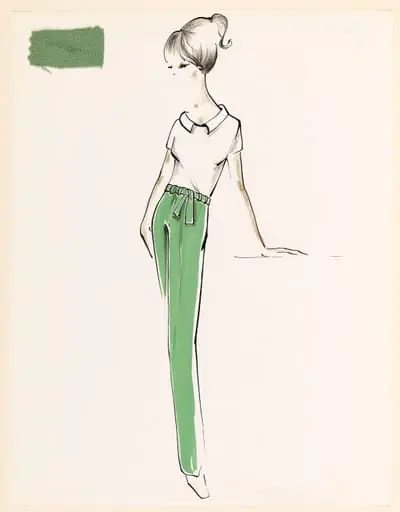 Haut blanc à manches courtes et pantalon vert à ceinture nouée
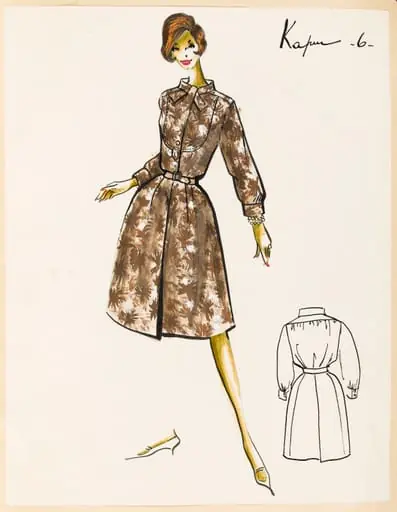 Kapur
Kapur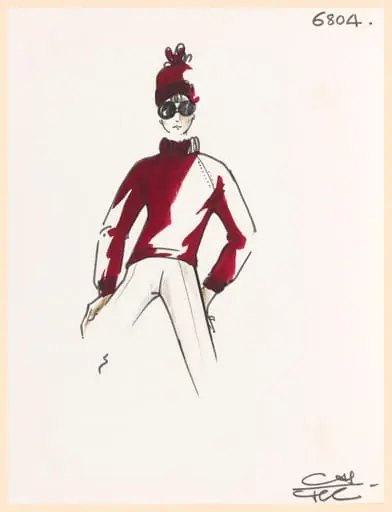 Pull-over à manches longues pourpre, bonnet assorti, pantalon et lunettes de soleil
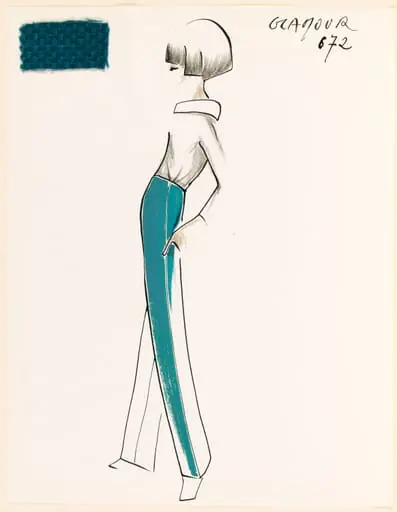 GLAMOUR
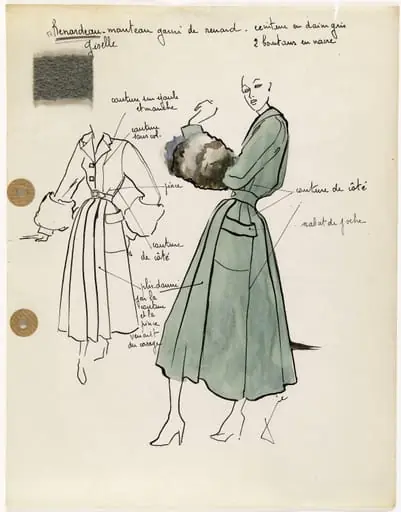 'Renardeau'
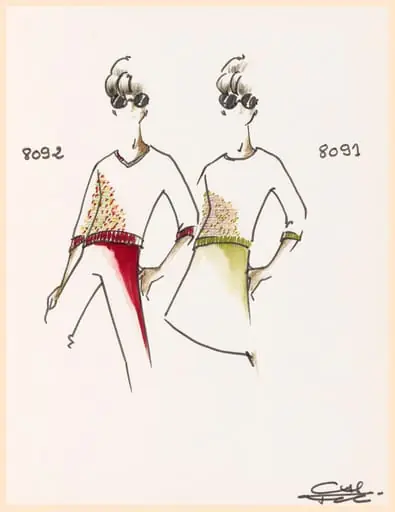 Pull-over à manches trois quarts et à encolure V à motifs multicolores, pantalon cerise et lunettes de soleil
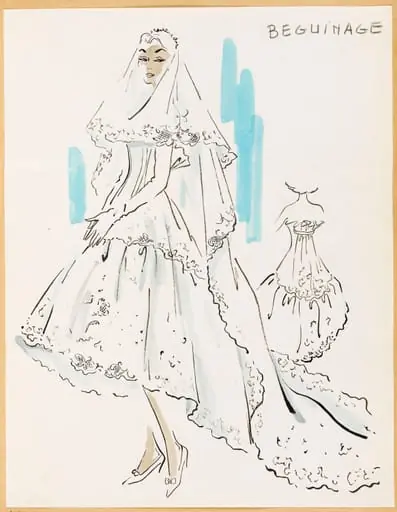 Béguinage