Artwork
Turquoise
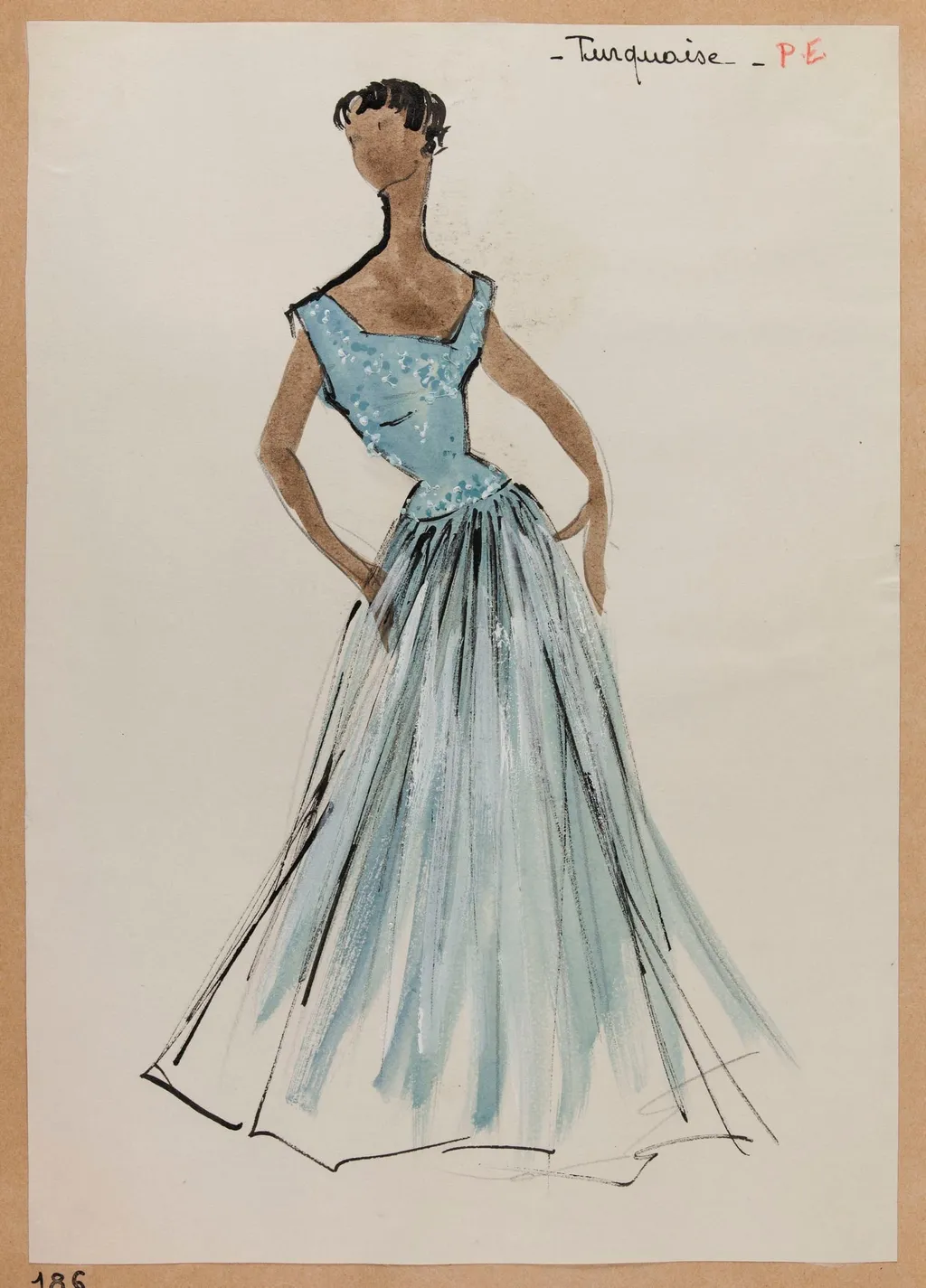
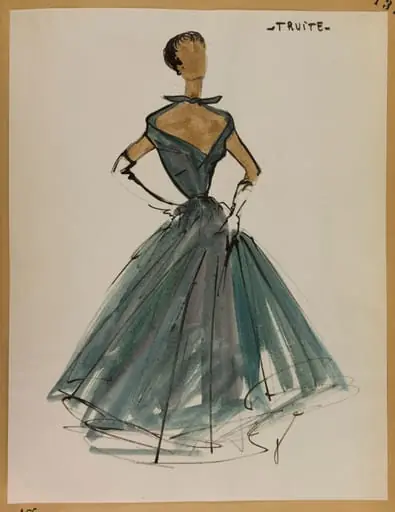
Turquoise is a drawing by Marie-Louise Carven. It dates from 1951 and is held in the collection of the Palais Galliera - Musée de la Mode de la Ville de Paris.
About this work
Overview
The sketch titled 'Turquoise,' dated circa 1951, exemplifies her approach to feminine silhouettes that balanced structure with ease.
Marie-Louise Carven, born Carmen de Tommaso, founded her fashion house in Paris in 1945. Focused on accessible, well-tailored clothing for smaller frames, she helped shape early French prêt-à-porter. Her designs emphasized lightness and movement, often using delicate fabrics and subtle patterns. The sketch titled 'Turquoise,' dated circa 1951, exemplifies her approach to feminine silhouettes that balanced structure with ease.
Subject & Meaning
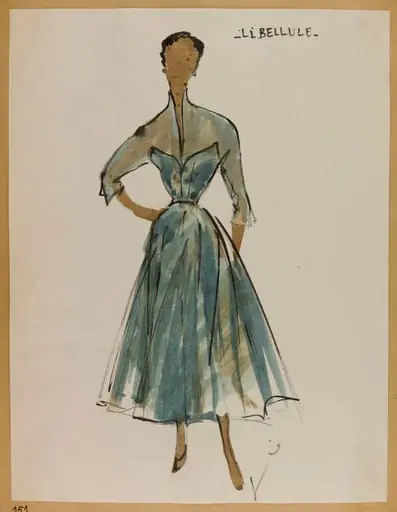
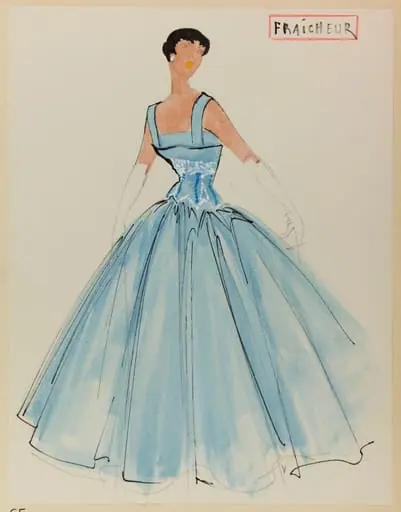
The sketch depicts a woman in a long, flared dress with a fitted, dotted bodice and layered, pale blue skirt. Her posture is relaxed—one hand on the hip, the other lightly holding the fabric—suggesting quiet confidence rather than performative elegance. The title 'Turquoise' points to the dress’s hue, though the drawing uses soft blues and whites, evoking freshness and understated charm. The image conveys an ideal of effortless, everyday grace.
Technique & Style
Rendered in loose, fluid brushwork, the sketch has the immediacy of a quick study rather than a polished illustration. Lines flow freely, defining form without heavy outlining, and the background remains blank to focus attention on the garment. The use of minimal color—primarily pale blue and white—mirrors Carven’s preference for restrained palettes. The technique captures motion and texture with economy, reflecting her design philosophy of simplicity.
History & Provenance
Created around 1951, this sketch originates from Carven’s personal design archive during the early years of her label’s growth. As one of the first Parisian designers to prioritize ready-to-wear, her sketches served as both creative tools and production guides. While the exact provenance of this piece is not widely documented, it aligns with the body of work preserved in fashion institutions that hold her legacy.
Context
In postwar Paris, fashion was shifting from haute couture exclusivity toward more democratic ready-to-wear. Carven responded by designing clothes that were elegant yet practical, suited to modern women’s lives. Her use of gingham, lace, and pastels contrasted with the heavier fabrics of the era. 'Turquoise' reflects this cultural pivot—designing for movement, comfort, and quiet individuality rather than spectacle.
Legacy
Carven’s influence endures in the emphasis on proportion and wearability in contemporary womenswear. Her sketches, including 'Turquoise,' illustrate how fashion can be both artistic and accessible. Though her label has changed hands, her approach to designing for the petite frame and her early adoption of prêt-à-porter remain foundational to modern fashion practices in France and beyond.
Artist & collection
Artist
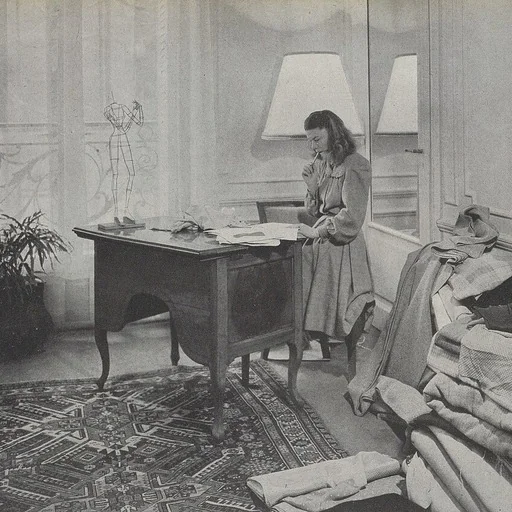
Marie-Louise Carven (31 August 1909 – 8 June 2015), born Carmen de Tommaso, was a French fashion designer who founded the house of Carven in 1945.
Museum
Palais Galliera - Musée de la Mode de la Ville de Paris
Continue through works from the same source collection.
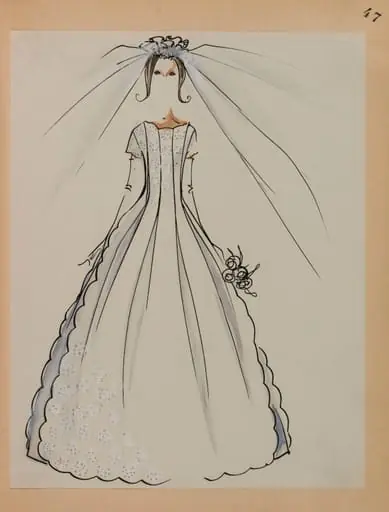 Robe de mariée festonnée et son voile
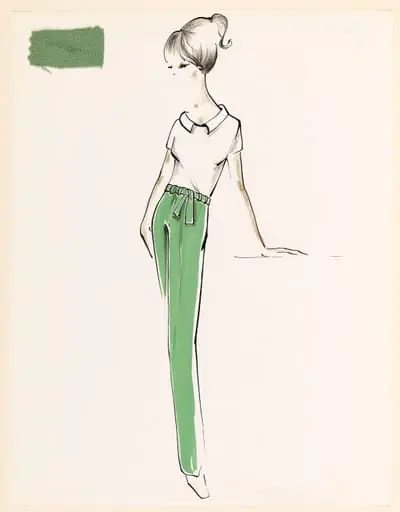 Haut blanc à manches courtes et pantalon vert à ceinture nouée
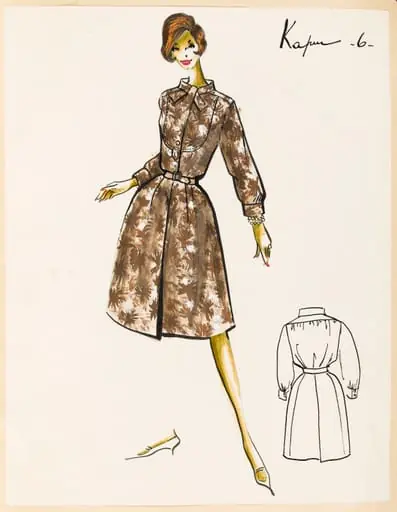 Kapur
Kapur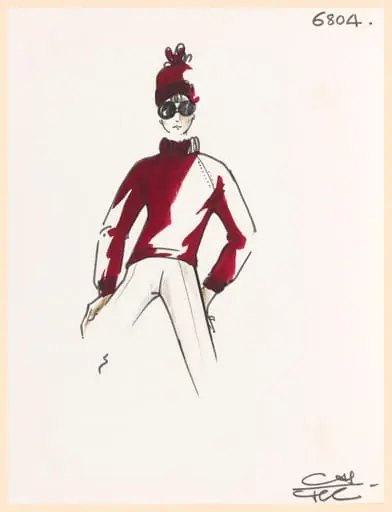 Pull-over à manches longues pourpre, bonnet assorti, pantalon et lunettes de soleil
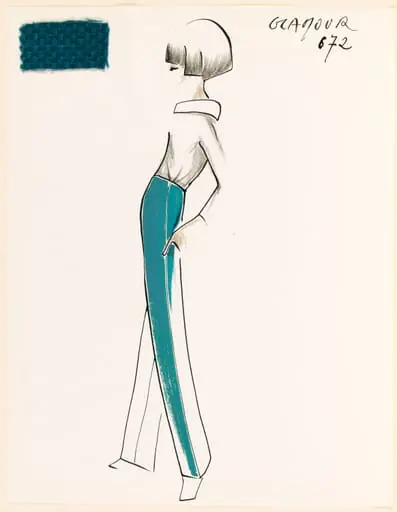 GLAMOUR
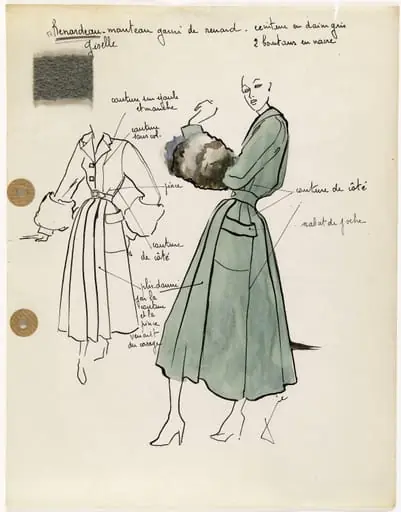 'Renardeau'
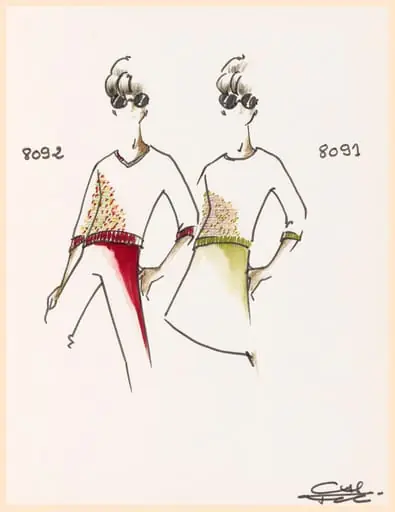 Pull-over à manches trois quarts et à encolure V à motifs multicolores, pantalon cerise et lunettes de soleil
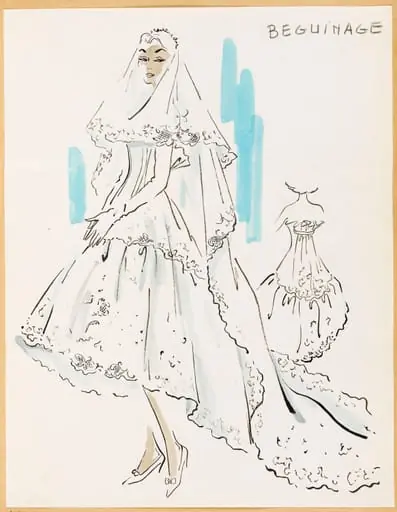 Béguinage