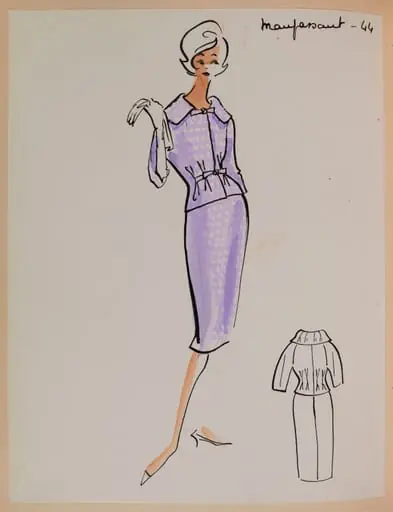
Artwork
Wangtan
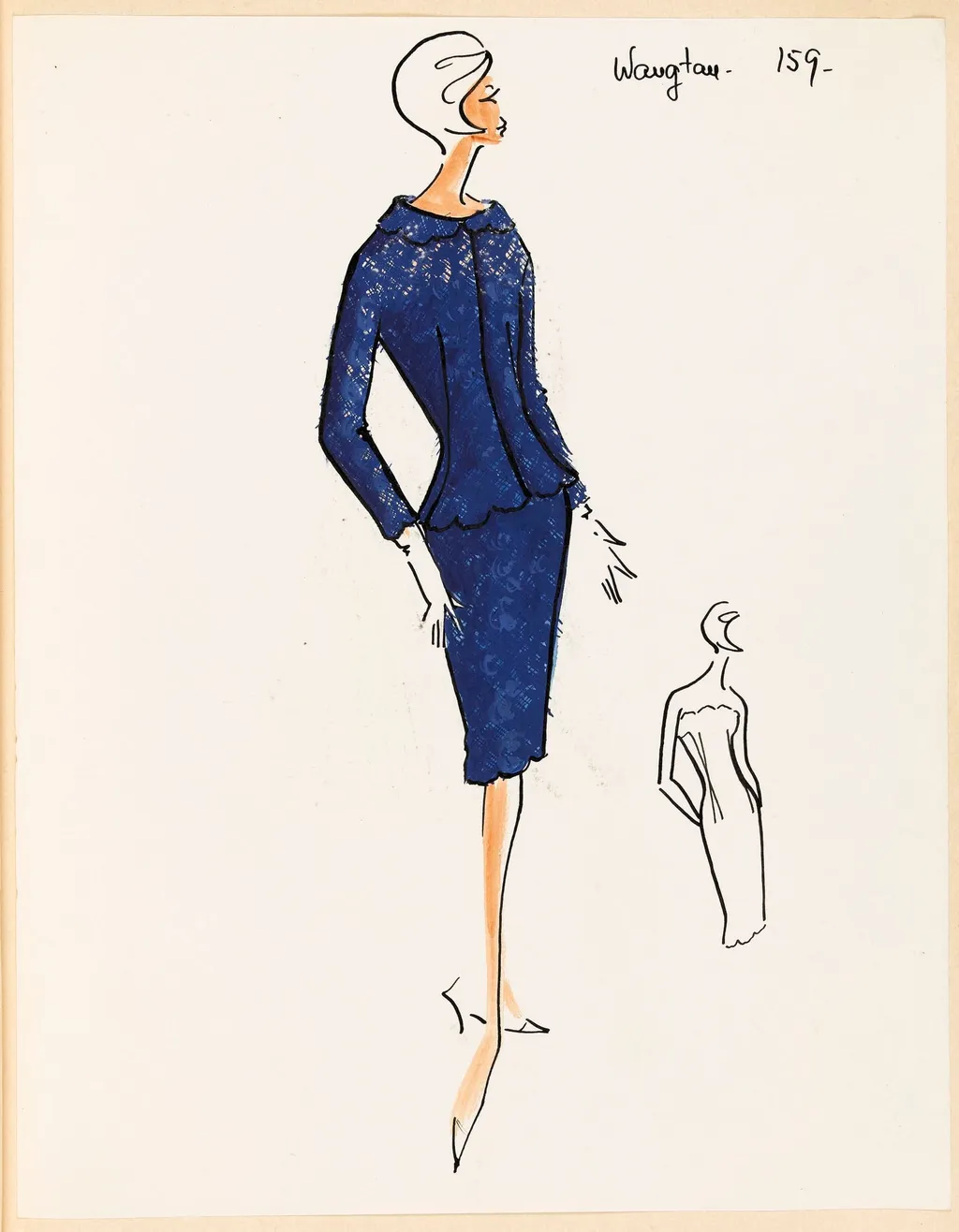
Wangtan is a drawing by Marie-Louise Carven. It dates from 1959 and is held in the collection of the Palais Galliera - Musée de la Mode de la Ville de Paris.
About this work
Overview
The sketch resides in the collection of the Museum of Ethnography, where it is preserved as part of a broader record of mid-century design practices.
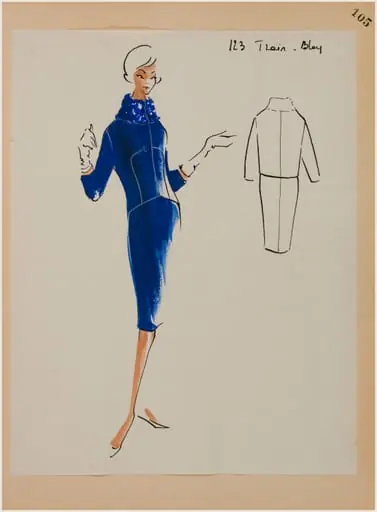
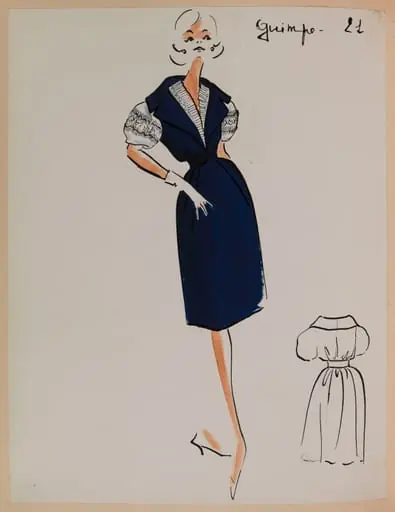
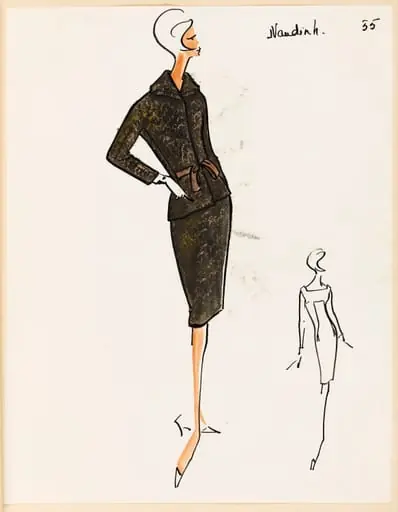
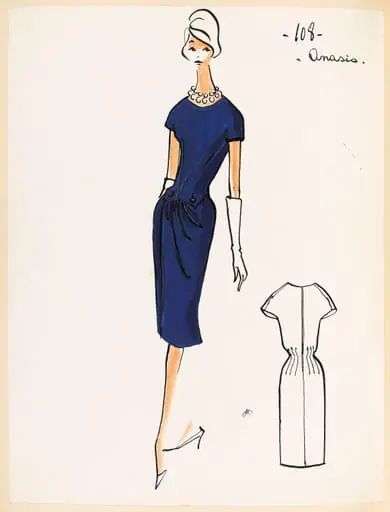
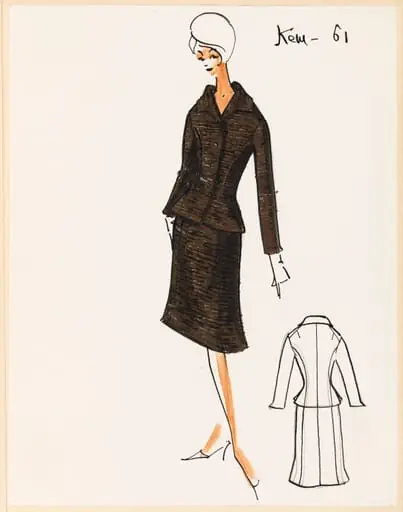
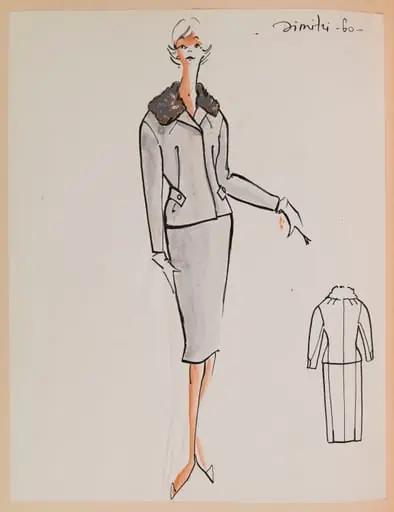
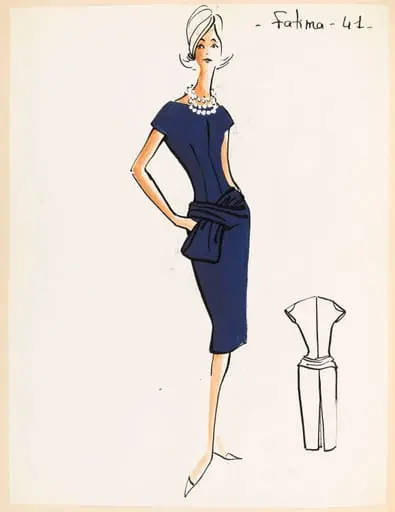
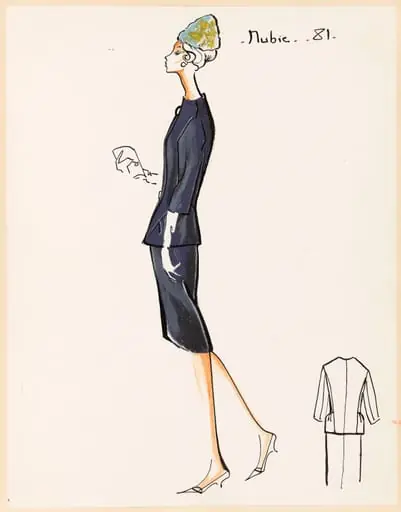
Created around 1959, *Wangtan* is a pencil sketch by French designer Marie-Louise Carven, capturing a woman in a tailored dark blue ensemble. Executed in loose, economical lines, the drawing functions as a design note rather than a finished illustration. It reflects Carven’s approach to fashion as functional, understated elegance. The sketch resides in the collection of the Museum of Ethnography, where it is preserved as part of a broader record of mid-century design practices.
Subject & Meaning
The figure depicts a woman in a simple jacket and skirt, hands tucked into pockets, suggesting ease and practicality. The posture and minimal detail convey a sense of quiet confidence, aligning with Carven’s philosophy of dressing petite women with dignity and comfort. The inclusion of a small rear view reinforces the designer’s attention to three-dimensional form, emphasizing how the garment moves and fits the body in daily life.
Technique & Style
Carven used swift, unfixed pencil strokes to suggest fabric texture and silhouette without overdetailing. The contrast between the dark blue garments and the pale paper heightens the clarity of the form. A secondary, abbreviated sketch on the corner demonstrates her method of testing proportions from multiple angles. The style is deliberate in its restraint—focused on silhouette and movement rather than ornamentation.
History & Provenance
Marie-Louise Carven founded her fashion house in 1945 and was among the first Parisian designers to develop a prêt-à-porter line, bridging couture and accessible fashion. *Wangtan* likely originated as a working sketch during her late 1950s design phase. Its presence in the Museum of Ethnography suggests its value as a cultural artifact, documenting how design thinking translated into wearable, everyday clothing.
Context
In postwar Europe, fashion was shifting toward practicality and mass production. Carven’s work responded to this by prioritizing clean lines and lightweight materials suited to modern lifestyles. *Wangtan* reflects this transition, embodying a quiet rebellion against ornate couture traditions. Its simplicity aligns with broader trends in mid-century design that valued function without sacrificing refinement.
Legacy
Carven’s sketches, including *Wangtan*, illustrate a design ethos centered on the wearer’s experience rather than spectacle. Her early adoption of ready-to-wear influenced later generations of designers who sought to merge artistry with accessibility. The sketch endures not as a finished garment, but as a testament to the thoughtful, human-centered process behind everyday fashion.
Artist & collection
Artist
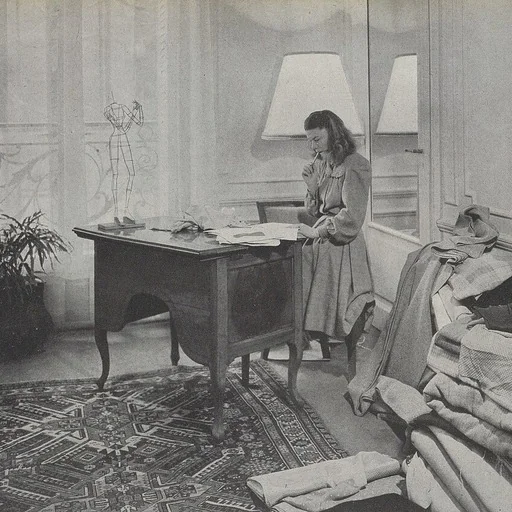
Marie-Louise Carven (31 August 1909 – 8 June 2015), born Carmen de Tommaso, was a French fashion designer who founded the house of Carven in 1945.
Museum
Palais Galliera - Musée de la Mode de la Ville de Paris
Continue through works from the same source collection.
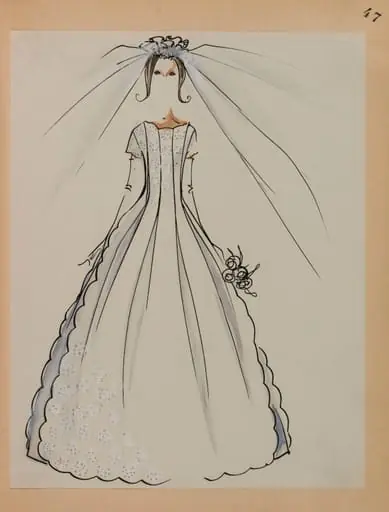 Robe de mariée festonnée et son voile
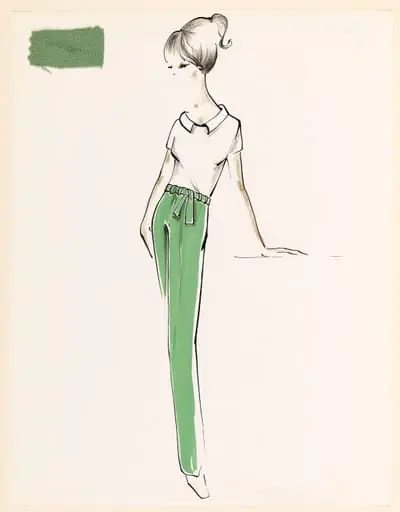 Haut blanc à manches courtes et pantalon vert à ceinture nouée
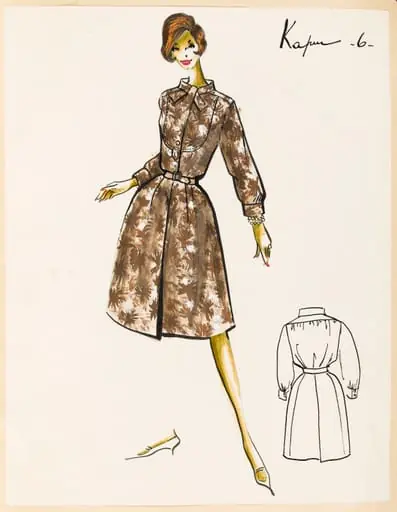 Kapur
Kapur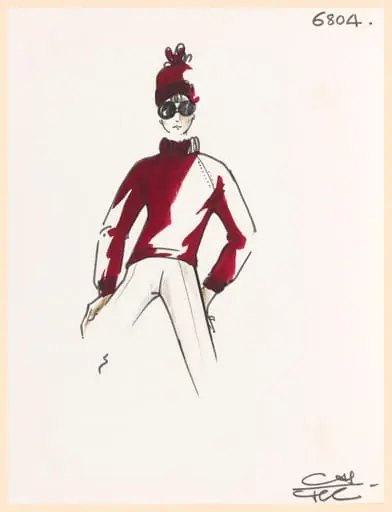 Pull-over à manches longues pourpre, bonnet assorti, pantalon et lunettes de soleil
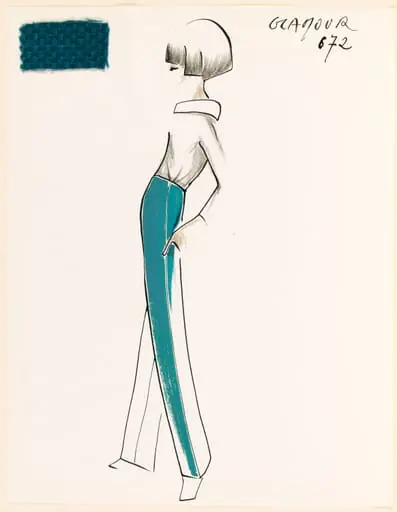 GLAMOUR
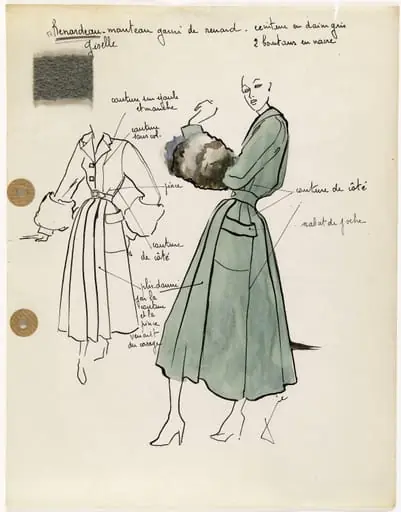 'Renardeau'
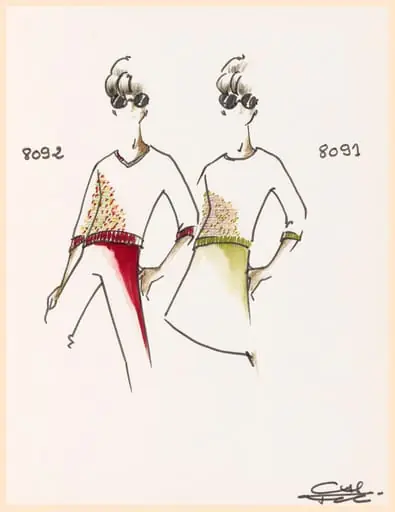 Pull-over à manches trois quarts et à encolure V à motifs multicolores, pantalon cerise et lunettes de soleil
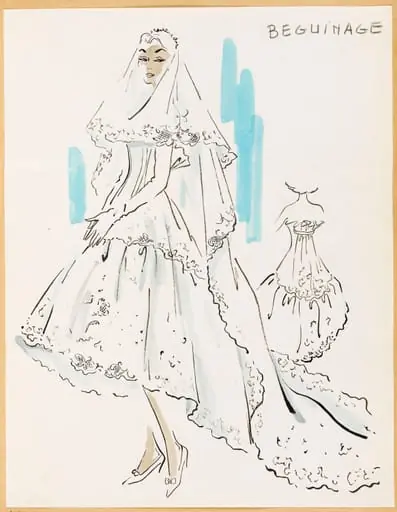 Béguinage