Artwork
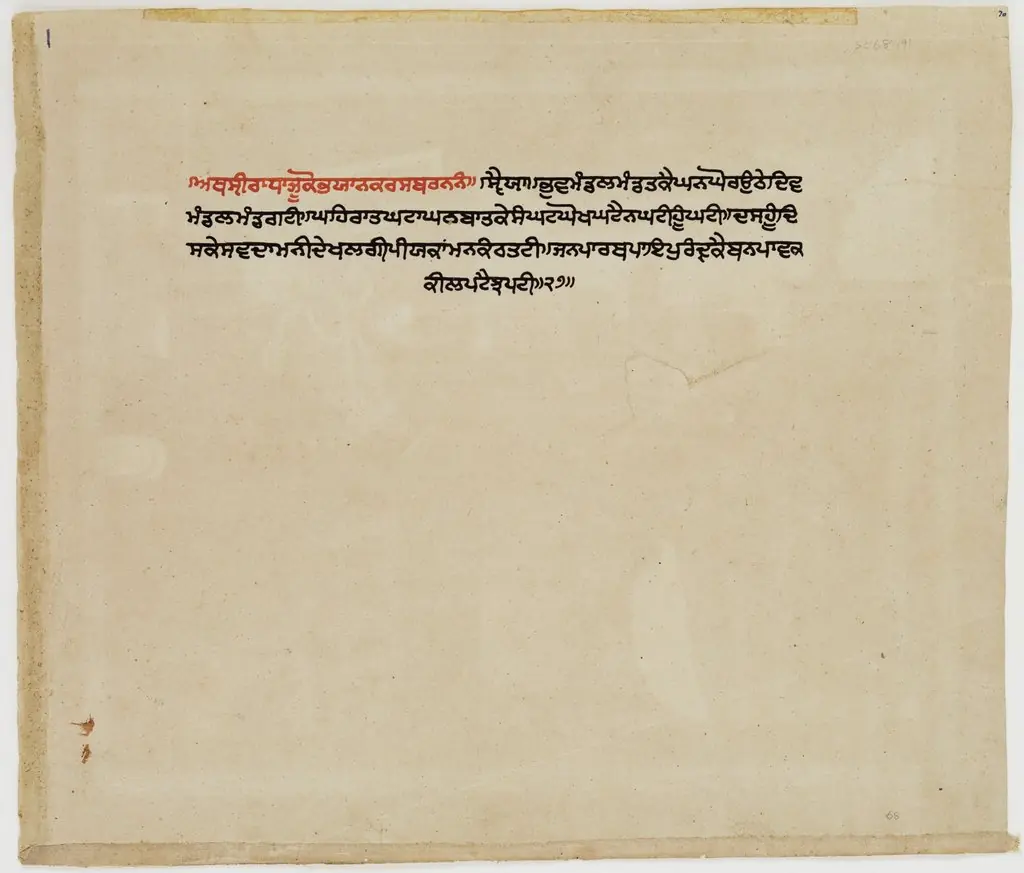
Krishna Prepares for Radha's Visit (page from the Gita Govinda)
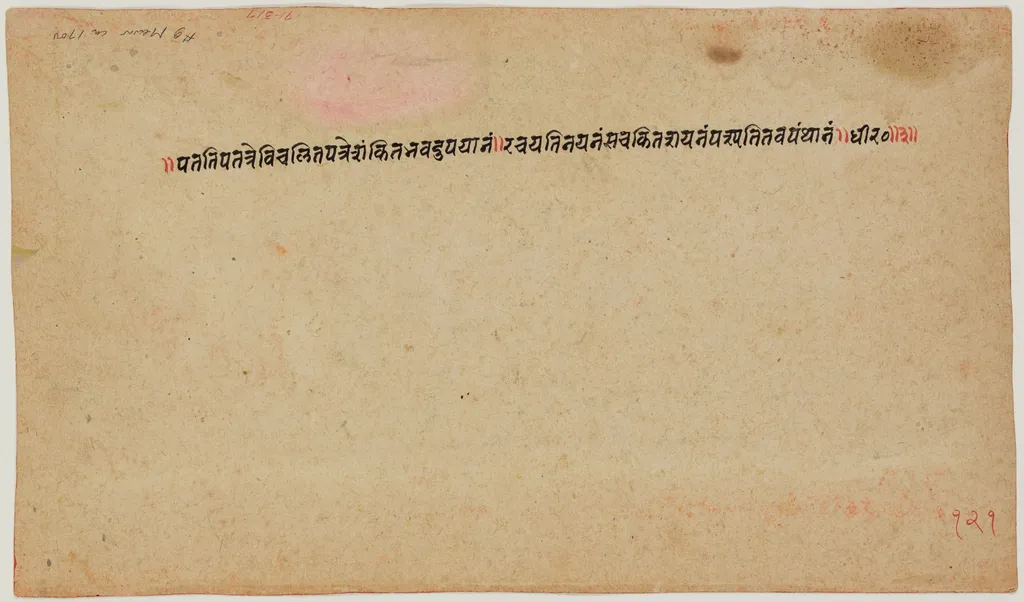
Krishna Prepares for Radha's Visit (page from the Gita Govinda) is an unspecified painting by the Mughal Painting artist Unknown. It dates from 1600 and is held in the collection of the Detroit Institute of Arts.
About this work
Overview
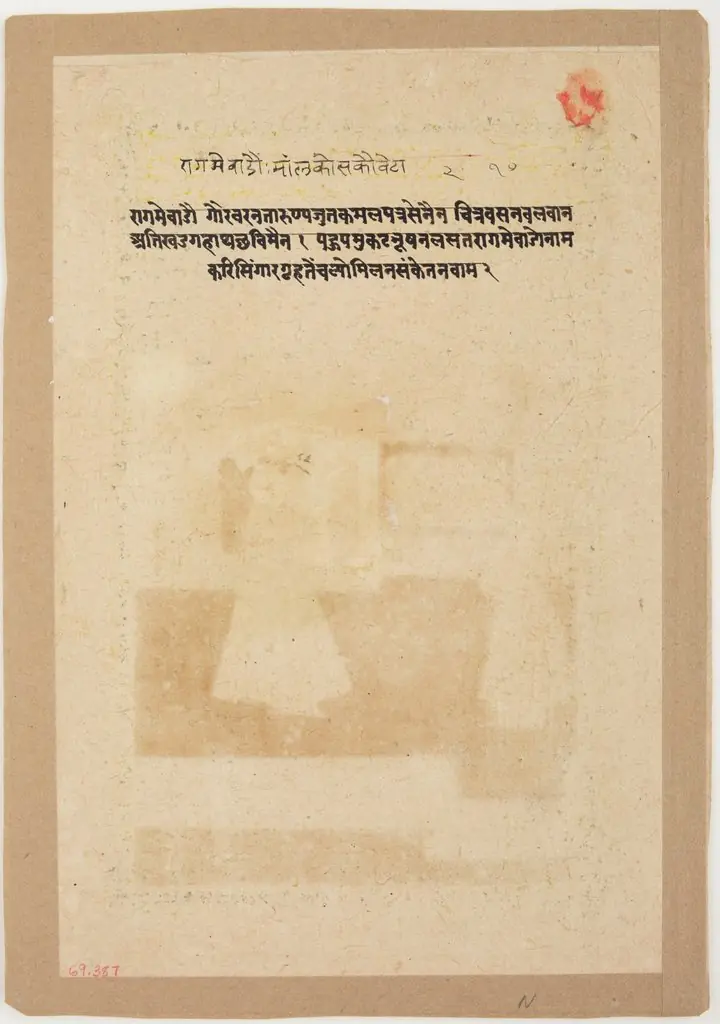
The object is a single sheet from a manuscript of the Gita Govinda, a celebrated 12th‑century Sanskrit poem that dramatizes the divine love between Krishna and Radha. The page measures roughly the size of a modern sheet of paper and shows a faded yellowed surface bearing black ink text, with occasional red highlights and a small red numeral, 729, in the lower right corner.
Subject & Meaning
The verses on the page belong to the narrative in which Krishna prepares for Radha’s arrival, a scene that underscores themes of devotion, anticipation, and the intimate exchange between the deities. The highlighted red characters likely indicate key words or melodic cues used by singers or reciters to emphasize the poem’s emotional peaks.
Technique & Style
The manuscript was produced by hand using a reed pen and iron‑gall ink for the main body of the text, while a separate pigment—probably vermilion—provided the red markings. The script follows a regional variant of the Devanagari‑derived style common to medieval North Indian devotional texts, characterized by evenly spaced lines and clear, rounded letterforms.
History & Provenance
The page originates from a larger codex that was copied in a temple workshop sometime between the 14th and 16th centuries, a period when the Gita Govinda was widely disseminated across the Indian subcontinent. The manuscript entered a Western collection in the early 20th century, eventually becoming part of the Detroit Institute of Arts’ holdings, where it is catalogued as a representative example of devotional manuscript culture.
Context
The Gita Govinda, composed by the poet Jayadeva, became a central text for the Bhakti movement, inspiring music, dance, and visual art. Manuscripts such as this one were used in temple rituals and courtly performances, serving both as literary sources and as practical guides for singers who would render the verses with accompanying instrumental accompaniment.
Artist & collection

 Domestic Scene
 Giacomo and Cardinal Marco, investing Andrea, Abbot of San Zeno, with his Benefice
 The Nymph of Fontainebleau
 Portrait of a Woman
 Madonna and Child with Saints in the Enclosed Garden
 Venus and Minerva
 Family Group of Four on Sofa
 Wall painting from Room H of the Villa of P. Fannius Synistor at Boscoreale
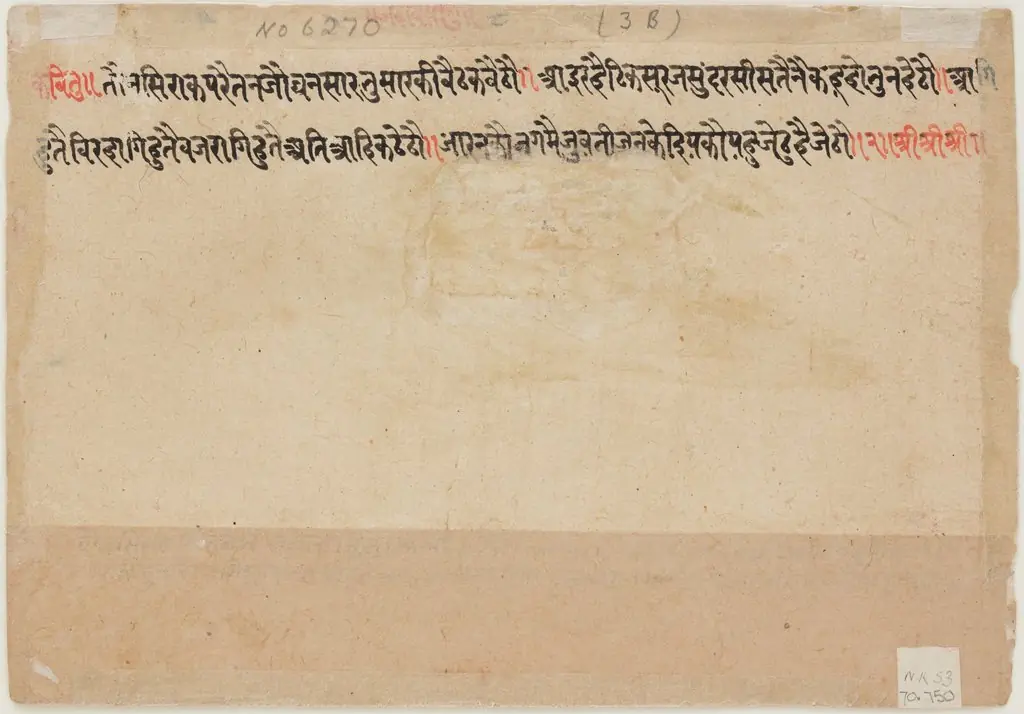 The Month of Jyeshtha (May-June), from a manuscript of the Barahmasa ("Twelve Months")
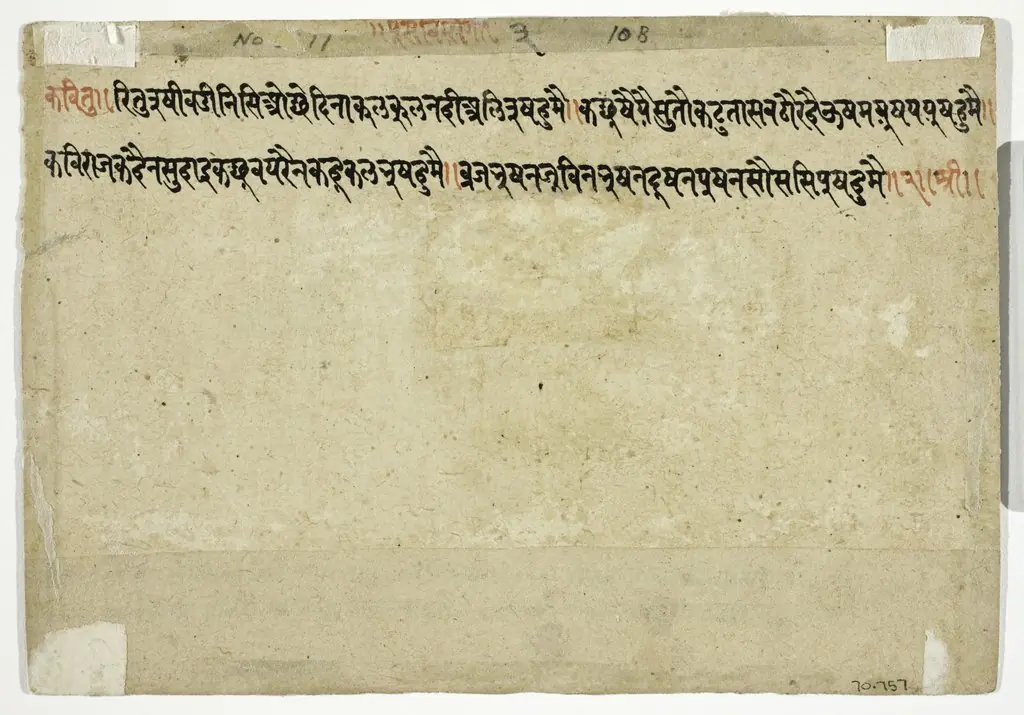 The Month of Pusa (December-January), from a manuscript of the Barahmasa ("Twelve Months")
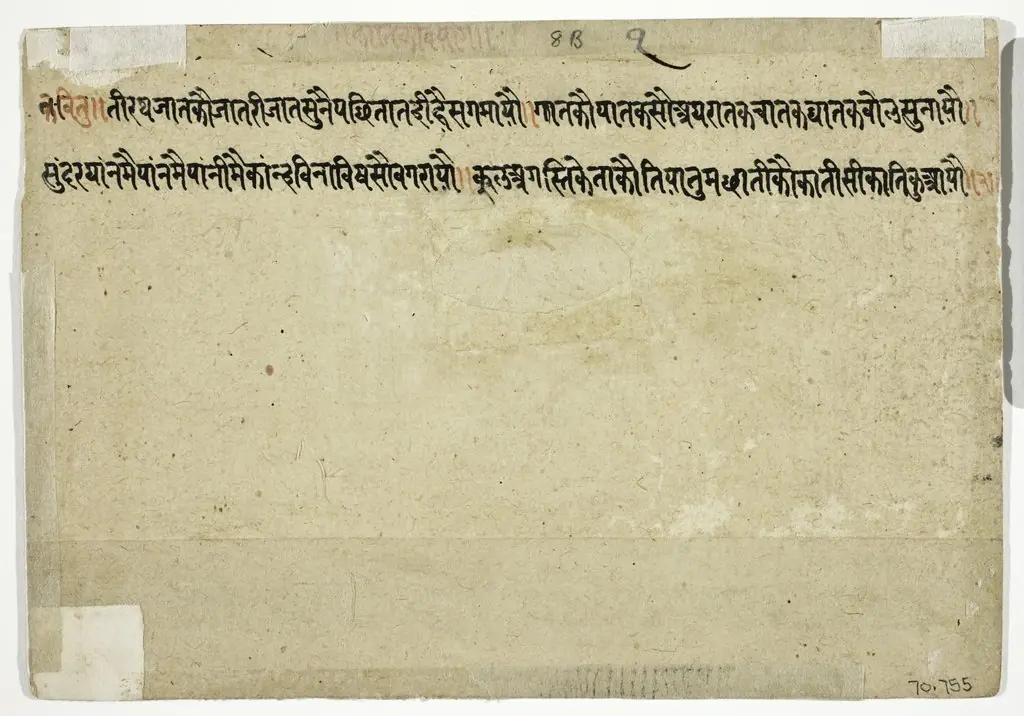 The Month of Kartik (October-November), from a manuscript of the Barahmasa ("Twelve Months")
 Prince with Attendant Musician
 The Month of Asadha (June-July), from a manuscript of the Barahmasa ("Twelve Months")
 The Month of Shravana (July-August), from a manuscript of the Barahmasa ("Twelve Months")
 The Month of Vaisakha (April-May), from a manuscript of the Barahmasa ("Twelve Months")
 Story of Krishna and Radha
 The Month of Bhado (August-September), from a manuscript of the Barahmasa ("Twelve Months")