Artwork
Shepherds Watering Cattle in a Forest
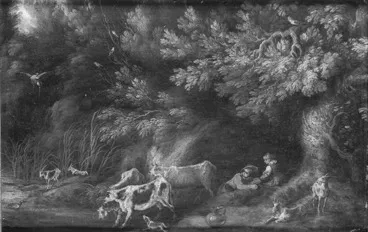
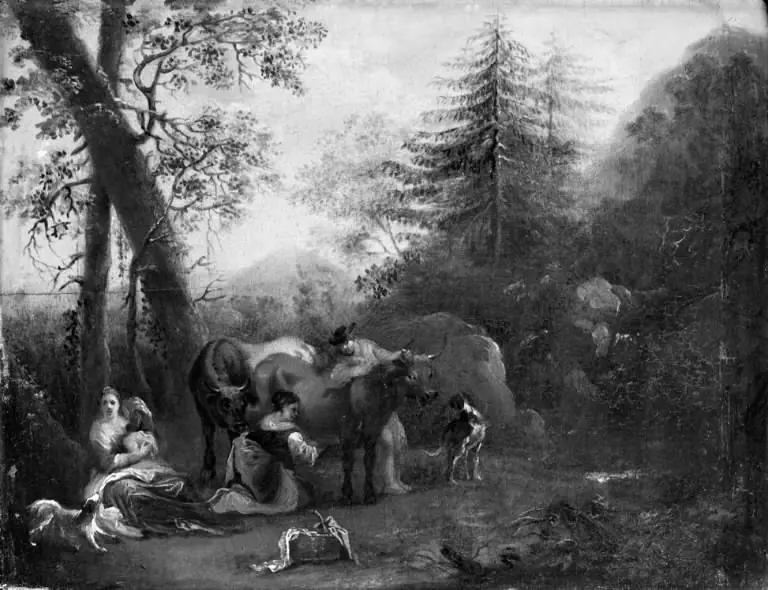
Shepherds Watering Cattle in a Forest is an unspecified painting by the Dutch Golden Age artist Unknown. It dates from 1625 and is held in the collection of the Statens Museum for Kunst. This painting depicts a quiet moment in a wooded landscape, where two shepherds attend to their herd near a stream.
About this work
Overview
This painting depicts a quiet moment in a wooded landscape, where two shepherds attend to their herd near a stream. The scene is composed with calm precision, emphasizing the harmony between humans, animals, and nature. The composition draws the viewer’s eye toward the central figure kneeling by the water, while the surrounding foliage frames the action without overwhelming it.
Subject & Meaning
The subject centers on rural labor and the daily rhythms of pastoral life. The shepherds are shown in quiet service, not idealized or heroic, but engaged in ordinary tasks. The presence of cattle, each rendered with individual character, suggests a relationship of care and familiarity. The setting implies a world untouched by urban disruption, valuing stillness and routine.
Technique & Style
The artist employs chiaroscuro to model forms and suggest spatial depth, with light falling from the left to illuminate the shepherds and cattle while leaving the forest edges in soft shadow. Brushwork is detailed yet restrained, particularly in the rendering of animal anatomy and foliage. The palette is muted, dominated by greens and earth tones, reinforcing the naturalism of the scene.
History & Provenance
The painting’s early ownership is undocumented, but its style aligns with 17th-century Northern European landscape traditions. It likely originated in a region where pastoral themes were popular among collectors seeking tranquil, morally grounded imagery. No major exhibitions or documented sales are recorded prior to its modern acquisition by the current institution.
Context
Created during a period when rural life was increasingly idealized in art, this work reflects a broader cultural interest in nature as a site of moral clarity. Unlike dramatic biblical or mythological scenes, it offers a quiet affirmation of everyday labor. Similar compositions appear in the work of Dutch and Flemish painters who favored unembellished depictions of the countryside.
Legacy
Though not widely reproduced or studied, the painting contributes to a quiet tradition of pastoral realism in early modern European art. Its emphasis on observation over symbolism influenced later landscape painters who sought authenticity in rural subjects. It remains a modest but thoughtful example of how ordinary moments were given visual dignity in an era of grand narratives.
Artist & collection

 Domestic Scene
 Giacomo and Cardinal Marco, investing Andrea, Abbot of San Zeno, with his Benefice
 The Nymph of Fontainebleau
 Portrait of a Woman
 Madonna and Child with Saints in the Enclosed Garden
 Venus and Minerva
 Family Group of Four on Sofa
 Wall painting from Room H of the Villa of P. Fannius Synistor at Boscoreale
 Landscape with Huntsmen
 Landscape with Huntsmen
 Waldlandschaft mit der Fabel "Der Adler und der Rabe"
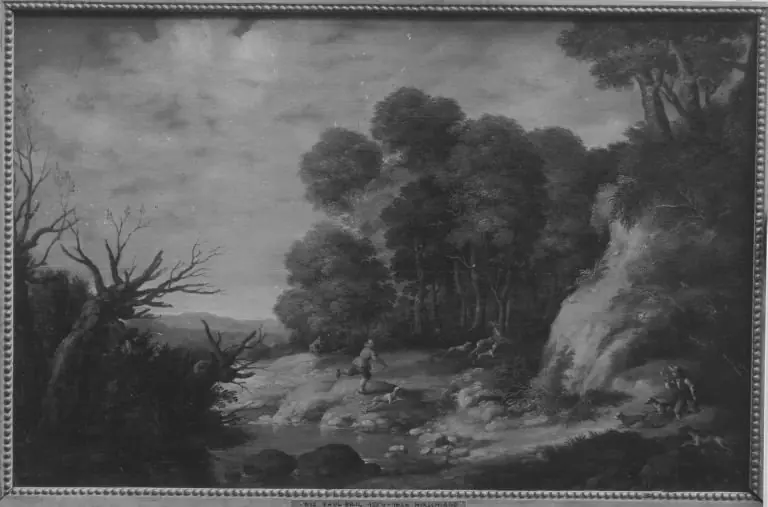 Waldlandschaft mit Hirschjagd
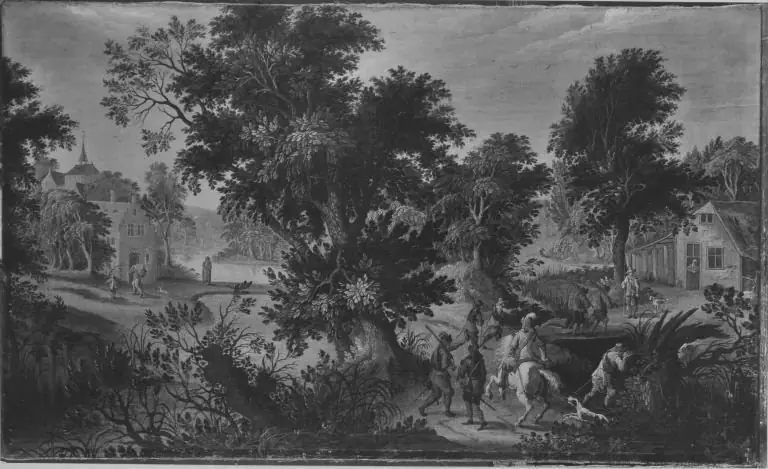 Wooded Landscape
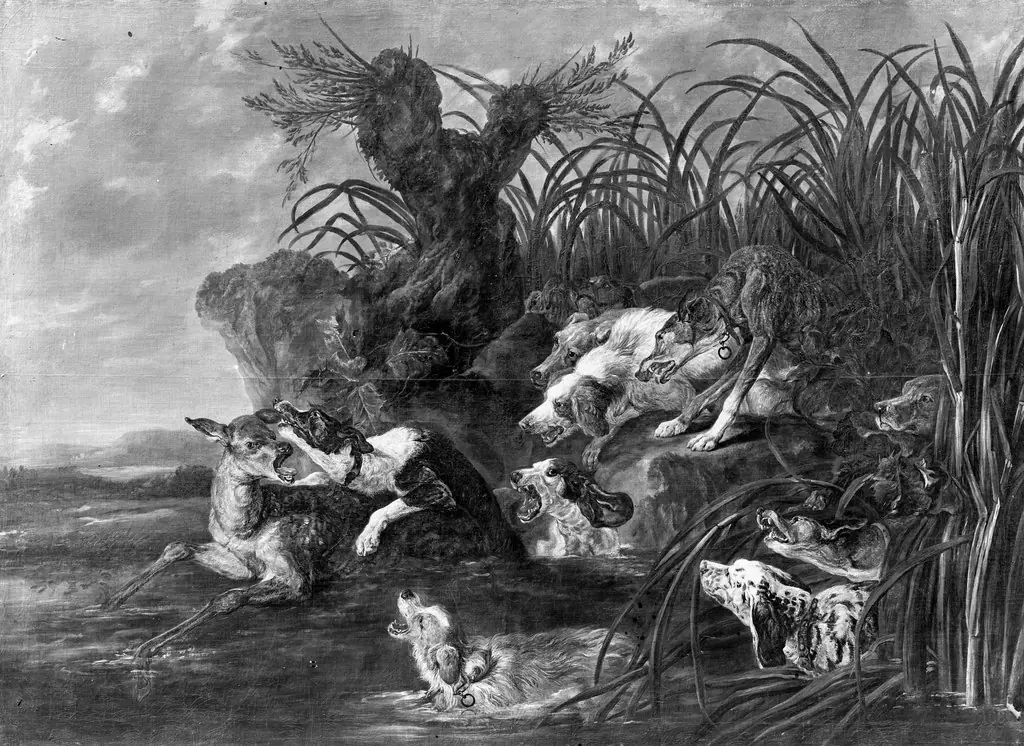 The deer hunt
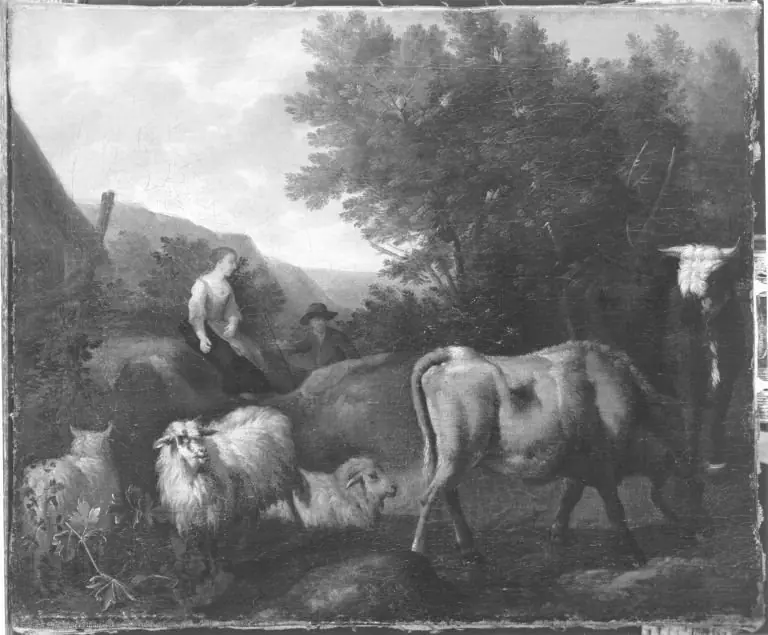 Landschaft mit Vieh und Hirten
 Wooded Landscape
 Felsenlandschaft mit Eustachiuslegende
 Geflügelstück
 Flusslandschaft mit Staffage
 Landscape with Cattle, the Shepherdess Milking the Cow