Artwork
Untitled
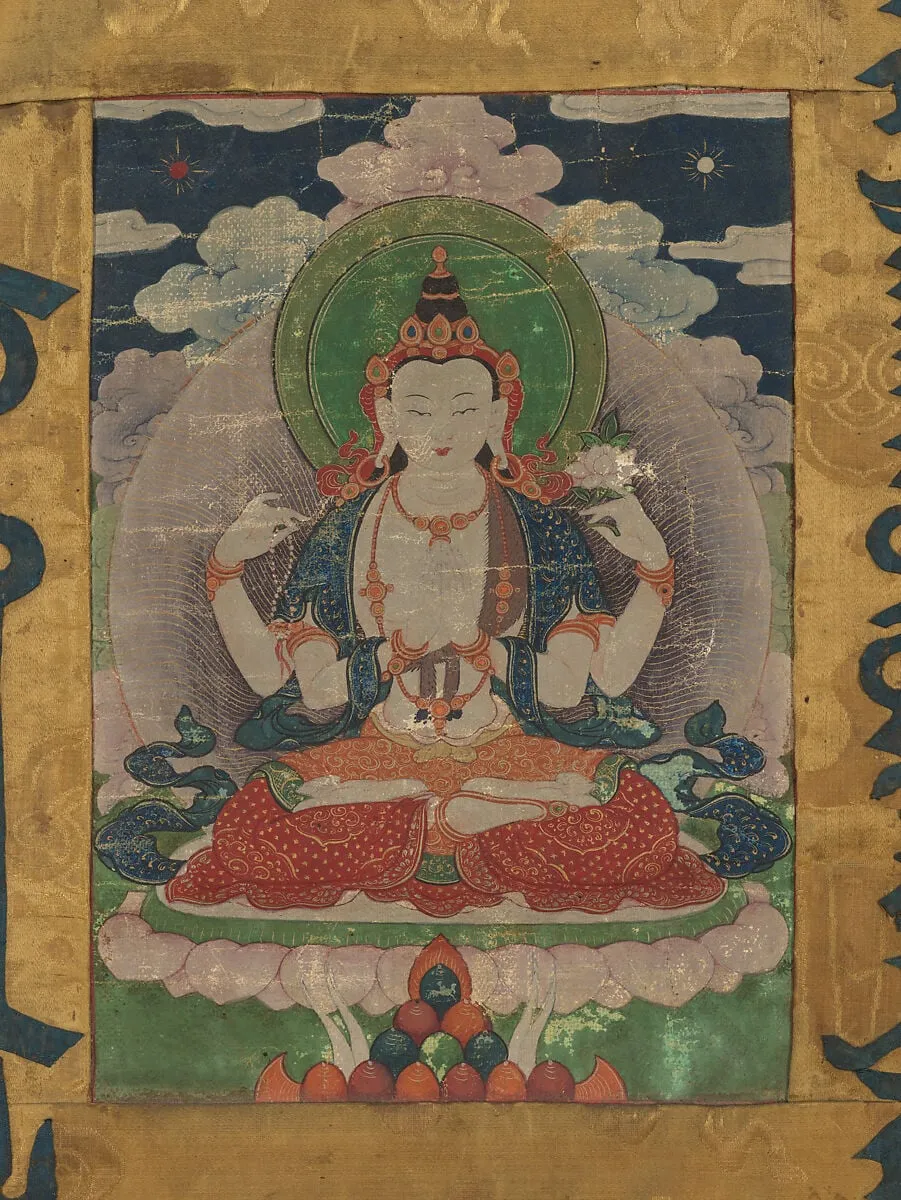
Untitled is a gold painting. It dates from 1649 and is held in the collection of the Metropolitan Museum of Art.
About this work
Overview
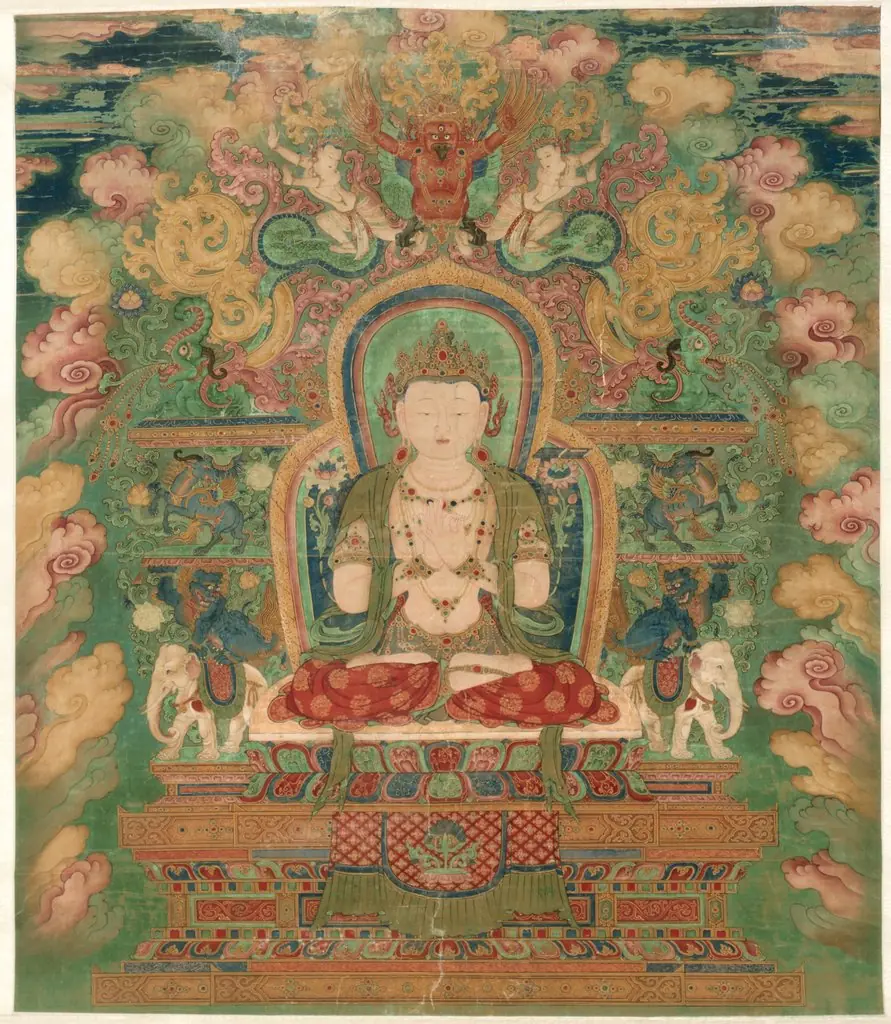
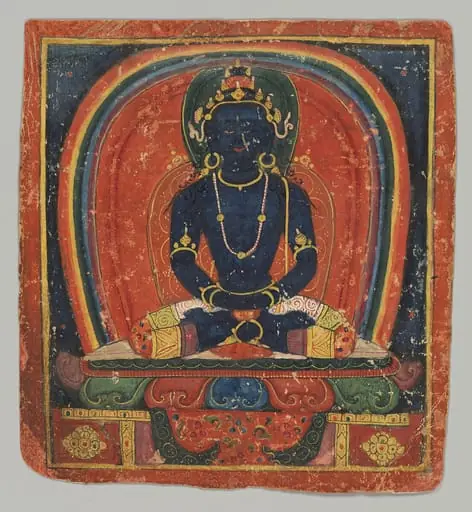
This untitled Tibetan hanging scroll, created in the 17th century, depicts a Buddha figure. Rendered with color and gold on cloth, the artwork presents a serene seated Buddha on a lotus throne. Its exact artist and specific date of creation remain unknown, reflecting a common characteristic of many historical religious works from the region.
Subject & Meaning
The central figure is a Buddha, depicted in a meditative posture with hands folded and eyes partially closed. He rests upon a lotus, a symbol of purity in Buddhist iconography. The extensive use of gold leaf is not merely decorative; it serves to convey an inner radiance emanating from the Buddha, rather than external illumination, emphasizing his enlightened state.
Technique & Style
Executed as a hanging scroll, the piece utilizes color and gold applied to cloth. The artist employed thin gold leaf on the background, creating a luminous effect that suggests light filtering through a mist. This technique contributes to the ethereal quality surrounding the golden Buddha, whose form is clearly delineated against the shimmering backdrop.
History & Provenance
The precise origins of this hanging scroll are not fully documented. It is known to have originated in Tibet during the 17th century, though the identity of the artist who created it remains unrecorded. Such anonymity is not uncommon for religious artworks of this period, where the devotional purpose often superseded individual artistic attribution.
Legacy
The conceptual use of gold in this scroll, signifying internal light rather than external reflection, had a lasting influence on Tibetan art. This approach to depicting spiritual radiance became a foundational principle, guiding artistic practices for many centuries. It established a visual language for conveying enlightenment and divine presence within the region's religious imagery.
Artist & collection