Artwork
Christ at the Garden of Gethsemane at the Mount of Olives
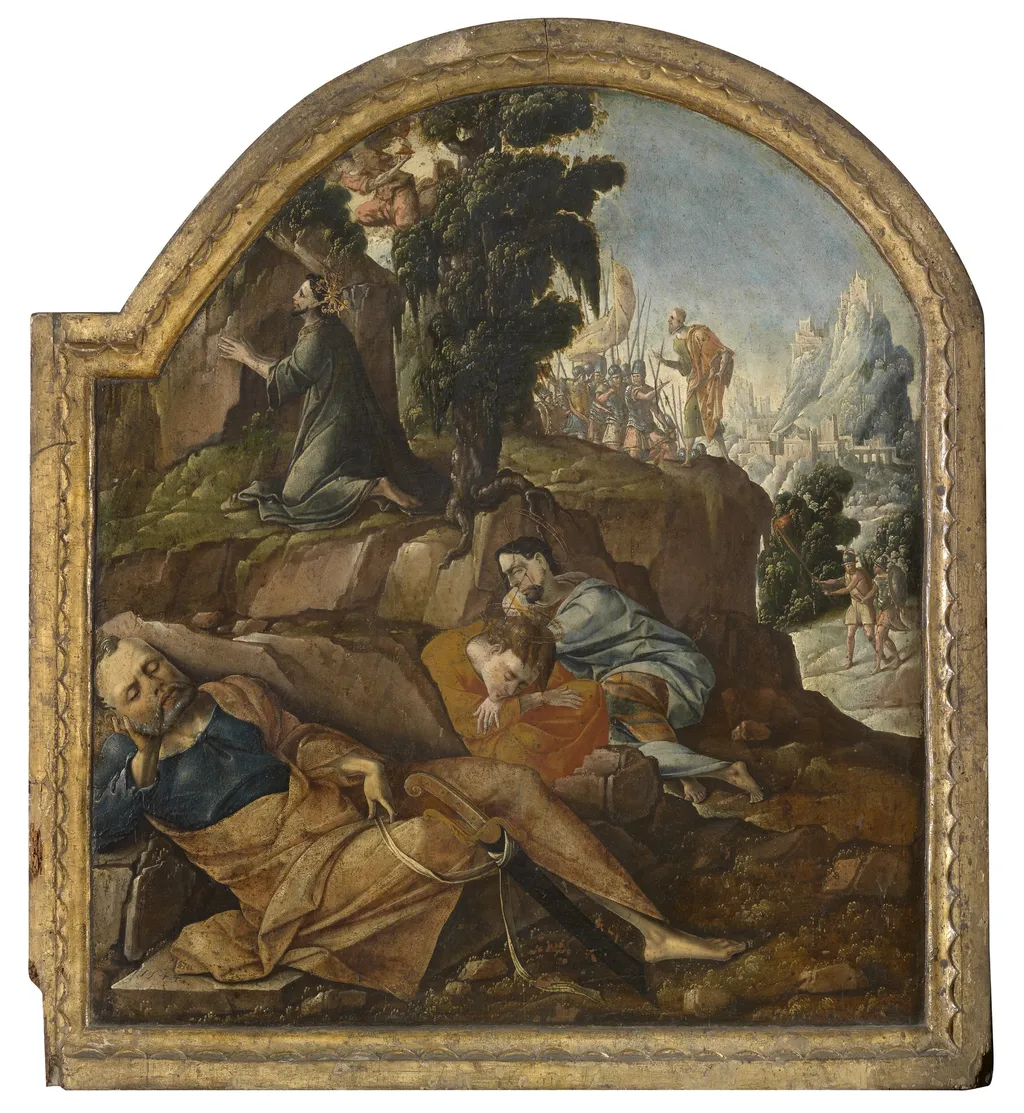
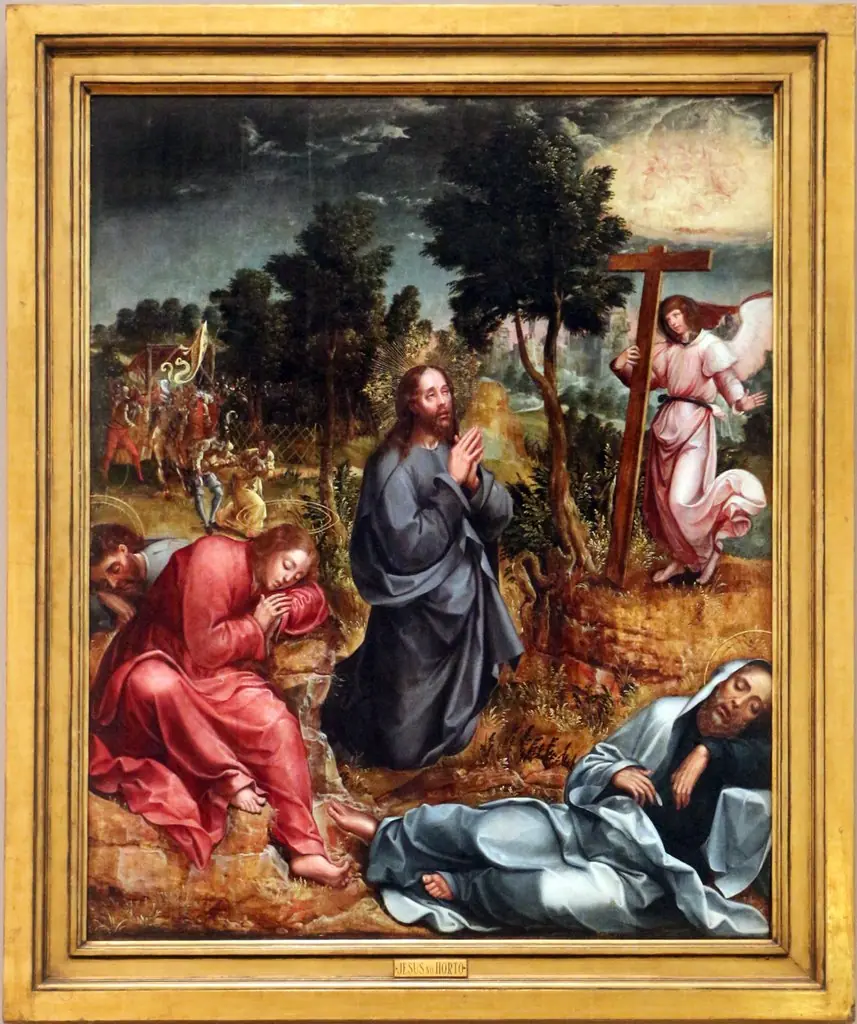
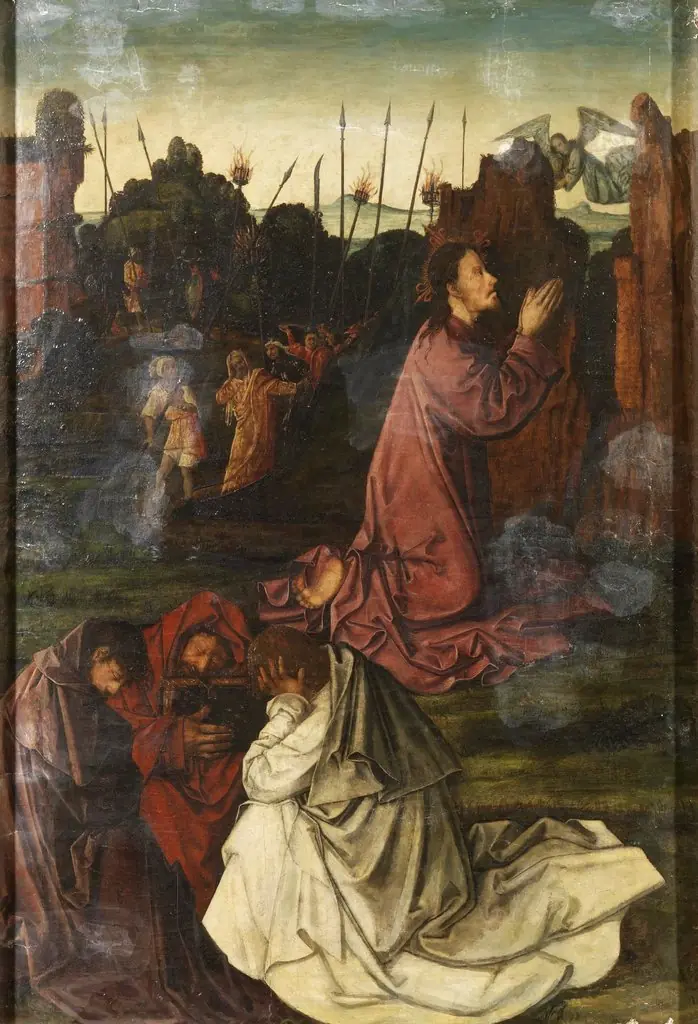
Christ at the Garden of Gethsemane at the Mount of Olives is an oil painting by the Mannerist artist Unknown. It dates from 1544 and is held in the collection of the Royal Museum of Fine Arts Antwerp. This oil painting captures Christ in the Garden of Gethsemane, moments before his arrest.
About this work
Overview
The muted tones and subdued lighting establish a quiet, introspective mood, emphasizing spiritual tension over dramatic action.
This oil painting captures Christ in the Garden of Gethsemane, moments before his arrest. The composition centers on his solitary, weary figure reclining on a stone bench, while his disciples sleep nearby. In the distance, approaching soldiers and a lantern bearer signal the impending betrayal. The muted tones and subdued lighting establish a quiet, introspective mood, emphasizing spiritual tension over dramatic action.
Subject & Meaning
The scene illustrates Christ’s anguish in prayer, as described in the Gospels, when he accepts his fate despite human fear. His posture—head supported, eyes closed—conveys resignation, while the sleeping disciples symbolize human failure to comprehend divine purpose. The advancing soldiers represent the fulfillment of prophecy, framing the moment as both personal suffering and cosmic turning point.
Technique & Style
The artist employs chiaroscuro to model form and direct attention: Christ’s pale skin and blue robe emerge from shadow, contrasting with the darker foliage and night sky. Brushwork is restrained, favoring smooth transitions over texture. The limited palette of earthy browns, muted greens, and cool blues reinforces the scene’s solemnity, while the shallow depth of field isolates Christ from the encroaching world.
History & Provenance
The painting’s origins are undocumented in public records, though its style aligns with early 17th-century devotional works from the Low Countries or Italy. No known collector or institution is recorded as its original owner. Its survival suggests it was likely commissioned for private worship, possibly by a religious order or devout patron seeking contemplative imagery.
Context
Created during a period when religious art emphasized emotional immediacy and personal piety, this work reflects Counter-Reformation ideals that encouraged viewers to identify with Christ’s suffering. Unlike grand altarpieces, its intimate scale and quiet drama suit private devotion, offering a space for meditation rather than public spectacle.
Legacy
Though not widely exhibited or reproduced, the painting contributes to a broader tradition of Gethsemane depictions that prioritize psychological realism over narrative spectacle. Its understated approach influenced later devotional art that favored quiet introspection, preserving a contemplative strand within Christian visual culture.
Artist & collection

 Domestic Scene
 Giacomo and Cardinal Marco, investing Andrea, Abbot of San Zeno, with his Benefice
 The Nymph of Fontainebleau
 Portrait of a Woman
 Madonna and Child with Saints in the Enclosed Garden
 Venus and Minerva
 Family Group of Four on Sofa
 Wall painting from Room H of the Villa of P. Fannius Synistor at Boscoreale