Artwork
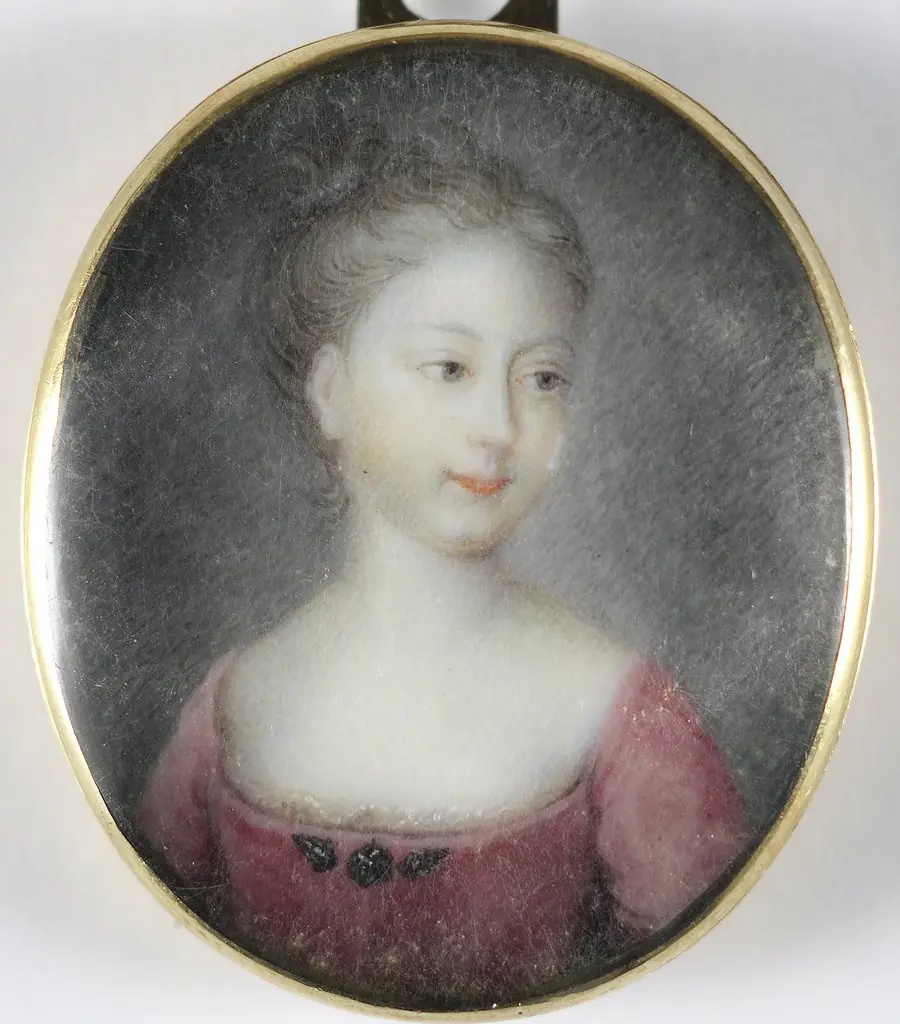
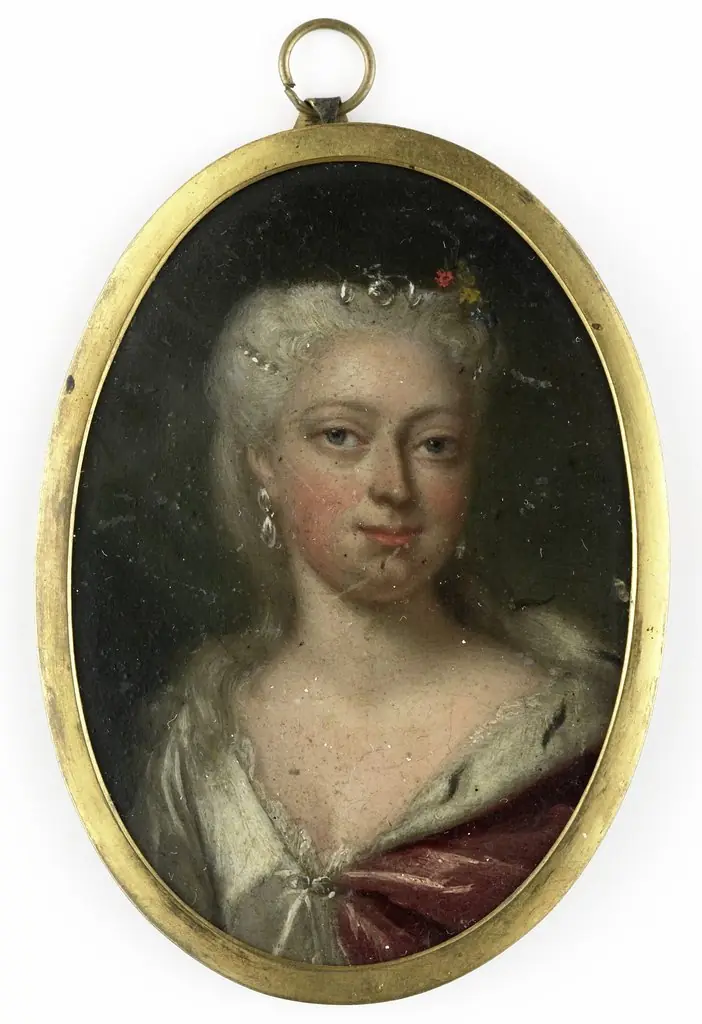
Anna van Hannover (1709-59). Sister to Frederick Louis, Prince of Wales, and wife of Prins Willem IV.
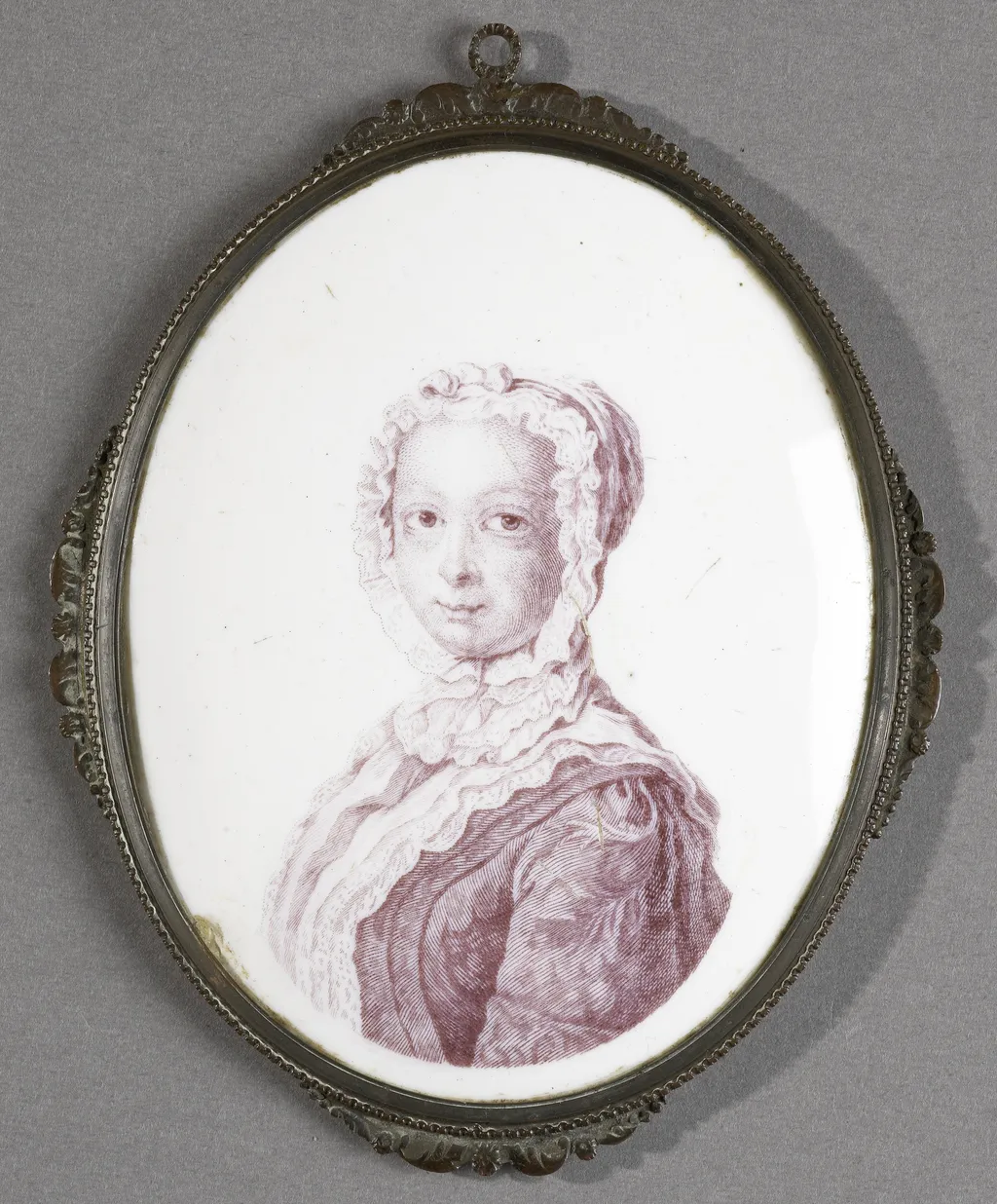
Anna van Hannover (1709-59). Sister to Frederick Louis, Prince of Wales, and wife of Prins Willem IV. is a copper painting. It dates from 1740 and is held in the collection of the Rijksmuseum. The work is an oval portrait executed on copper, depicting a woman with light, softly curled hair.
About this work
Overview
The work is an oval portrait executed on copper, depicting a woman with light, softly curled hair. She is dressed in a high‑necked gown trimmed with lace at the collar and chest, set against an unadorned background that directs attention to her face and attire.
Subject & Meaning
The sitter is Anna van Hannover (1709–1759), sister of Frederick Louis, Prince of Wales, and later wife of Prince Willem IV. The portrait presents her in a dignified, courtly manner, emphasizing her noble lineage and marital alliance through the refined clothing and composed expression.
Technique & Style
Rendered on a copper plate, the painting displays a warm, reddish tonal quality characteristic of the medium’s reflective surface. The oval format and simple scroll motif framing the edges reflect early‑18th‑century portrait conventions, while the delicate rendering of hair and lace demonstrates a careful, detailed approach.
History & Provenance
The portrait originates from the early 18th century, created shortly after Anna’s marriage to Prince Willem IV. It entered the collection of the Rijksmuseum, where it is displayed among other contemporary European portraits, providing context for the period’s aristocratic portraiture.
Artist & collection