Artwork
The Lamentation
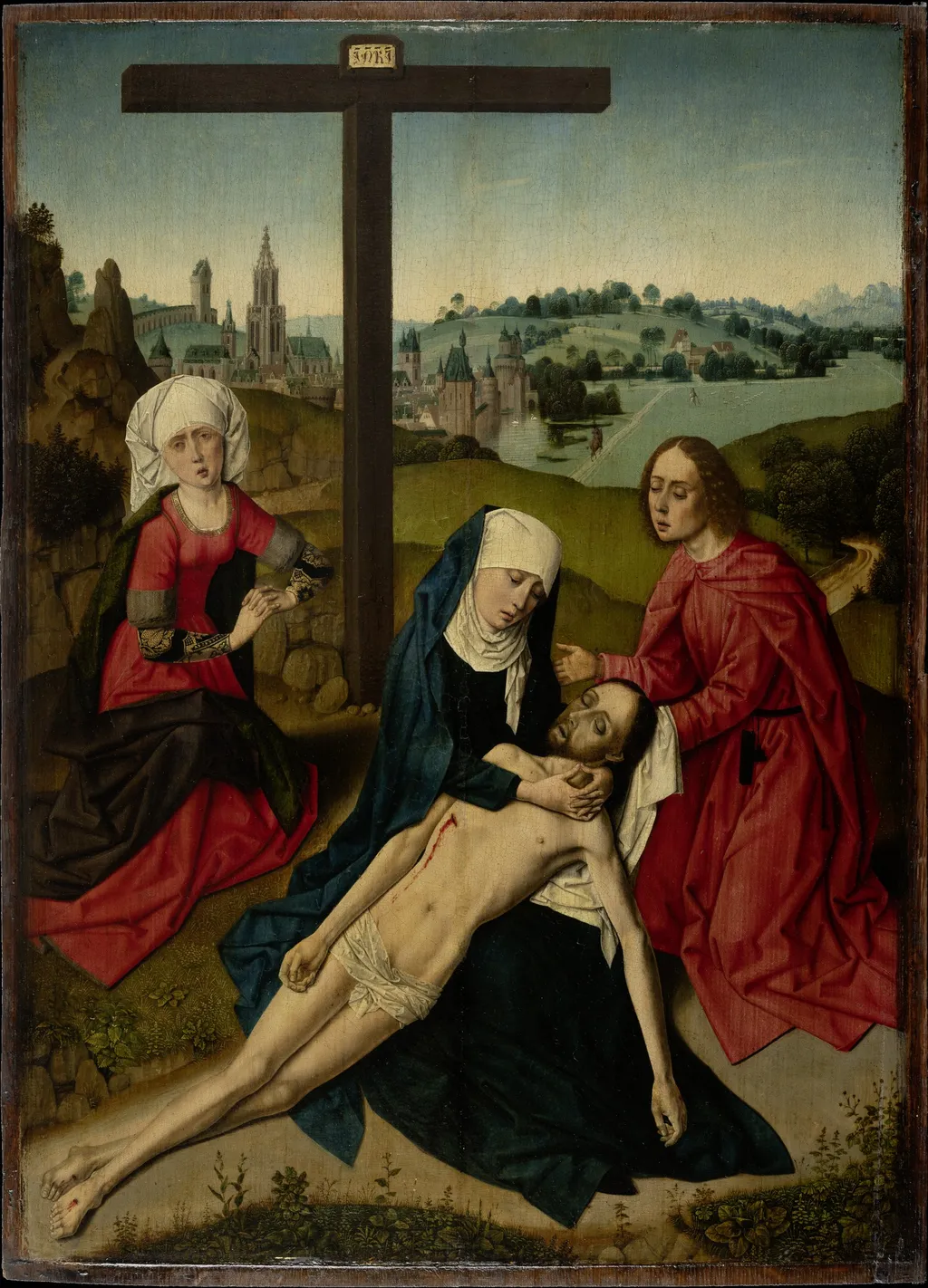
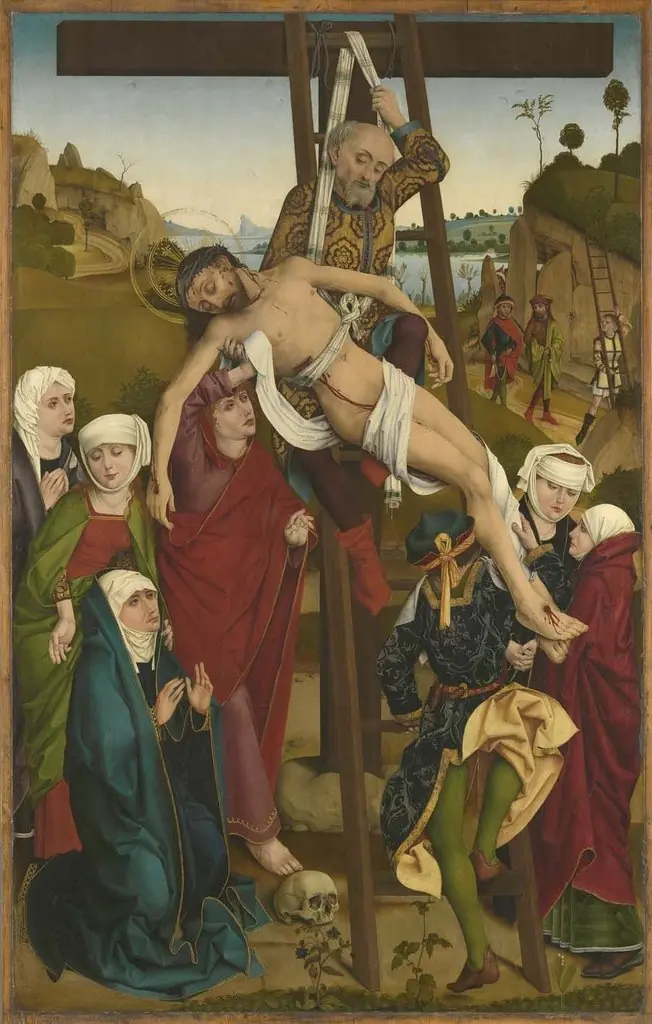
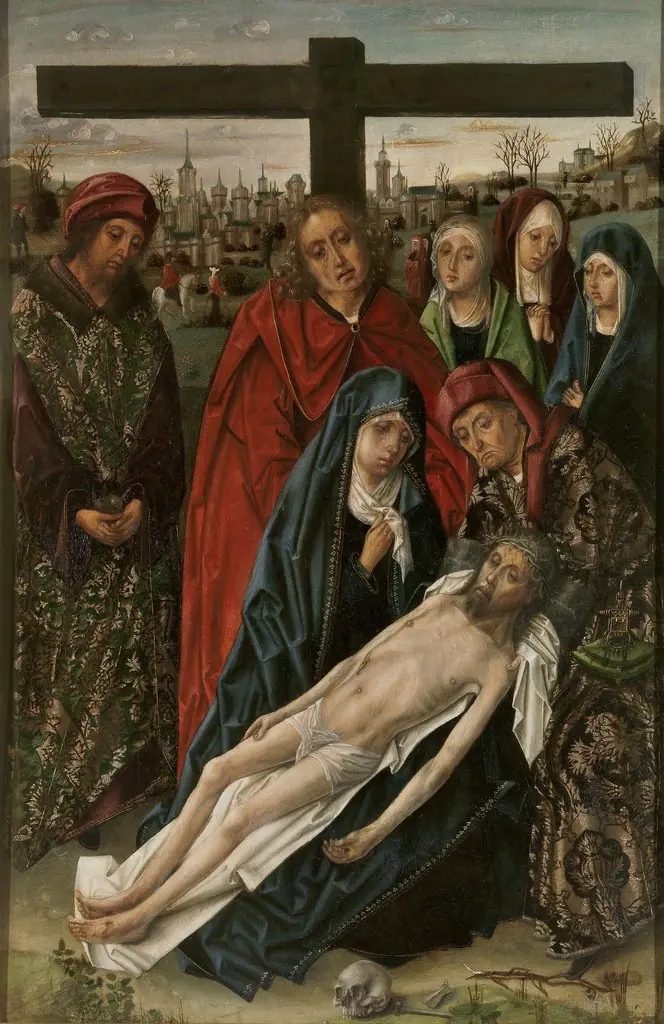
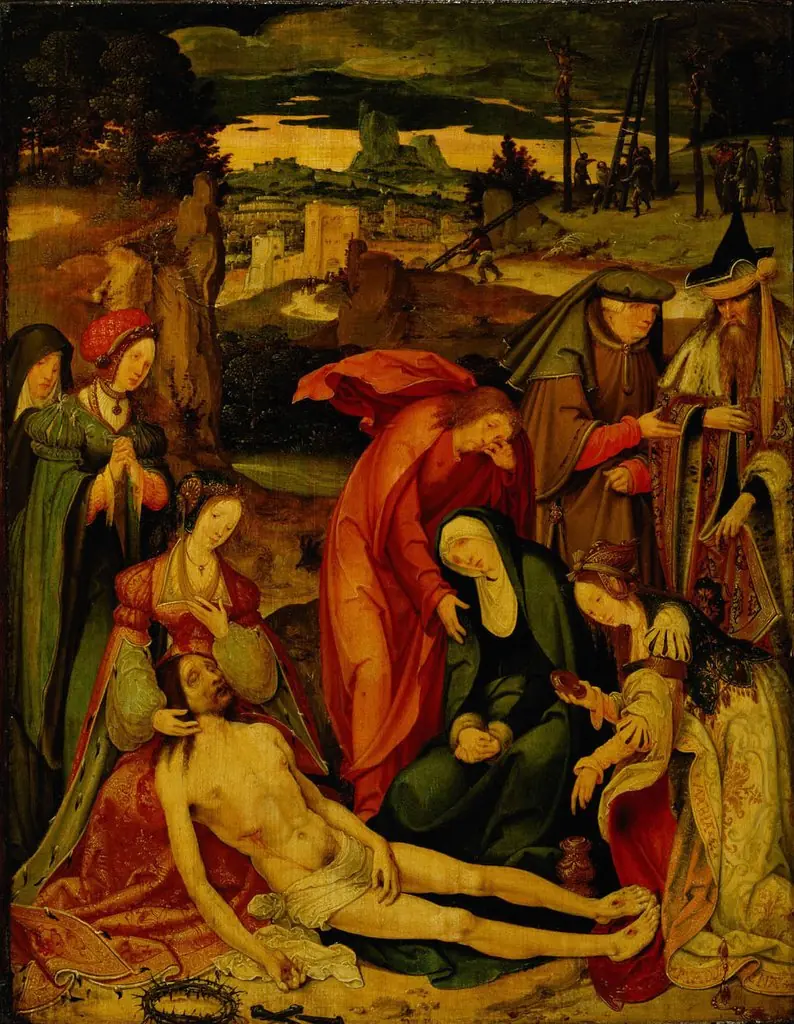
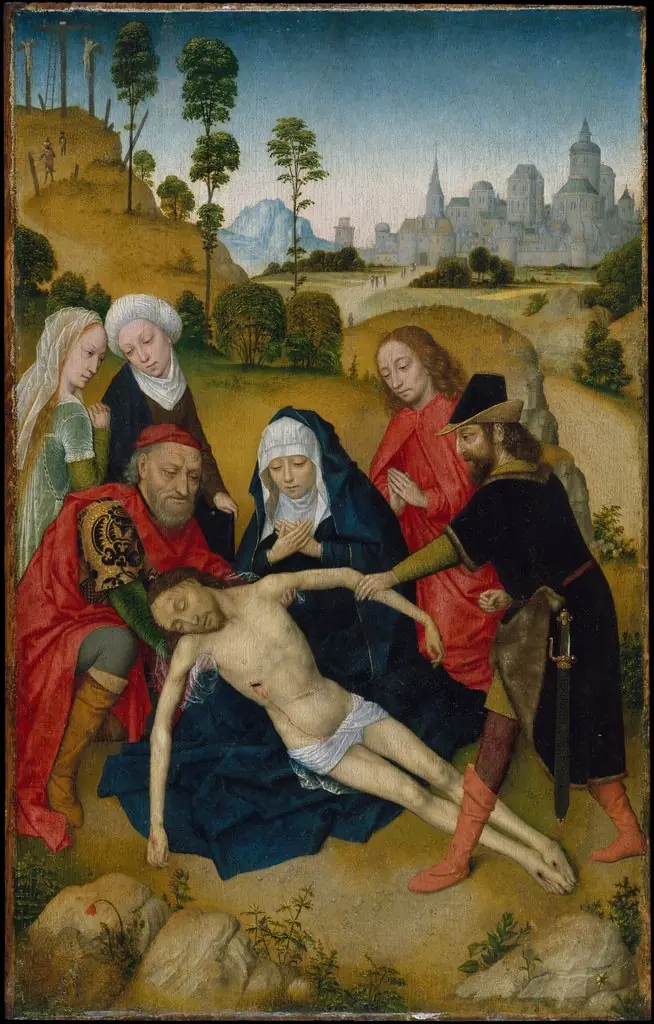
The Lamentation is an oil painting by the Northern Renaissance artist Unknown. It dates from 1470 and is held in the collection of the Städel Museum.
About this work
Overview
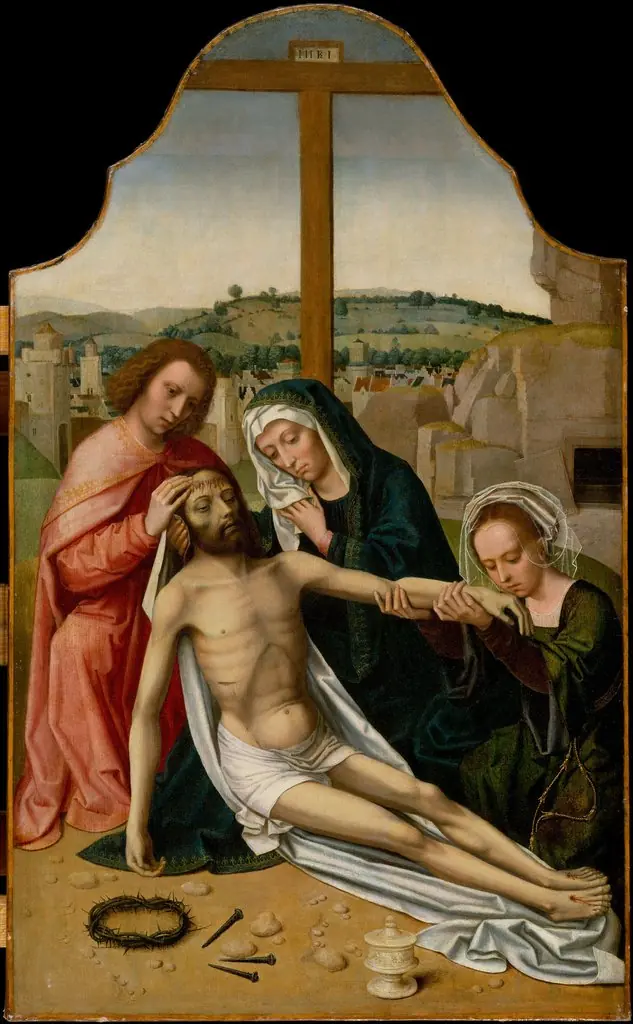
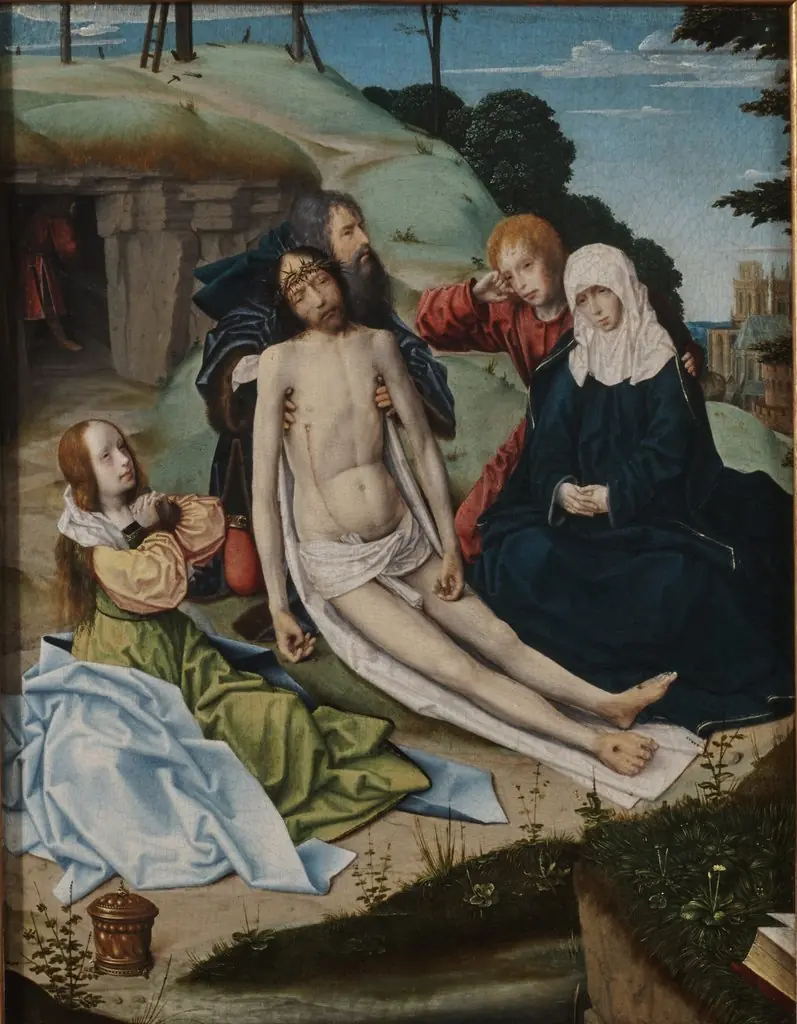
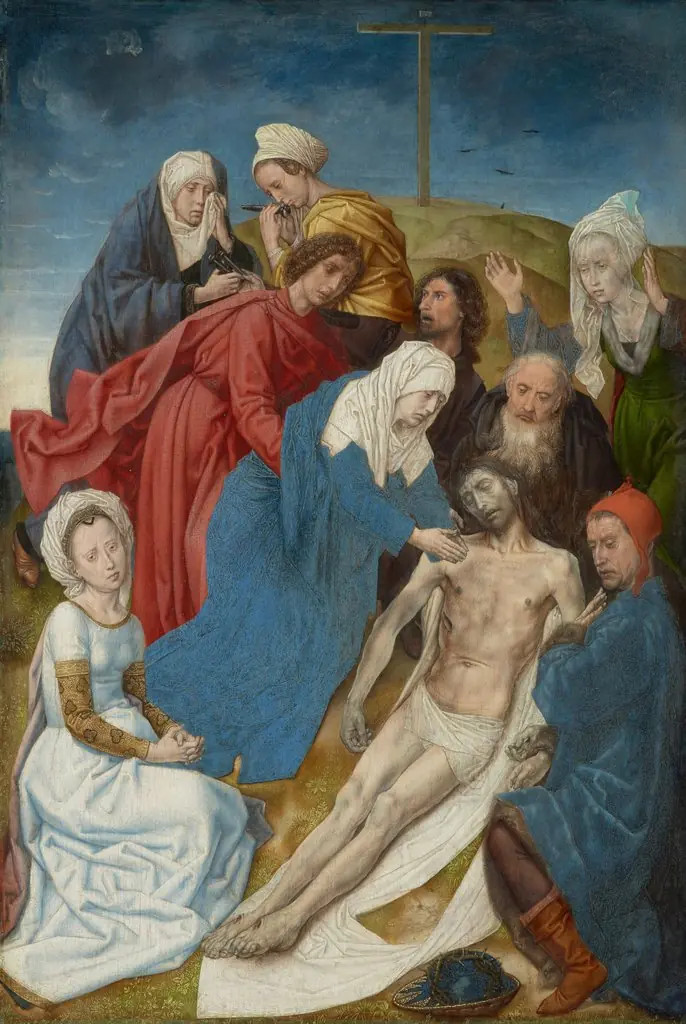
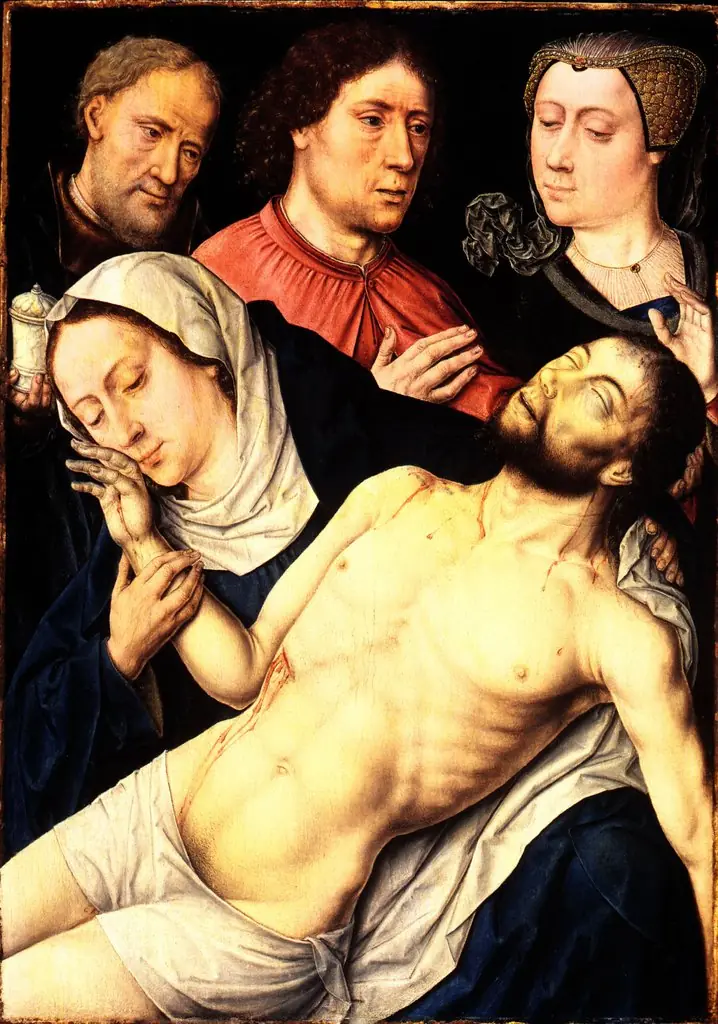
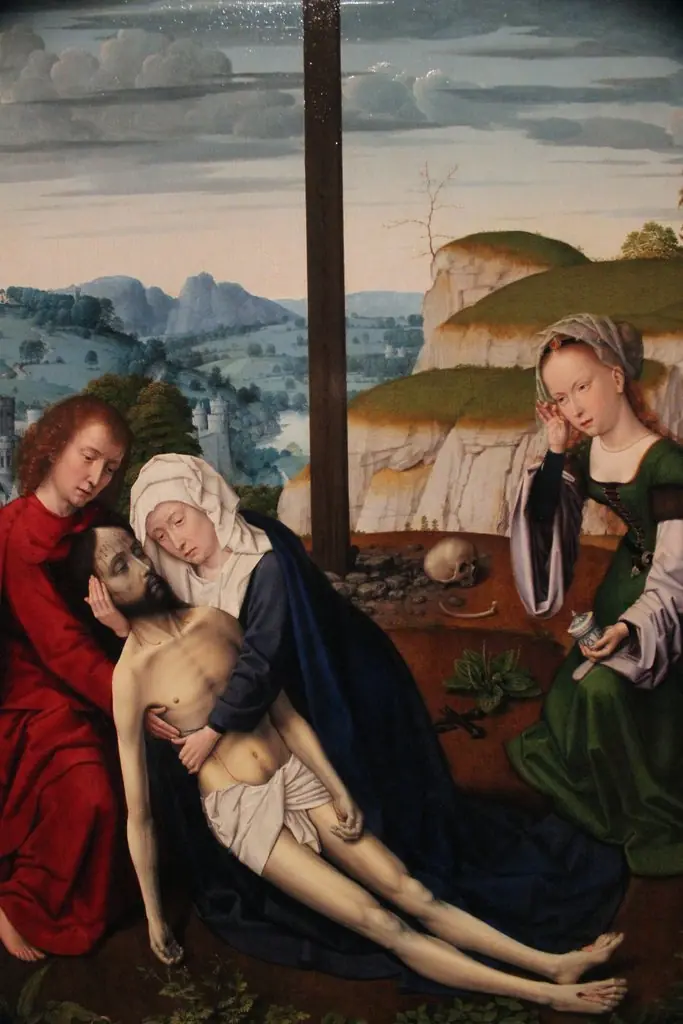
An oil painting depicting the mourning of Christ’s body after the Crucifixion, this work centers on three figures gathered around his lifeless form. The composition is tightly focused, with no distractions from the emotional core. A dramatic interplay of light and shadow isolates the figures, while richly layered glazes enhance the warmth and depth of their garments and skin.
Subject & Meaning
The scene captures the moment of grief following Christ’s death, with Mary cradling his head, John supporting his arm, and another woman bowed in silent sorrow.
The scene captures the moment of grief following Christ’s death, with Mary cradling his head, John supporting his arm, and another woman bowed in silent sorrow. The presence of the distant cross anchors the narrative in the Passion, while the quiet intimacy of the figures emphasizes human loss over divine spectacle. The absence of angels or celestial elements grounds the moment in earthly mourning.
Technique & Style
The artist employs chiaroscuro to sculpt the forms with stark contrasts, directing focus to the central group. Multiple layers of translucent glaze build luminous skin tones and deep, resonant colors in the robes. Brushwork is refined but unobtrusive, favoring smooth transitions over visible strokes, enhancing the stillness and solemnity of the scene.
History & Provenance
The painting’s early ownership is undocumented, but its style aligns with early 16th-century Northern European devotional panels. It likely originated in a private chapel or monastery, used for contemplative prayer. No record of commission or patron survives, suggesting it was produced for devotional use rather than public display.
Context
Created during a period when personal piety and emotional engagement with Christ’s suffering were emphasized in religious practice, the painting reflects a shift from grand altarpieces to intimate, meditative imagery. Similar scenes appear in works by artists from the Rhineland and Low Countries, where quiet lamentation was a favored theme for private devotion.
Legacy
Though not widely reproduced or exhibited in major collections, the painting exemplifies a quiet tradition of Northern Renaissance devotional art. Its restrained emotion and technical subtlety influenced later artists seeking to convey sacred grief without theatricality, preserving a mode of spiritual representation distinct from Italian grandeur.
Artist & collection

 Domestic Scene
 Giacomo and Cardinal Marco, investing Andrea, Abbot of San Zeno, with his Benefice
 The Nymph of Fontainebleau
 Portrait of a Woman
 Madonna and Child with Saints in the Enclosed Garden
 Venus and Minerva
 Family Group of Four on Sofa
 Wall painting from Room H of the Villa of P. Fannius Synistor at Boscoreale