Artwork
Princes Juggling Balls in Courtyard
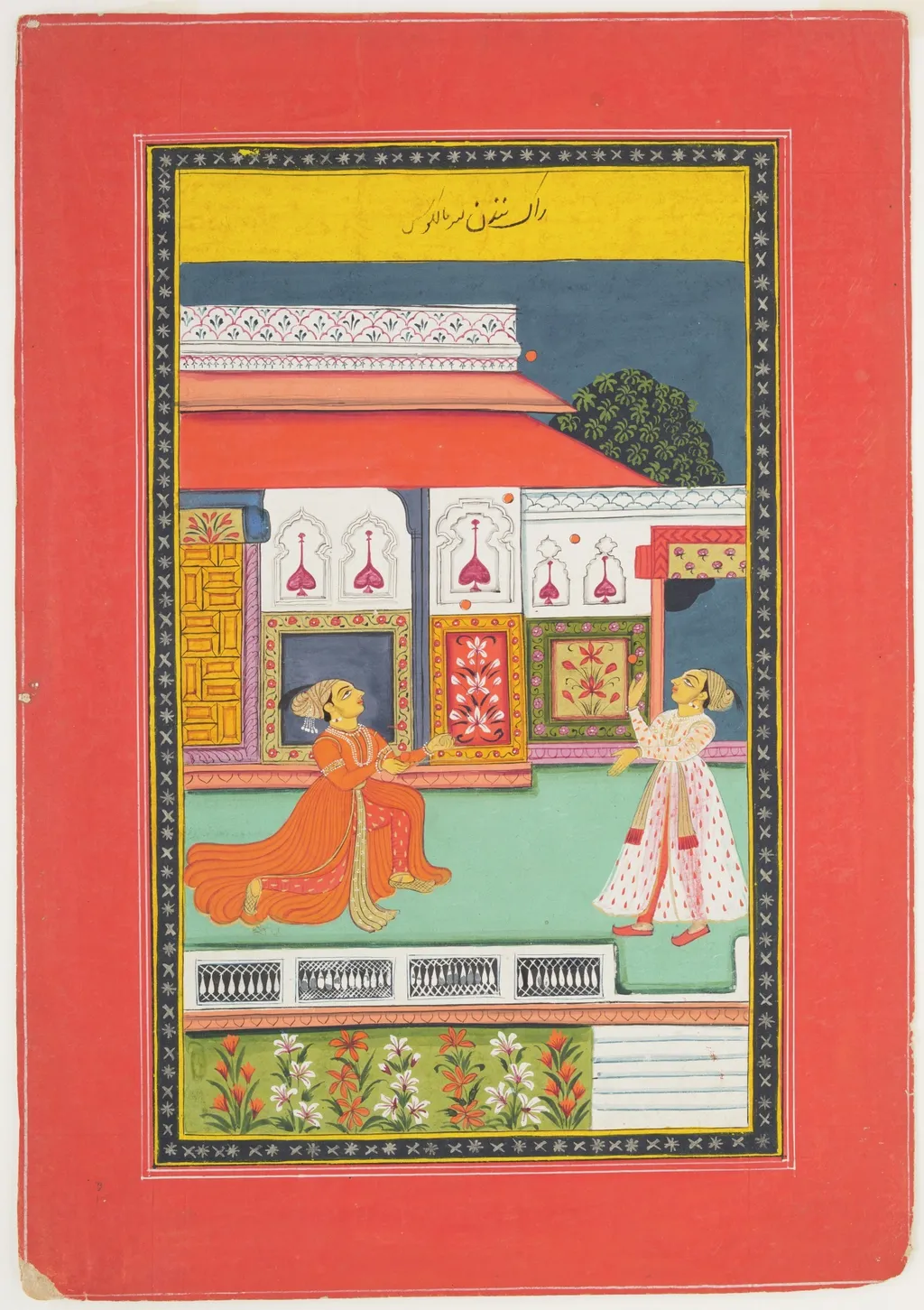
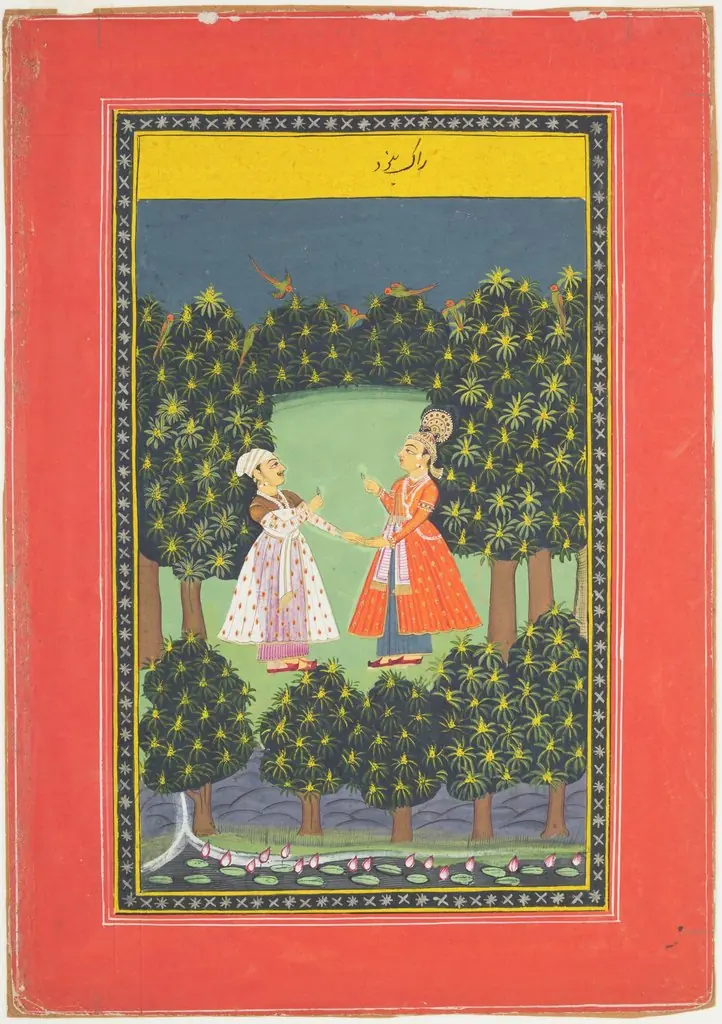
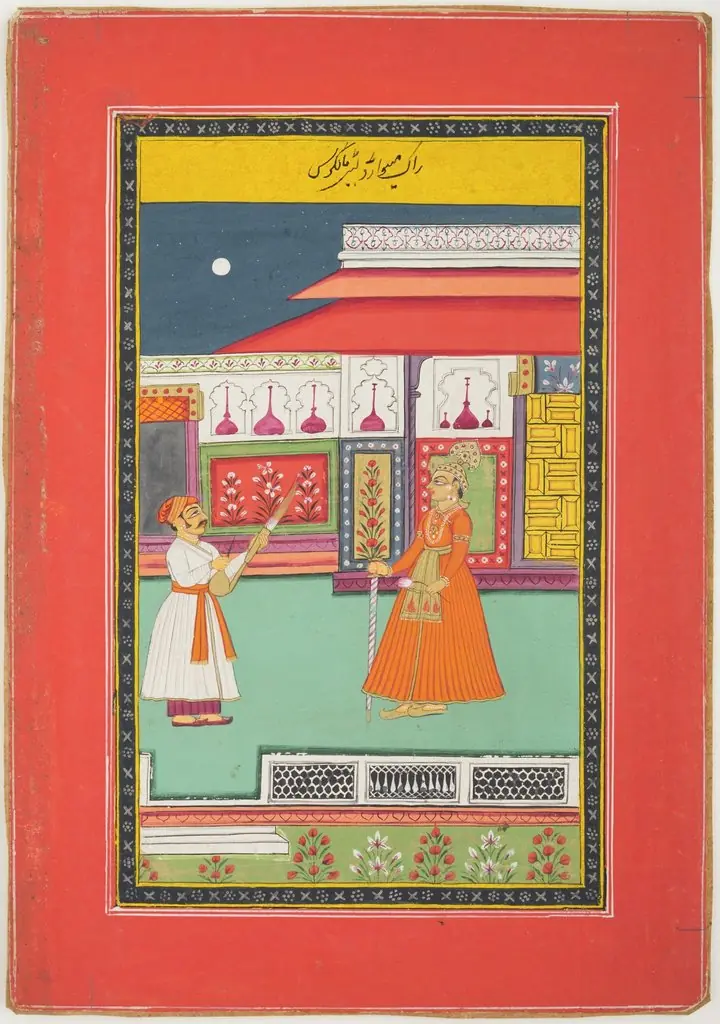
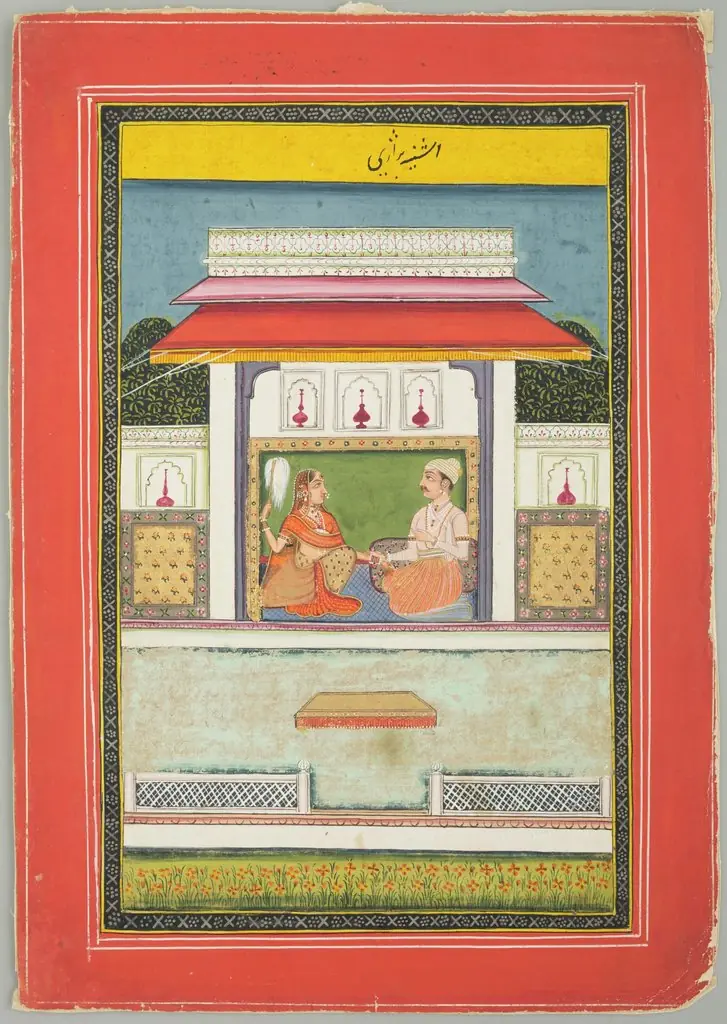
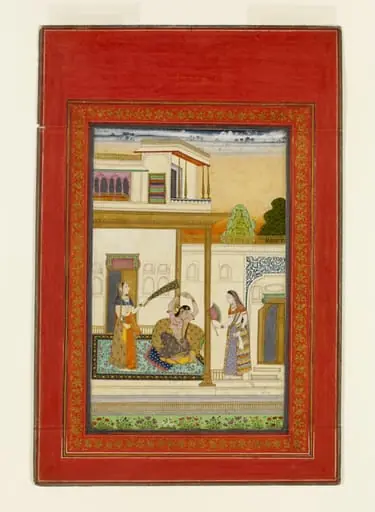
Princes Juggling Balls in Courtyard is an unspecified painting by Unknown. It is held in the collection of the Detroit Institute of Arts. This painting captures two figures in a richly decorated courtyard, one seated and the other actively juggling balls.
About this work
Overview
The composition centers on the motion of juggling, suggesting a moment of performance or leisure within an elite setting.
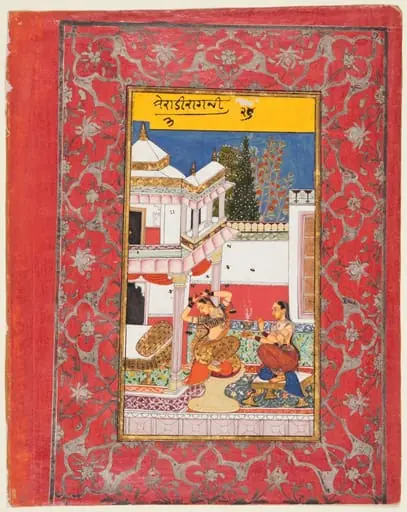
This painting captures two figures in a richly decorated courtyard, one seated and the other actively juggling balls. The scene is enclosed by a bold red frame, enhancing its ornamental quality. Vibrant hues of red, yellow, green, and blue dominate the background, contributing to a dynamic visual rhythm. The composition centers on the motion of juggling, suggesting a moment of performance or leisure within an elite setting.
Subject & Meaning
The two figures, dressed in elaborate robes, likely represent nobility or court entertainers. The act of juggling may symbolize skill, control, or courtly amusement rather than mere spectacle. The seated figure’s stillness contrasts with the standing man’s motion, possibly reflecting hierarchy or the balance between observation and action. The setting implies a private, luxurious space reserved for refined pastimes.
Technique & Style
The artist employs fine brushwork to render intricate architectural patterns and textile details, indicating meticulous craftsmanship. Color is used expressively, not naturalistically, with saturated tones creating visual energy. The flat, decorative space and emphasis on pattern over depth align with regional traditions favoring ornamental composition over illusionistic perspective.
History & Provenance
The painting resides in the Detroit Institute of Arts, though its origin and early ownership remain undocumented. Its style suggests a South Asian or Persianate courtly tradition, possibly from the 17th or 18th century. No known artist signature or inscription accompanies the work, leaving its precise provenance and commissioning context uncertain.
Context
Courtyard scenes featuring courtly entertainment were common in illustrated manuscripts and album paintings across Mughal, Deccan, and Persian courts. Such works often celebrated the refined culture of royal life, blending leisure with symbolic display. The juggling motif may reflect broader traditions of acrobatic performance in courtly settings, valued for its artistry and precision.
Legacy
This painting contributes to the understanding of non-Western visual traditions that prioritized pattern, color, and symbolic gesture over realism. Its preservation in a major Western institution highlights the global reach of courtly art forms and invites continued study of how performance and status were visually encoded in pre-modern South Asian and Islamic artistic contexts.
Artist & collection

 Domestic Scene
 Giacomo and Cardinal Marco, investing Andrea, Abbot of San Zeno, with his Benefice
 The Nymph of Fontainebleau
 Portrait of a Woman
 Madonna and Child with Saints in the Enclosed Garden
 Venus and Minerva
 Family Group of Four on Sofa
 Wall painting from Room H of the Villa of P. Fannius Synistor at Boscoreale