Artwork
Küstenlandschaft mit Ruinen
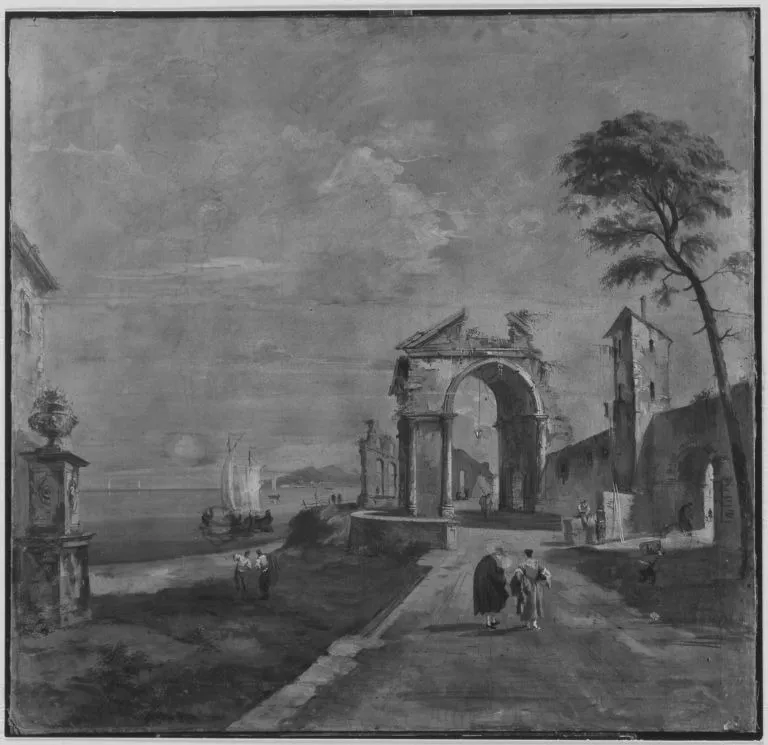
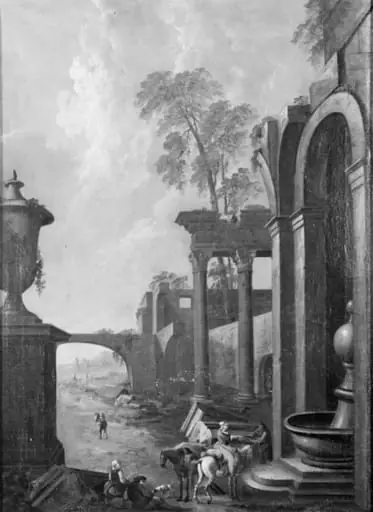
Küstenlandschaft mit Ruinen is an unspecified painting by the Rococo painting artist Unknown. It dates from 1750 and is held in the collection of the Bavarian State Painting Collections. This oil painting presents a quiet coastal landscape dominated by a monumental stone archway, flanked by weathered structures.
About this work
Overview
This oil painting presents a quiet coastal landscape dominated by a monumental stone archway, flanked by weathered structures.
This oil painting presents a quiet coastal landscape dominated by a monumental stone archway, flanked by weathered structures. Figures move along a winding path in the foreground, while distant boats suggest quiet maritime activity. The scene is rendered in muted tones with delicate brushwork, evoking stillness rather than drama. Light and shadow are carefully modulated to enhance spatial depth without drawing attention to technique.
Subject & Meaning
The ruins suggest the passage of time and the quiet decay of human endeavor amid nature’s endurance. The archway, though fragmentary, retains structural grace, hinting at classical antiquity. Figures are small and unobtrusive, emphasizing the landscape’s dominance. No narrative is implied; instead, the scene invites contemplation of solitude, memory, and the passage of seasons.
Technique & Style
The artist employs subtle chiaroscuro to model forms, avoiding harsh contrasts in favor of soft transitions between light and shadow. Brushwork is restrained, with smooth blending in the sky and water, and finer strokes defining architectural details. Color palette is restrained—ochres, grays, and pale blues—reinforcing the mood of calm. Perspective is linear but gentle, guiding the eye toward the horizon without force.
History & Provenance
The work is attributed to a 17th-century Dutch or Flemish painter active in the tradition of idealized landscape painting. Its early ownership is undocumented, but it likely passed through private collections in the Low Countries before entering a public collection in the 19th century. No records of exhibition or critical commentary from its time survive.
Context
Created during a period when Dutch artists increasingly turned to tranquil, non-narrative landscapes, the painting reflects a broader shift from religious or mythological themes to quiet observations of nature and ruins. Similar works by contemporaries often featured classical fragments as symbols of impermanence, aligning with philosophical currents of the era.
Legacy
Though not widely reproduced or studied, the painting exemplifies a quiet strand of Northern European landscape tradition that valued atmosphere over spectacle. Its influence is seen in later 18th-century vedute and Romantic-era works that favored contemplative ruins, though it remains outside mainstream art-historical narratives.
Artist & collection

 Domestic Scene
 Giacomo and Cardinal Marco, investing Andrea, Abbot of San Zeno, with his Benefice
 The Nymph of Fontainebleau
 Portrait of a Woman
 Madonna and Child with Saints in the Enclosed Garden
 Venus and Minerva
 Family Group of Four on Sofa
 Wall painting from Room H of the Villa of P. Fannius Synistor at Boscoreale
 Capriccio of Ruins with Figures beneath an Archway
 Fantasy palace with a colonade
 Küstenlandschaft italienischen Charakters
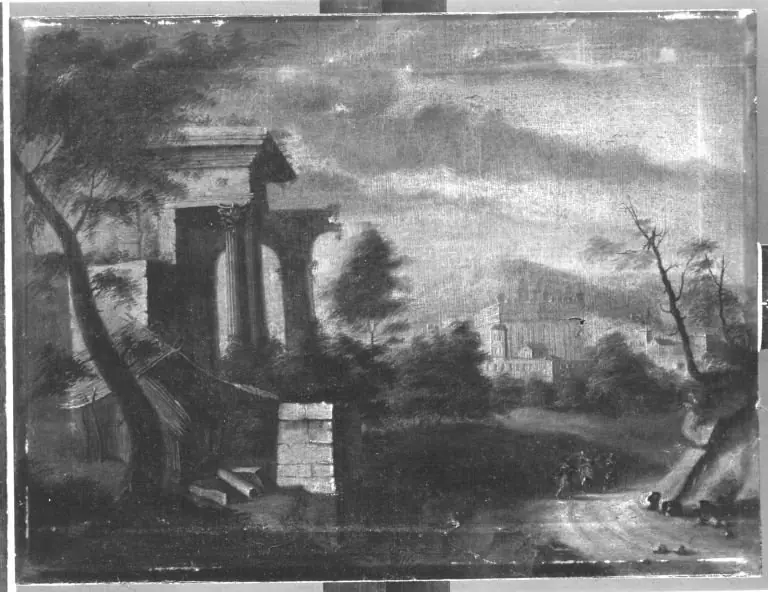 Landschaft mit Ruinen (Nachfolger)
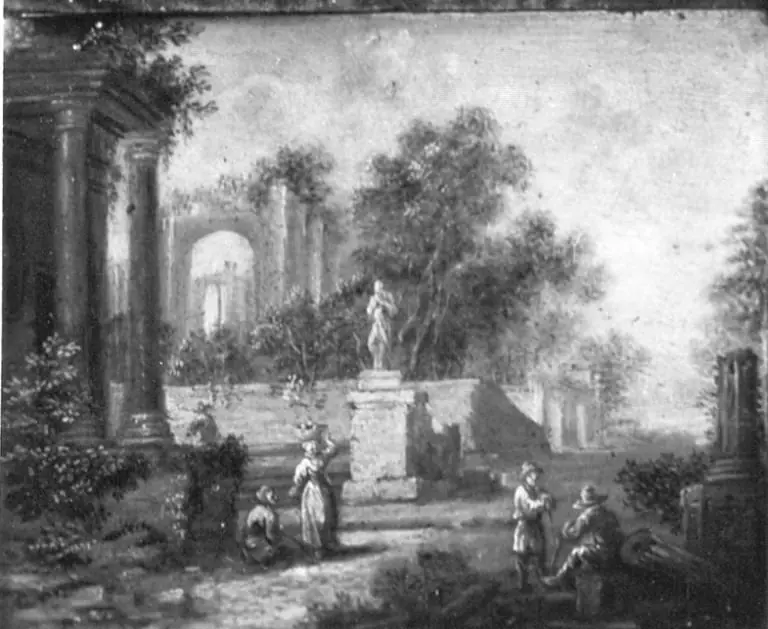 Landschaft mit Ruinen
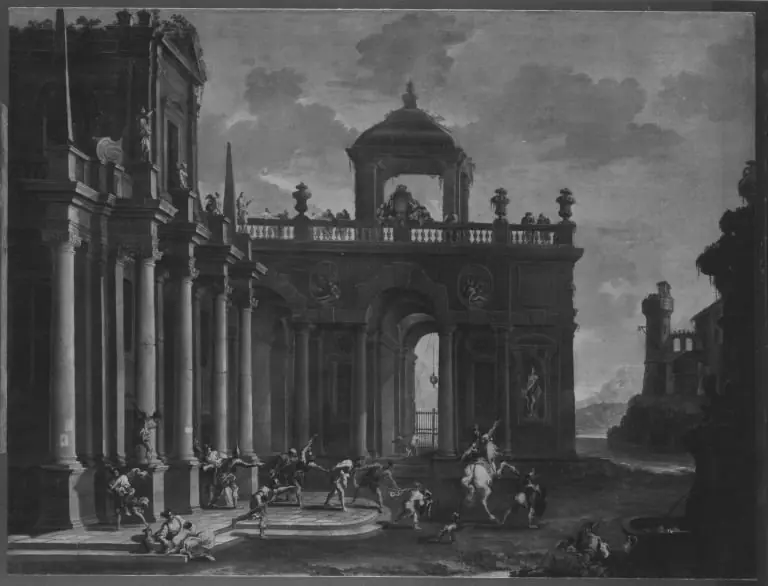 Architekturbild mit der Gefangennahme Simsons
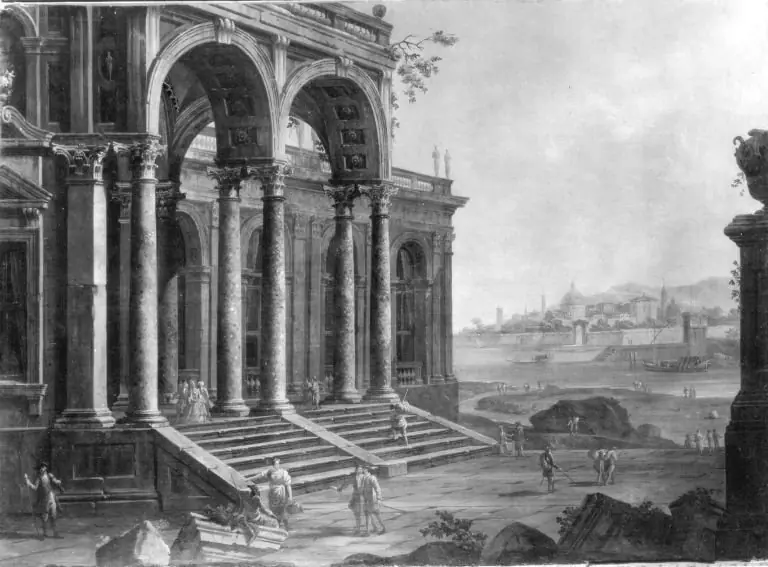 Architekturbild
 Roman Ruins and Gravemonuments
 Roman Ruins and Gravemonuments
 Italienische Ideallandschaft
 Architectural image
 Ruins in a Landscape