Artwork
Triptych:Crucifixion of Jesus (central panel)
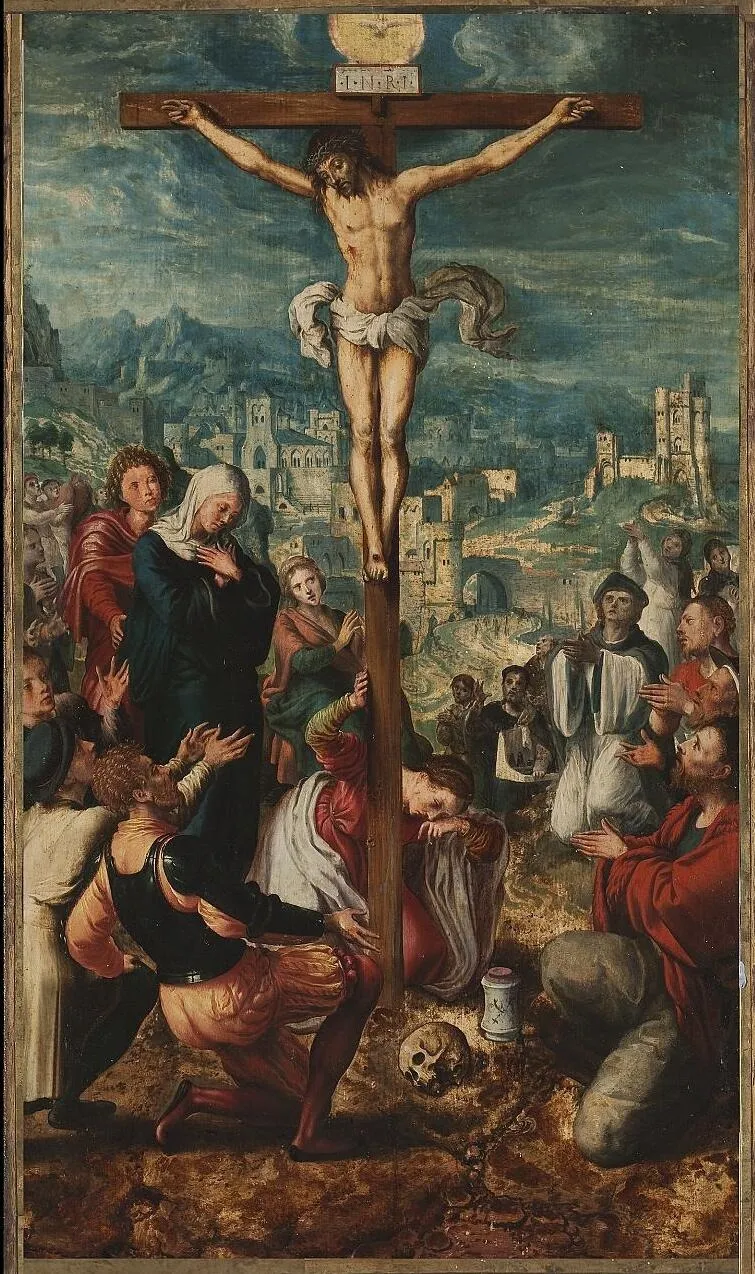
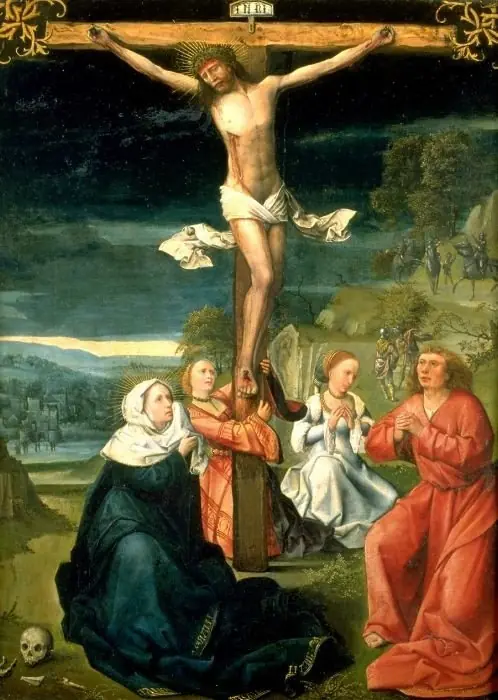
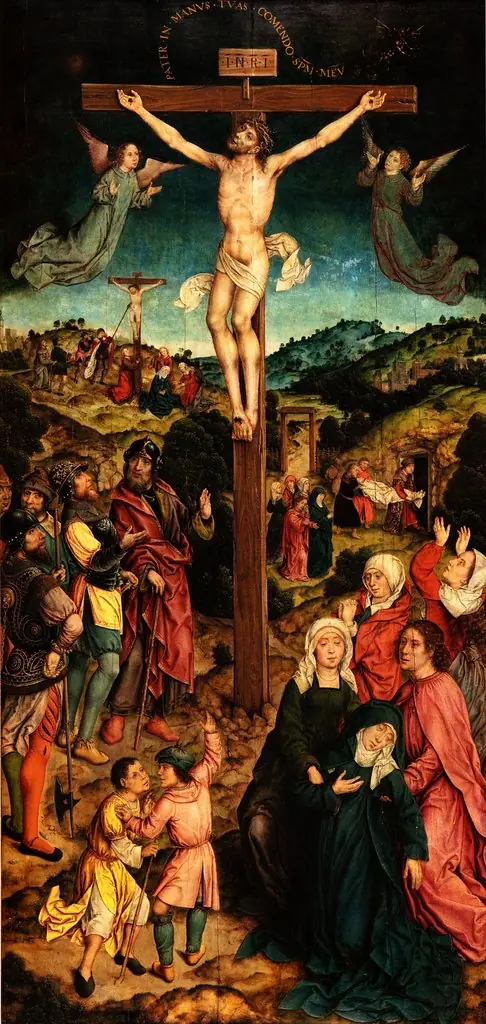
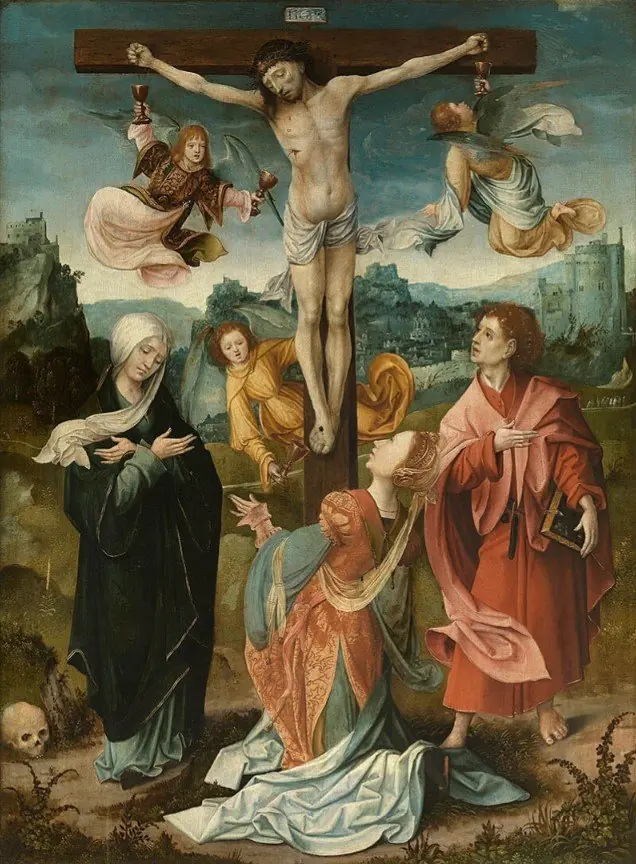
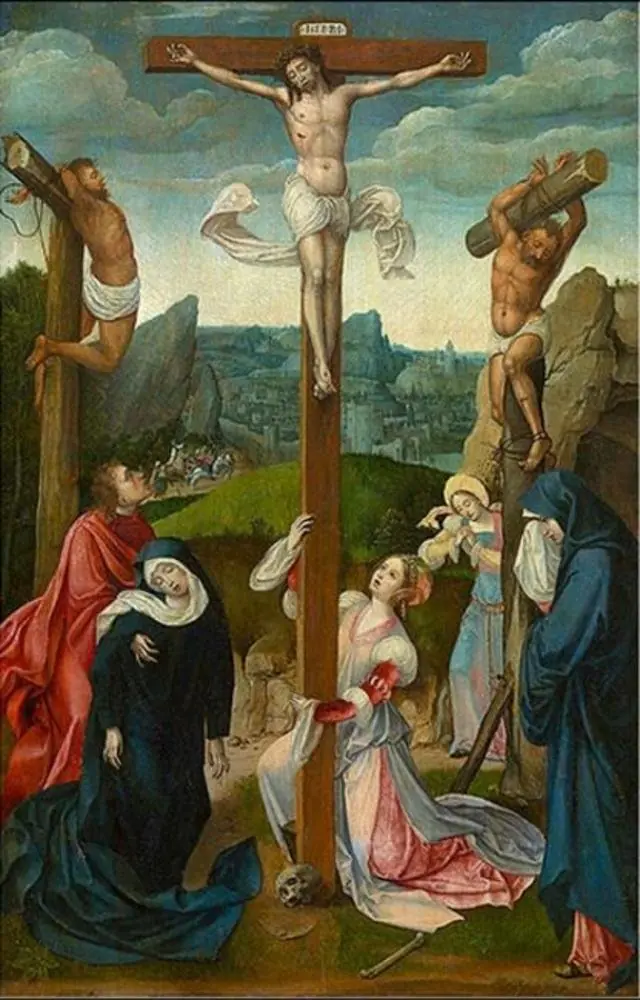
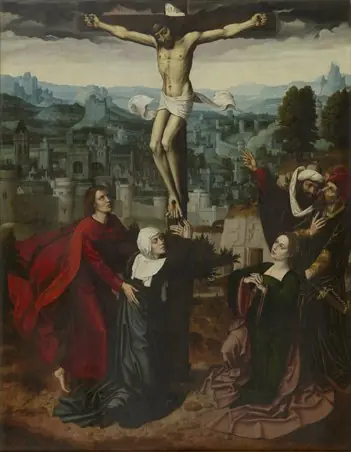
Triptych:Crucifixion of Jesus (central panel) is an oil painting by the Early Baroque Italian artist Unknown. It dates from 1550 and is held in the collection of the Hermitage Museum. The central panel of a triptych portrays the crucifixion of Jesus, rendered in oil on canvas.
About this work
Overview
The central panel of a triptych portrays the crucifixion of Jesus, rendered in oil on canvas. The composition centers on the cross, with the figure of Christ flanked by a gathering of onlookers, some kneeling, others in prayer. A distant cityscape with architectural forms and mountains forms the background, while foreground figures convey tension and movement.
Subject & Meaning
The work captures the moment of Christ’s execution, emphasizing both the physical suffering of the central figure and the emotional response of the surrounding crowd. A man is shown being drawn away from the cross, and another individual appears anguished, underscoring themes of loss, devotion, and the collective weight of the event within the Christian narrative.
Technique & Style
Employing strong chiaroscuro, the artist creates a dramatic contrast between illuminated forms and deep shadows, directing attention to Jesus on the cross. The handling of oil paint allows for subtle modeling of flesh and fabric, while the layered background provides a sense of spatial depth, enhancing the solemn atmosphere of the scene.
History & Provenance
The panel is part of a larger triptych and is currently in the collection of the State Hermitage Museum in St. Petersburg. Its acquisition history reflects the museum’s broader efforts to assemble significant religious works from the European tradition, though specific details of its earlier ownership remain limited.
Context
Created within the tradition of Christian narrative painting, the piece aligns with the visual conventions of the crucifixion genre, where the central figure is highlighted against a populated landscape. The inclusion of a cityscape and mountainous horizon situates the event within a recognizable world, linking the sacred drama to contemporary viewers of the period.
Artist & collection

 Domestic Scene
 Giacomo and Cardinal Marco, investing Andrea, Abbot of San Zeno, with his Benefice
 The Nymph of Fontainebleau
 Portrait of a Woman
 Madonna and Child with Saints in the Enclosed Garden
 Venus and Minerva
 Family Group of Four on Sofa
 Wall painting from Room H of the Villa of P. Fannius Synistor at Boscoreale