Artwork
Crucifix with Mary, Mary Magdalen and St John the Evangelist
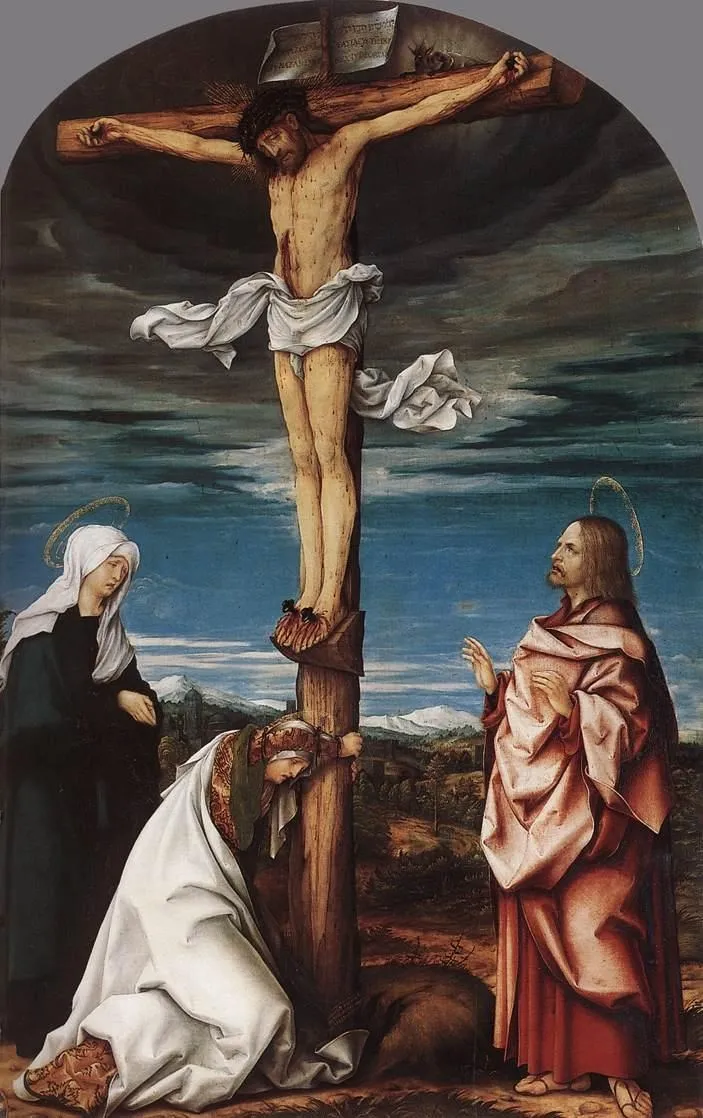
Crucifix with Mary, Mary Magdalen and St John the Evangelist is an oil painting by the Northern Renaissance artist Hans Burgkmair the Elder. It dates from 1519 and is held in the collection of the Bavarian State Painting Collections.
About this work
Overview
Hans Burgkmair the Elder’s 1519 oil painting titled *Crucifix with Mary, Mary Magdalen and St John the Evangelist* presents a dramatic moment from the Passion. Executed in the early sixteenth century, the work is part of the collection of the Alte Pinakothek in Munich and remains a notable example of German religious art from the period.
Subject & Meaning
The composition centers on the crucified Christ, whose twisted torso and bleeding limbs dominate the scene.
The composition centers on the crucified Christ, whose twisted torso and bleeding limbs dominate the scene. At his side kneels a veiled woman, identified as the Virgin Mary, clutching the cross in grief, while a second female figure, Mary Magdalene, is positioned nearby. St John the Evangelist stands opposite, his hands raised in prayer, his halo indicating sanctity. The arrangement underscores themes of sorrow, devotion, and redemption.
Technique & Style
Burgkmair employs a pronounced chiaroscuro, using deep shadows and a faint, luminous halo around the cross to model the figures against a turbulent, storm‑filled sky. The oil medium allows for rich, layered coloration; the red robe of St John and the white veil of Mary are rendered with subtle gradations that enhance their three‑dimensional presence. The textured background contributes to the overall dramatic intensity.
History & Provenance
Created in 1519, the painting entered the holdings of the Bavarian royal collection before being transferred to the Alte Pinakothek, where it has been displayed since the museum’s foundation in the early nineteenth century. Its attribution to Burgkmair the Elder has been consistently affirmed by scholarly catalogues and provenance records.
Context
The work reflects the devotional climate of early Reformation Germany, when visual narratives of the crucifixion were central to private and public piety. Burgkmair, a leading figure in the Nuremberg school, integrated Northern Renaissance attention to detail with emerging Italianate influences, situating the piece within a transitional artistic moment.
Artist & collection
Artist
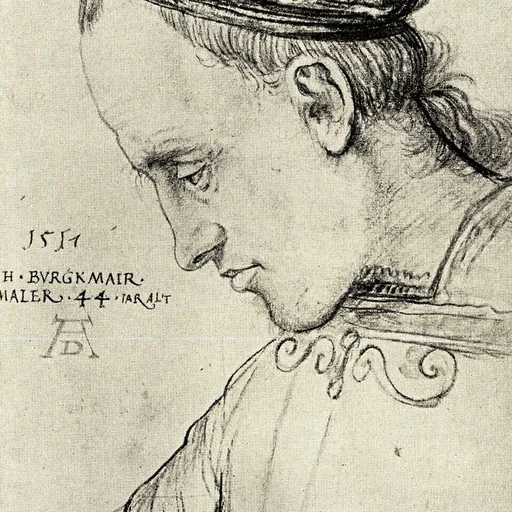
Hans Burgkmair the Elder (1473–1531) was a German artist, born in Augsburg.

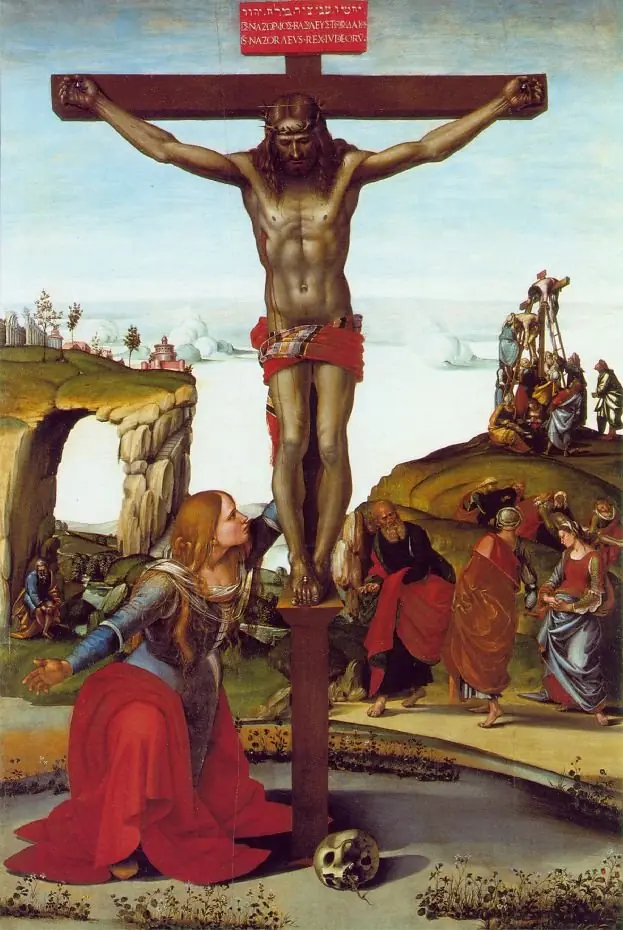 Crucifixion with Saint Mary Magdalene
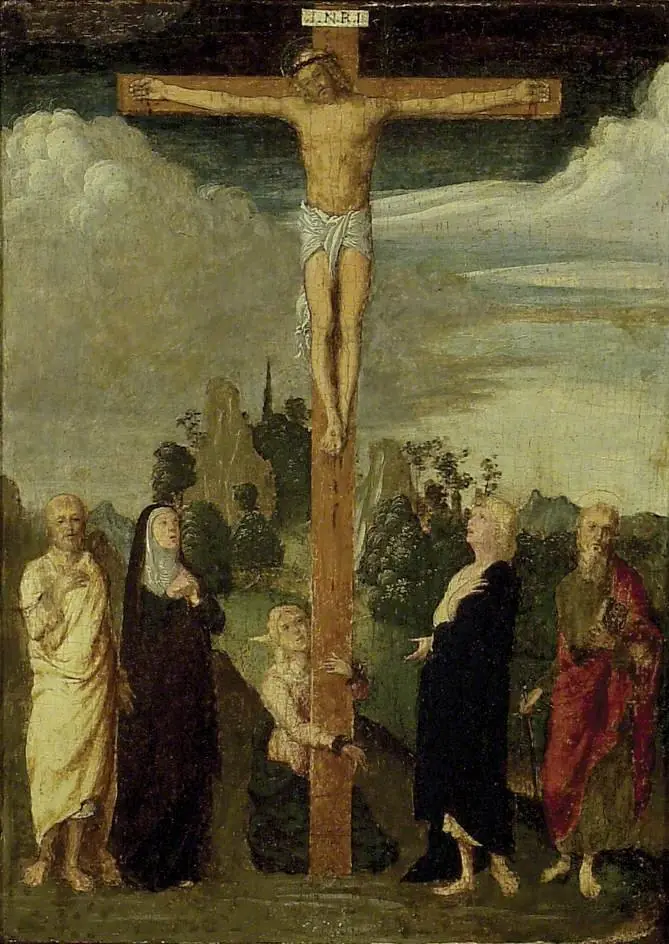 The Crucifixion with the Virgin Mary and St John
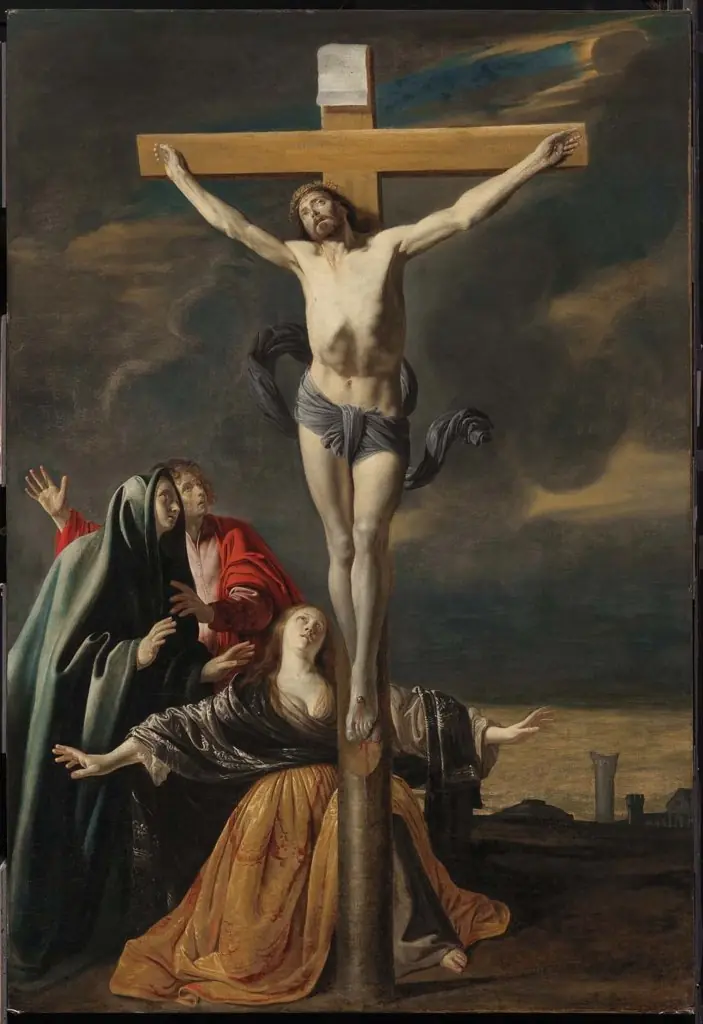 The Crucifixion with the Virgin, Saints John, and Mary Magdalen
![The Crucifixion with the Virgin, Saint John, Saint Jerome, and Saint Mary Magdalene [middle panel], by Pietro Perugino](https://artifactworldgallery.com/img/pietro-perugino--the-crucifixion-with-the-virgin-saint-john-saint-jerome-and--a9b4c312771e3f71-w320.webp) The Crucifixion with the Virgin, Saint John, Saint Jerome, and Saint Mary Magdalene [middle panel]
The Crucifixion with the Virgin, Saint John, Saint Jerome, and Saint Mary Magdalene [middle panel]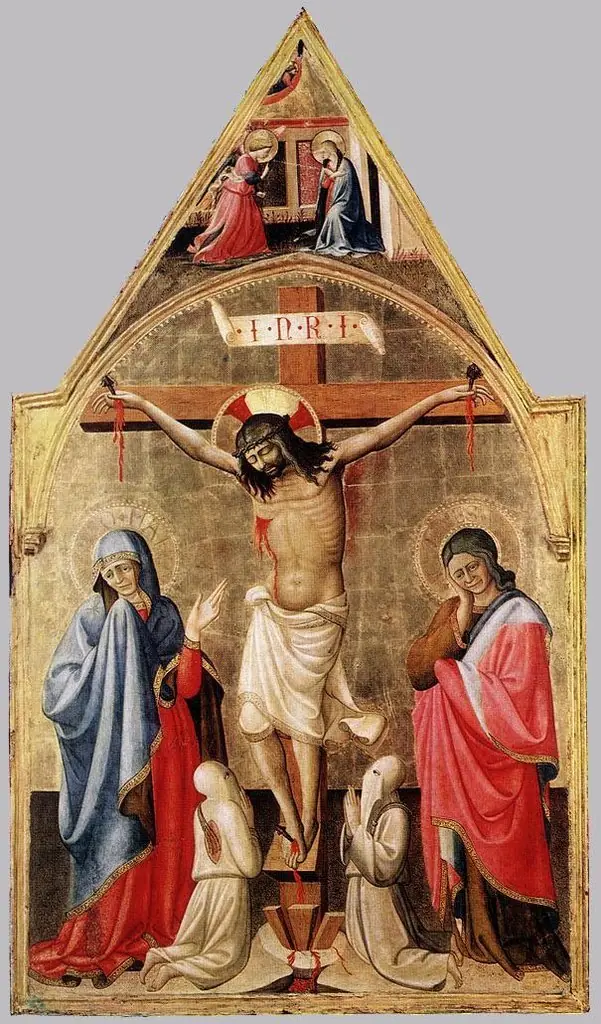 Crucifixion with Mary and St John the Evangelist
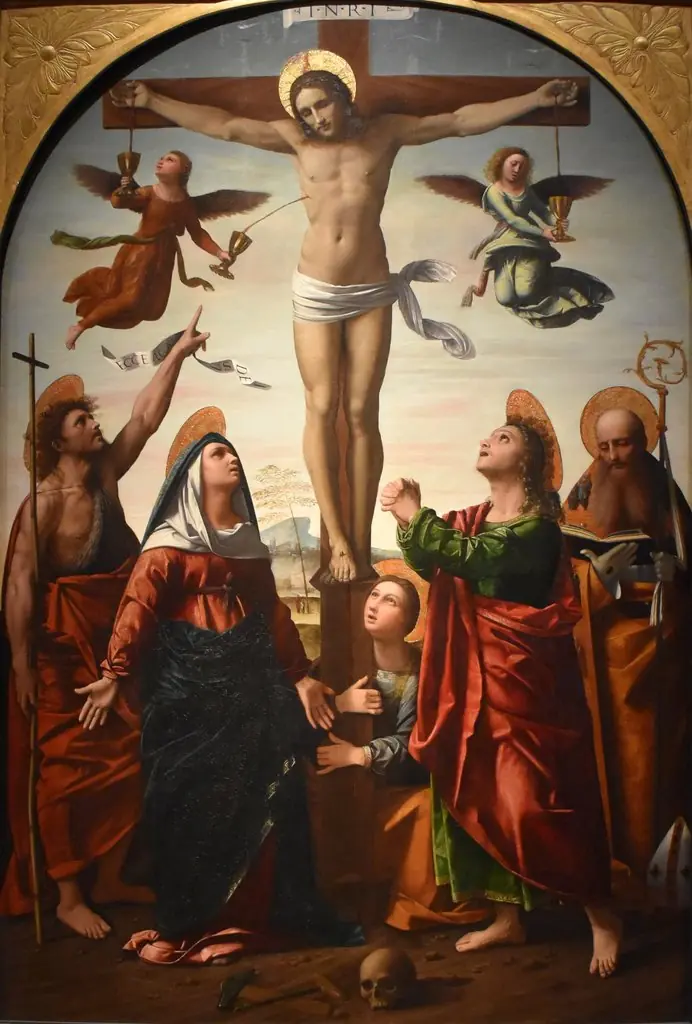 Crucifixion with the Virgin and Saints
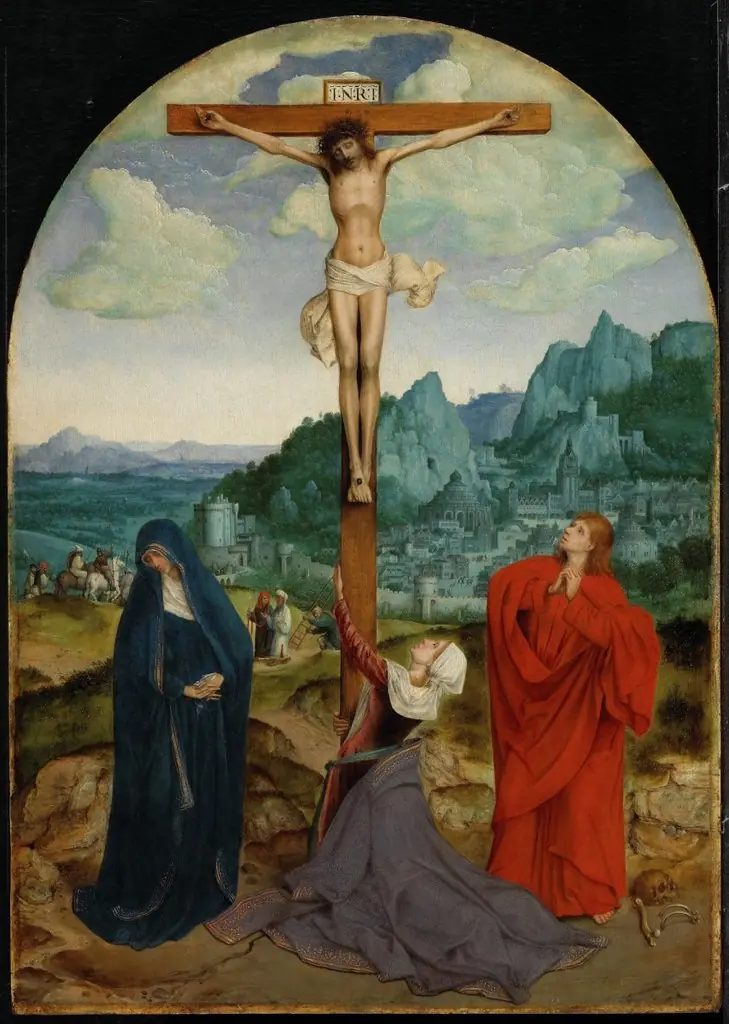 Crucifixion, with the Virgin and Saint John
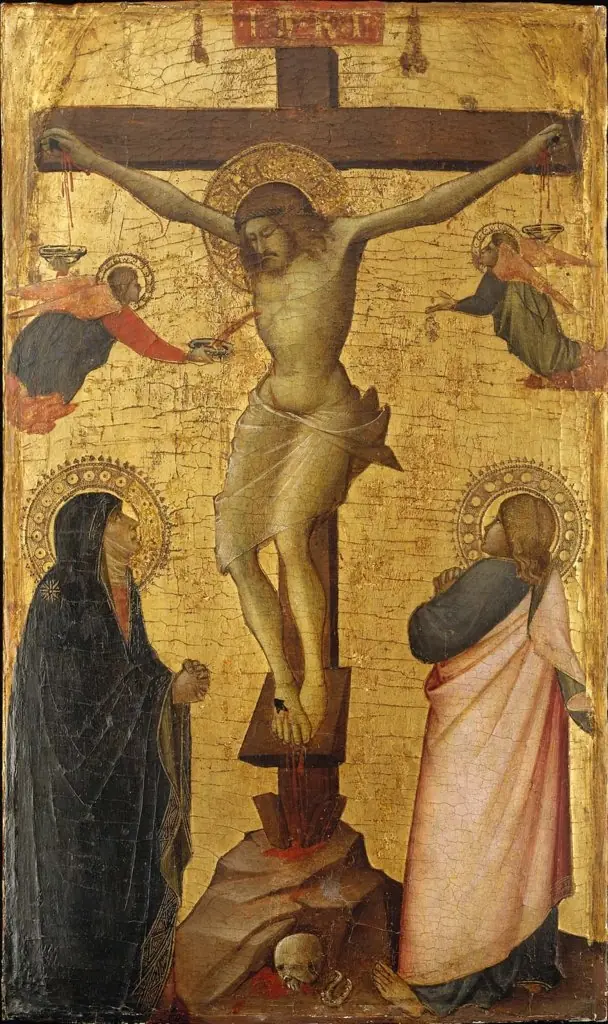 The Crucifixion with the Virgin and Saint John