Artwork
Antonia Amalia. Duchess of Brunswick and Lüneburg. Born 22 April 1696
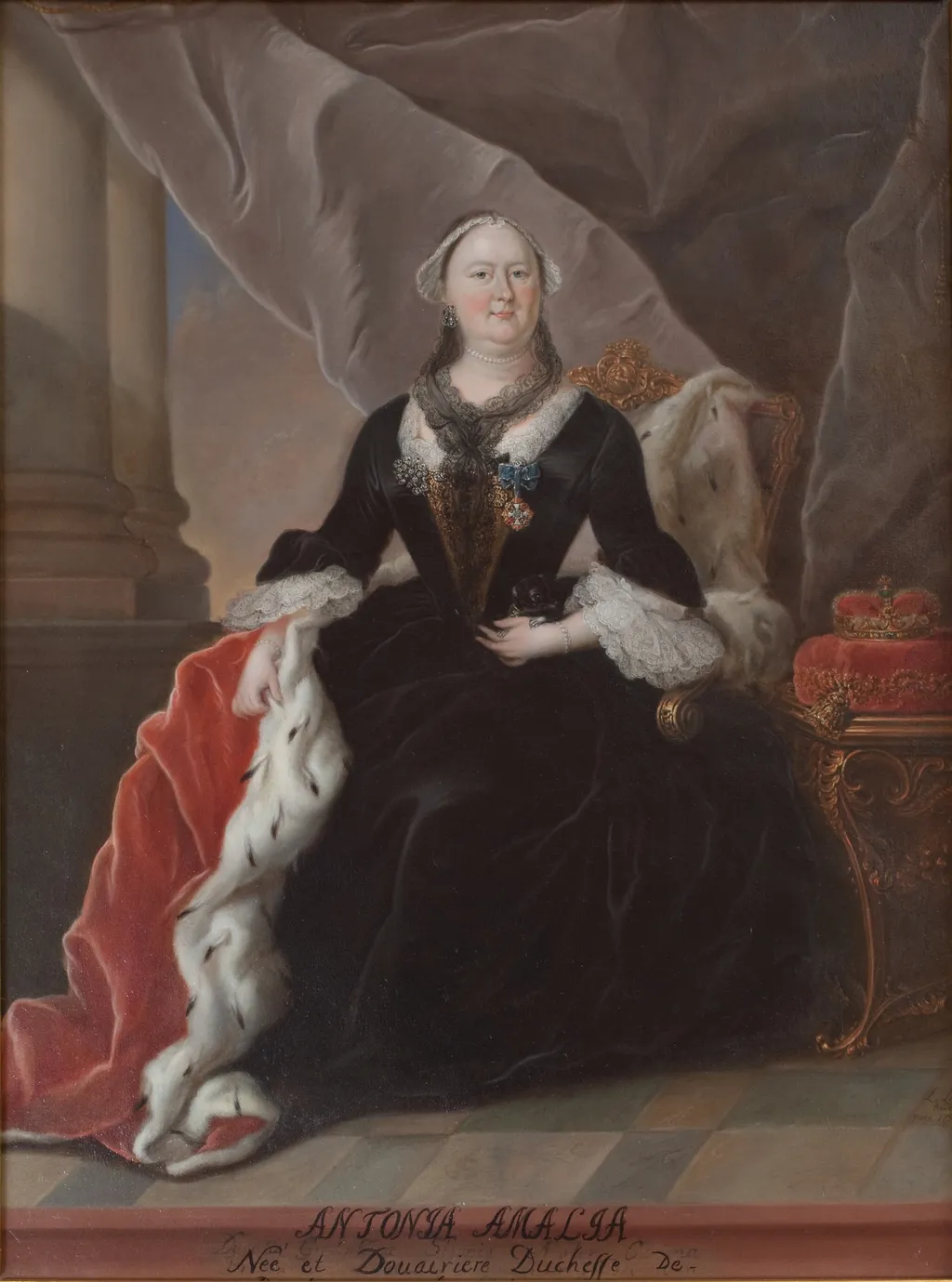
Antonia Amalia. Duchess of Brunswick and Lüneburg. Born 22 April 1696 is an oil painting by the Neoclassicist artist Unknown. It dates from 1800 and is held in the collection of the Statens Museum for Kunst. This copper portrait depicts Antonia Amalia, Duchess of Brunswick and Lüneburg, seated in an elaborate chair.
About this work
Overview
This copper portrait depicts Antonia Amalia, Duchess of Brunswick and Lüneburg, seated in an elaborate chair. She wears a black gown trimmed with white fur and gold accents, a pearl necklace, and her hair is styled back. A small dog rests on her lap, and a red cushion is tucked under her arm, while a swirled curtain and a gilded throne form the background.
Subject & Meaning
The sitter is identified by the inscription bearing her name, confirming the work as a formal representation of the duchess. The inclusion of luxurious garments, fur trim, and jewelry underscores her high rank, while the dog, a common symbol of fidelity, reinforces notions of loyalty and domestic virtue expected of noble women.
Technique & Style
Executed on copper, the painting benefits from the metal’s smooth surface, allowing fine detail and a luminous finish. The artist employs chiaroscuro, contrasting illuminated areas on the figure with a darker, muted backdrop, thereby modeling the form and drawing the viewer’s eye to the duchess’s face and attire.
History & Provenance
The work is dated to the early eighteenth century, corresponding with Antonia Amalia’s lifespan (born 22 April 1696). Its provenance traces to collections associated with the Brunswick-Lüneburg court, though specific ownership changes have not been fully documented.
Context
Portraits of aristocratic women in this period often served diplomatic and dynastic purposes, presenting the sitter’s status and alliances. The setting—a luxurious chair, a gilded throne, and opulent drapery—reflects contemporary courtly aesthetics and the visual language of power in German principalities.
Artist & collection

 Domestic Scene
 Giacomo and Cardinal Marco, investing Andrea, Abbot of San Zeno, with his Benefice
 The Nymph of Fontainebleau
 Portrait of a Woman
 Madonna and Child with Saints in the Enclosed Garden
 Venus and Minerva
 Family Group of Four on Sofa
 Wall painting from Room H of the Villa of P. Fannius Synistor at Boscoreale
 Anna of Hanover
 Bárbara de Braganza reina de España
 Catherine Opalińska, Queen of Poland
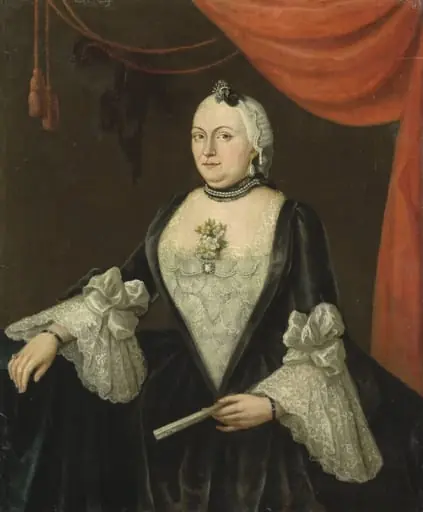 Johanna van Rijswijk (b. 1715), Wife of Jan Hendrik van Rijswijk
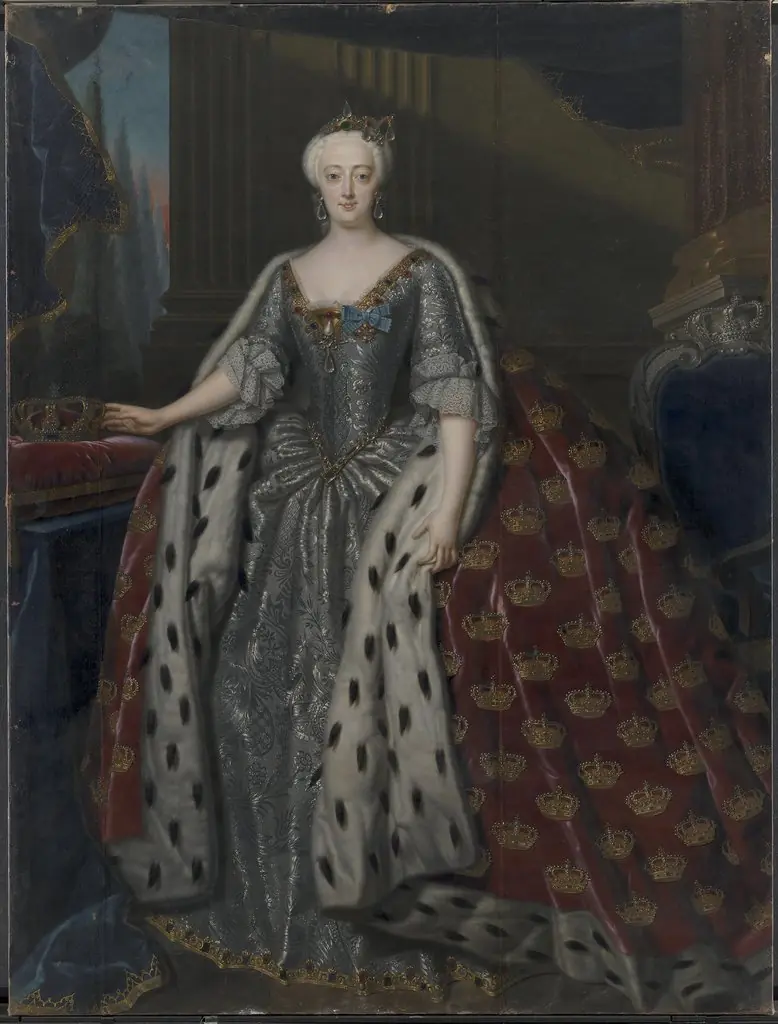 Sophie Magdalene, Christian VI's dronning
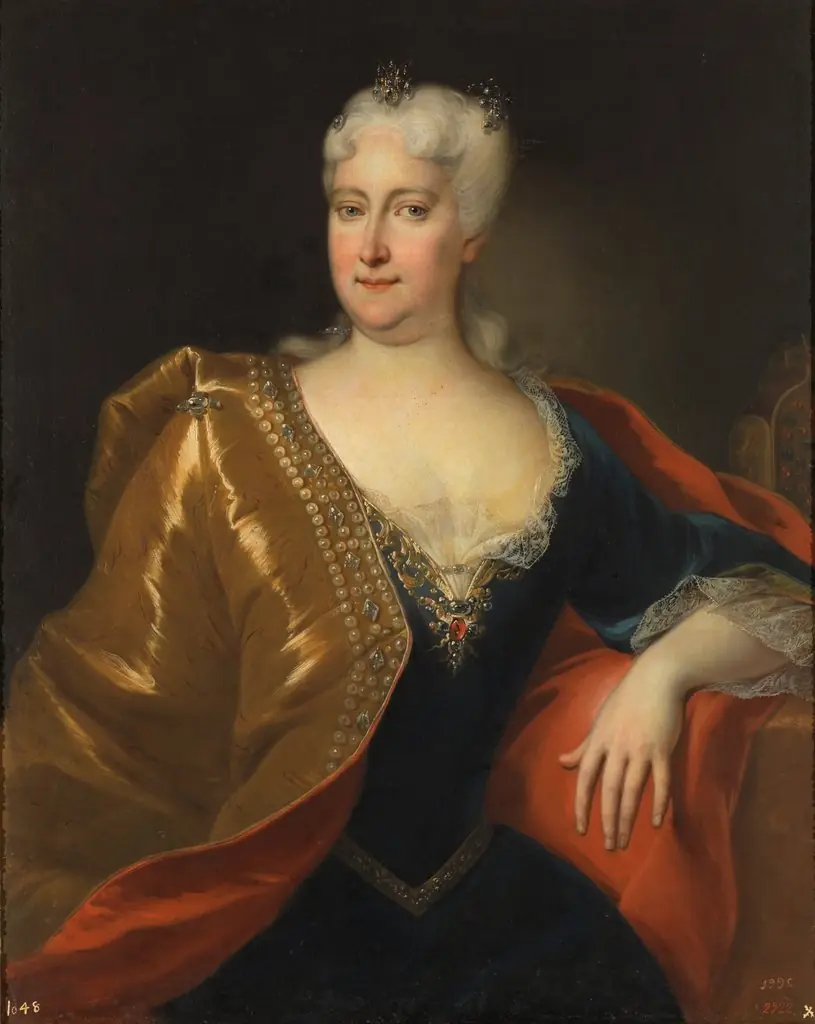 La emperatriz Isabel Cristina de Brunswick
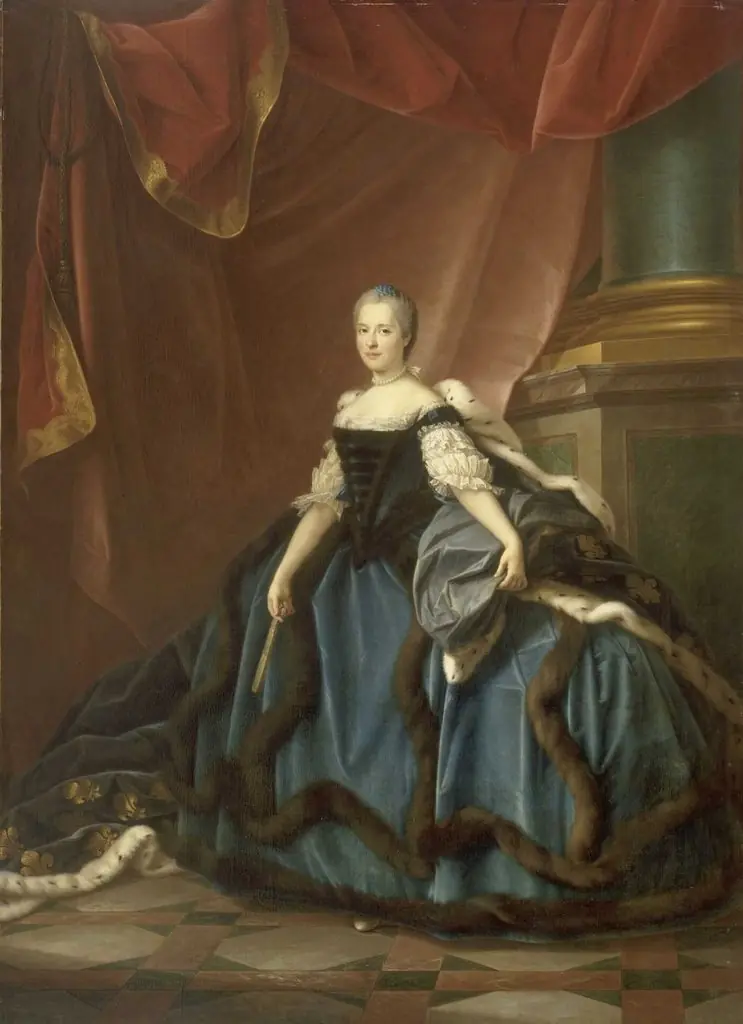 Marie-Josephus of Saxe
 Portrait of Catherine II
 Portrait of Ulrika Eleonora the Younger, Queen of Sweden