Artwork
The Lamentation of Christ
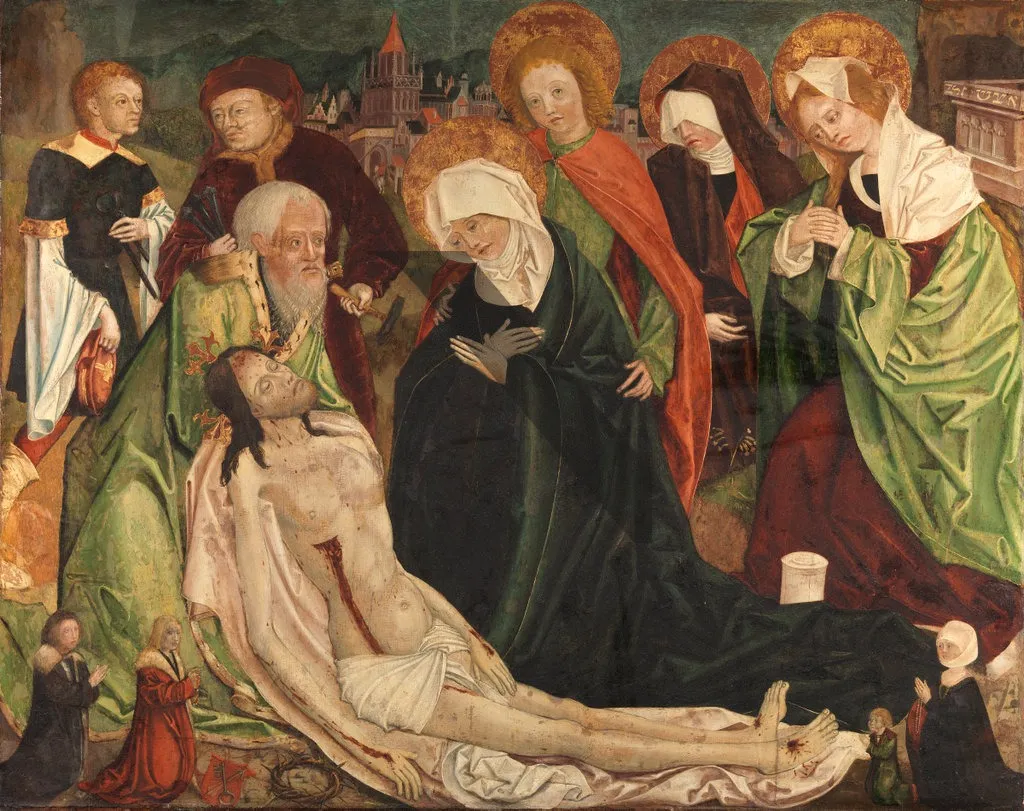
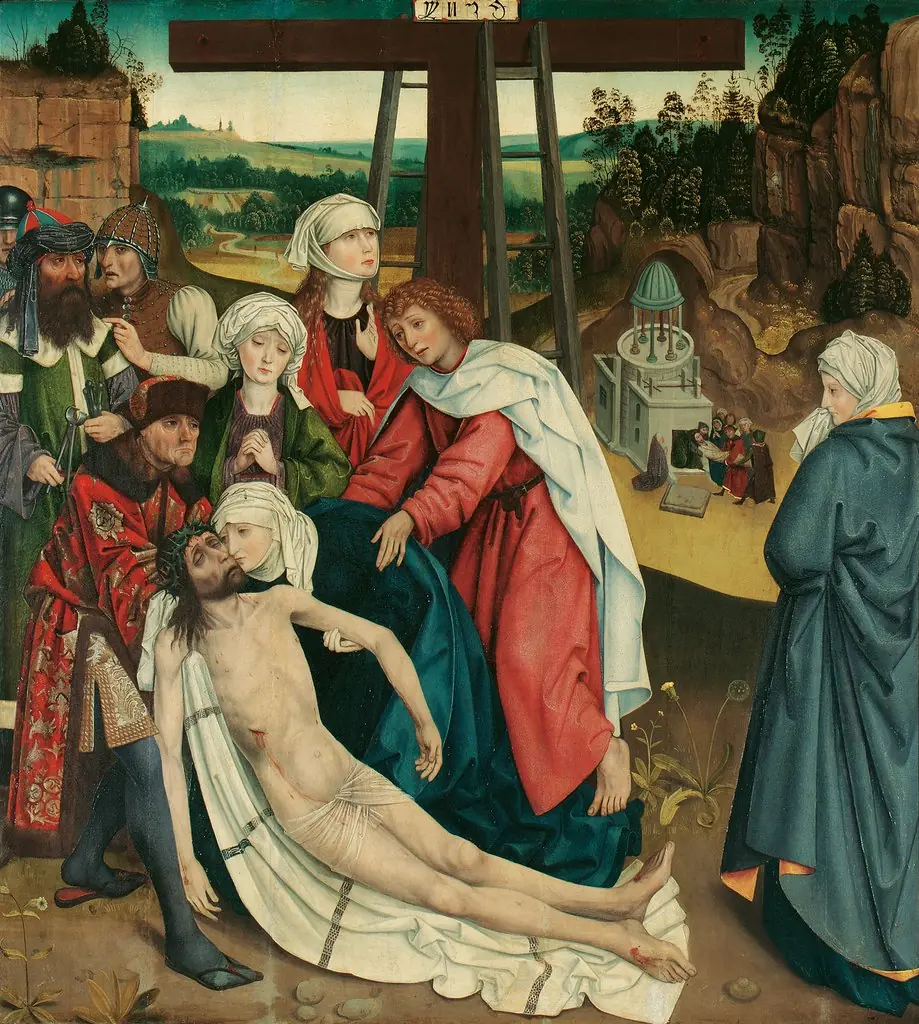
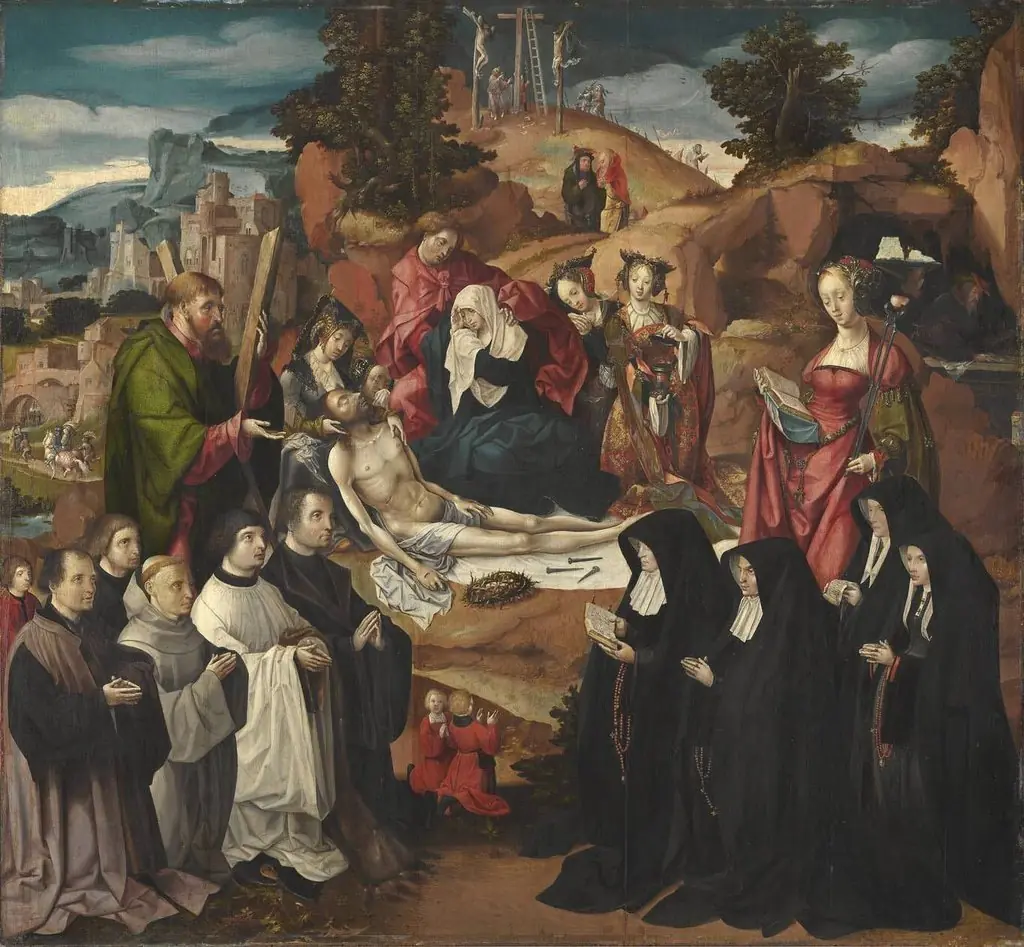
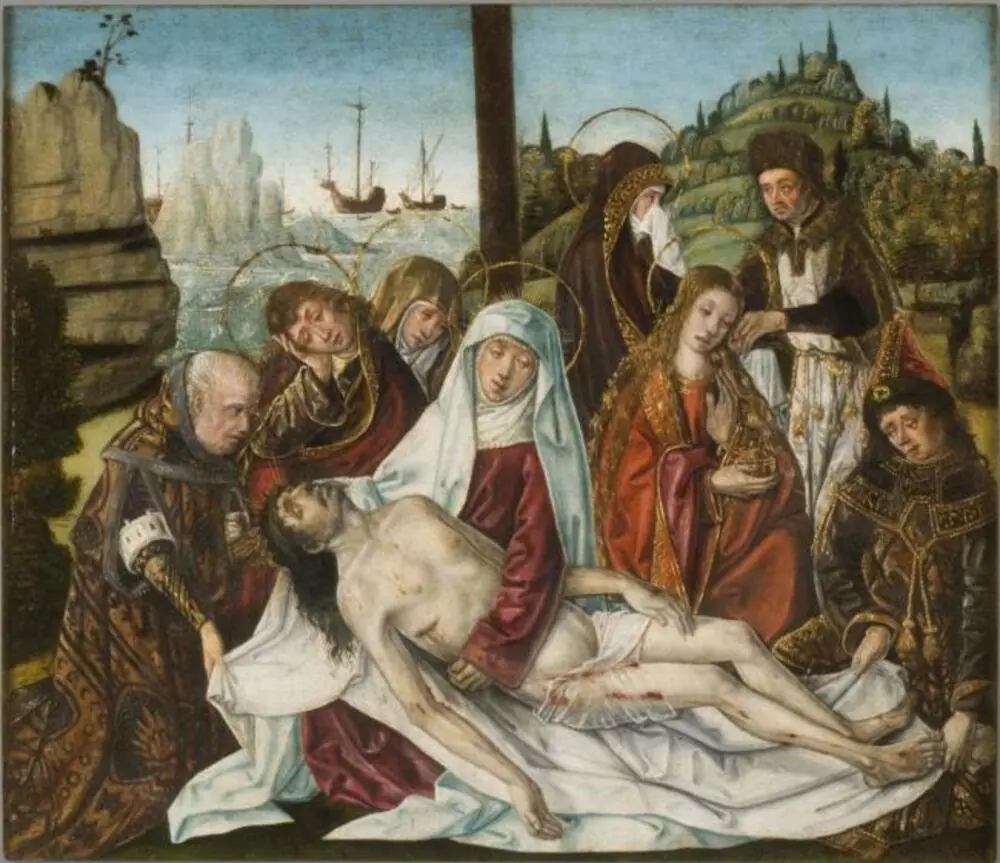
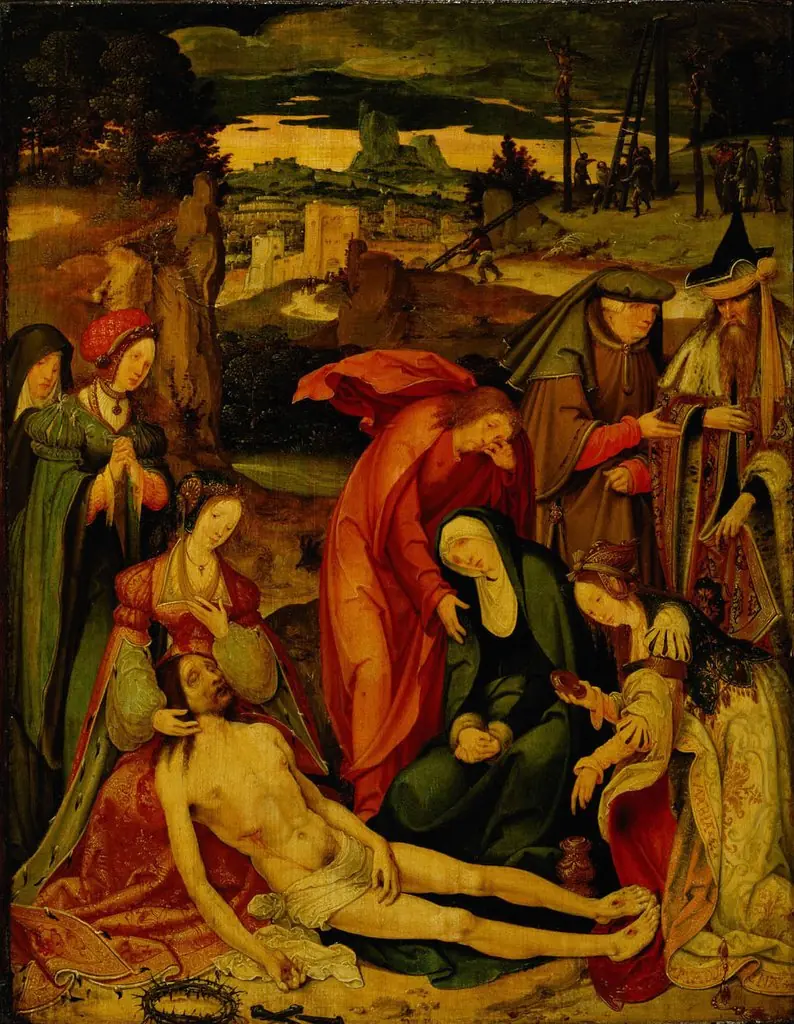
The Lamentation of Christ is an unspecified painting by the Northern Renaissance artist Unknown. It dates from 1510 and is held in the collection of the National Gallery of Ireland. This painting depicts a moment of mourning following the crucifixion of Christ.
About this work
Overview
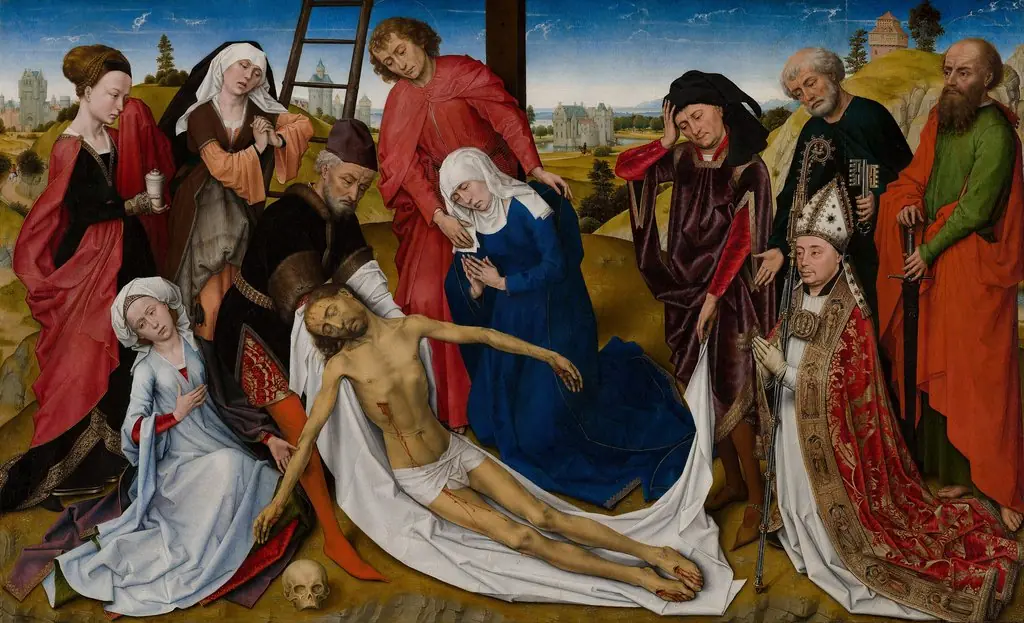
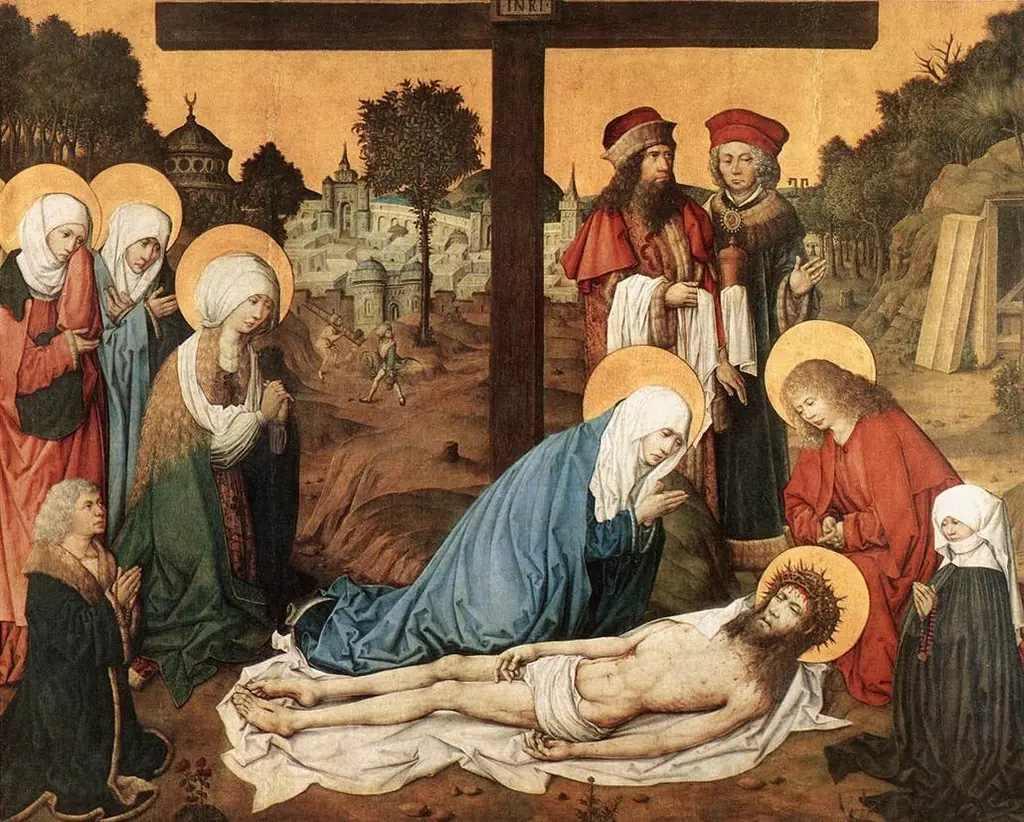
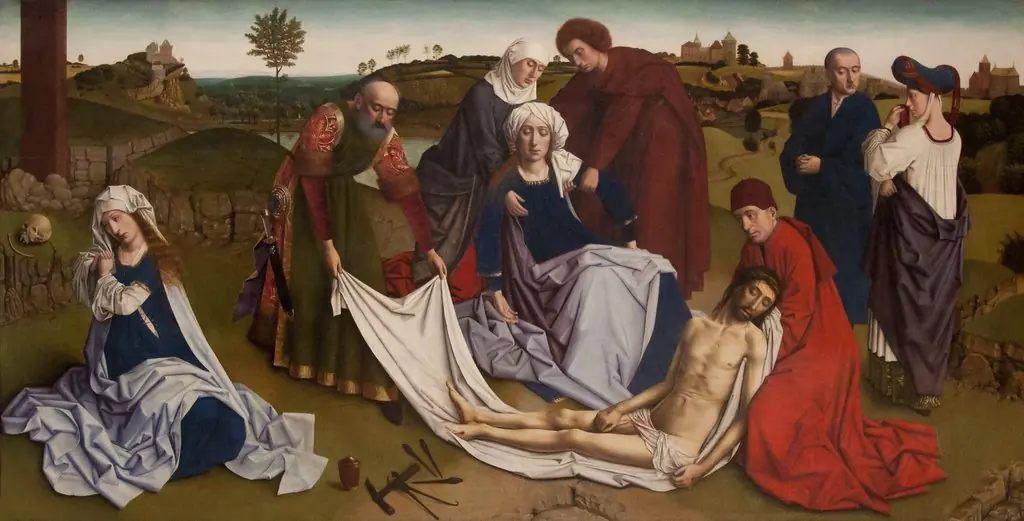
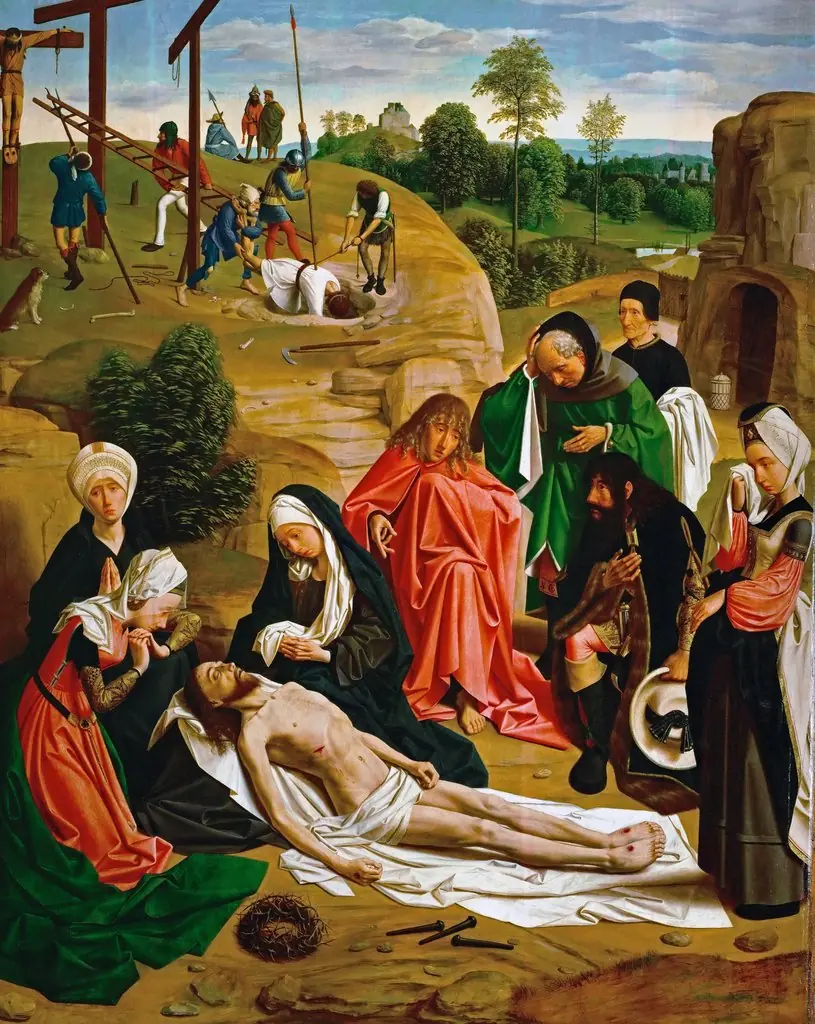
A lifeless body lies on the ground, surrounded by figures in medieval attire, their expressions subdued and gestures tender.
This painting depicts a moment of mourning following the crucifixion of Christ. A lifeless body lies on the ground, surrounded by figures in medieval attire, their expressions subdued and gestures tender. The composition centers on the corpse, with no dramatic lighting or deep perspective to distract from the quiet grief. The scene is contained within a shallow space, framed by a distant town, reinforcing the intimacy of the moment.
Subject & Meaning
The scene illustrates the Lamentation, a traditional Christian theme showing Christ’s followers grieving his death before burial. The figures include Mary, John, and other mourners, their postures conveying sorrow without theatricality. The blood on Christ’s side and his pale skin emphasize his humanity and sacrifice. The absence of divine intervention or heavenly signs focuses attention on human loss and communal mourning.
Technique & Style
The artist employs flat, even color fields with minimal modeling, avoiding chiaroscuro and three-dimensional depth. Facial features are softly rendered, lacking sharp definition, while garments are rendered in solid hues of red, green, and dark tones. The background town is simplified, rendered in outline rather than detail, keeping visual emphasis on the central group and their emotional stillness.
History & Provenance
The painting originates from the late medieval period, likely produced in a regional workshop in northern Europe. It was probably commissioned for private devotion or a small chapel, reflecting the devotional practices of the time. Its survival suggests it was carefully preserved, though its exact early ownership remains undocumented in surviving records.
Context
Created during a time when religious imagery served as a tool for meditation and piety, this work aligns with devotional traditions that emphasized empathy with Christ’s suffering. Unlike later Renaissance works, it does not seek naturalism or spatial illusion, instead favoring symbolic clarity and emotional resonance suited to contemplative prayer.
Legacy
This painting exemplifies the persistence of medieval visual language well into the early modern period. Its restrained style contrasts with the emerging trends of anatomical precision and dramatic lighting, yet its emotional directness influenced later devotional art. It remains a quiet testament to pre-Renaissance approaches to sacred narrative.
Artist & collection

 Domestic Scene
 Giacomo and Cardinal Marco, investing Andrea, Abbot of San Zeno, with his Benefice
 The Nymph of Fontainebleau
 Portrait of a Woman
 Madonna and Child with Saints in the Enclosed Garden
 Venus and Minerva
 Family Group of Four on Sofa
 Wall painting from Room H of the Villa of P. Fannius Synistor at Boscoreale