Artwork
The Lamentation
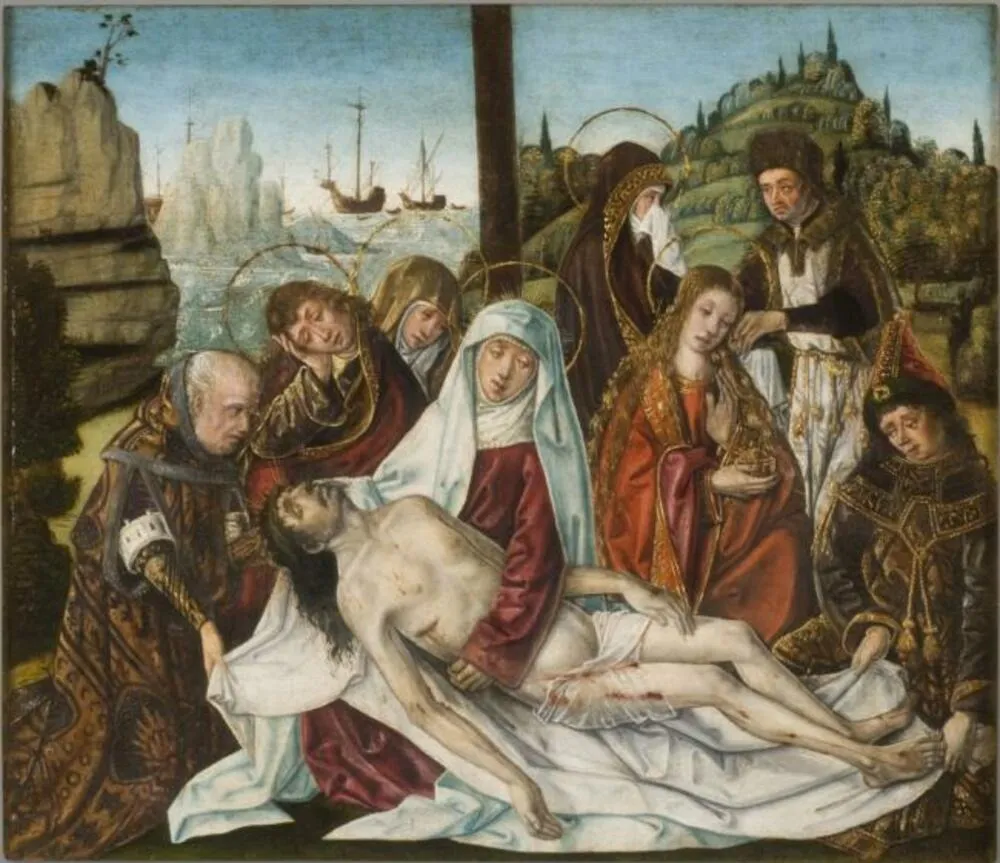
The Lamentation is an unspecified painting by the Early Renaissance artist Rodrigo de Osona. It dates from 1494 and is held in the collection of the Philadelphia Museum of Art.
About this work
Overview
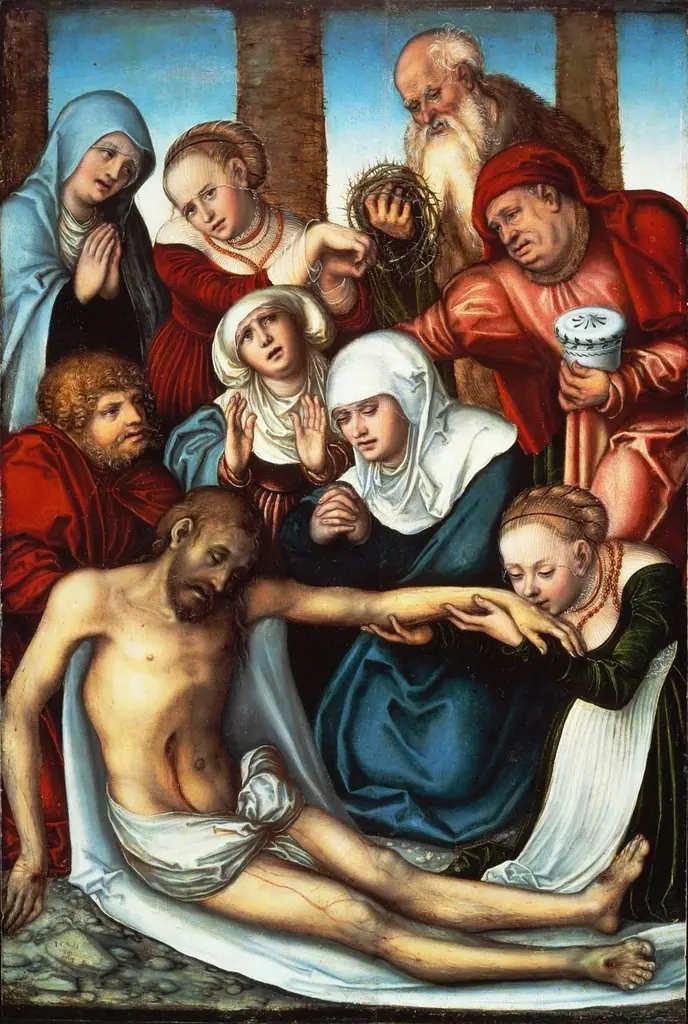
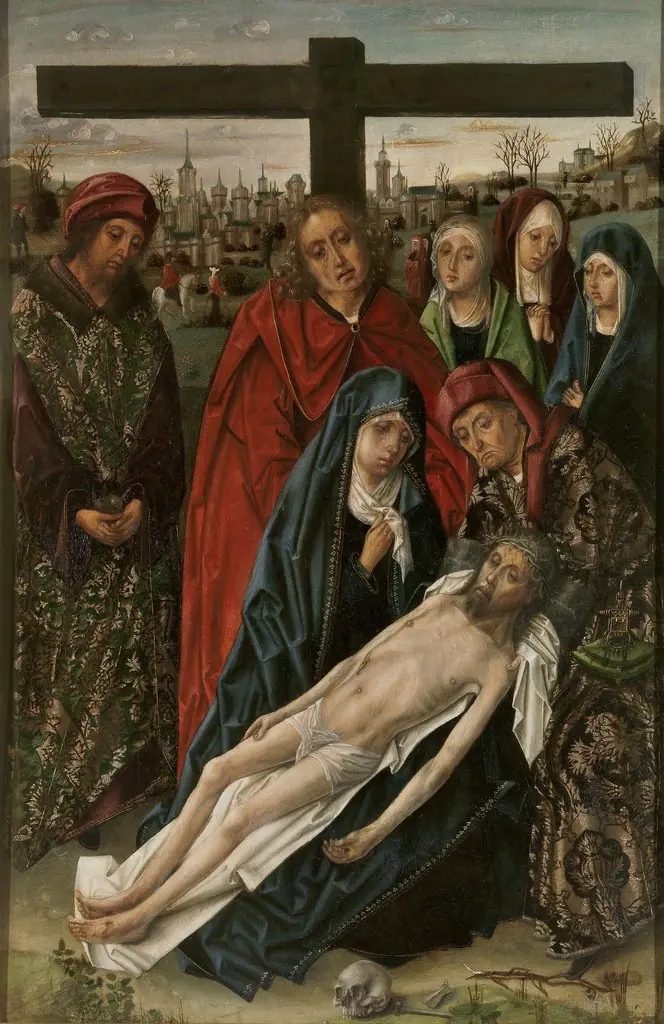
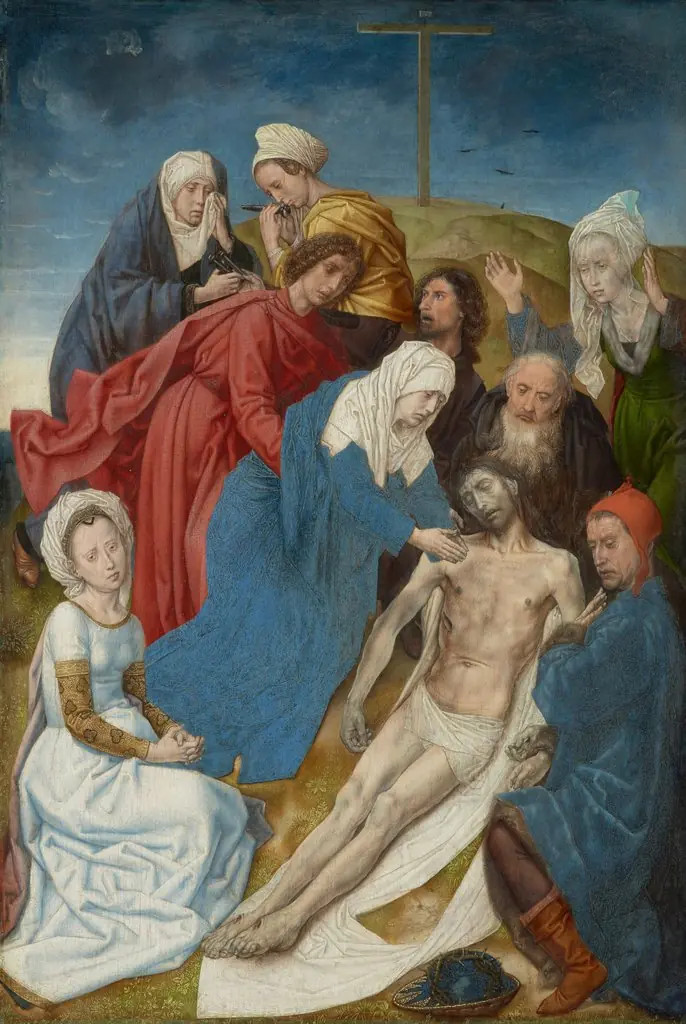
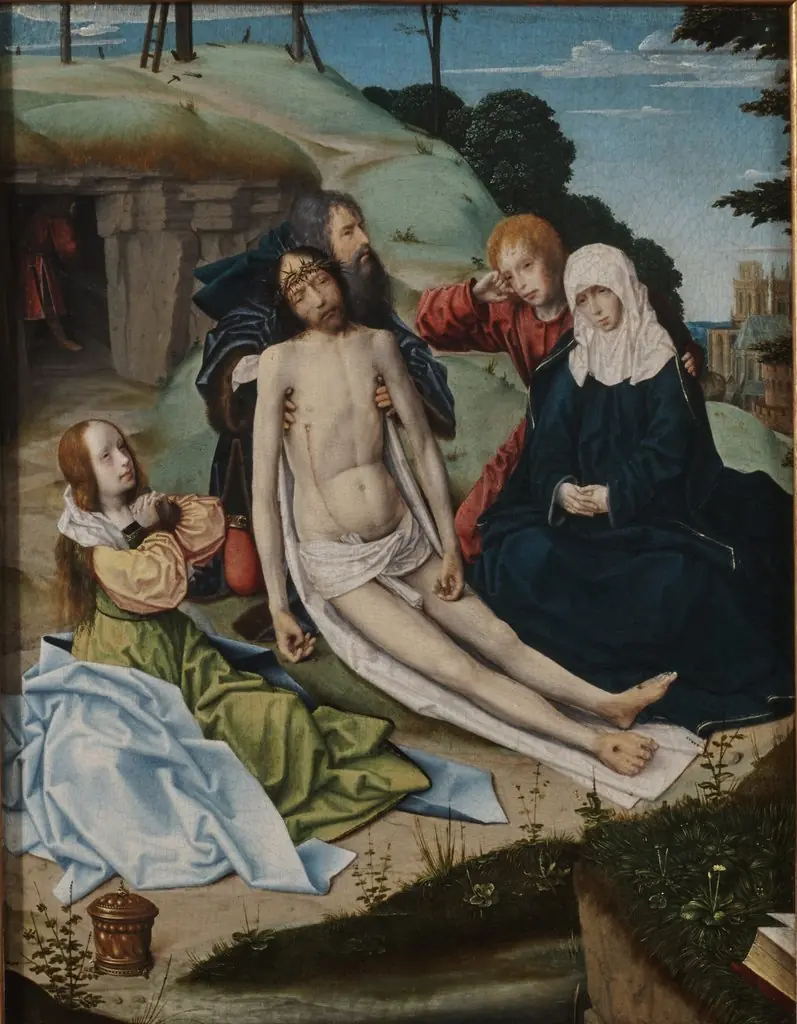
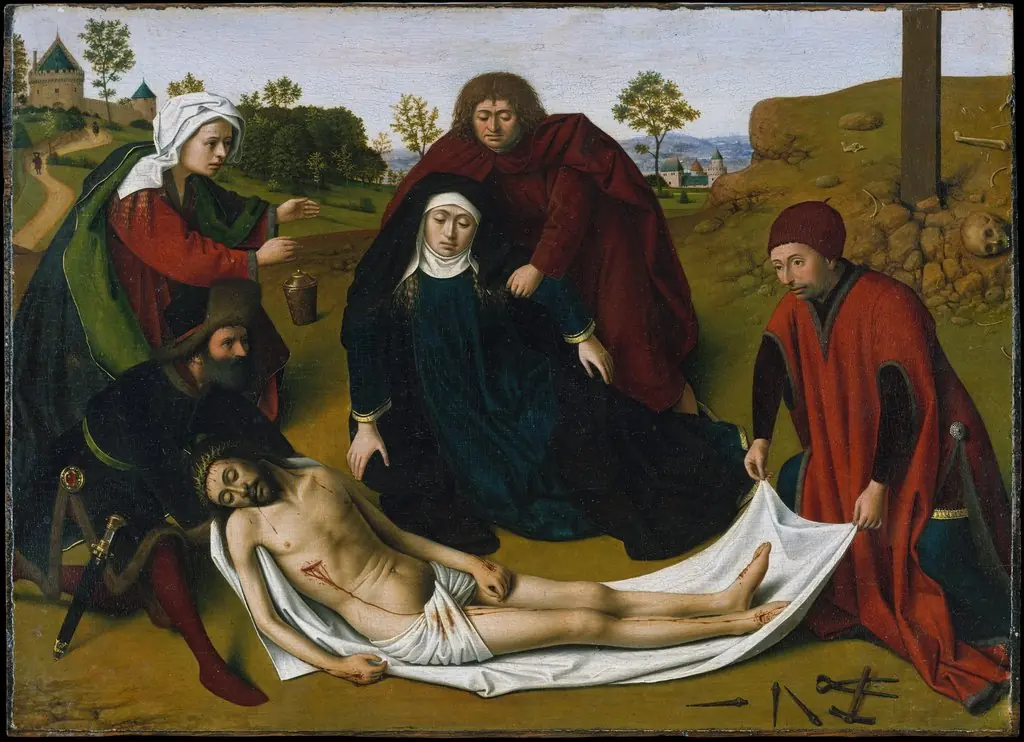
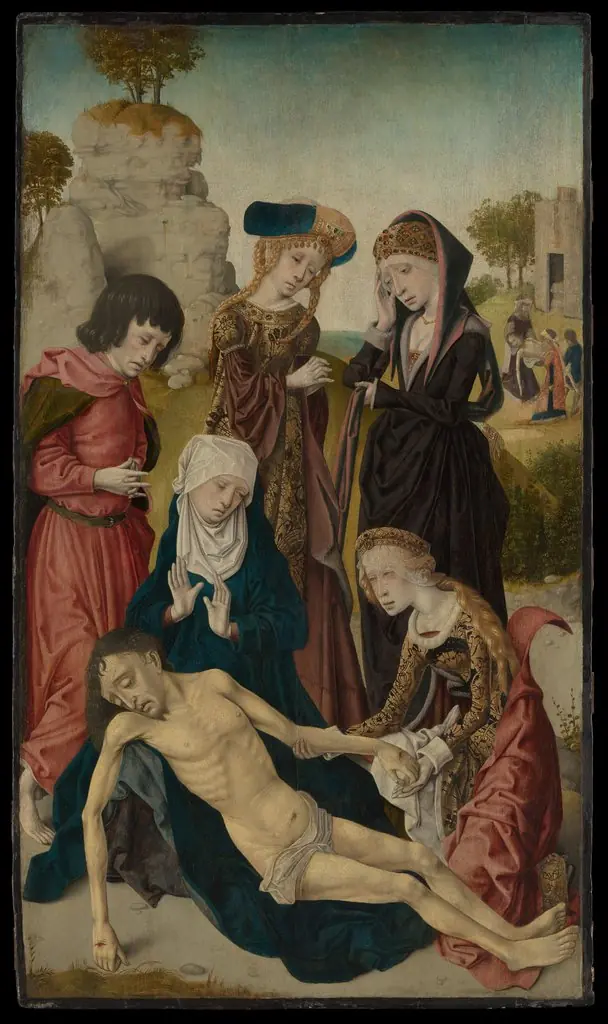
Painted in 1494 by Rodrigo de Osona, this work portrays the moment after Christ’s crucifixion, as his body is mourned by followers and saints.
Painted in 1494 by Rodrigo de Osona, this work portrays the moment after Christ’s crucifixion, as his body is mourned by followers and saints. Executed in tempera on panel, it belongs to a Spanish devotional tradition centered on the emotional response to Christ’s death. The painting is now in the collection of the Philadelphia Museum of Art, where it remains one of the few surviving works by the artist.
Subject & Meaning
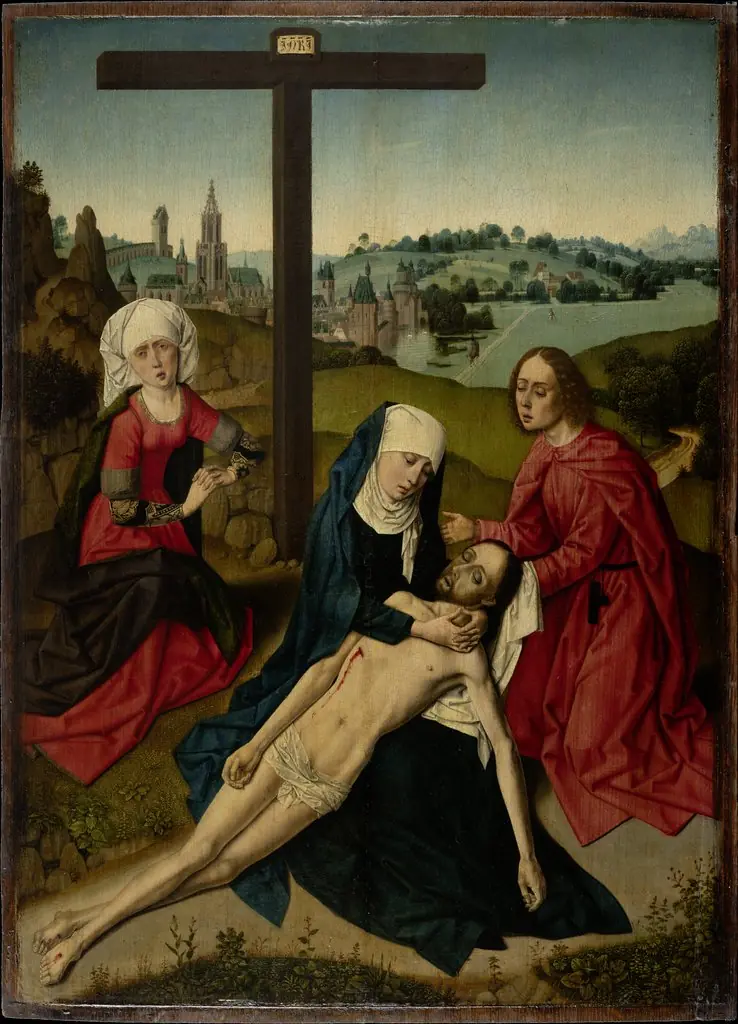
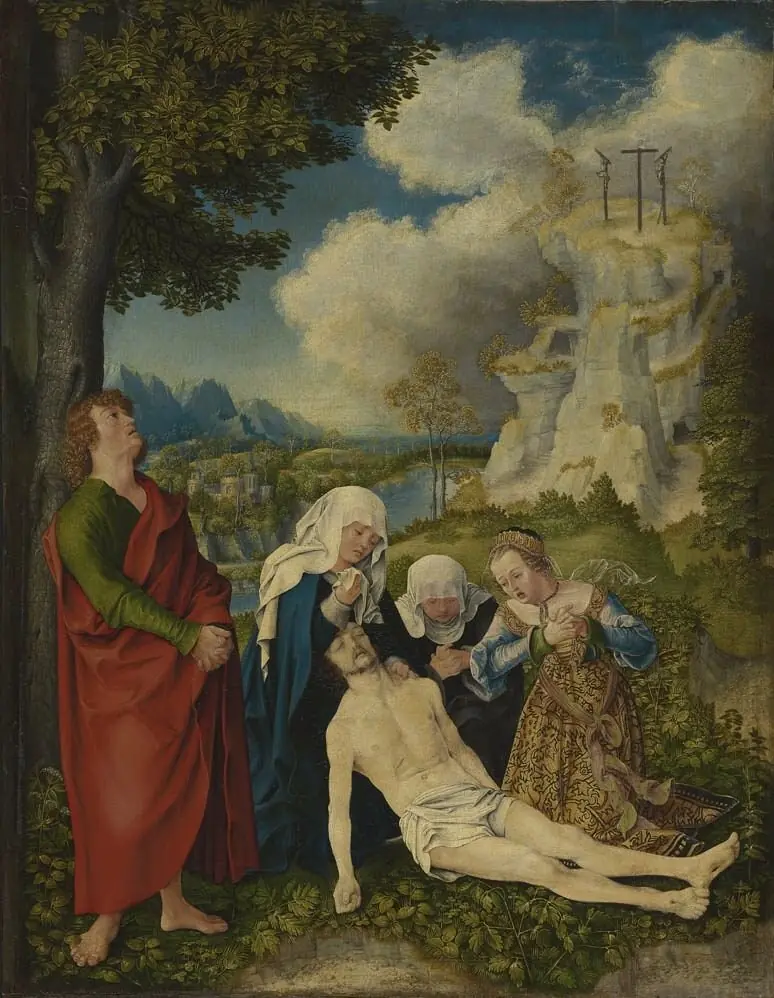
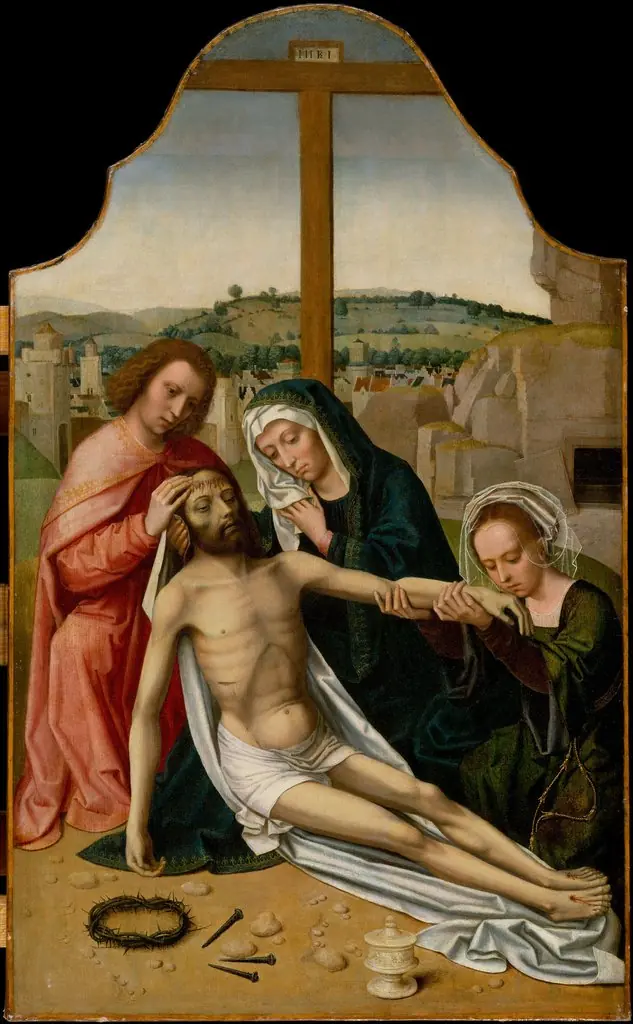
The scene centers on Christ’s lifeless body, partially covered by a white shroud, with a visible wound on his side. Figures surrounding him—some identified by halos as apostles and holy women—express grief through posture and gesture. The composition emphasizes communal sorrow, reflecting medieval devotional practices that encouraged viewers to contemplate Christ’s sacrifice through empathetic mourning.
Technique & Style
Osona employed tempera paint on a wooden panel, using fine brushwork to render textures of fabric and skin. The palette is restrained, dominated by ochres, umbers, and muted blues, enhancing the somber tone. Figures are arranged in a shallow space, with minimal perspective, aligning with late Gothic conventions. The landscape background, though simplified, adds depth without distracting from the central lament.
History & Provenance
The painting likely originated in a Spanish monastery or private chapel, intended for personal or liturgical meditation. It passed through private collections before entering the Philadelphia Museum of Art’s holdings in the 20th century. Its survival is notable, as many similar works from this period were lost to war, iconoclasm, or deterioration.
Context
Created during the late 15th century, the painting reflects the devotional intensity of late medieval Spain, where images of Christ’s suffering were used to foster spiritual reflection. Osona worked in the tradition of Catalan and Aragonese painters, blending local stylistic traits with broader European influences, particularly from Flemish art, which was circulating in Iberia at the time.
Legacy
Though Rodrigo de Osona is not widely known today, this painting offers insight into the regional religious art of late medieval Spain. It stands as a quiet example of how devotional imagery functioned in daily spiritual life, preserving a mode of visual piety that preceded the more dramatic expressions of the Renaissance.
Artist & collection