Artwork
Tantric Manuscript "Sangrahani Sutra"
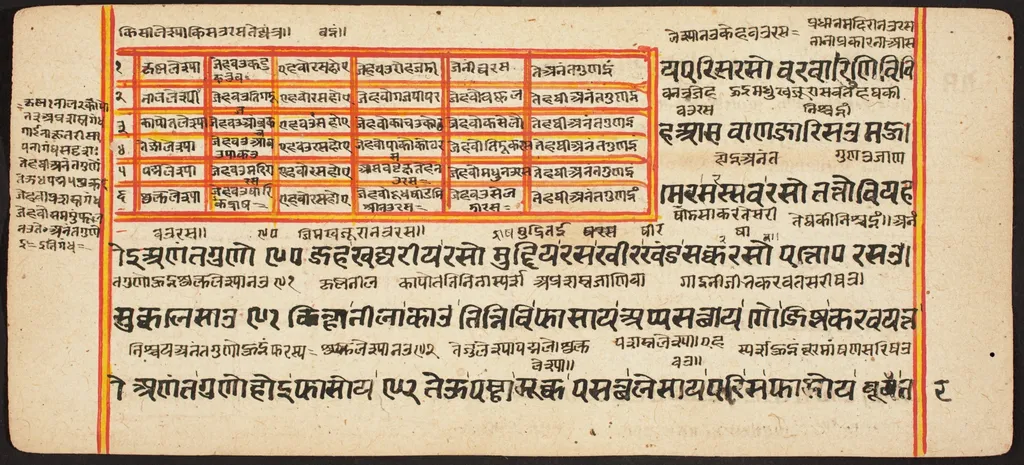
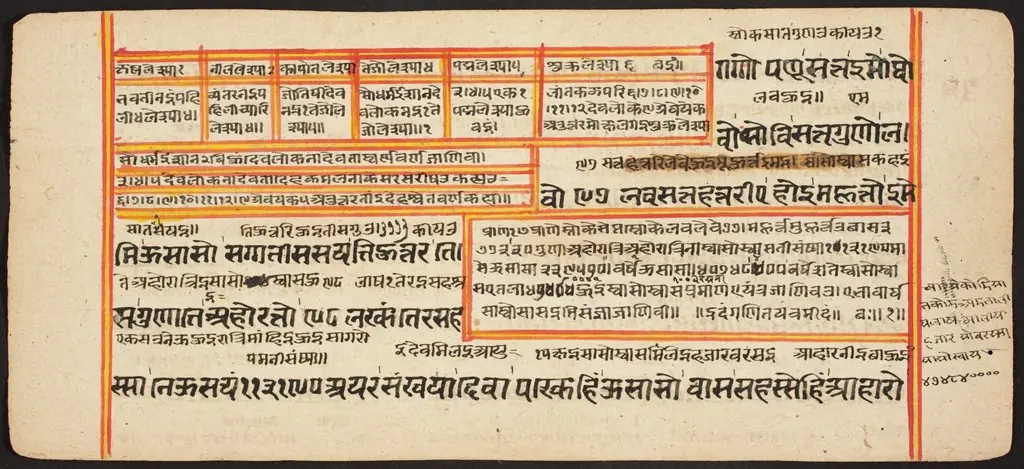
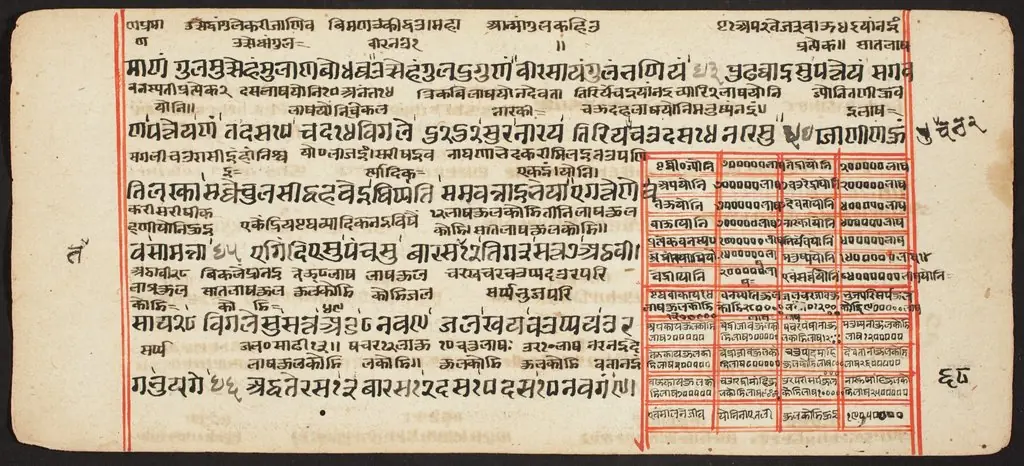
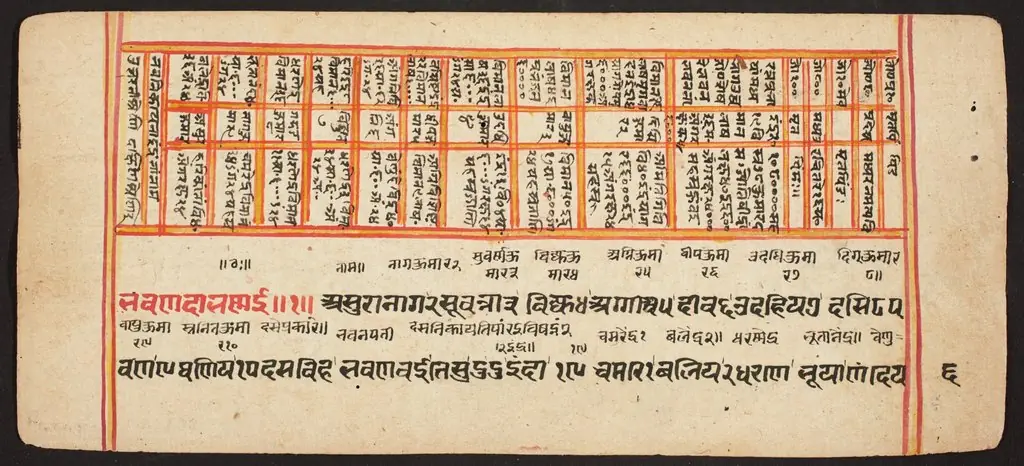
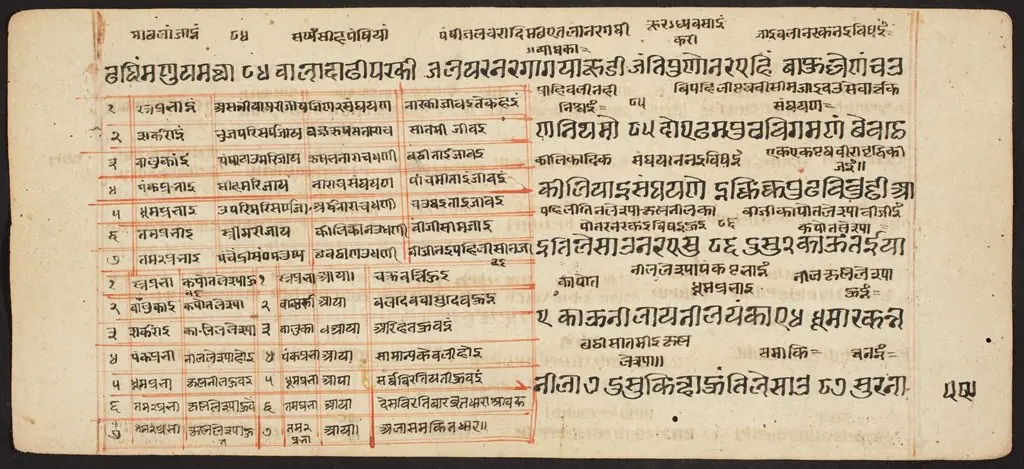
Tantric Manuscript "Sangrahani Sutra" is an unspecified painting by Unknown. It is held in the collection of the Detroit Institute of Arts. This painted page originates from a handwritten manuscript of the Sangrahani Sutra, a Buddhist text composed in Prakrit.
About this work
Overview
Created on palm leaf or prepared paper, it features dense script arranged in orderly rows, with selective red ink used to emphasize key passages.
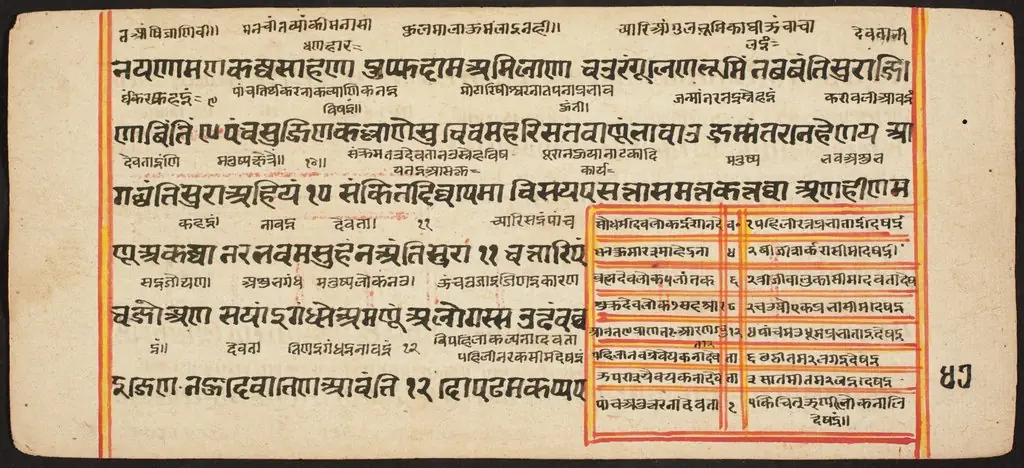
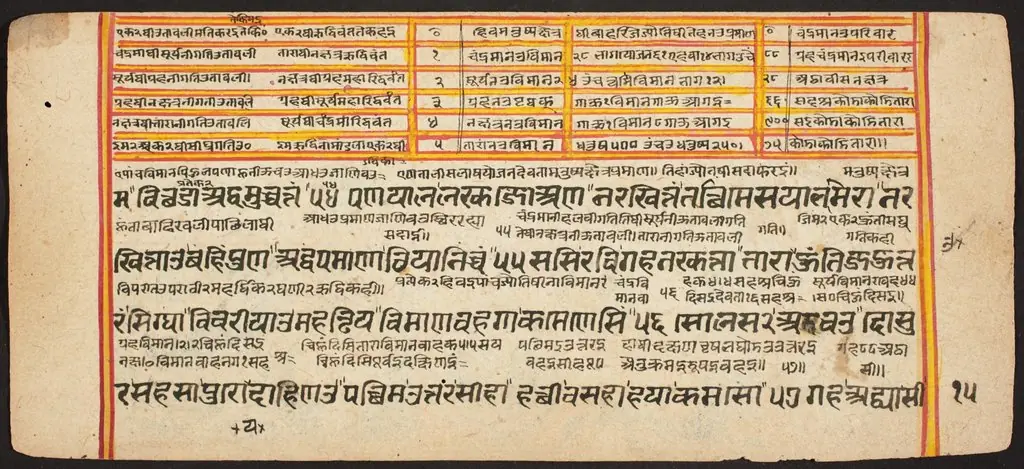
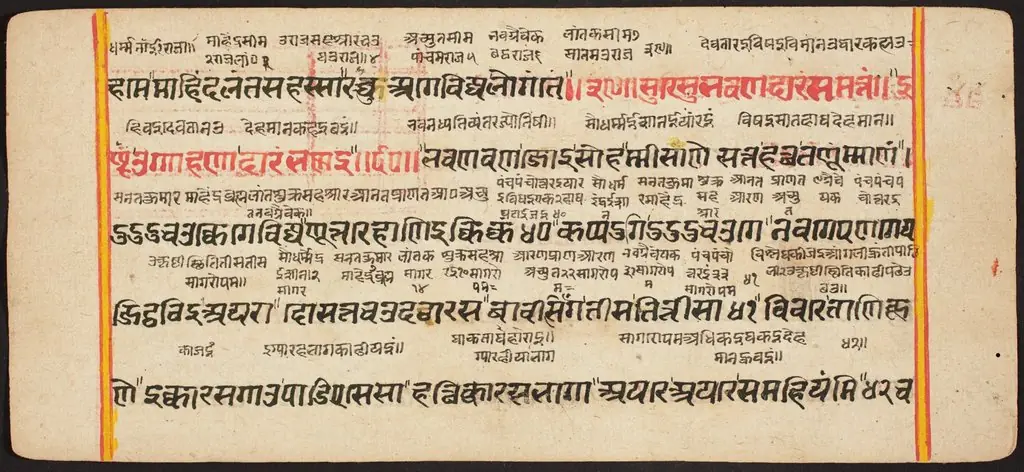
This painted page originates from a handwritten manuscript of the Sangrahani Sutra, a Buddhist text composed in Prakrit. Created on palm leaf or prepared paper, it features dense script arranged in orderly rows, with selective red ink used to emphasize key passages. The warm, aged surface bears a fine texture, typical of materials used in medieval South Asian scribal traditions. Its design reflects liturgical function rather than decorative intent.
Subject & Meaning
The Sangrahani Sutra belongs to the Theravada Buddhist canon, serving as a doctrinal summary of monastic rules and ethical principles. The script’s precision and red highlights indicate ritual significance, likely aiding recitation or meditation. The absence of figural imagery aligns with early Buddhist textual traditions that prioritized verbal transmission over iconography, reinforcing the text’s authority through formal clarity.
Technique & Style
The script is executed in a regional variant of Brahmi-derived writing, with careful penwork and consistent letterforms. Red ink, possibly derived from cinnabar or vermilion, marks doctrinal emphases. The surface shows subtle wear and organic grain, suggesting handmade paper or palm leaf. Flourishes in letter terminals reflect scribal training, not artistic embellishment—function dictated form.
History & Provenance
The manuscript likely originated in Sri Lanka or southern India between the 8th and 12th centuries, a period of active Buddhist textual preservation. It entered the Detroit Institute of Arts’ collection through early 20th-century acquisitions of South Asian religious artifacts, though its exact provenance prior to museum acquisition remains undocumented.
Context
During its time, such manuscripts were produced in monastic scriptoria under strict guidelines. Scribes were often monks trained in both language and ritual discipline. The use of red for emphasis mirrored practices in Hindu and Jain texts, indicating shared scribal customs across South Asian religious communities, despite doctrinal differences.
Legacy
Surviving pages like this one are rare, as organic materials degrade over centuries. They preserve linguistic forms no longer in use and offer insight into pre-print transmission of Buddhist teachings. Today, they serve as critical sources for scholars studying the evolution of Buddhist liturgy and the material culture of early monastic education.
Artist & collection

 Domestic Scene
 Giacomo and Cardinal Marco, investing Andrea, Abbot of San Zeno, with his Benefice
 The Nymph of Fontainebleau
 Portrait of a Woman
 Madonna and Child with Saints in the Enclosed Garden
 Venus and Minerva
 Family Group of Four on Sofa
 Wall painting from Room H of the Villa of P. Fannius Synistor at Boscoreale
 Tantric Manuscript "Sangrahani Sutra"
 Tantric Manuscript "Sangrahani Sutra"
 Tantric Manuscript "Sangrahani Sutra"
 Tantric Manuscript "Sangrahani Sutra"
 Tantric Manuscript "Sangrahani Sutra"
 Tantric Manuscript "Sangrahani Sutra"
 Tantric Manuscript "Sangrahani Sutra"
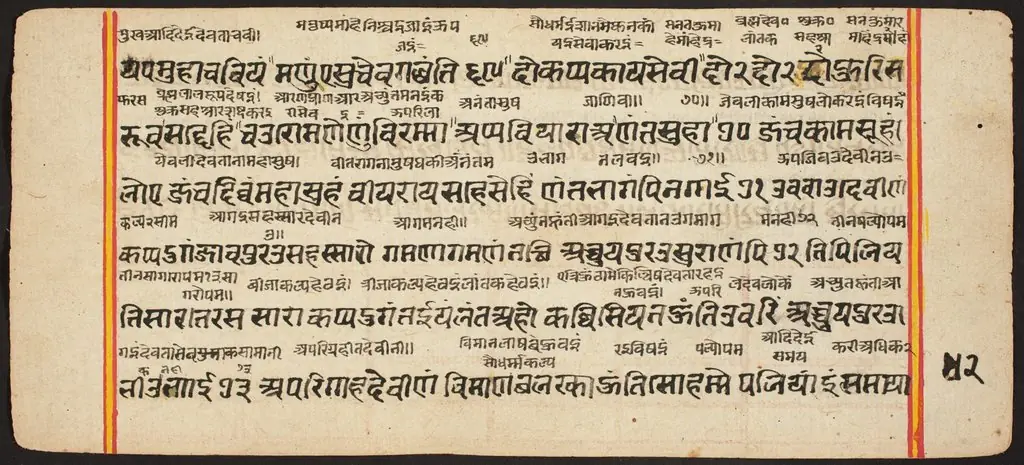 Tantric Manuscript "Sangrahani Sutra"
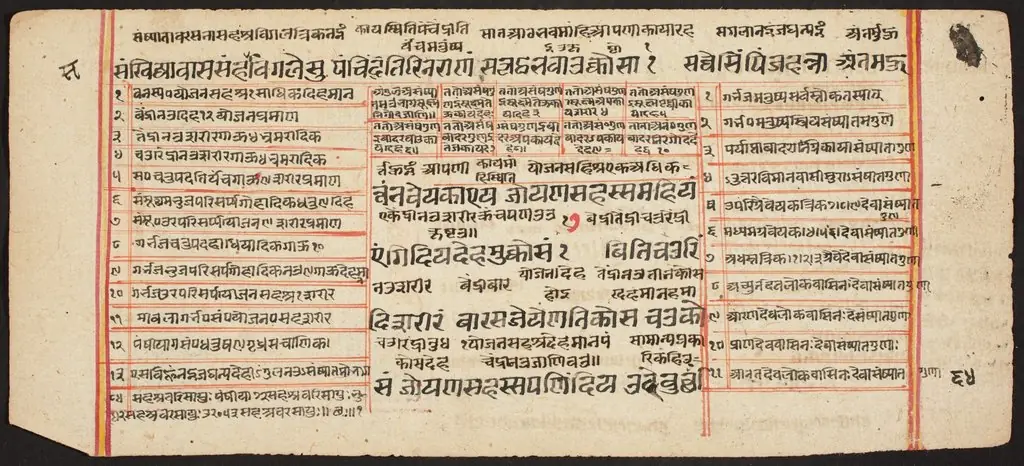 Tantric Manuscript "Sangrahani Sutra"
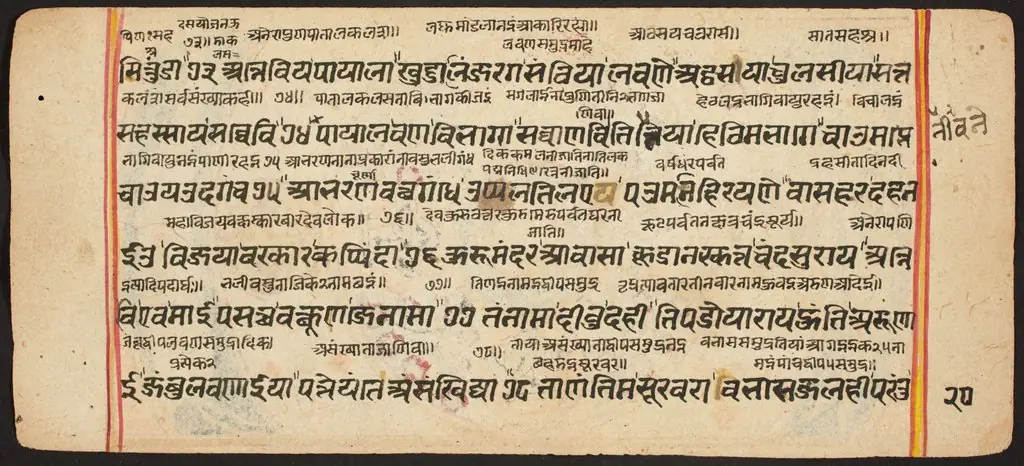 Tantric Manuscript "Sangrahani Sutra"