Artwork
Portrait of Glafira Zimina, a Girl from a Merchant Family
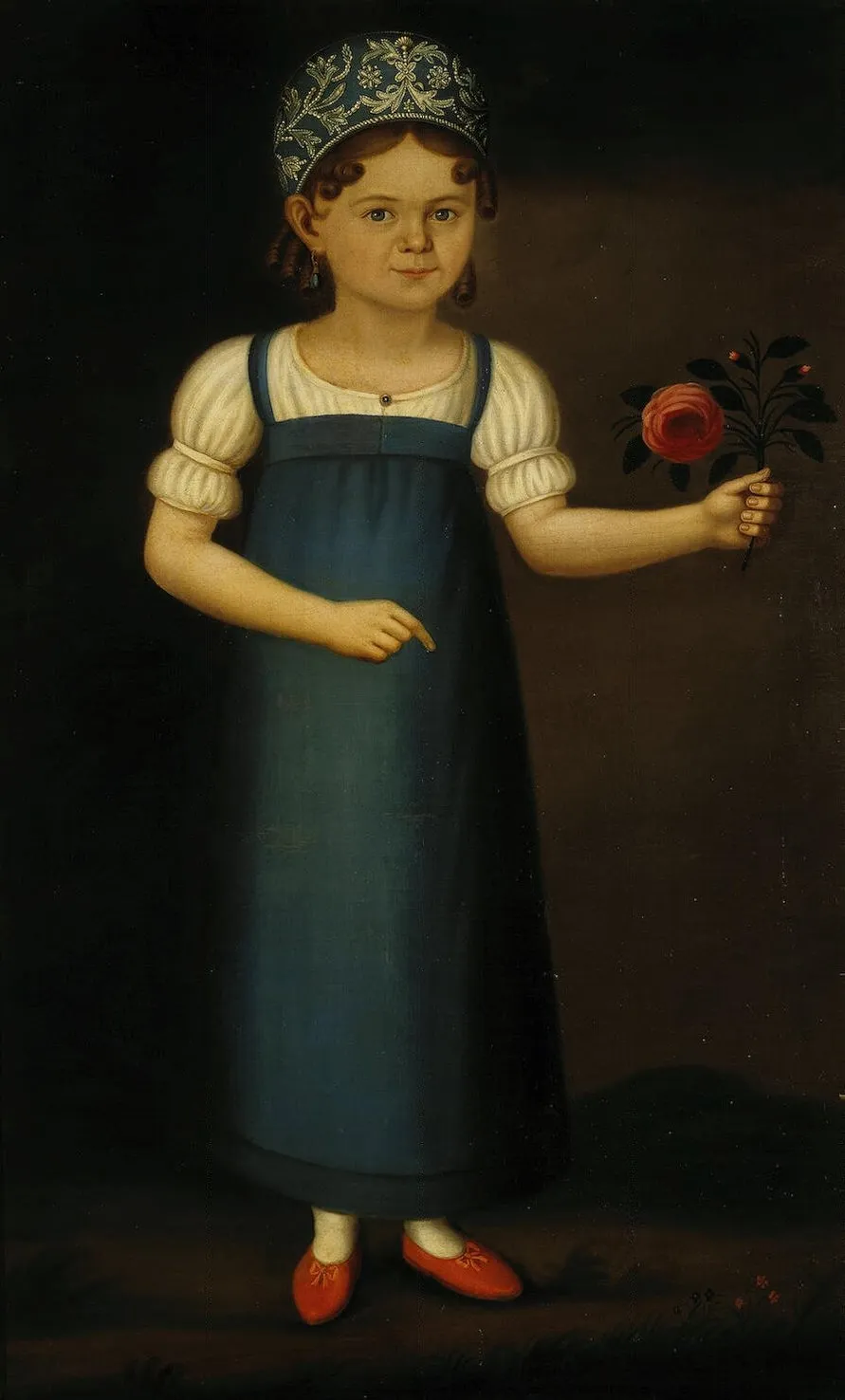
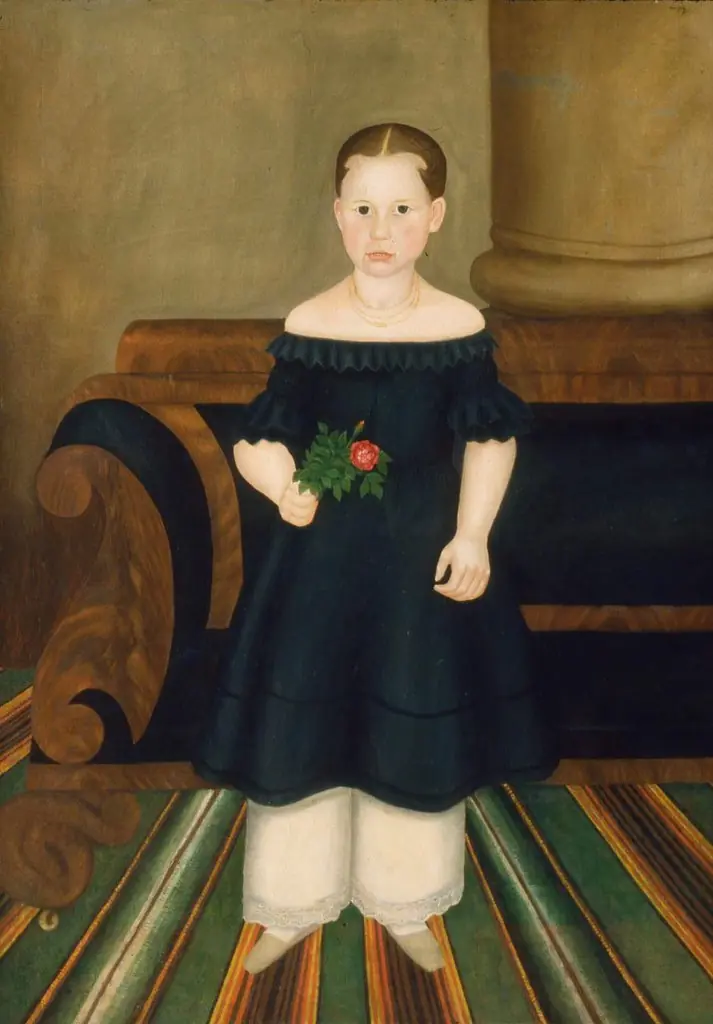
Portrait of Glafira Zimina, a Girl from a Merchant Family is an oil painting by the Biedermeier artist Unknown. It dates from 1825 and is held in the collection of the Hermitage Museum.
About this work
Overview
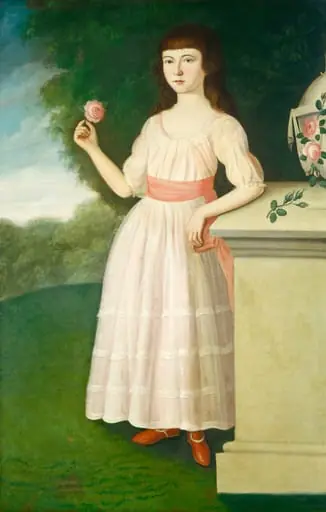
The composition emphasizes stillness and intimacy, with attention to subtle details in her attire and the single rose she holds.
This oil painting depicts a young girl from a merchant family, posed formally against a dark, unadorned background. Her expression is serene and direct, conveying quiet confidence rather than theatricality. The composition emphasizes stillness and intimacy, with attention to subtle details in her attire and the single rose she holds. The work reflects a preference for understated elegance over ornate display.
Subject & Meaning
The girl, Glafira Zimina, is presented not as a noble figure but as a member of the urban merchant class, suggesting rising social visibility for non-aristocratic families. The red rose she holds may symbolize youth or virtue, while her calm gaze invites quiet contemplation rather than grandeur. Her attire, though refined, lacks aristocratic embellishment, grounding the portrait in everyday life.
Technique & Style
The artist employs soft chiaroscuro to model the girl’s face and hands, creating a gentle luminosity that contrasts with the deep background. Brushwork is smooth, particularly in rendering skin and fabric textures, with delicate attention to lace and the folds of her dress. The red shoes and rose provide restrained color accents, enhancing focus without overwhelming the composition.
History & Provenance
The painting was created in the late 18th or early 19th century, likely in Russia, where merchant families increasingly commissioned portraits to assert their status. Glafira Zimina’s identity is documented through family records, though the artist remains unidentified. The work has remained in private collections, preserving its original condition and context.
Context
During this period, Russian merchant families sought to align themselves with cultural norms of refinement through portraiture. Unlike aristocratic portraits, these works often avoided overt symbolism or elaborate settings, favoring naturalism and personal presence. This portrait reflects a broader trend of domestic, intimate representation among the urban middle class.
Legacy
The portrait stands as an example of how non-noble subjects were increasingly represented with dignity in Russian art. Its quiet realism and attention to personal detail influenced later generations of artists who sought to capture ordinary life with emotional sincerity, contributing to the evolution of Russian genre painting.
Artist & collection

 Domestic Scene
 Giacomo and Cardinal Marco, investing Andrea, Abbot of San Zeno, with his Benefice
 The Nymph of Fontainebleau
 Portrait of a Woman
 Madonna and Child with Saints in the Enclosed Garden
 Venus and Minerva
 Family Group of Four on Sofa
 Wall painting from Room H of the Villa of P. Fannius Synistor at Boscoreale