Artwork
Die vierzehn Nothelfer
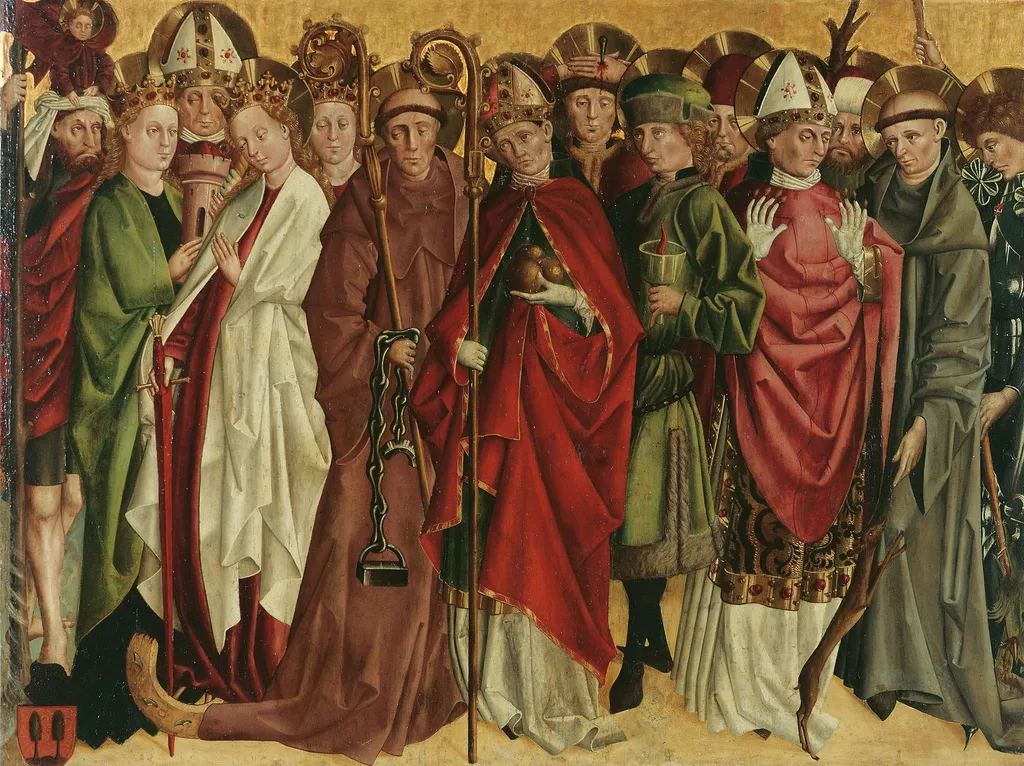
Die vierzehn Nothelfer is an unspecified painting by the Early Renaissance artist Unknown. It dates from 1470 and is held in the collection of the Kunsthistorisches Museum.
About this work
Overview
The work titled *Die vierzehn Nothelfer* presents a procession of twelve figures arranged in a single line. Each figure is rendered in a similar scale, regardless of spatial depth, and is clothed in robes or simple garments, some topped with crowns, miters or hats. The palette is dominated by red, green, gold, with touches of white and brown, set against a flat gold background.
Subject & Meaning
The assemblage includes individuals bearing symbolic objects—a staff, a cup, a child—suggesting a narrative of assistance or intercession. The presence of ecclesiastical headgear such as miters alongside secular crowns points to a juxtaposition of holy and worldly helpers, aligning with the title’s reference to fourteen aiders, though only twelve are depicted.
Technique & Style
Figures are rendered with a flattened, almost sculptural facial treatment, lacking chiaroscuro and emphasizing linear outlines. The garments appear stiff and patterned, and the uniform height of all figures creates a timeless, hierarchical composition. The gold ground, typical of early modern devotional panels, reinforces a formal, iconic quality.
History & Provenance
The painting’s exact origin and ownership trail are not detailed in the supplied information. Its stylistic traits associate it with Central European religious art of the late Renaissance or early Baroque period, a time when such gold‑ground panels were common in ecclesiastical settings.
Context
During the era suggested by the work’s visual language, artists often produced series of saints or intercessors for altarpieces or private devotion. The combination of clerical and secular symbols reflects contemporary theological ideas about the communion of saints and the role of earthly patrons in spiritual aid.
Artist & collection

 Domestic Scene
 Giacomo and Cardinal Marco, investing Andrea, Abbot of San Zeno, with his Benefice
 The Nymph of Fontainebleau
 Portrait of a Woman
 Madonna and Child with Saints in the Enclosed Garden
 Venus and Minerva
 Family Group of Four on Sofa
 Wall painting from Room H of the Villa of P. Fannius Synistor at Boscoreale
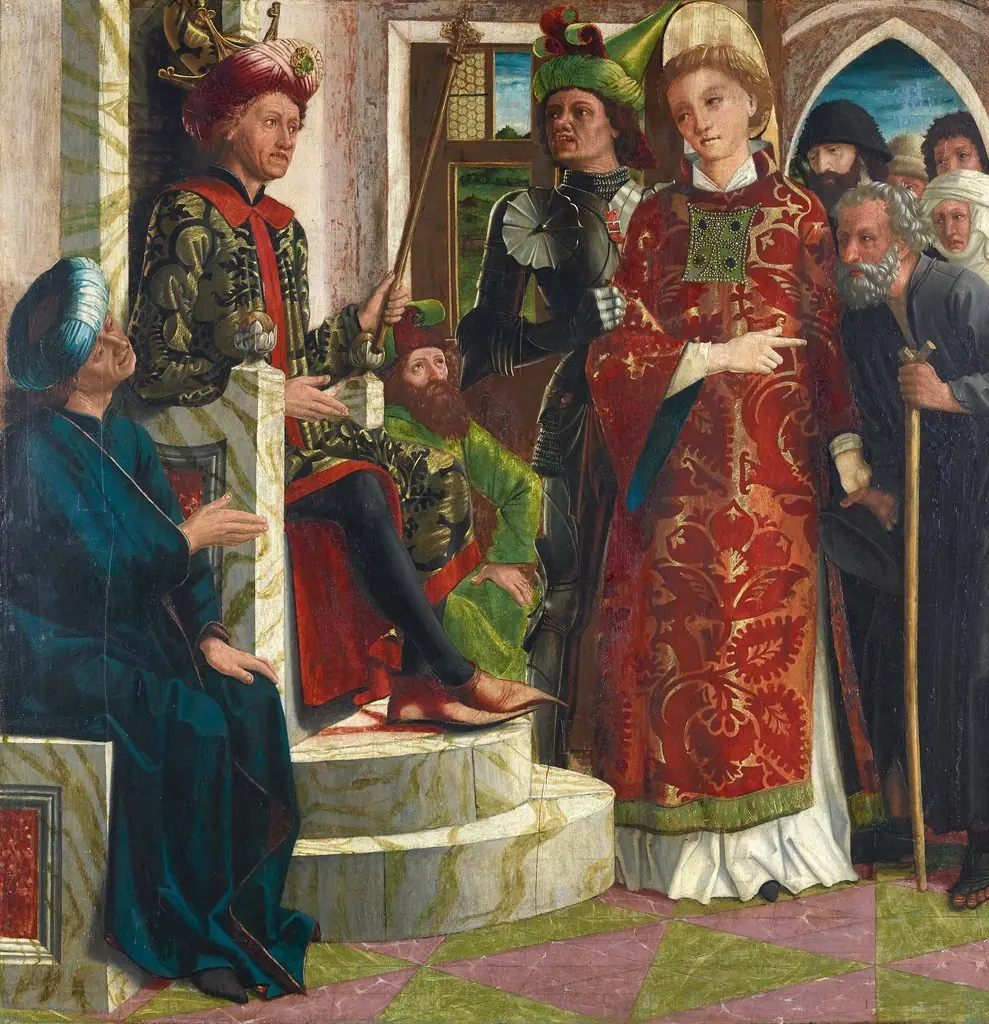 Der hl. Laurentius vor Kaiser Decius
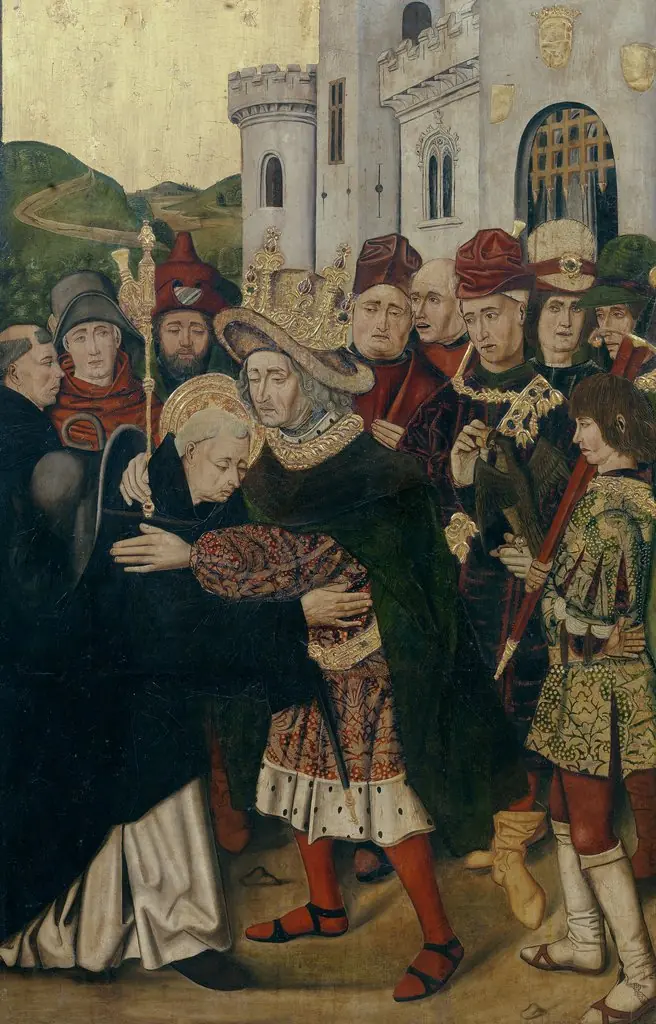 Ferdinand I of Castile welcoming Saint Dominic of Silos
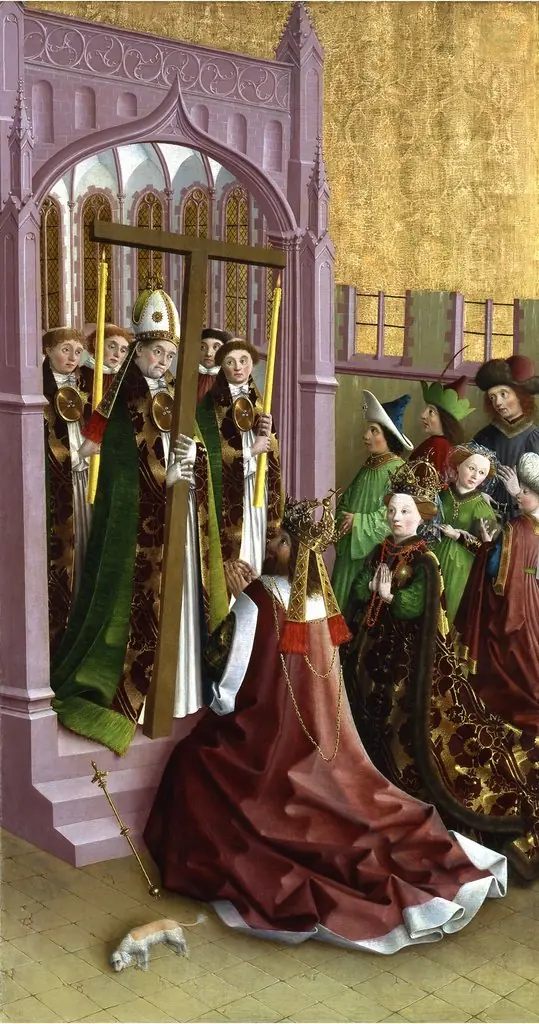 Darmstadt Altarpiece: Constantine and His Mother Helena Venerating the True Cross
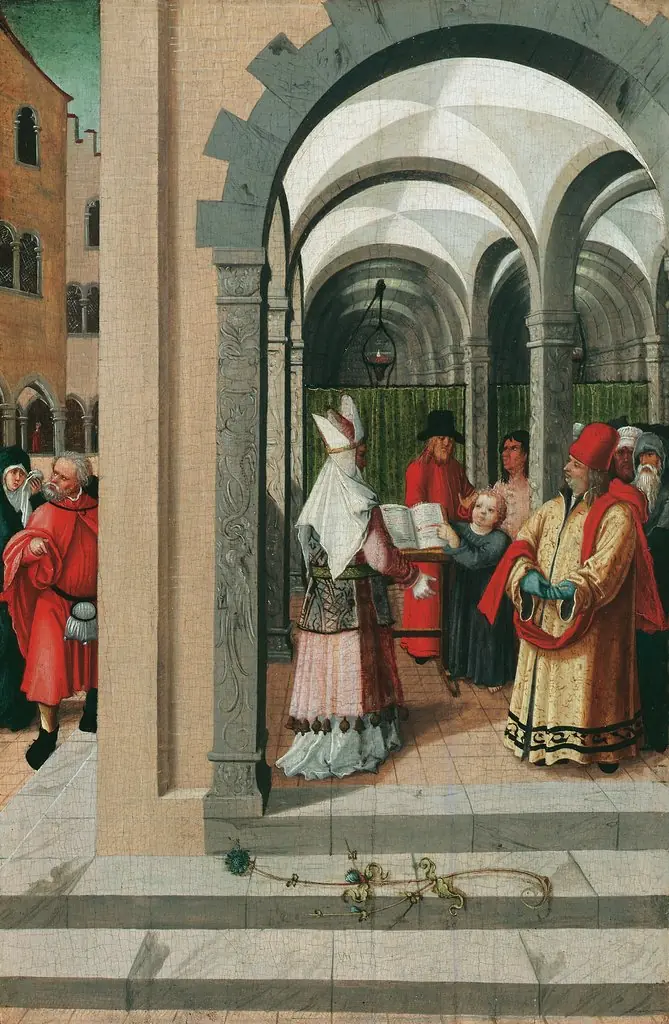 Der zwölfjährige Jesus im Tempel
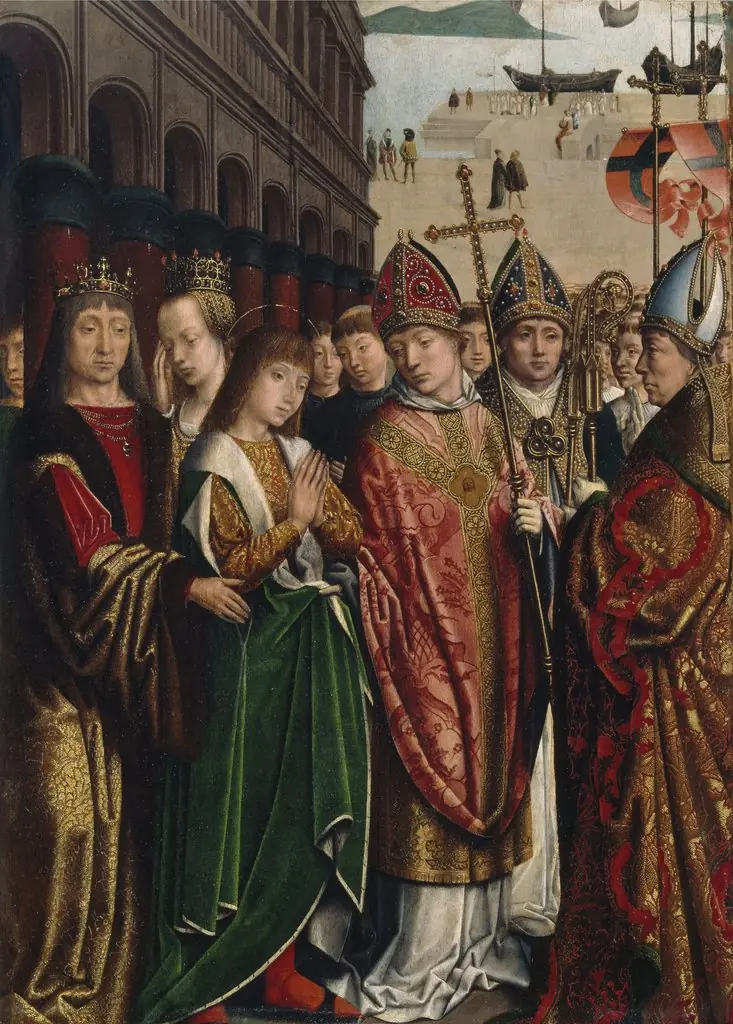 Saint Rumbold Taking Leave of his Parents
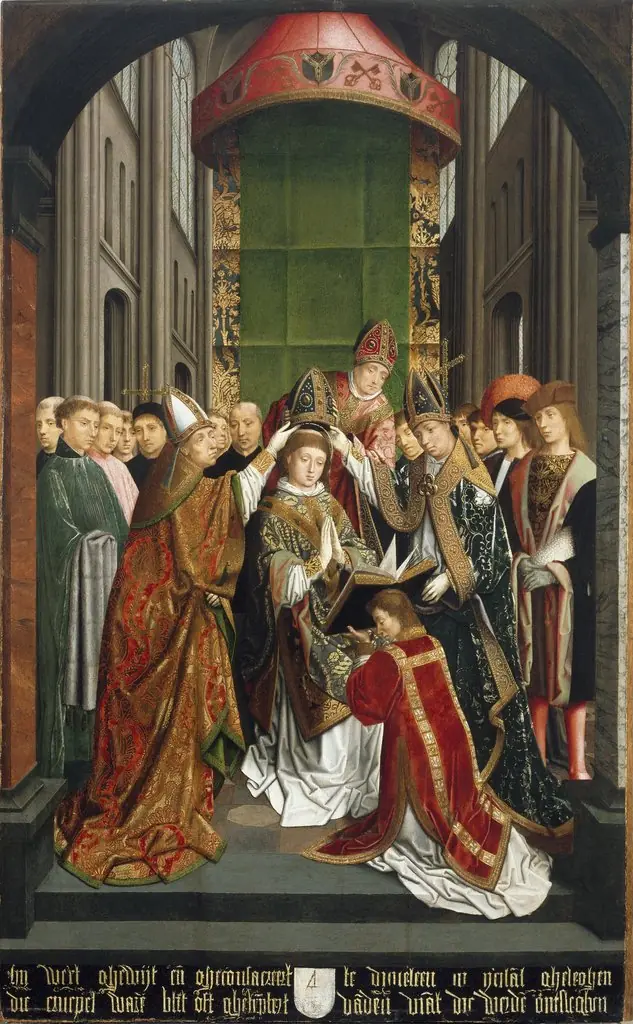 The Enthronement of Saint Romold as Bishop of Dublin
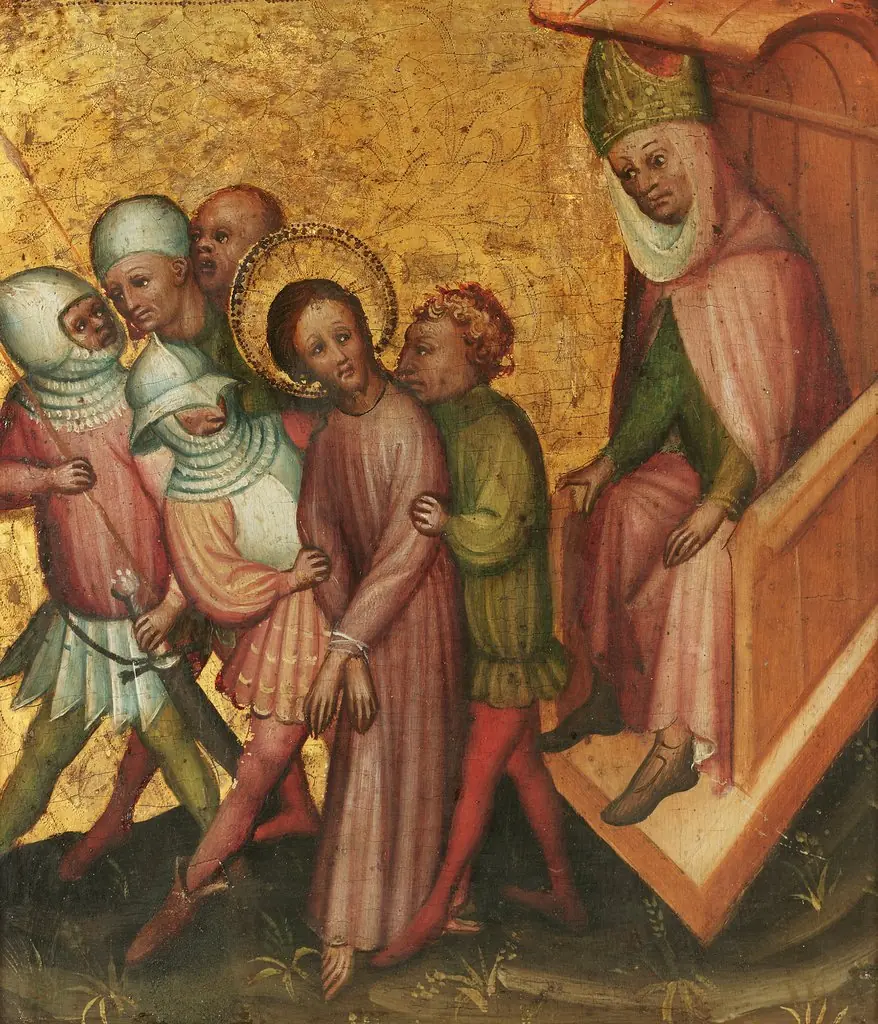 Christus vor Kaiphas
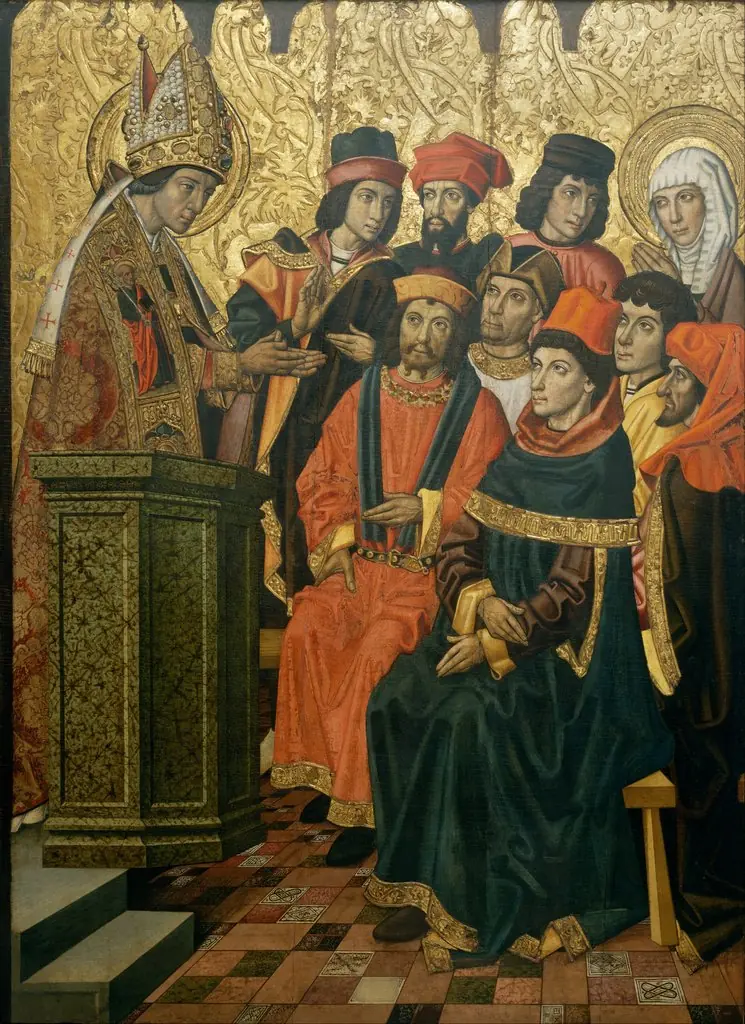 Saint Augustine and Saint Monica in a Sermon by Saint Ambrose
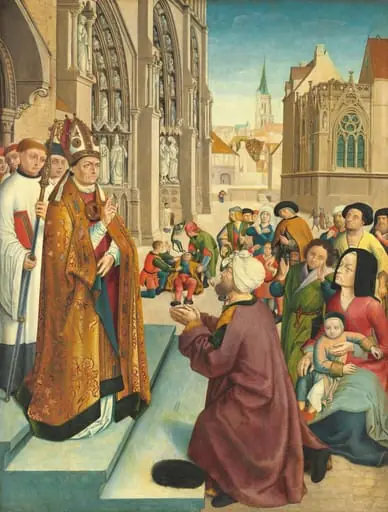 Episodes from the Life of a Bishop Saint