Artwork
Der hl. Laurentius vor Kaiser Decius
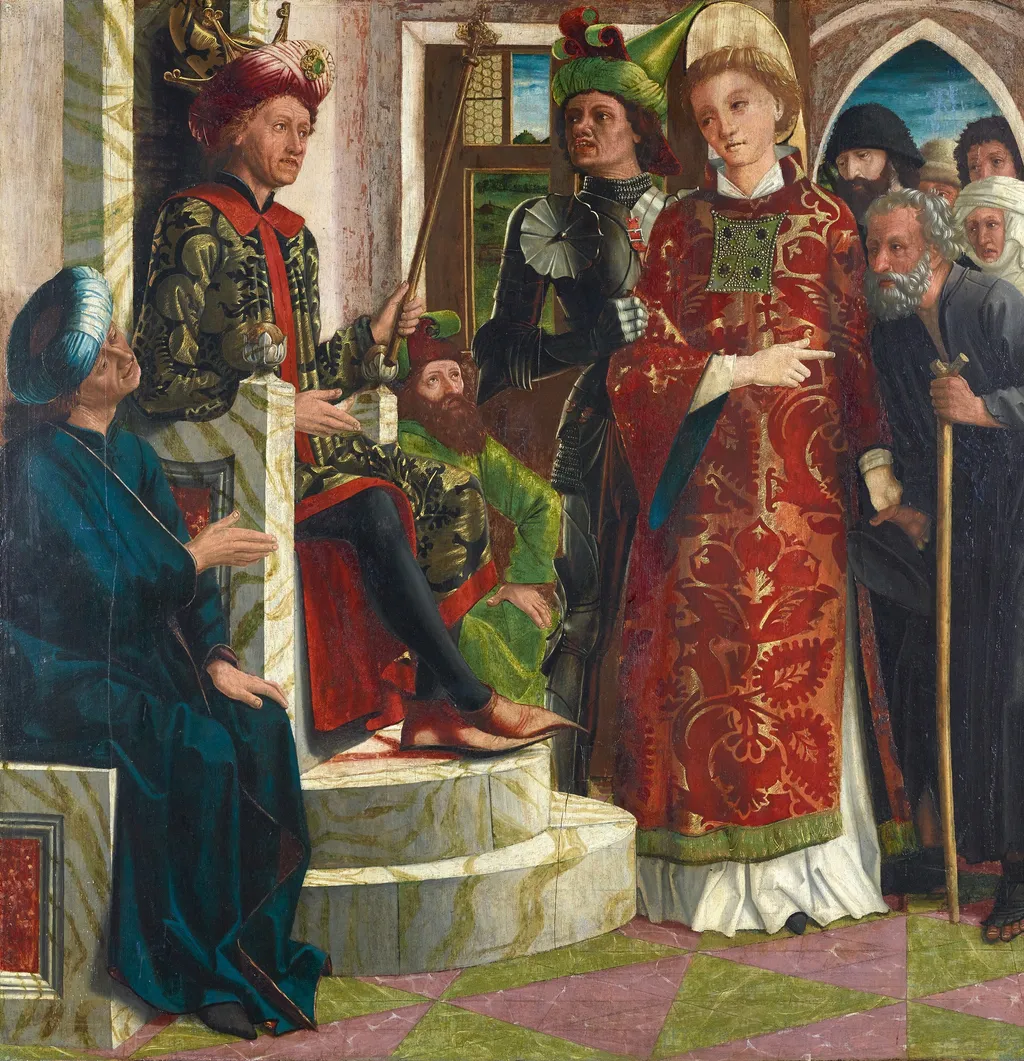
Der hl. Laurentius vor Kaiser Decius is an unspecified painting by the Early Renaissance artist Michael Pacher. It dates from 1465 and is held in the collection of the Kunsthistorisches Museum.
About this work
Overview
Its modest dimensions belie the intricacy of its surface, where pigments are layered to achieve luminous, saturated hues.
Michael Pacher’s *Der hl. Laurentius vor Kaiser Decius* dates to 1465, marking a transitional moment in Central European art. Executed in tempera and oil on panel, the work merges late Gothic precision with emerging Renaissance spatial logic. Its modest dimensions belie the intricacy of its surface, where pigments are layered to achieve luminous, saturated hues. The painting remains among Pacher’s most studied works for its technical and iconographic innovations.
Subject & Meaning
The scene depicts Saint Lawrence’s interrogation by Emperor Decius, a narrative drawn from early Christian martyrdom accounts. Lawrence, clad in liturgical red, stands accused before the enthroned ruler, whose green robes signal imperial authority. A female figure gestures toward the seated emperor, possibly personifying Justice or the Church. Each facial expression and gesture conveys gravitas, reinforcing the moral weight of the confrontation between temporal and spiritual power.
Technique & Style
Pacher employs a restrained linear perspective, organizing figures within a shallow architectural space. Drapery folds are rendered with crisp, angular contours that recall late medieval manuscript illumination, yet the modeling of faces and hands reveals a new interest in volumetric form. Gold leaf and brocade patterns are meticulously applied, their reflective surfaces contrasting with matte fabrics to create visual hierarchy. The palette—deep reds, emerald greens, and ochres—enhances the scene’s dramatic tension.
History & Provenance
Commissioned for an unidentified ecclesiastical setting in the Tyrol, the panel likely formed part of a larger altarpiece dedicated to Saint Lawrence. It entered the Kunsthistorisches Museum, Vienna, in the nineteenth century, following secularization campaigns that dispersed many ecclesiastical collections. Conservation records note minor losses along the panel joins, though the original paint layer remains largely intact, preserving Pacher’s exacting detail.
Context
Created during a period of artistic exchange between Italy and the Alpine regions, the painting reflects Pacher’s engagement with Paduan and Florentine models. His synthesis of Northern European craftsmanship with Southern European spatial principles positioned him as a key figure in the dissemination of Renaissance ideals north of the Alps. The work also responds to contemporary devotional practices, emphasizing the immediacy of sacred narratives.
Legacy
Pacher’s panel influenced subsequent generations of Tyrolean and Bavarian artists, who adopted his approach to figural arrangement and color harmony. Later scholarship has situated the work within broader debates about the reception of Renaissance naturalism in German-speaking lands. Today, it serves as a benchmark for assessing the technical and conceptual shifts that defined Central European painting in the late fifteenth century.
Own this work as a print
Artist & collection
Artist
Michael Pacher (c. 1435 – August 1498) was a painter and sculptor from Tyrol active during the second half of the fifteenth century. He was one of the earliest artists to introduce the principles of Renaissance painting…

 Kirchenväteraltar, Flügelaußenseite: Der Teufel weist dem hl. Augustinus das Buch der Laster vor
 Pope Sixtus II. bids farewell to St. Lawrence
 Saint Ambrose from Milan
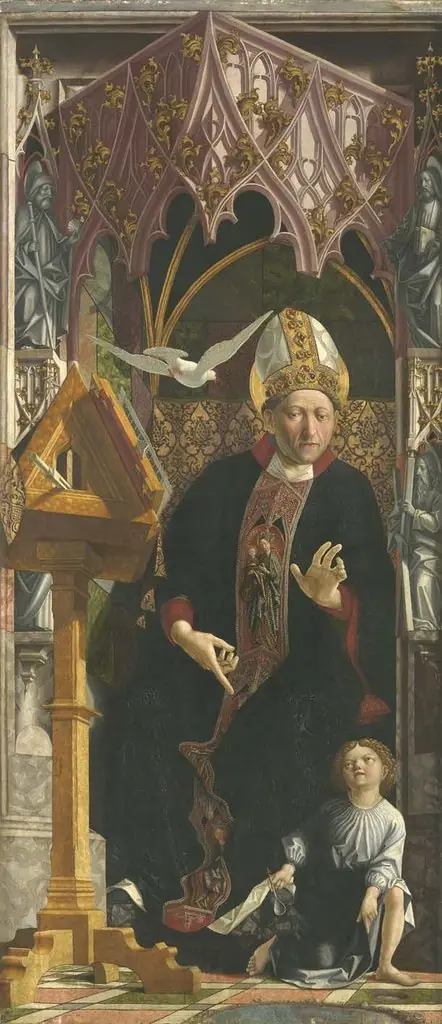 Kirchenväteraltar: Hl. Augustinus
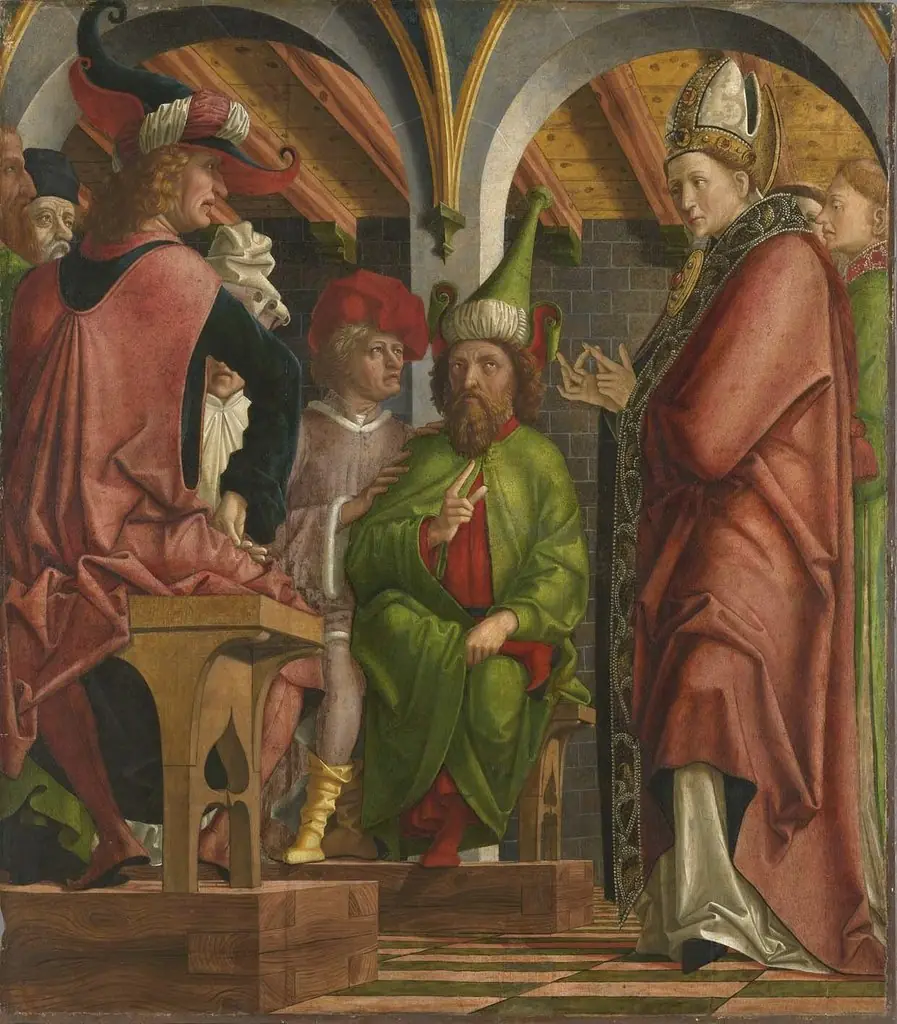 Kirchenväteraltar, Flügelaußenseite: Disputation des hl. Augustinus mit den Häretikern
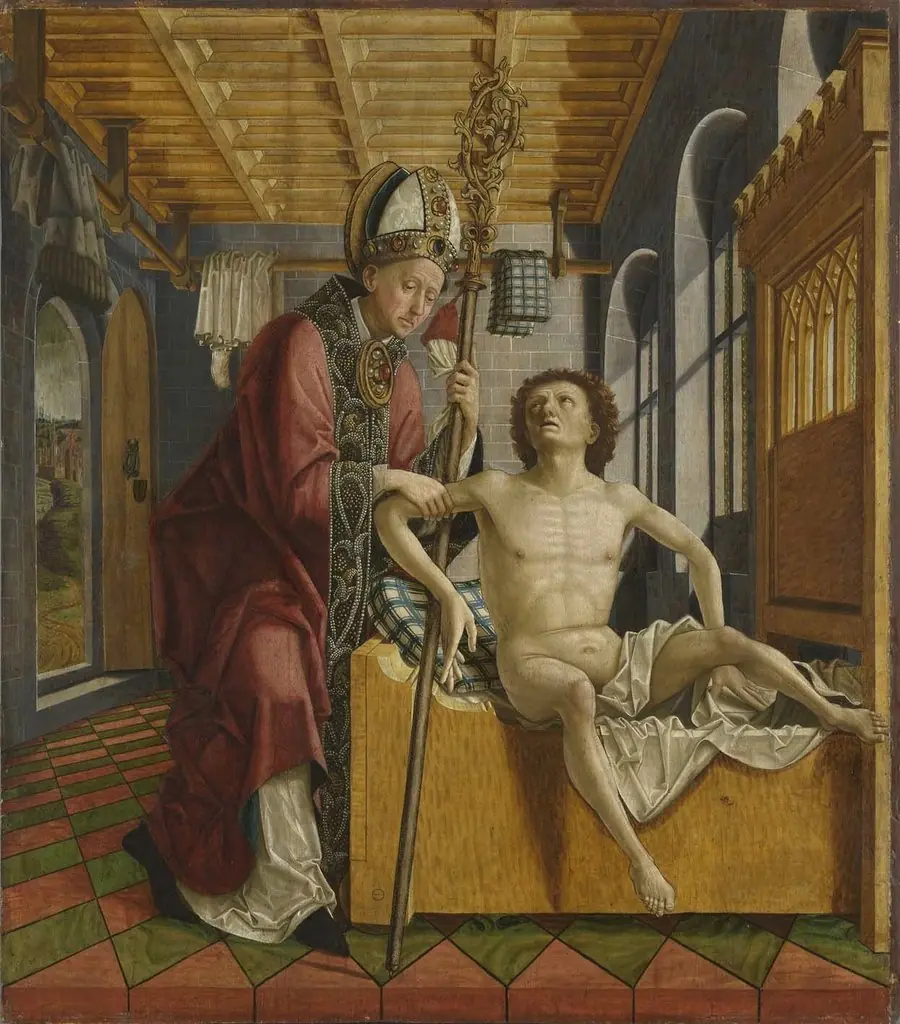 Kirchenväteraltar, Flügelaußenseite: Der hl. Augustinus heilt den Stiftsprobst
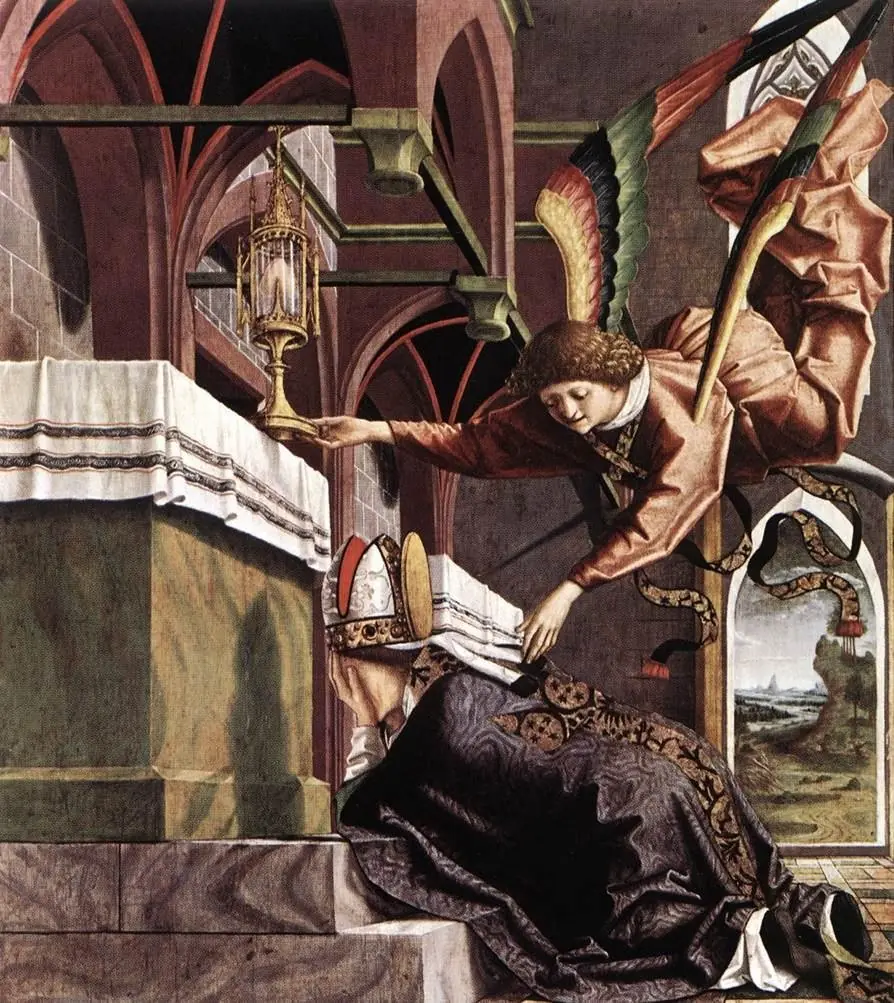 Altarpiece of the Church Fathers: Vision of St Sigisbert
 Kirchenväteraltar: Hl. Hieronymus
 Die vierzehn Nothelfer
 Der zwölfjährige Jesus im Tempel
 Jesus amongst the Doctors of the Law
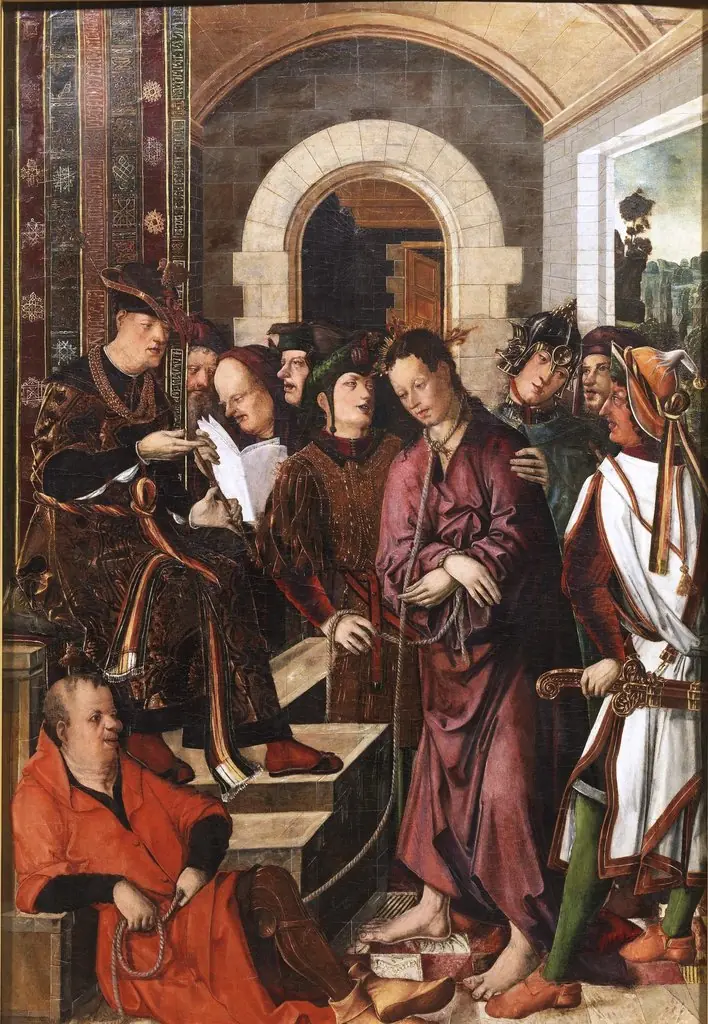 Christ before Pilate
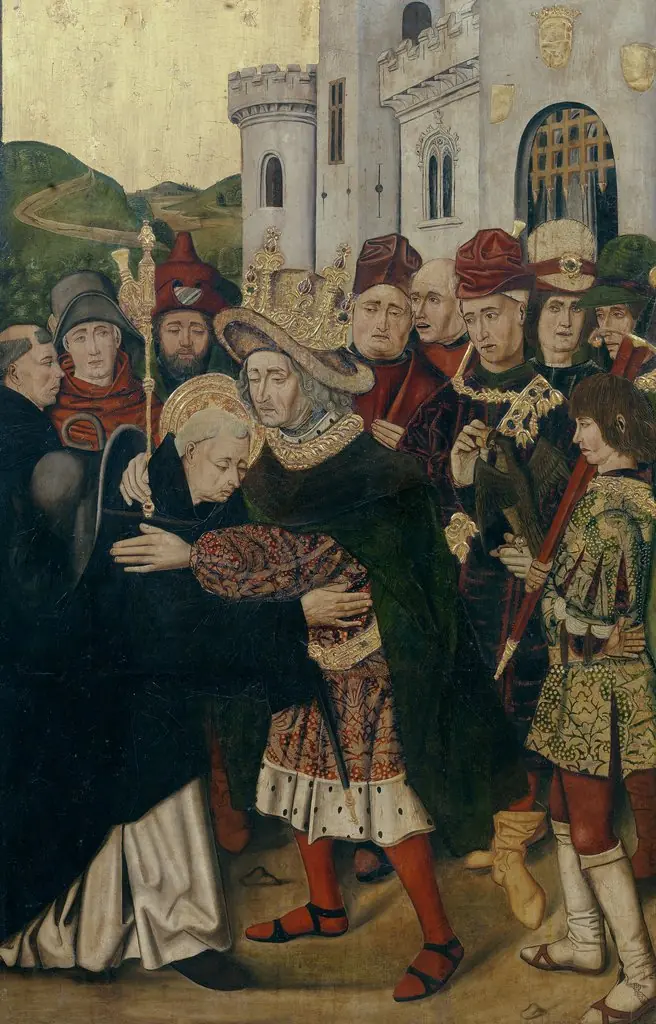 Ferdinand I of Castile welcoming Saint Dominic of Silos
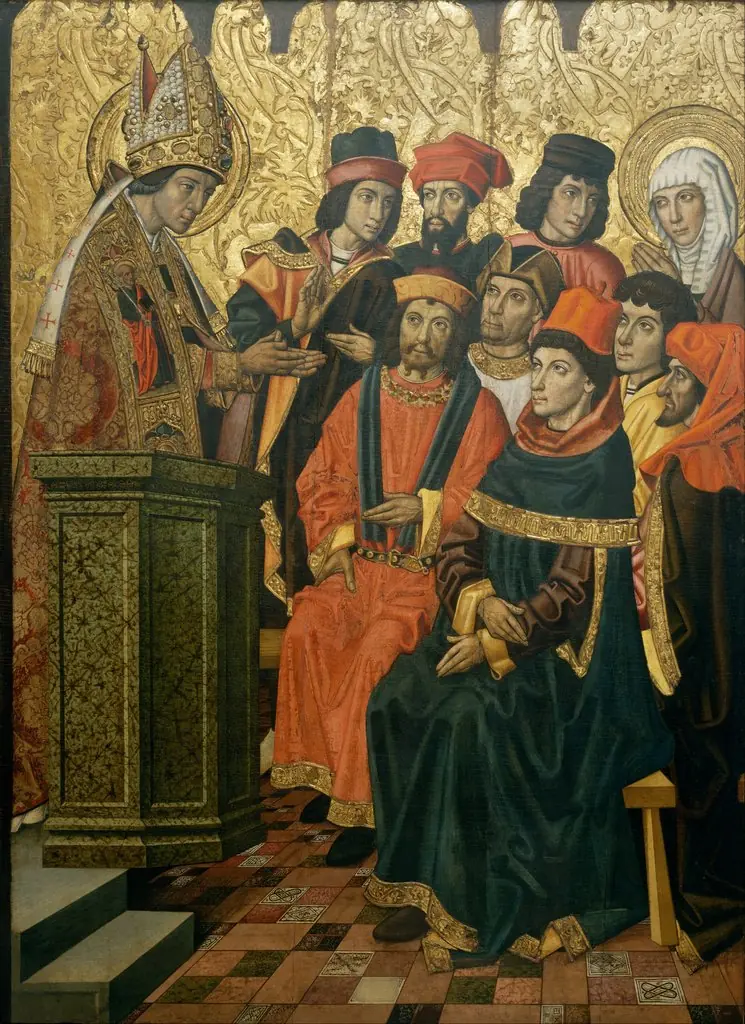 Saint Augustine and Saint Monica in a Sermon by Saint Ambrose
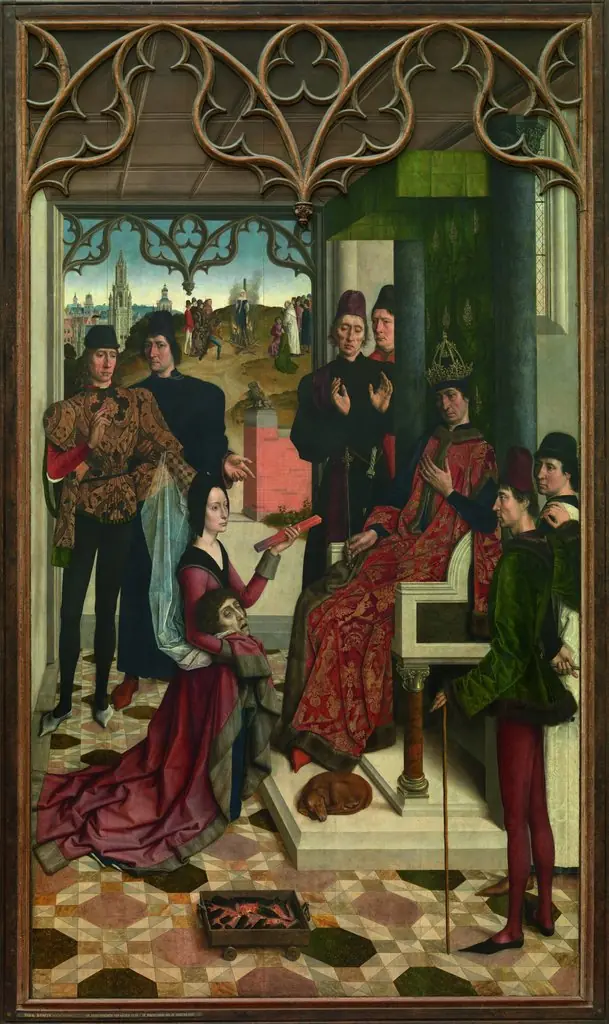 Justice of Emperor Otto III: The Trial by Fire
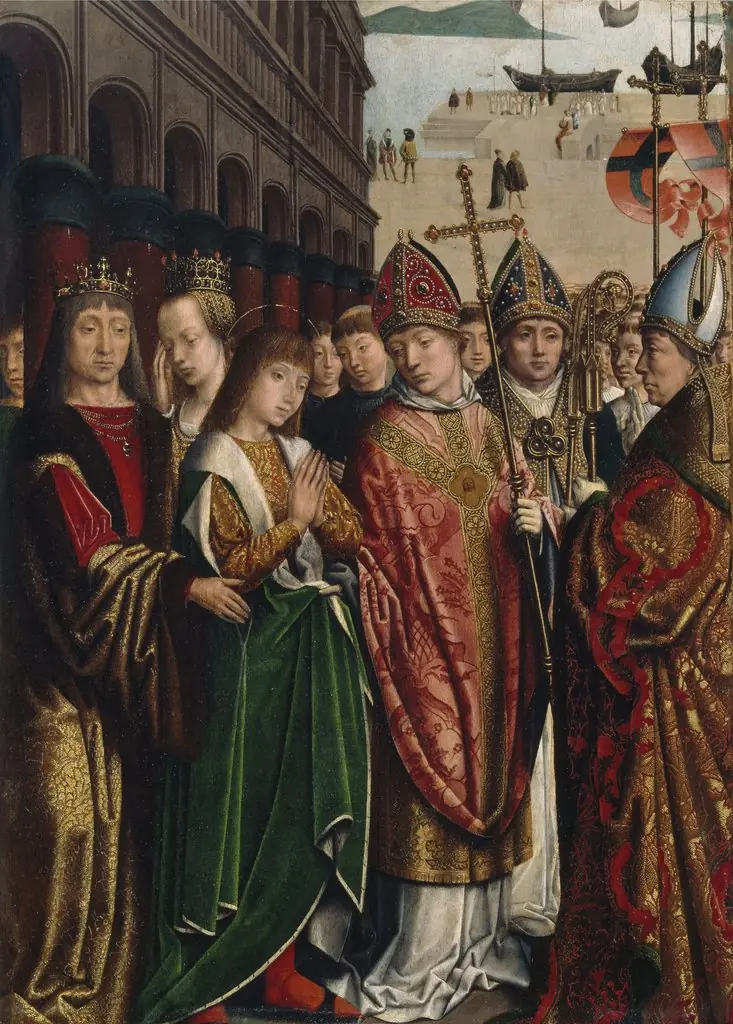 Saint Rumbold Taking Leave of his Parents
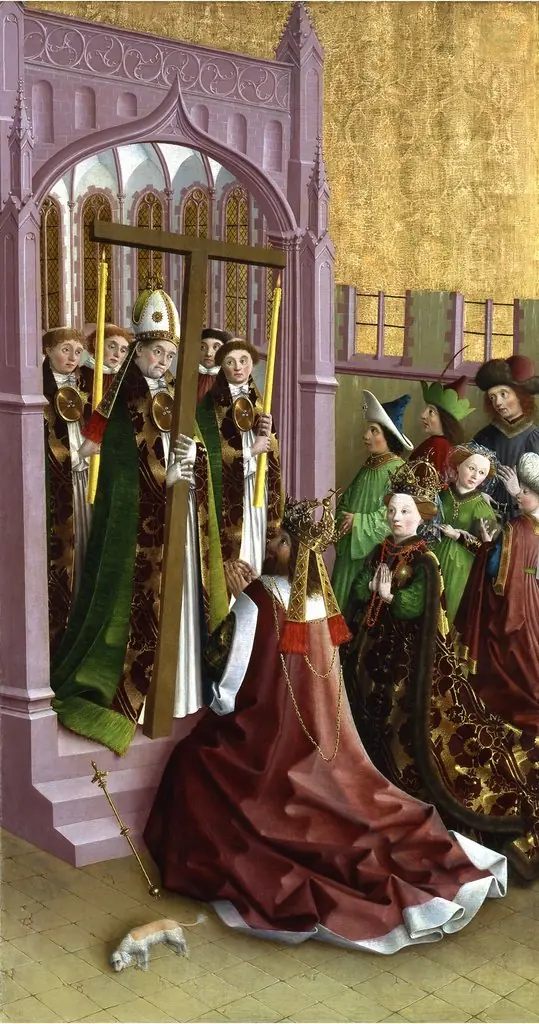 Darmstadt Altarpiece: Constantine and His Mother Helena Venerating the True Cross
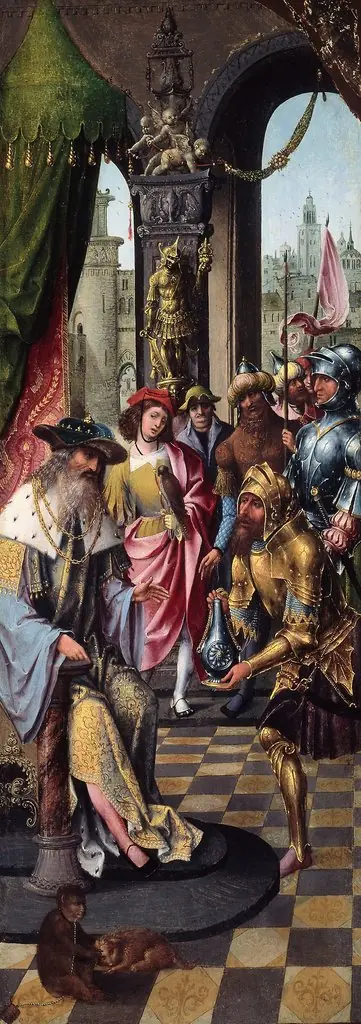 King David Receiving the Cistern Water of Bethlehem
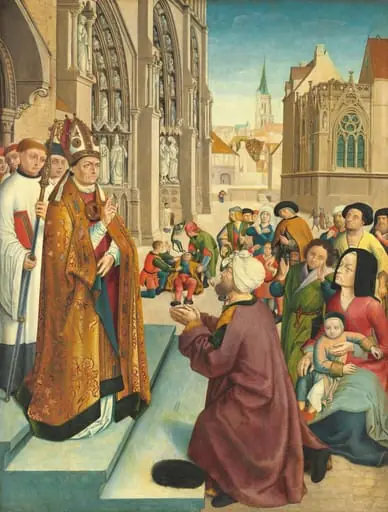 Episodes from the Life of a Bishop Saint