Artwork
Holy Trinity. Votive painting of Jakub Dębiński, from the Parish Church of St Margaret in Dębno near Brzesko
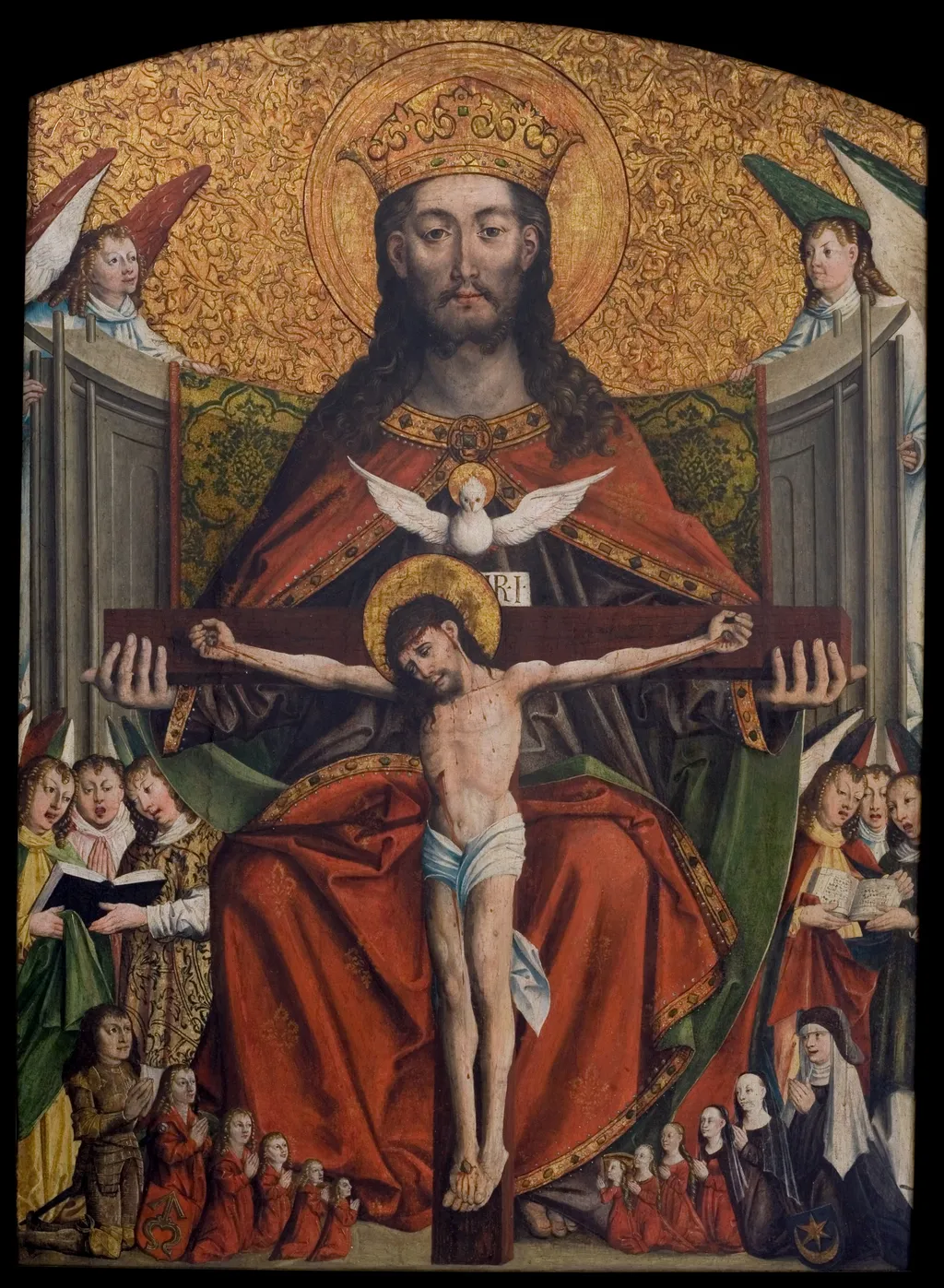
Holy Trinity. Votive painting of Jakub Dębiński, from the Parish Church of St Margaret in Dębno near Brzesko is an unspecified painting by the Northern Renaissance artist Unknown. It dates from 1520 and is held in the collection of the National Museum in Kraków. This votive painting, created for the Parish Church of St.
About this work
Overview
The composition includes kneeling donors and other figures, indicating its function as an offering of prayer and gratitude by a private patron, Jakub Dębiński.
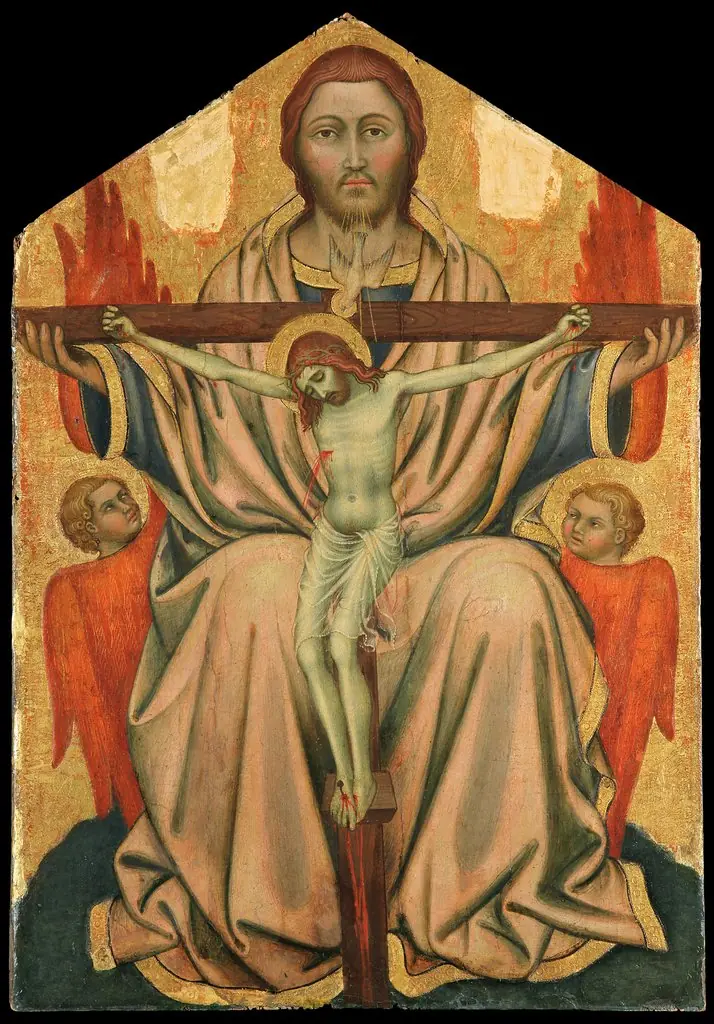
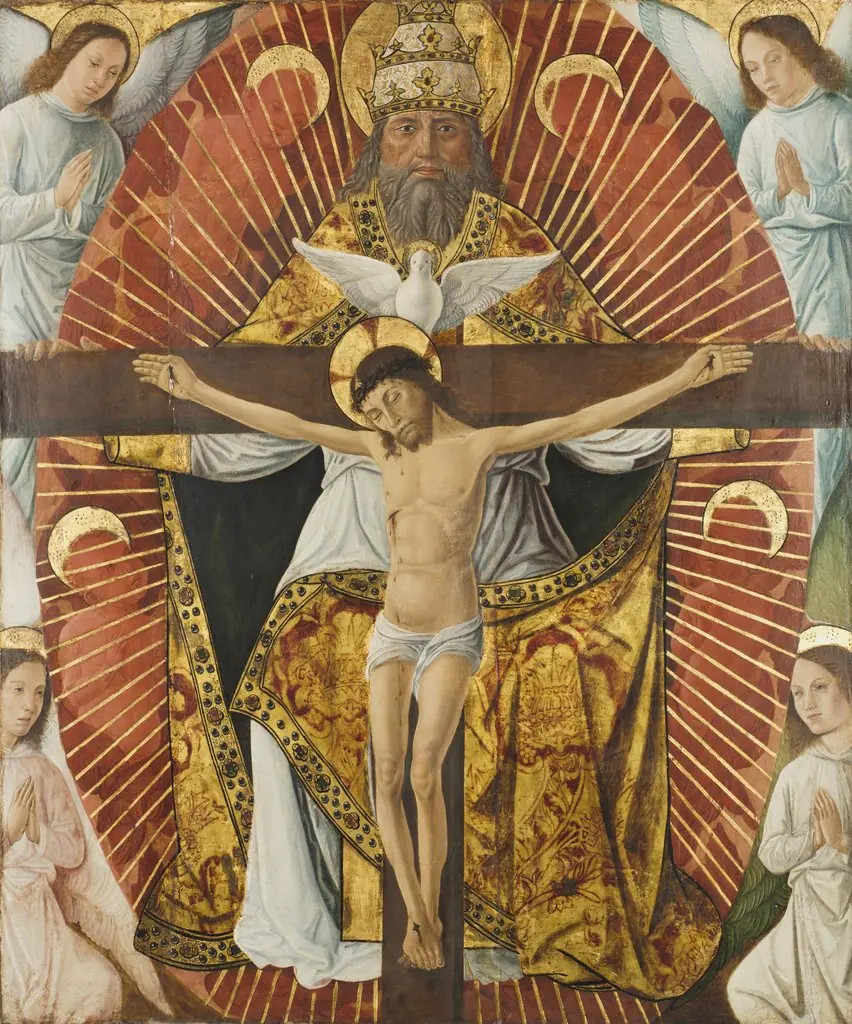
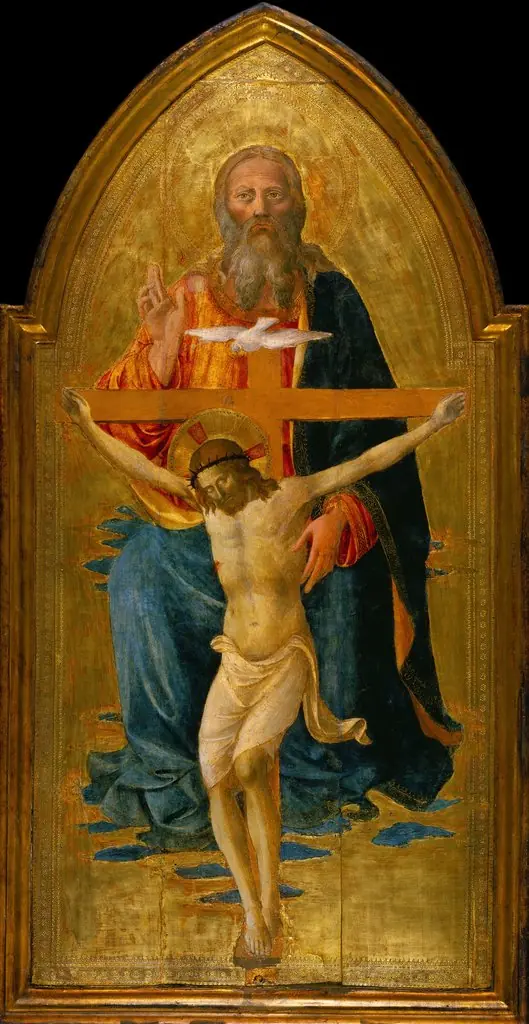
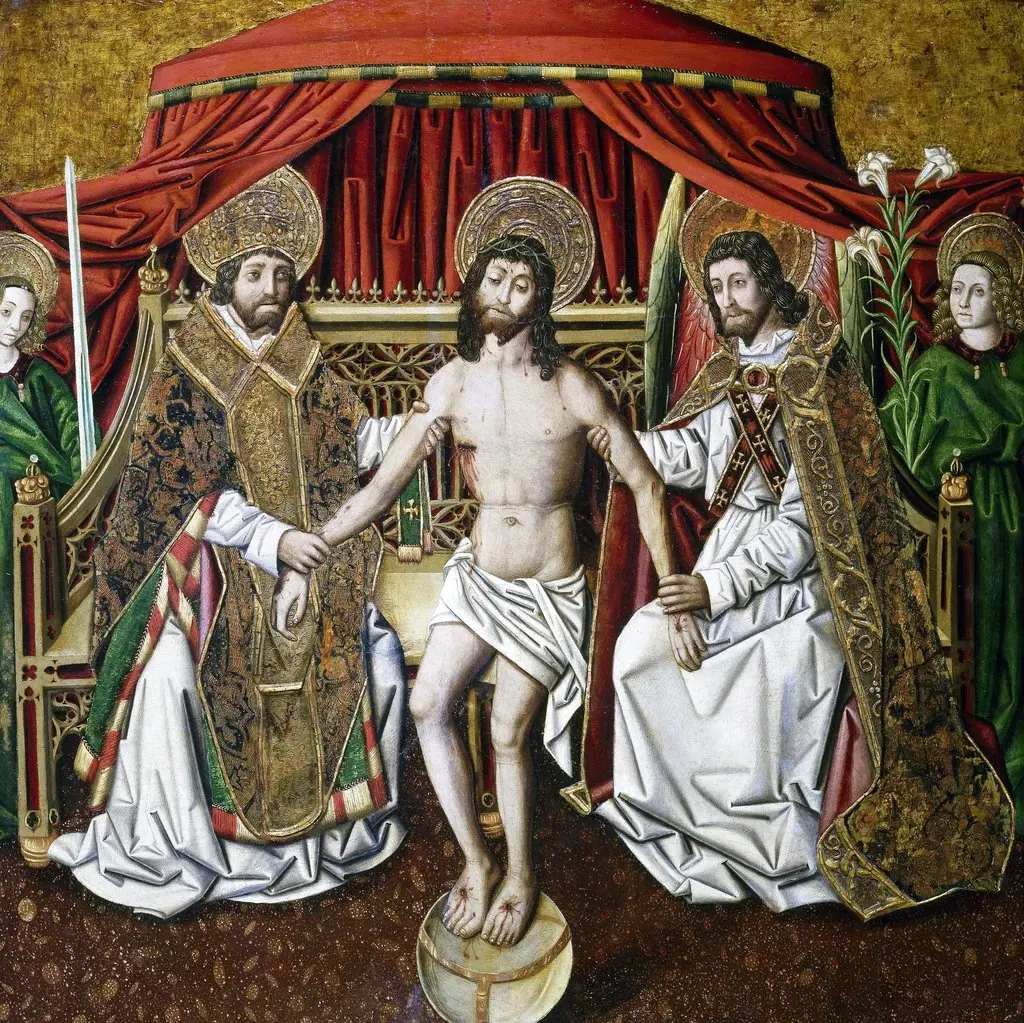
This votive painting, created for the Parish Church of St. Margaret in Dębno near Brzesko, portrays the Holy Trinity in a devotional context. It centers on Christ crucified, with God the Father above, and the Holy Spirit implied through the surrounding luminous space. The composition includes kneeling donors and other figures, indicating its function as an offering of prayer and gratitude by a private patron, Jakub Dębiński.
Subject & Meaning
The painting illustrates the Christian doctrine of the Trinity through hierarchical spatial arrangement: Christ on the cross, God the Father in celestial authority above, and the implied presence of the Holy Spirit. The kneeling figures represent the donor and community, visually affirming their faith and petition for divine intercession. The inclusion of books and instruments suggests literacy and liturgical participation among the faithful.
Technique & Style
Executed in tempera or oil on panel, the work employs a flat, decorative gold background typical of late medieval devotional art. Figures are rendered with simplified anatomy and symbolic color—red for Christ’s sacrifice, gold for divinity. The lack of perspective and emphasis on pattern over naturalism reflect regional Polish traditions, prioritizing spiritual presence over spatial realism.
History & Provenance
Commissioned by Jakub Dębiński, the painting was installed in the Parish Church of St. Margaret in Dębno, likely in the late 15th or early 16th century. It remained in situ for centuries, serving as a focal point for local worship. Its survival through periods of religious upheaval suggests continued local veneration and careful preservation by the parish community.
Context
Created during a period of strong lay piety in rural Poland, the painting reflects the trend of private individuals commissioning religious art to express personal devotion and secure spiritual benefits. Similar votive panels were common in Lesser Poland, often depicting the Trinity or saints alongside donors, reinforcing communal identity and religious obligation within village life.
Legacy
The painting remains an important example of regional Polish devotional art, preserving the visual language of late medieval piety. It contributes to scholarly understanding of how ordinary believers engaged with theological concepts through imagery. Its continued presence in its original church setting offers rare continuity in a landscape where many such works were lost or dispersed.
Artist & collection

 Domestic Scene
 Giacomo and Cardinal Marco, investing Andrea, Abbot of San Zeno, with his Benefice
 The Nymph of Fontainebleau
 Portrait of a Woman
 Madonna and Child with Saints in the Enclosed Garden
 Venus and Minerva
 Family Group of Four on Sofa
 Wall painting from Room H of the Villa of P. Fannius Synistor at Boscoreale