Artwork
The Trinity
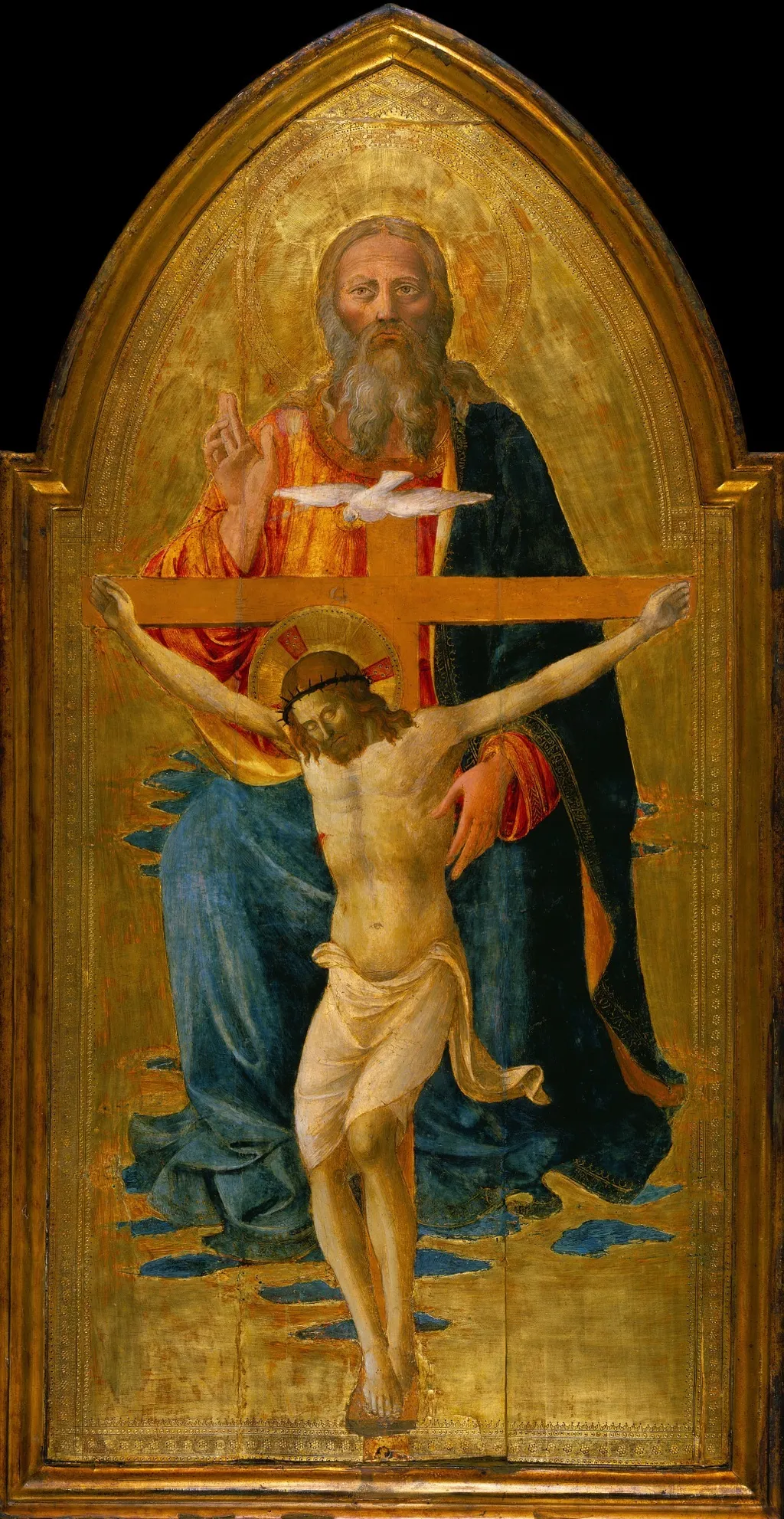
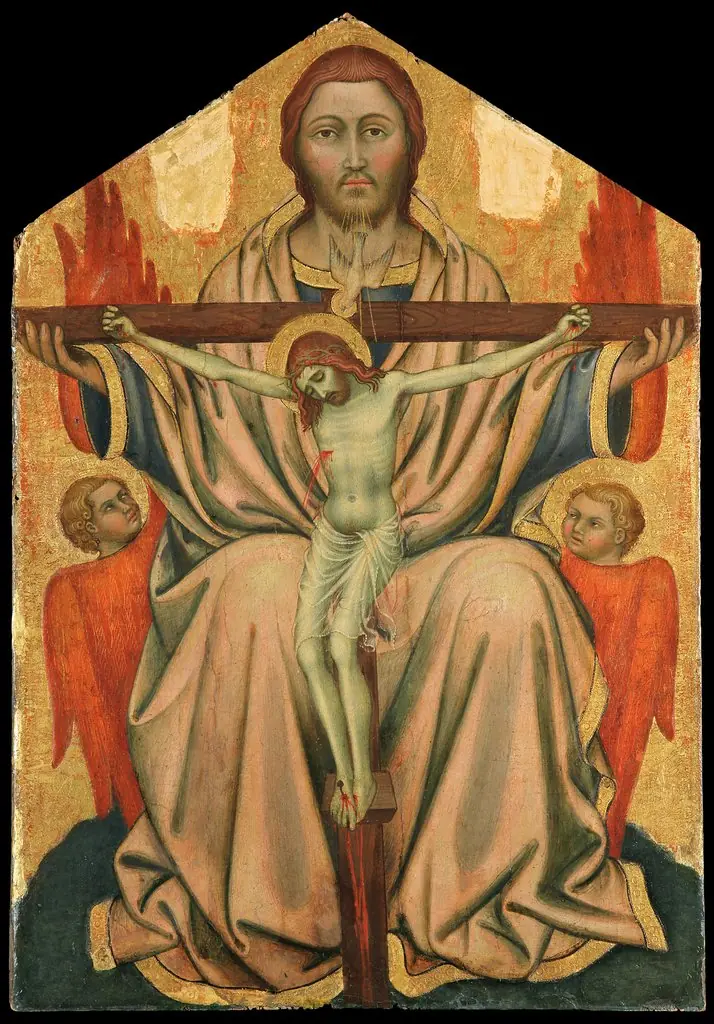
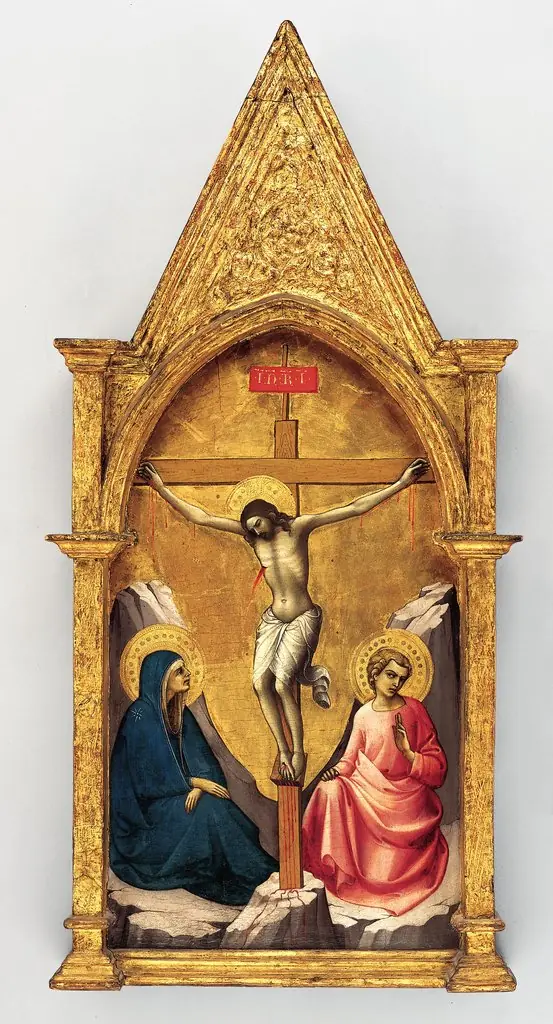
The Trinity is an unspecified painting by the Early Renaissance artist Domenico di Michelino. It dates from 1450 and is held in the collection of the Detroit Institute of Arts.
About this work
Overview
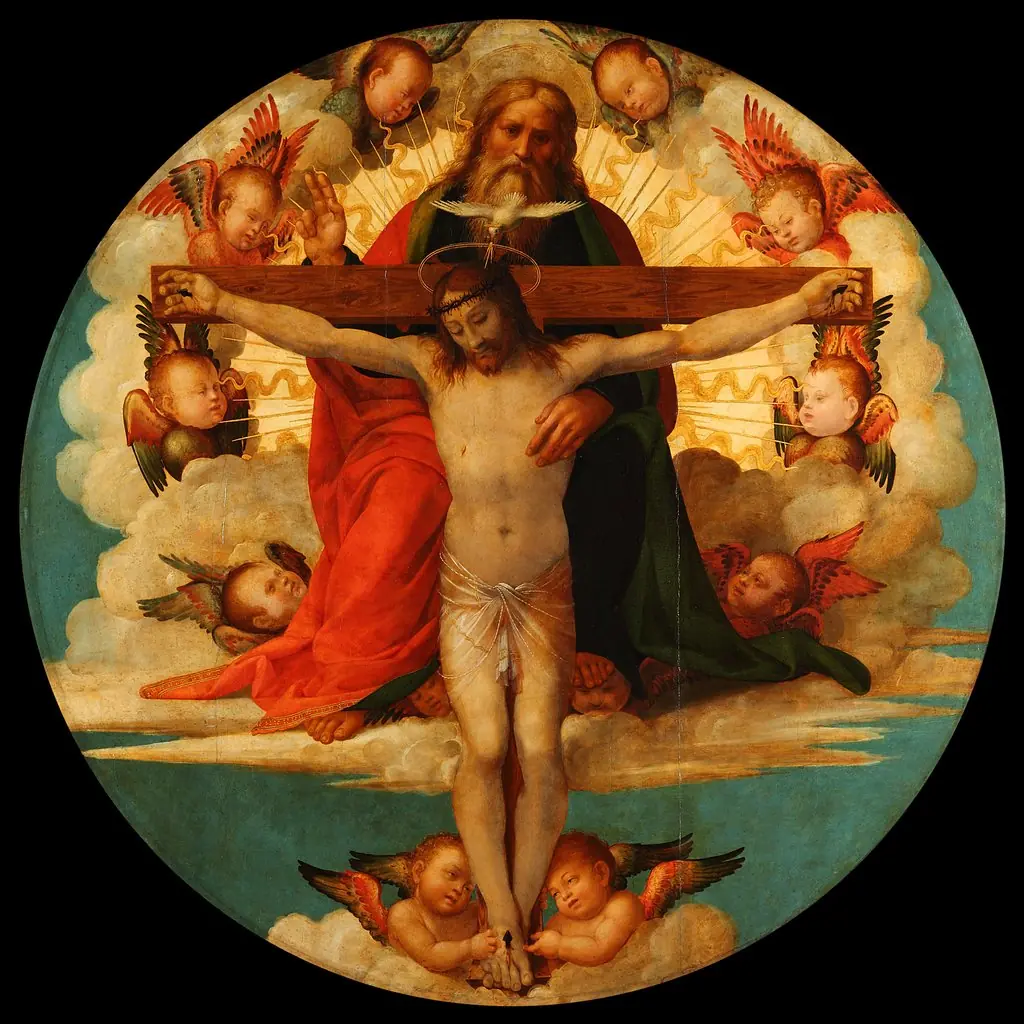
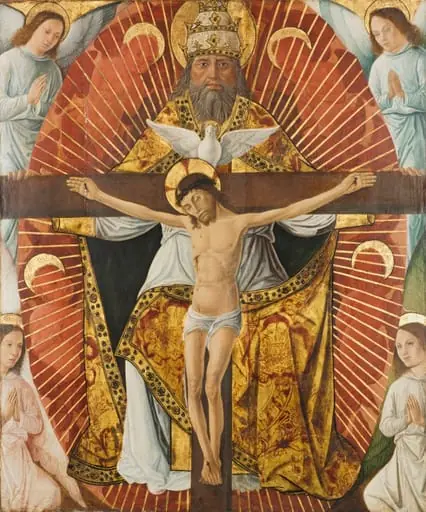
Painted around 1450 by Domenico di Michelino, this work is an early Renaissance devotional panel depicting the Christian Trinity.
Painted around 1450 by Domenico di Michelino, this work is an early Renaissance devotional panel depicting the Christian Trinity. Executed in tempera and gold leaf on wood, it reflects the devotional priorities of mid-15th-century Florence. The painting entered the Detroit Institute of Arts collection in the 20th century and remains a representative example of Florentine religious art from the period.
Subject & Meaning
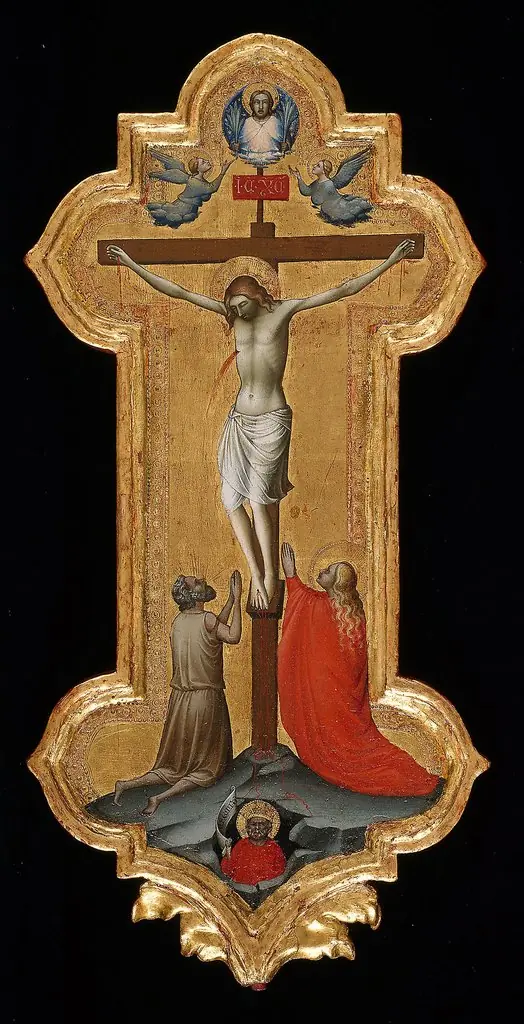
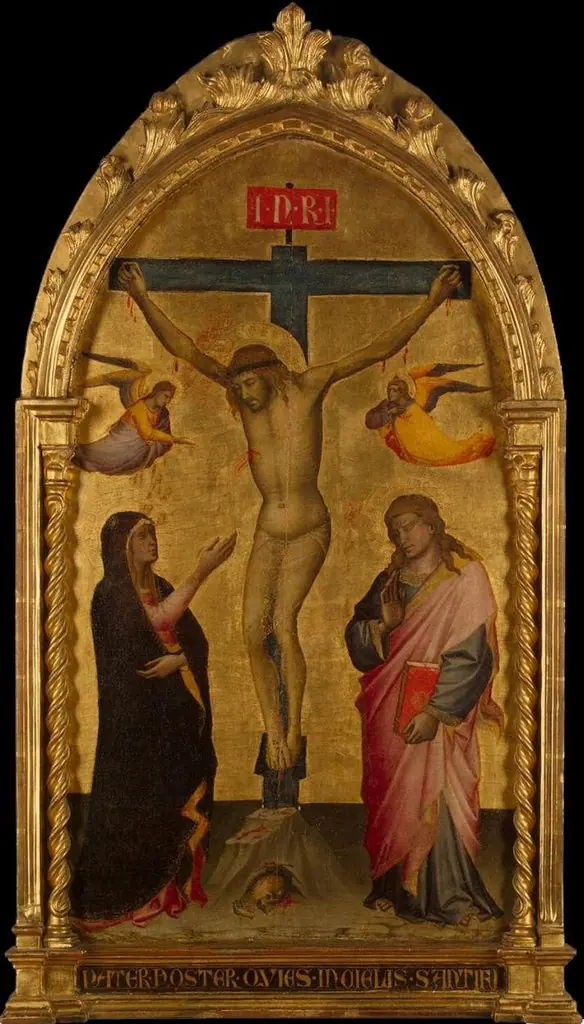
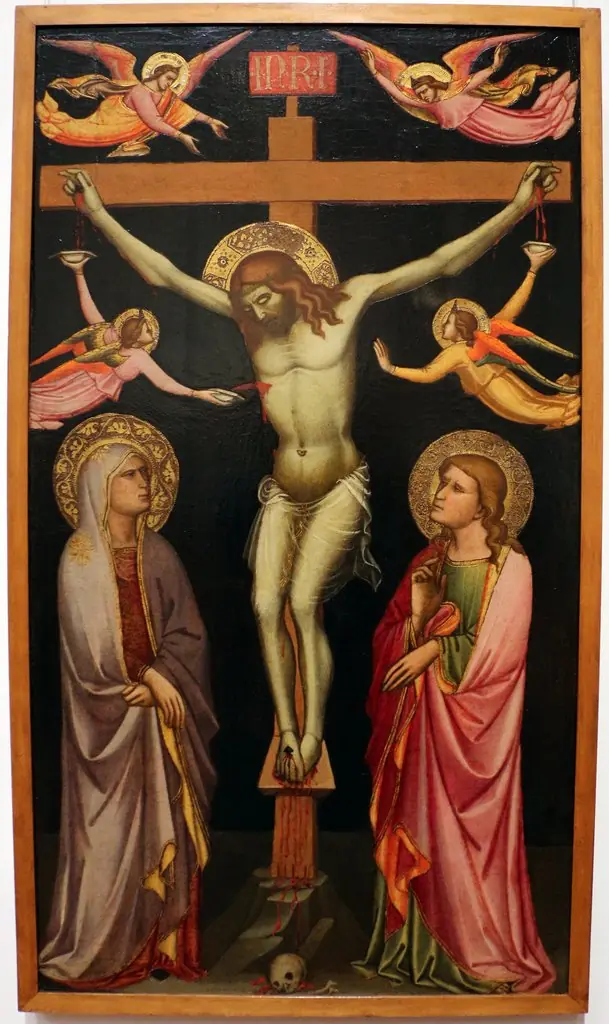
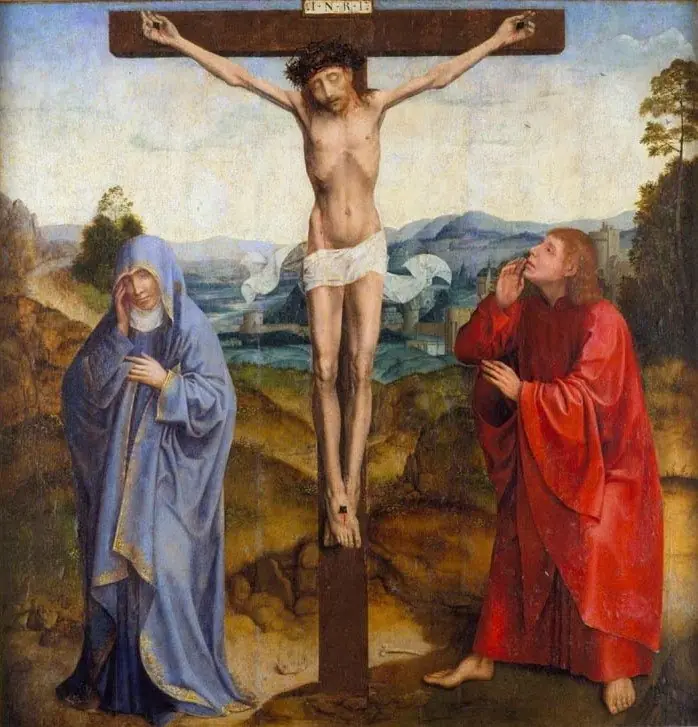
The composition centers on Christ crucified, his body rendered with quiet solemnity. Above him, God the Father, identified by his beard and halo, observes from a celestial realm, draped in red and gold. The gold background signifies divine space, while the figures’ stillness and hierarchical arrangement convey theological order. The scene invites contemplation of sacrifice and divine presence, typical of devotional imagery of the time.
Technique & Style
Michelino employed tempera paint with extensive gold leaf for the background, creating a luminous, otherworldly field. Figures are rendered with careful attention to drapery folds and facial expression, showing influence from Giotto’s tradition. The modeling of Christ’s body suggests a nascent understanding of volume, though spatial depth remains limited. The style bridges late Gothic formalism and early Renaissance naturalism.
History & Provenance
The painting was likely commissioned for private or ecclesiastical use in Florence during the 1440s–1450s. Its early history is undocumented, but it surfaced in European collections before being acquired by the Detroit Institute of Arts in the 1930s. Its preservation in good condition allows study of Florentine panel painting techniques from the early Renaissance.
Context
Created during a period when Florence was a hub of religious art production, the painting aligns with devotional practices emphasizing Christ’s sacrifice and divine authority. Artists like Michelino worked within established iconographic traditions, responding to both theological demands and patron expectations. The use of gold leaf and hierarchical composition reflects continuity with medieval practices even as naturalistic tendencies emerged.
Legacy
Though not widely known outside scholarly circles, the painting contributes to understanding the evolution of Florentine religious imagery. It demonstrates how artists balanced symbolic tradition with emerging realism, serving as a bridge between medieval iconography and the humanist tendencies of later Renaissance painting. Its presence in a major American museum broadens access to early Italian devotional art.
Artist & collection
Artist
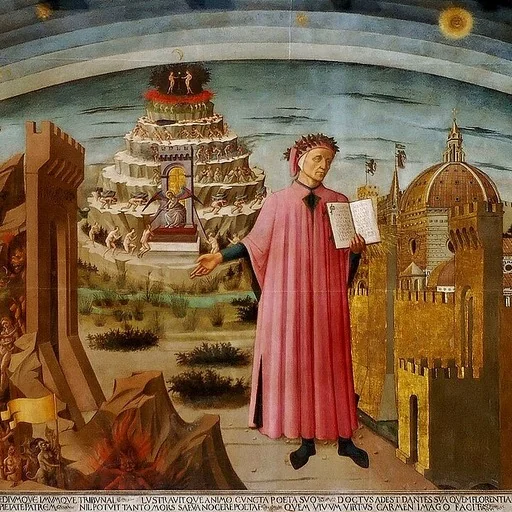
Domenico di Michelino (1417–1491) was an Italian Renaissance painter who was born and died in Florence.