Artwork
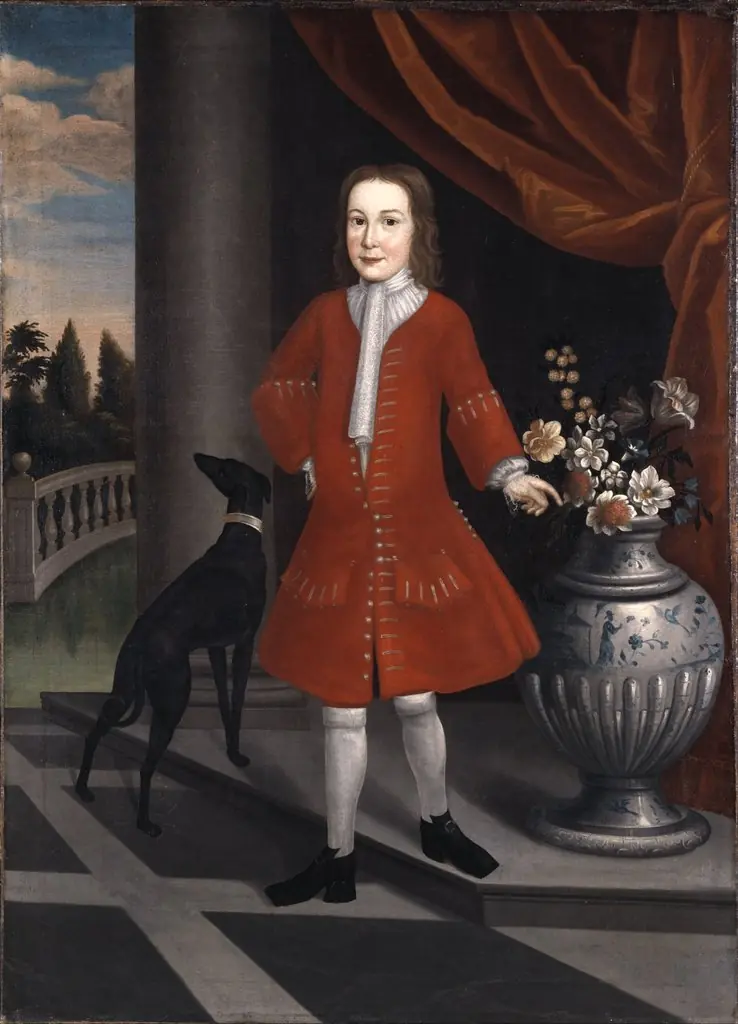
Boy of Hallett Family with Dog
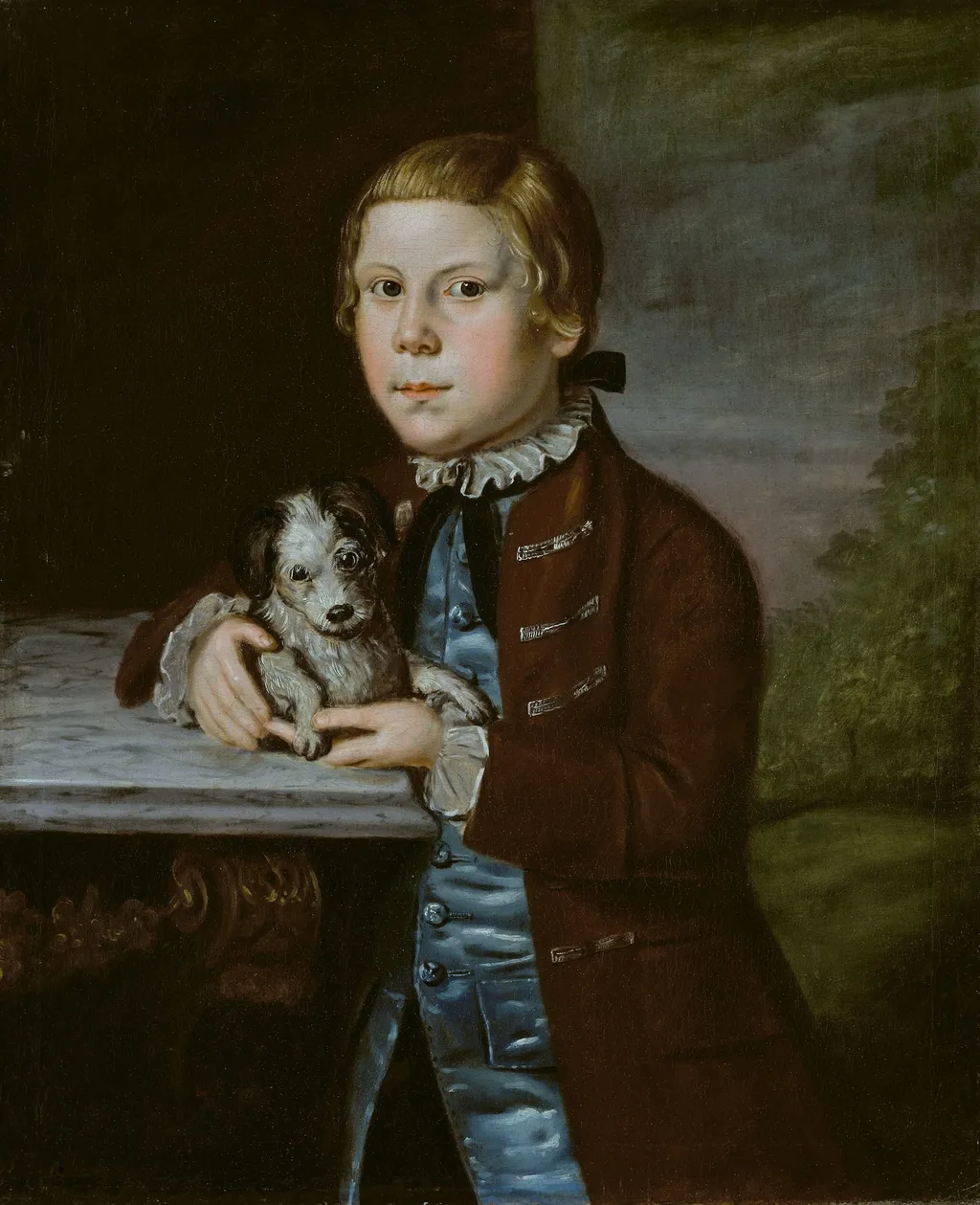
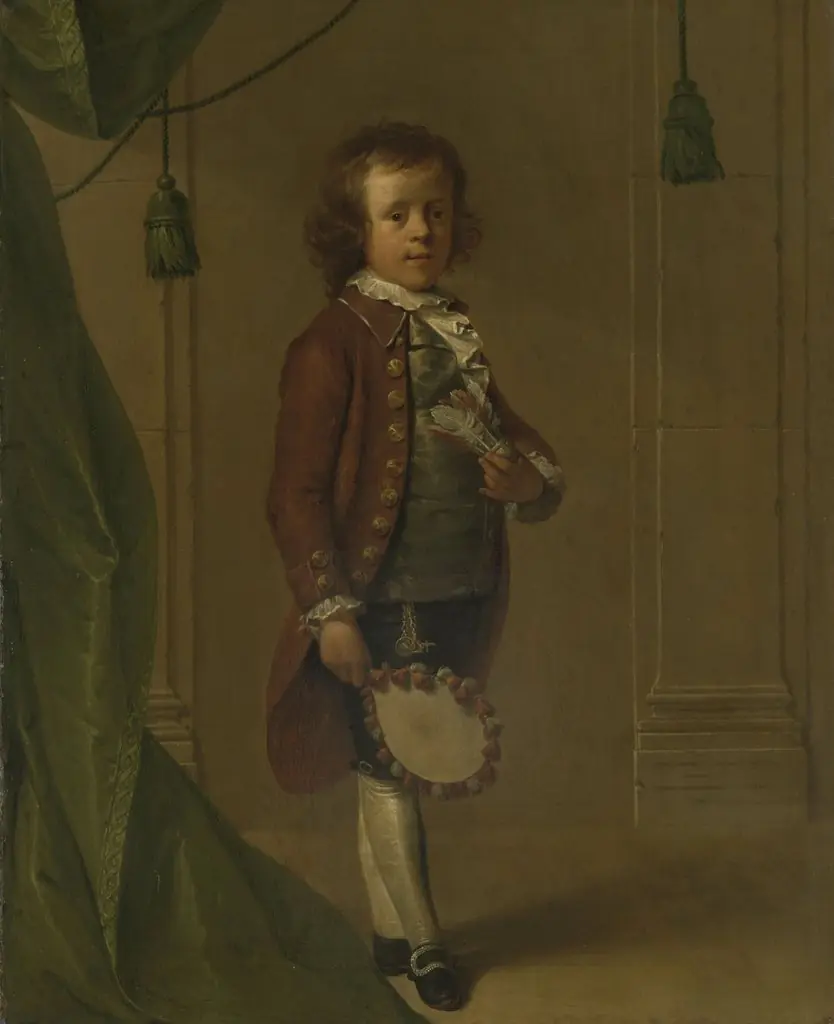
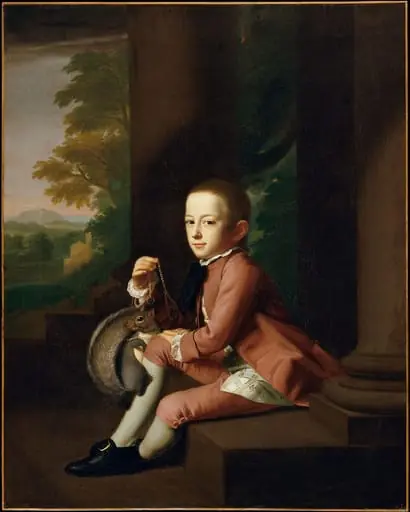
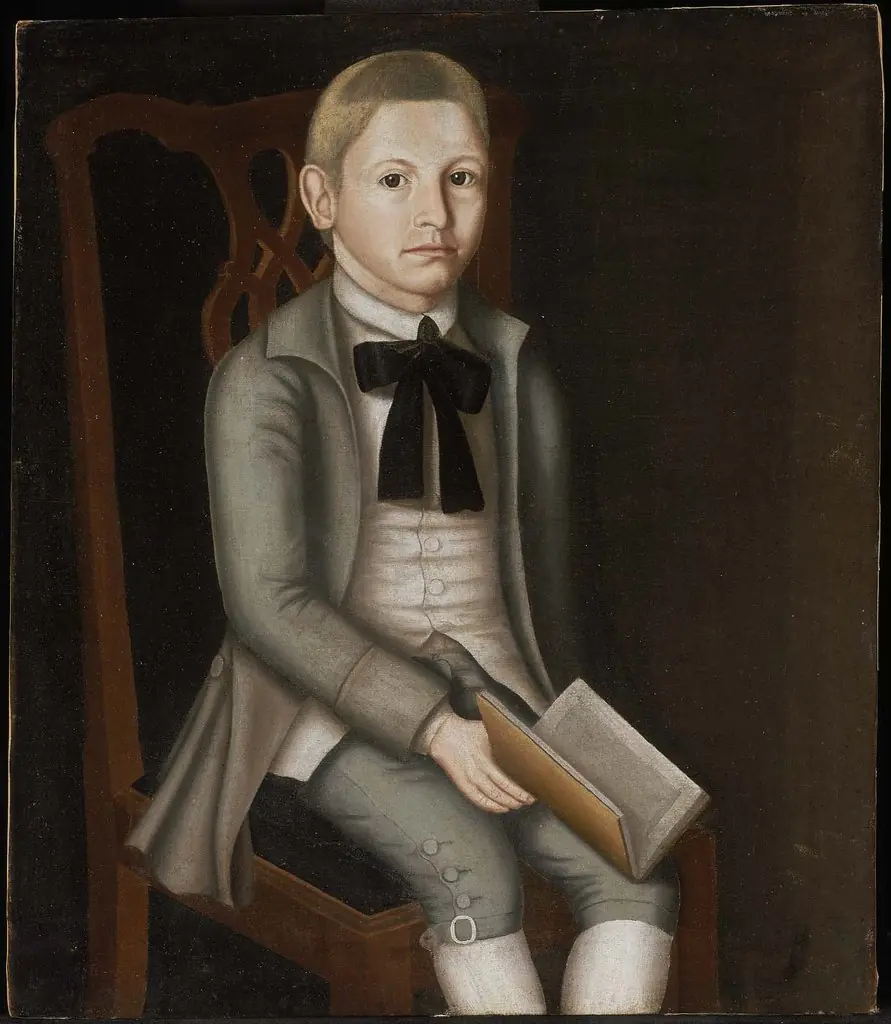
Boy of Hallett Family with Dog is an oil painting by the Rococo painting artist Unknown. It dates from 1771 and is held in the collection of the Art Institute of Chicago.
About this work
Overview
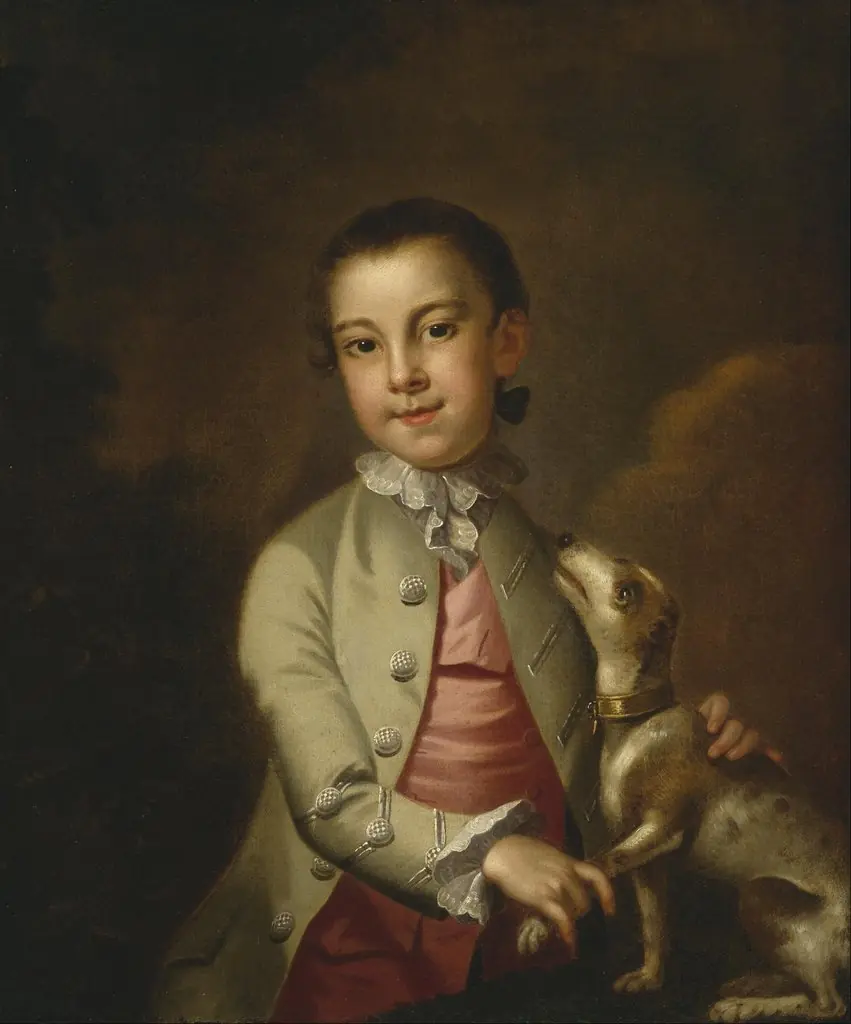
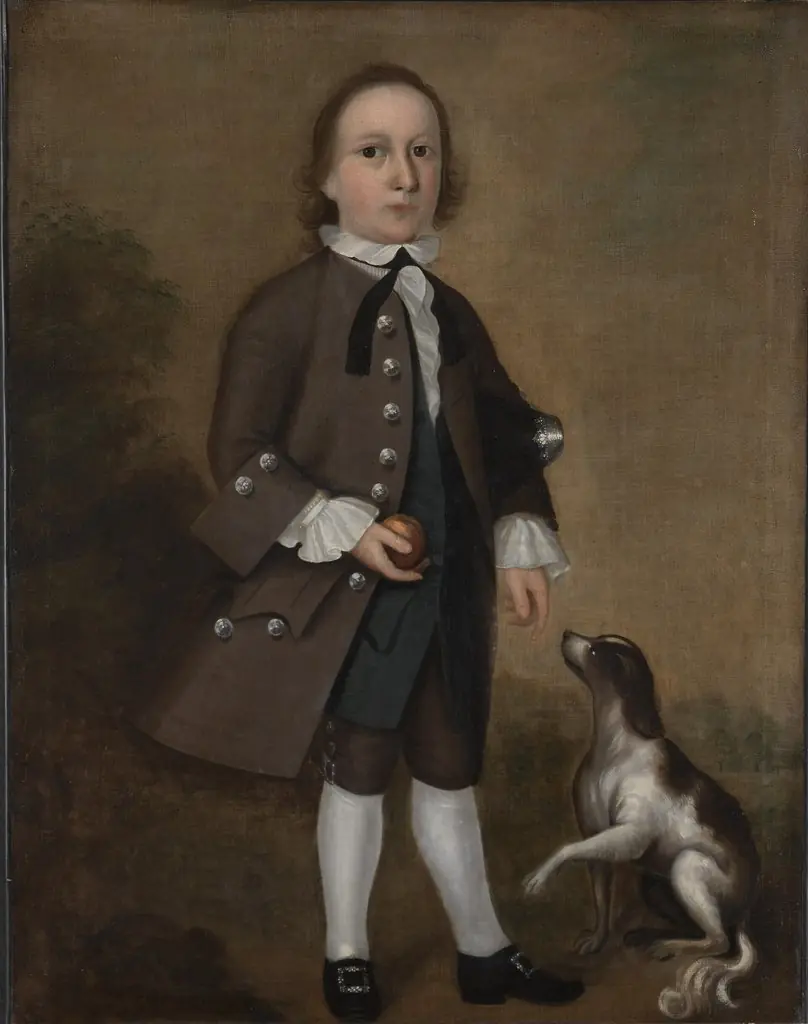
This oil painting portrays a young boy from the Hallett family seated beside his dog, rendered in the formal portraiture style of the 18th century.
This oil painting portrays a young boy from the Hallett family seated beside his dog, rendered in the formal portraiture style of the 18th century. The composition centers on the boy and animal, isolated against a deep, shadowed background. The lighting and color choices focus attention on their figures, emphasizing presence over setting. The work reflects the conventions of aristocratic portraiture, where familial identity and companionship were visually affirmed.
Subject & Meaning
The boy, dressed in a brown jacket with silver buttons and a blue shirt, is depicted with quiet composure, suggesting his social standing. The dog, a loyal companion with dappled white and black fur, symbolizes fidelity and domestic affection. Together, they convey a quiet intimacy, common in portraits of the era that sought to blend personal warmth with familial prestige. The absence of elaborate surroundings shifts focus to the bond between child and pet.
Technique & Style
The artist employs chiaroscuro to model the boy’s form and the dog’s fur, using strong contrasts between light and shadow to create volume and depth. The dark background enhances the luminosity of the subject’s skin and clothing, while fine brushwork captures the texture of fabric and fur. The palette is restrained, relying on tonal variation rather than color to define form, a hallmark of refined 18th-century portraiture.
History & Provenance
The painting is attributed to the Hallett family, a known colonial American lineage, though the artist’s identity remains unconfirmed. It likely originated in the northeastern United States during the mid-to-late 1700s. Ownership records suggest it remained within the family for generations before entering institutional collections, preserving its connection to its original context.
Context
In 18th-century America, portraiture served both as status symbol and personal memorial. Depictions of children with pets were uncommon but not rare, often reflecting Enlightenment ideals of natural affection and domestic virtue. This work aligns with a growing trend among provincial elites to commission intimate, psychologically grounded images rather than grand ceremonial portraits.
Legacy
The painting contributes to a modest but significant body of American colonial portraiture that captures everyday familial relationships. Its restrained elegance and emotional subtlety distinguish it from more ornate European counterparts. Today, it is valued as a quiet testament to the personal lives of early American families, offering insight into domestic culture beyond political or economic narratives.
Artist & collection

 Domestic Scene
 Giacomo and Cardinal Marco, investing Andrea, Abbot of San Zeno, with his Benefice
 The Nymph of Fontainebleau
 Portrait of a Woman
 Madonna and Child with Saints in the Enclosed Garden
 Venus and Minerva
 Family Group of Four on Sofa
 Wall painting from Room H of the Villa of P. Fannius Synistor at Boscoreale