Artwork
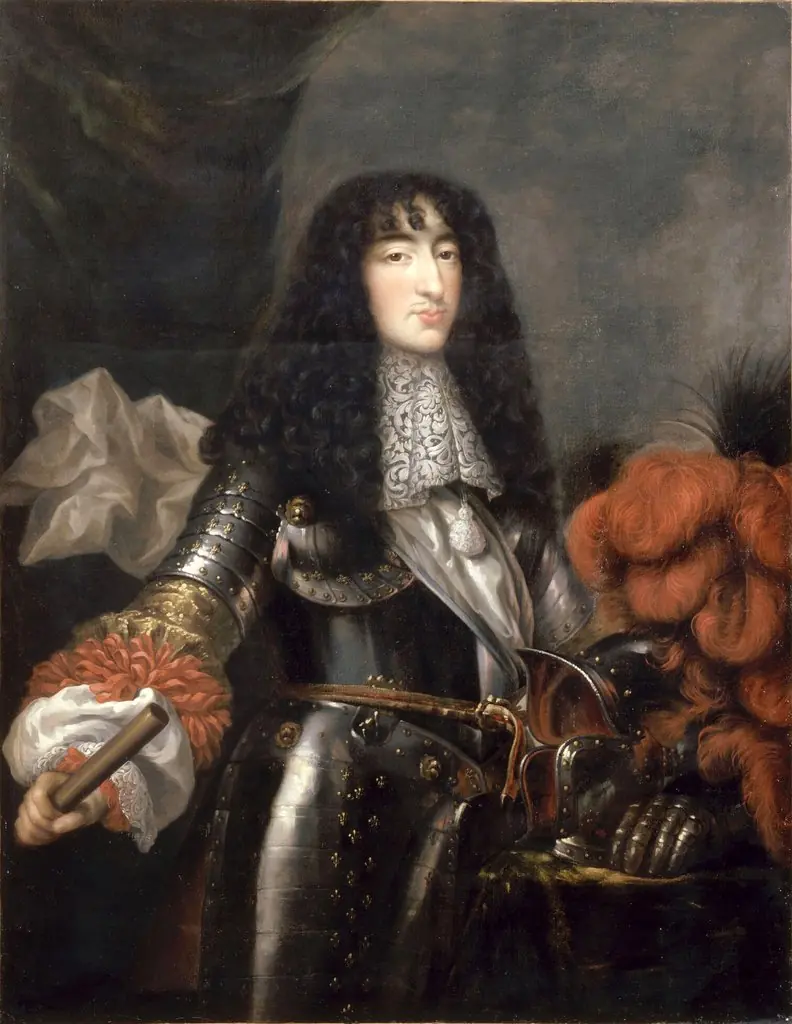
Philippe d'Orléans auprès du portrait de sa fille Marie-Louise d'Orléans, future reine d'Espagne, en Diane
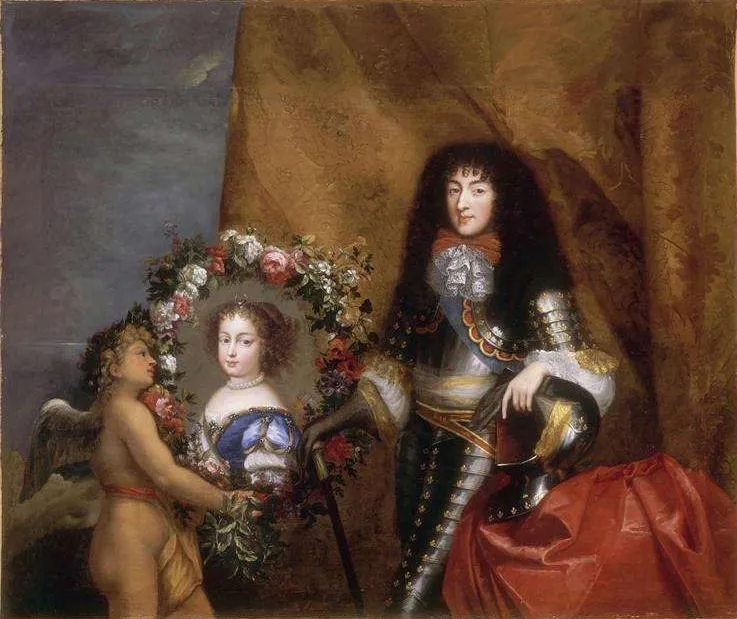
Philippe d'Orléans auprès du portrait de sa fille Marie-Louise d'Orléans, future reine d'Espagne, en Diane is an oil painting by the Dutch Golden Age artist Unknown. It dates from 1667 and is held in the collection of the Palace of Versailles.
About this work
Overview
The composition emphasizes familial connection through posture and spatial arrangement, with rich textiles and metallic details reinforcing their noble status.
This oil painting portrays Philippe d'Orléans, Duke of Orléans, seated beside his daughter Marie-Louise, who would later become Queen of Spain. Both figures are framed by a cherub holding flowers, set against a muted wall and soft sky. The composition emphasizes familial connection through posture and spatial arrangement, with rich textiles and metallic details reinforcing their noble status. The lighting enhances three-dimensionality, focusing attention on the central group.
Subject & Meaning
The painting presents Philippe d'Orléans in armor, symbolizing his military role, alongside his young daughter dressed as the goddess Diana, evoking purity and divine favor. The cherub and floral bouquet suggest innocence and auspiciousness, aligning Marie-Louise with mythological ideals. The pairing reflects political aspirations—her impending marriage to the Spanish king—transforming a private moment into a dynastic statement of legitimacy and future alliance.
Technique & Style
The artist employs chiaroscuro to model forms with subtle gradations of light and shadow, lending volume to the armor, fabric, and skin. Gold accents on the armor catch the light, contrasting with the soft blue and white of the girl’s dress. The background remains deliberately subdued, allowing the figures to emerge with clarity. Brushwork is precise yet fluid, particularly in rendering textures like silk and metal, characteristic of courtly portraiture of the period.
History & Provenance
Commissioned during the 1670s, the painting was created shortly before Marie-Louise’s marriage to King Charles II of Spain in 1679. It likely originated in the French royal court, possibly as a diplomatic gift or personal keepsake. Its early history is tied to the Orléans family, and it remained within their collection until the 18th century, later entering public or institutional holdings through inheritance or sale.
Context
This work emerged during a period of intense dynastic maneuvering in Europe, as France sought to extend influence through marriage alliances. Portraits of royal children in allegorical guises were common tools of political messaging. The depiction of Marie-Louise as Diana aligns with broader trends in French court art that blended classical mythology with contemporary royal identity to elevate the monarchy’s image abroad.
Legacy
The painting serves as a visual record of a key moment in Franco-Spanish relations and reflects the conventions of 17th-century aristocratic portraiture. While not widely exhibited today, it remains an important example of how familial imagery was instrumentalized for political ends. Its preservation offers insight into the symbolic language used by the French court to project power and continuity.
Artist & collection

 Domestic Scene
 Giacomo and Cardinal Marco, investing Andrea, Abbot of San Zeno, with his Benefice
 The Nymph of Fontainebleau
 Portrait of a Woman
 Madonna and Child with Saints in the Enclosed Garden
 Venus and Minerva
 Family Group of Four on Sofa
 Wall painting from Room H of the Villa of P. Fannius Synistor at Boscoreale
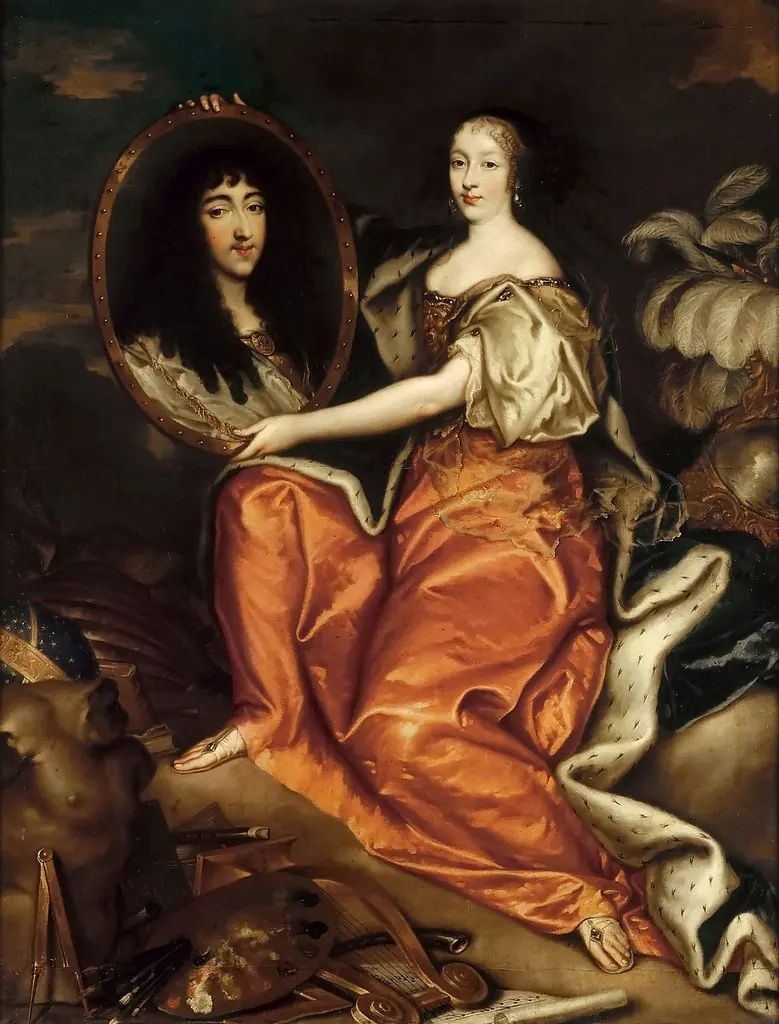 Henriette-Anne of England, Duchess of Orleans, known as Madame (1644-1670)
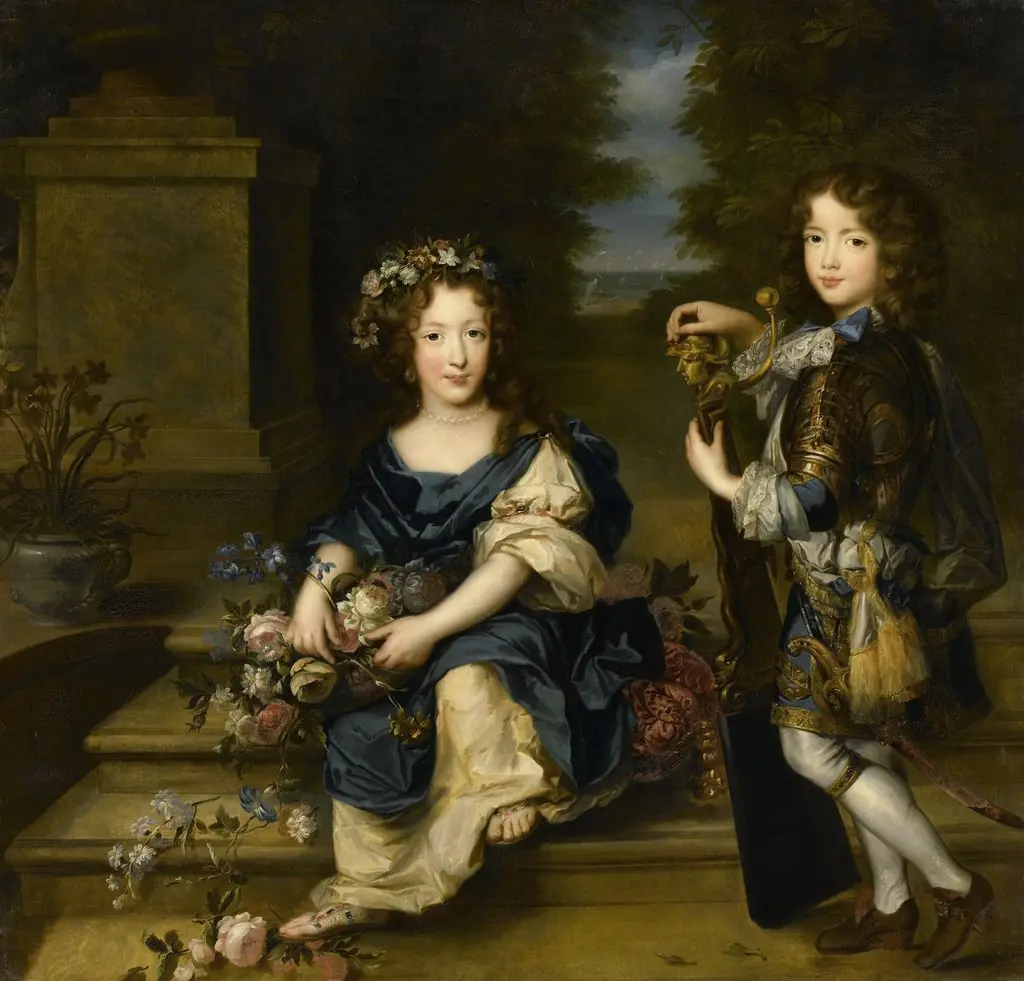 Anne-Marie de Bourbon, future princess of Conti and Louis de Bourbon, count of Vermandois
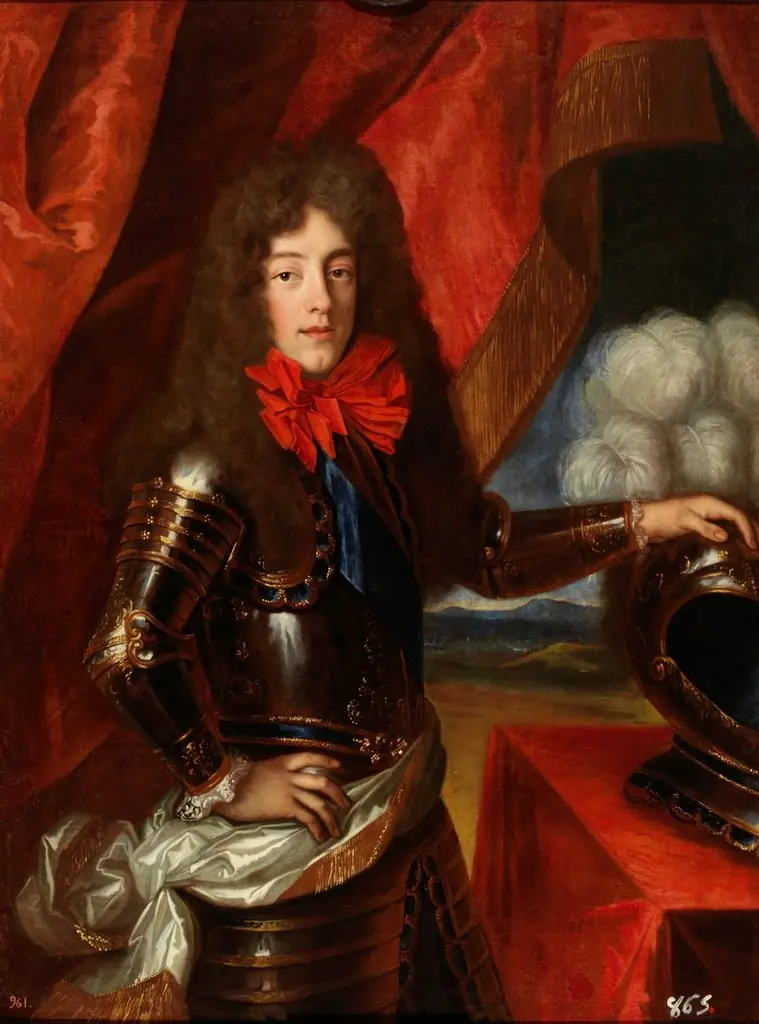 Luis III duque de Borbón
 The Birth of the Duke of Burgundy
 Charles Emmanuel II, Duke of Savoy, and his family
 Philippe II d'Orleans, Regent of France and Madame de Parabere as Minerva
 Louis II de Bourbon Condé and his son Henri-Jules, Duke of Enghien
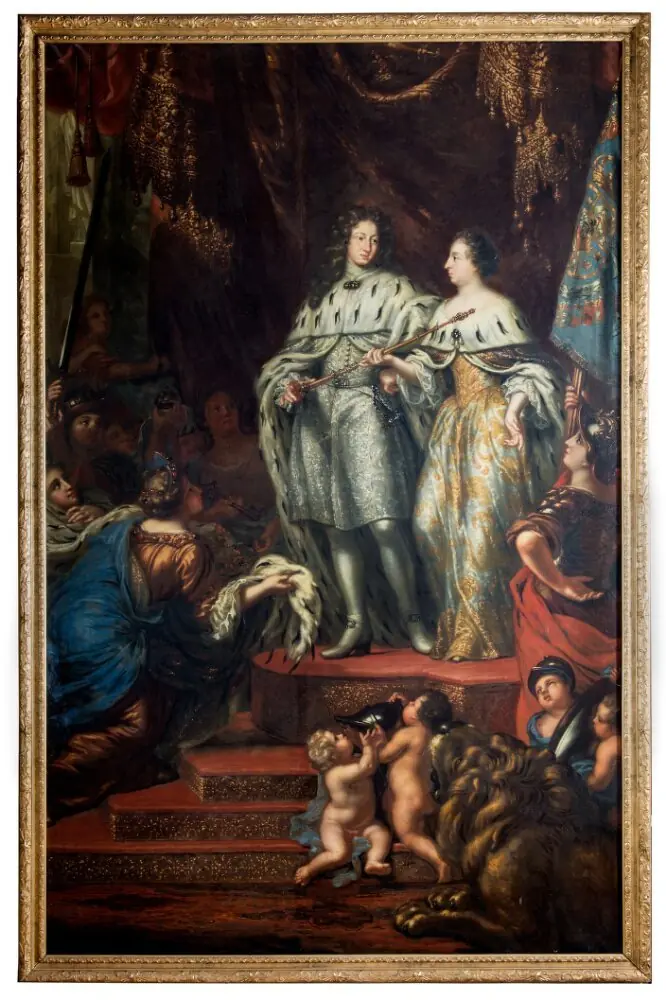 Allegori över hur konung Karl XI mottager regeringen av sin moder Hedvig Eleonora
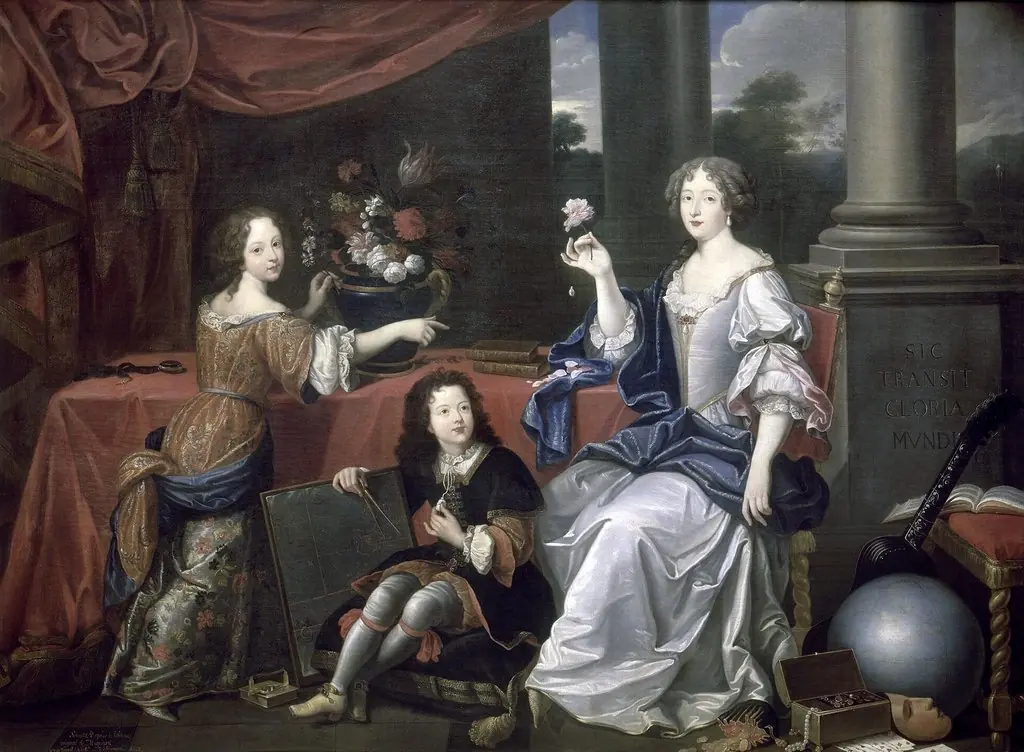 Portrait of Louise de La Vallière and her children
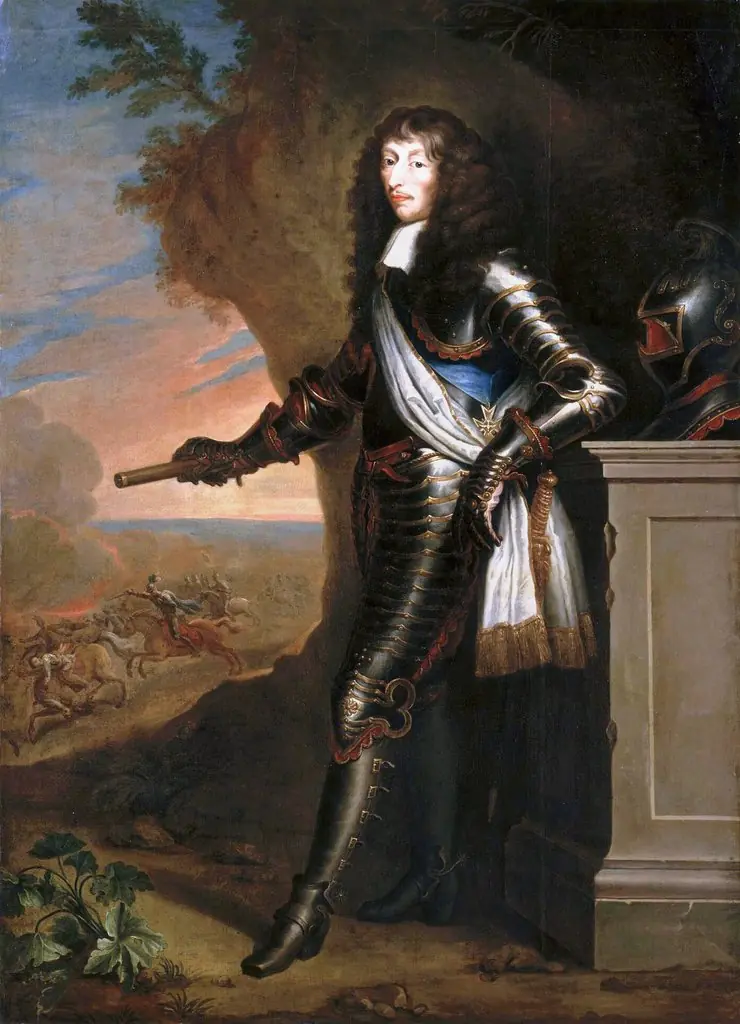 Portrait of Louis de Bourbon, Prince of Condé (1621-1686)
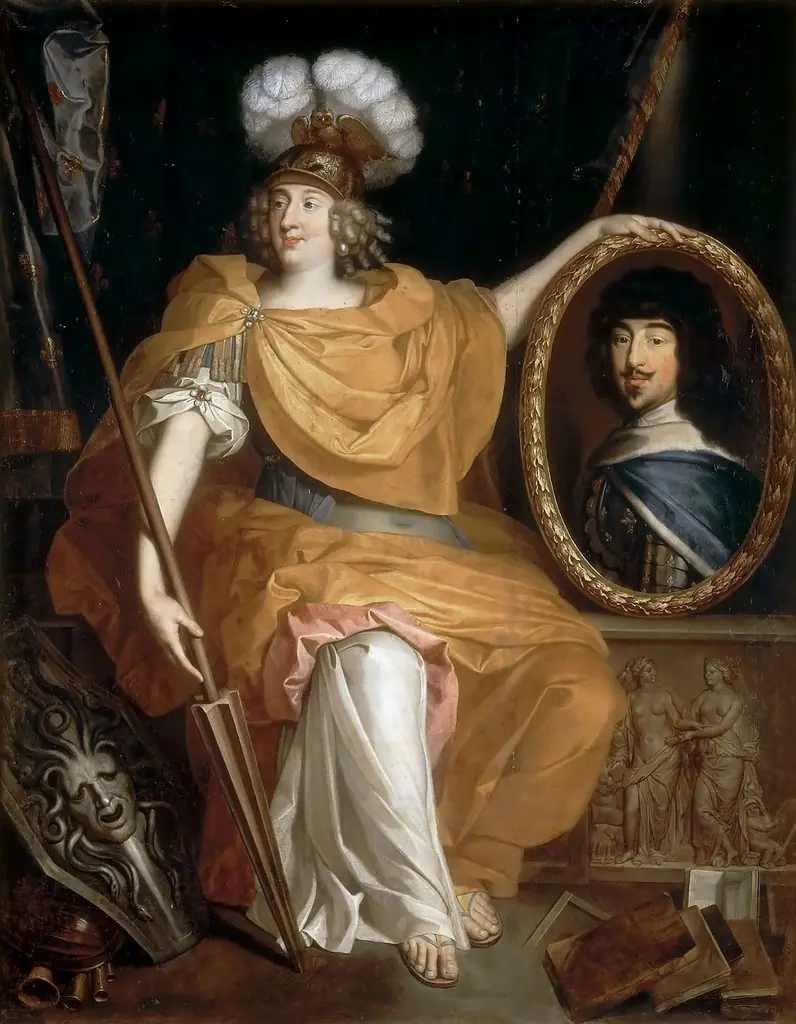 Anne-Marie-Louise of Orleans (1627-1693), duchess of Montpensier
 Philippe of France, Duke of Orleans