Artwork
Landscape with Shepherds and Cattle at the Watering Place
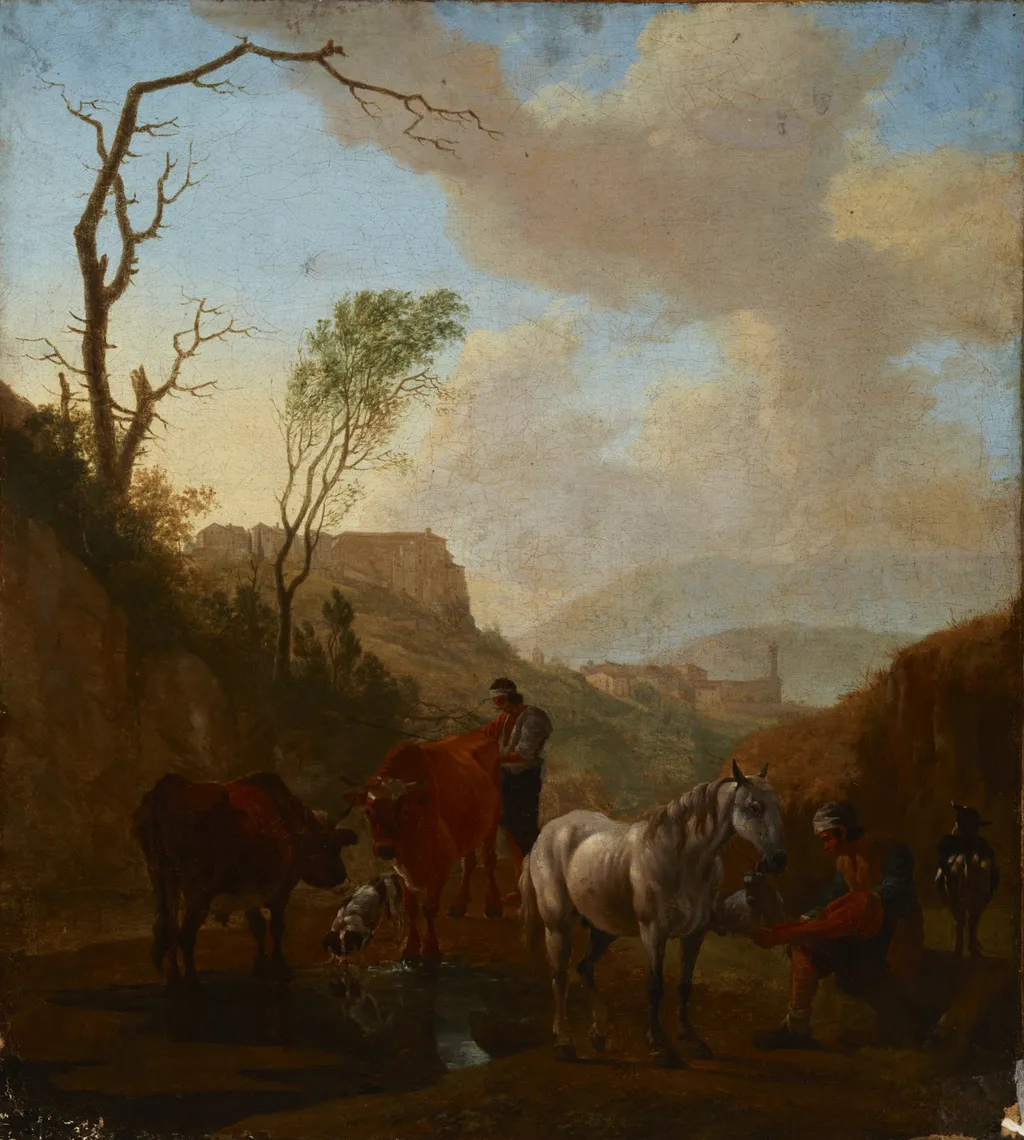
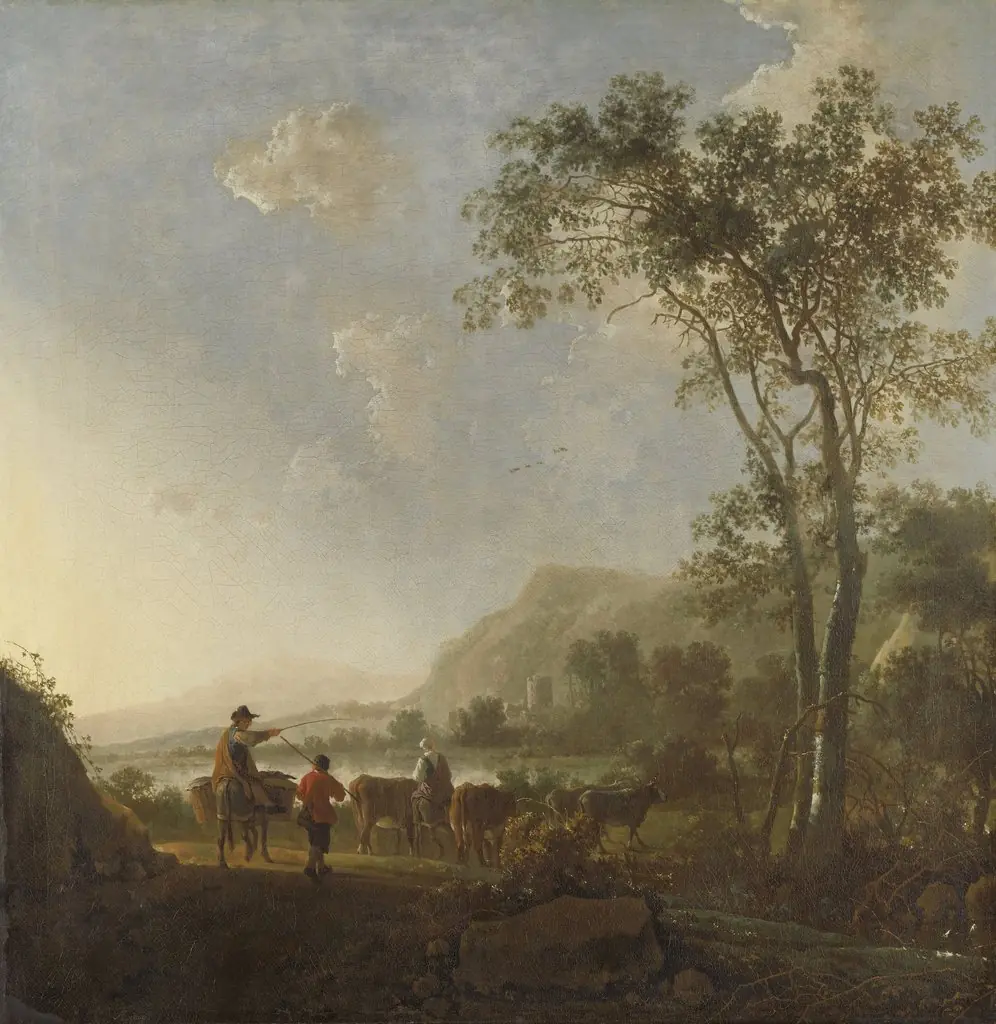
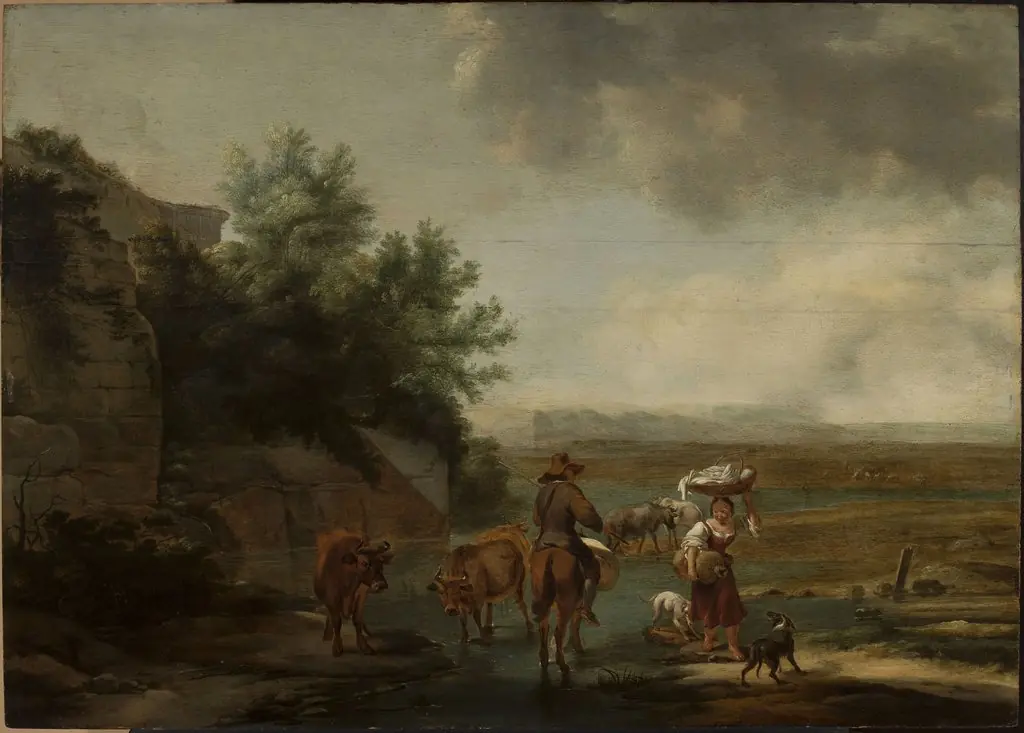
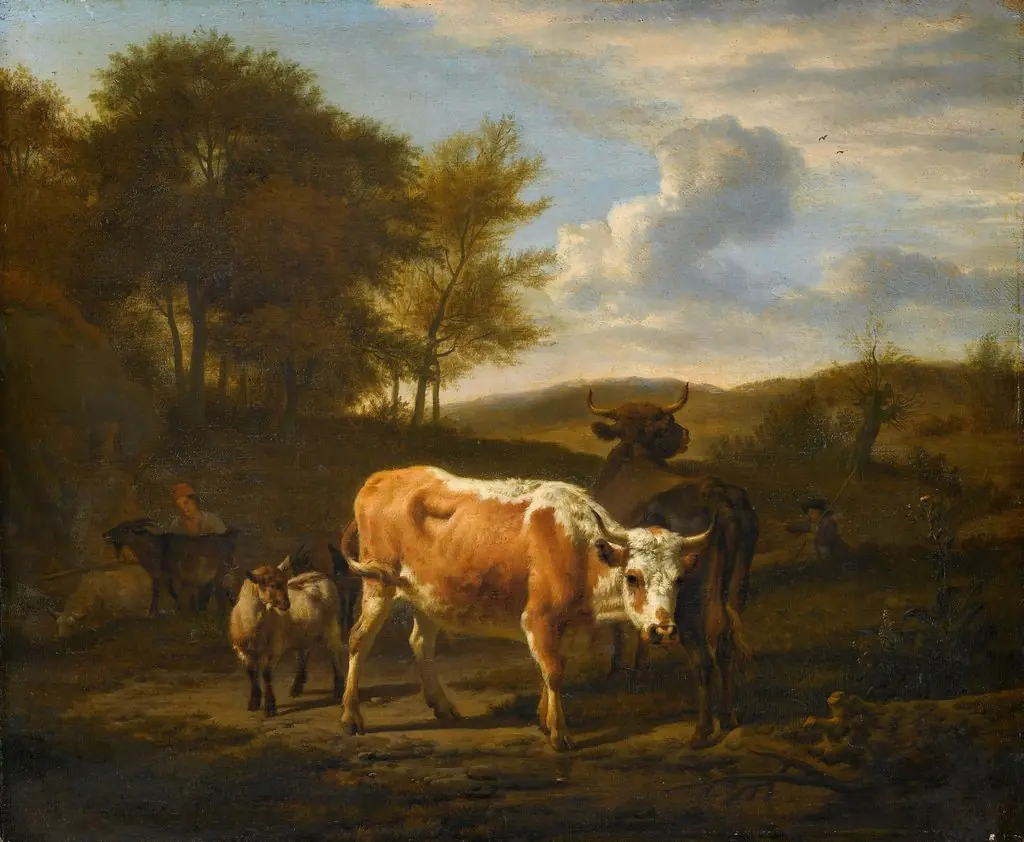
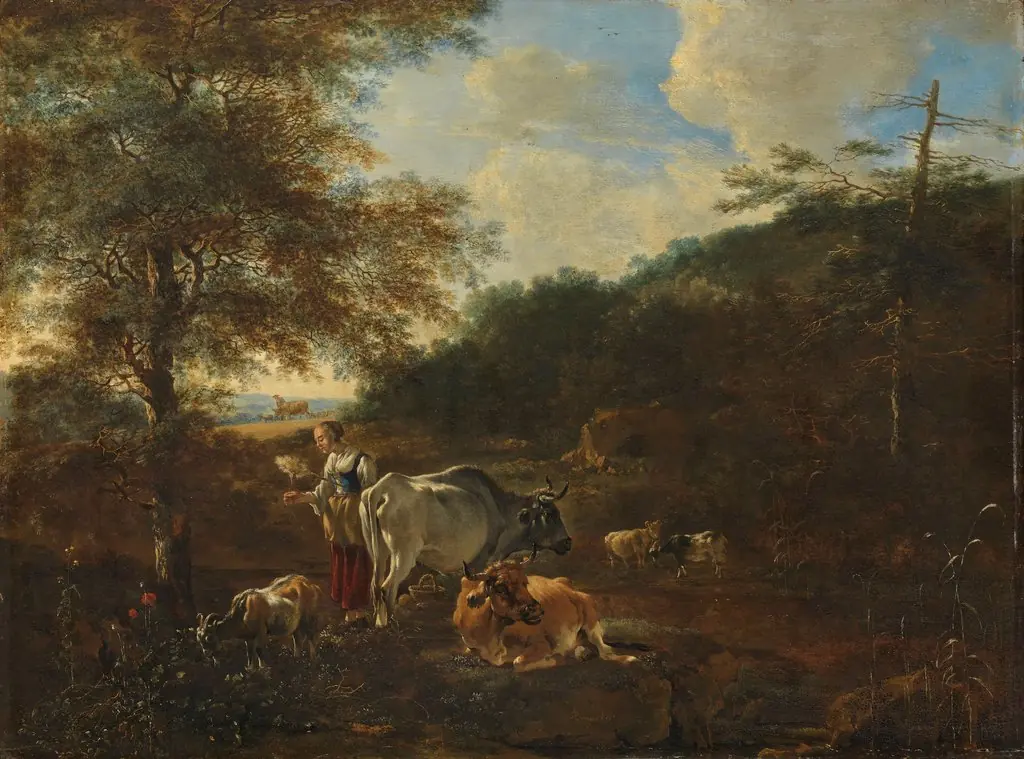
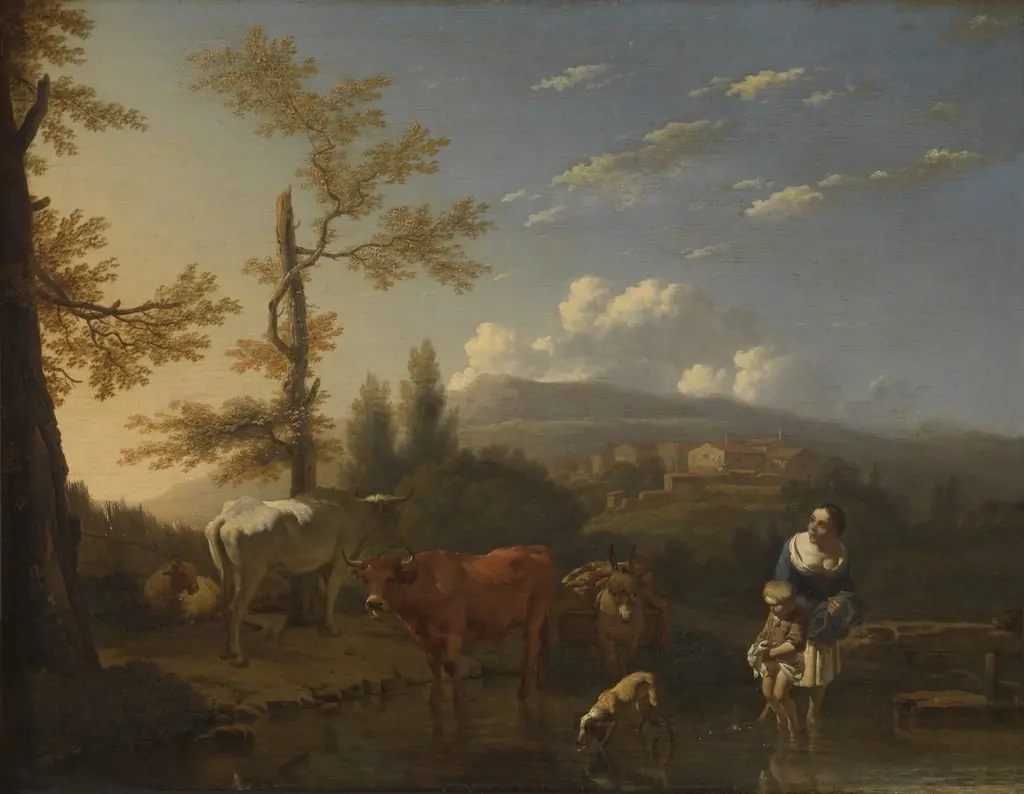
Landscape with Shepherds and Cattle at the Watering Place is an oil painting by the Rococo painting artist Unknown. It dates from 1750 and is held in the collection of the National Museum in Kraków. This oil painting depicts a quiet rural scene where shepherds and their cattle gather at a water source.
About this work
Overview
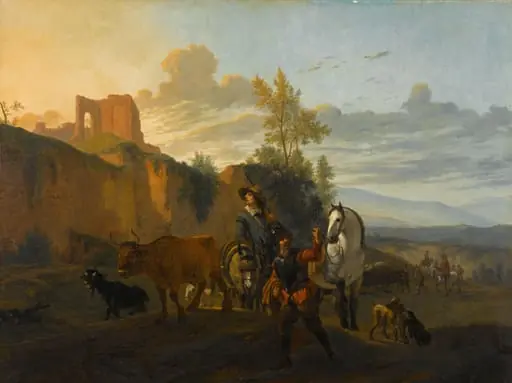
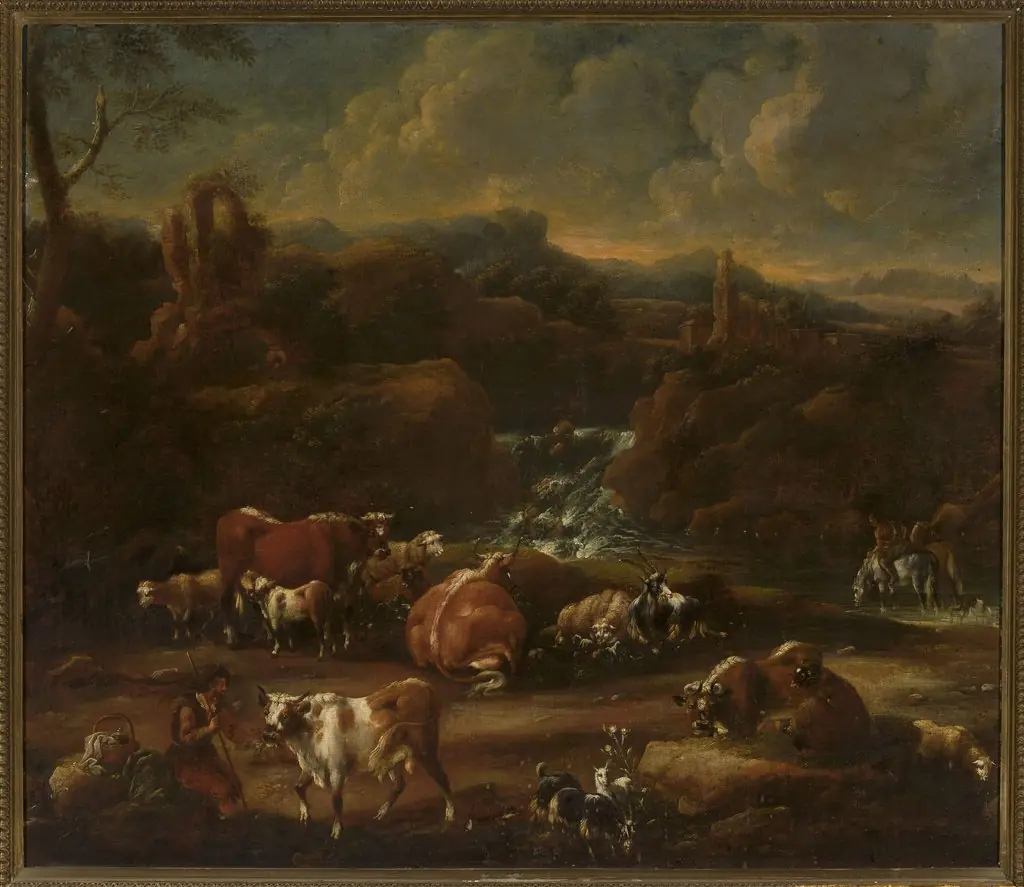
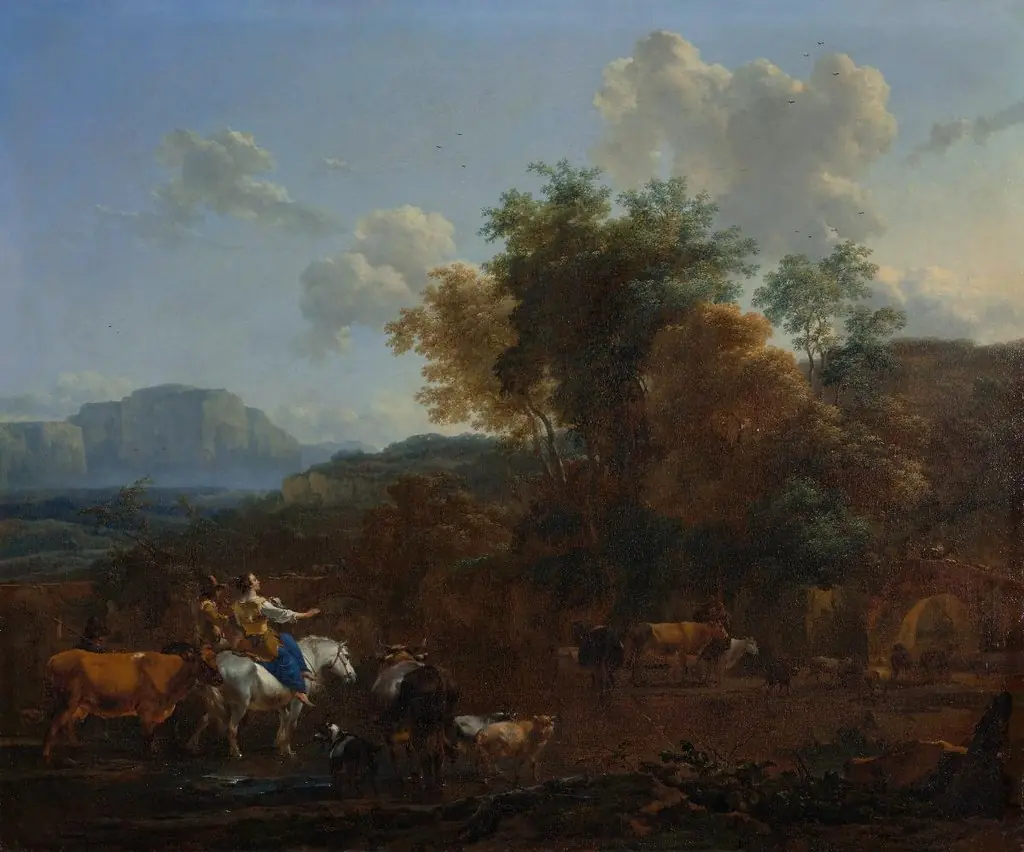
This oil painting depicts a quiet rural scene where shepherds and their cattle gather at a water source. The composition emphasizes stillness and harmony, with rolling hills and a soft, cloud-dappled sky forming the backdrop. Warm tones and delicate brushwork contribute to an atmosphere of calm, inviting the viewer into a moment of everyday pastoral life.
Subject & Meaning
The scene centers on the routine of pastoral life—shepherds tending livestock at a watering hole. There is no narrative drama or symbolic allegory; instead, the focus lies in the quiet dignity of labor and the rhythm of nature. The presence of animals and humans in balanced proximity suggests a relationship of mutual dependence, rooted in the land.
Technique & Style
The artist employs soft, blended brushstrokes to render textures of foliage, water, and fur with subtle variation. Light is carefully modulated to create depth, with gentle shadows defining forms and enhancing the three-dimensionality of the landscape. Warm hues in the earth and sky unify the composition, while the water’s surface is rendered with minimal detail to suggest gentle movement.
History & Provenance
The painting’s origins are not fully documented, but its style aligns with 17th-century Dutch or Flemish landscape traditions. It is currently held in the National Museum in Kraków, where it entered the collection through documented acquisitions in the early 20th century, likely from a private European collection.
Context
Created during a period when landscape painting gained prominence in Northern Europe, this work reflects a broader cultural shift toward valuing everyday natural scenes over religious or mythological themes. Such paintings catered to urban patrons seeking idealized visions of rural peace, distinct from the chaos of city life.
Legacy
Though not widely exhibited outside Poland, the painting contributes to the museum’s collection of Northern European landscapes, offering insight into regional interpretations of pastoral life. It remains a quiet example of how ordinary moments were elevated through careful observation and restrained technique.
Artist & collection

 Domestic Scene
 Giacomo and Cardinal Marco, investing Andrea, Abbot of San Zeno, with his Benefice
 The Nymph of Fontainebleau
 Portrait of a Woman
 Madonna and Child with Saints in the Enclosed Garden
 Venus and Minerva
 Family Group of Four on Sofa
 Wall painting from Room H of the Villa of P. Fannius Synistor at Boscoreale