Artwork
Page from Tales of a Parrot (Tuti-nama): text page
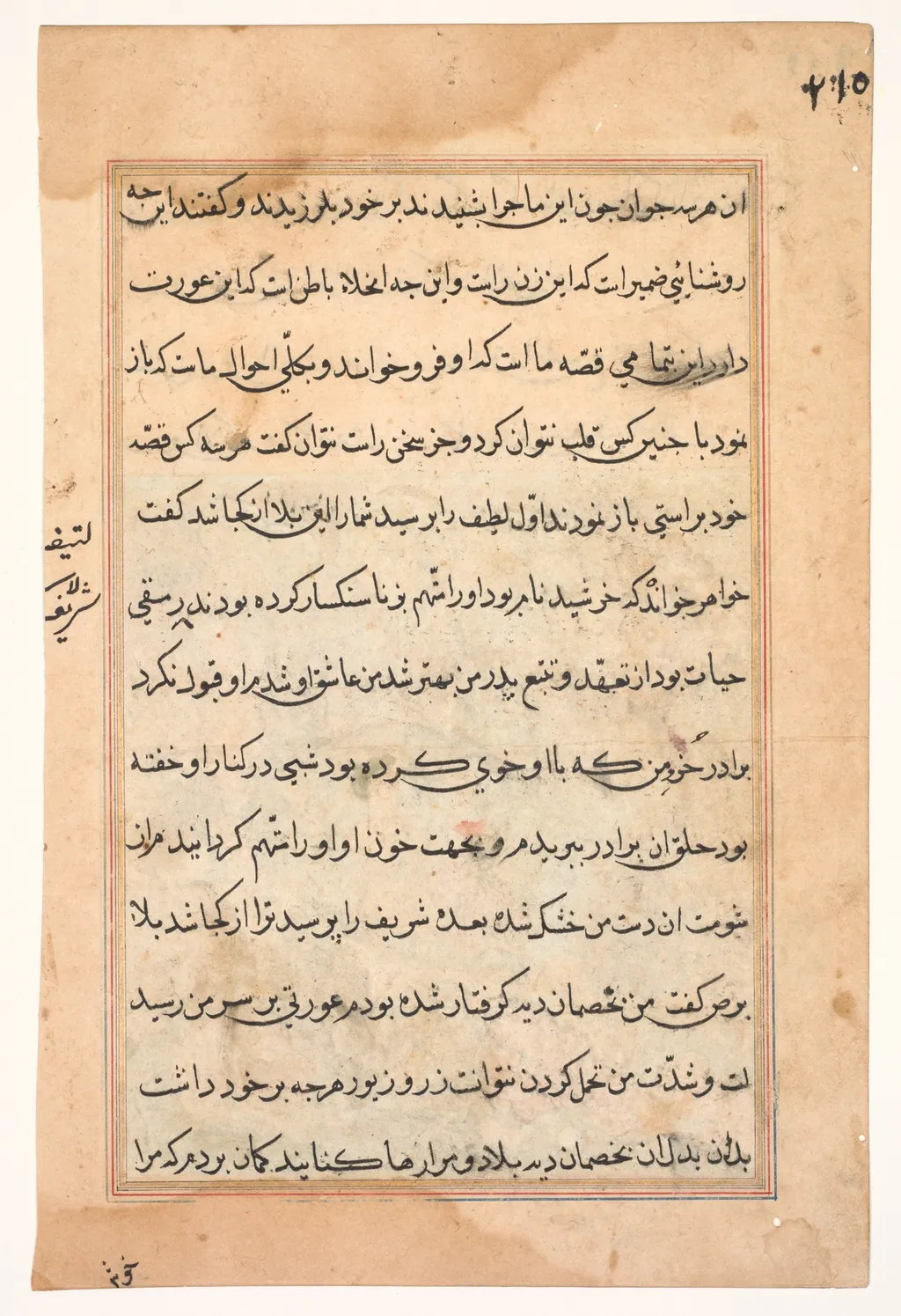
Page from Tales of a Parrot (Tuti-nama): text page is an unspecified painting. It dates from 1560 and is held in the collection of the Cleveland Museum of Art. This object is a painted page from the illustrated manuscript known as *Tuti‑nama* (Tales of a Parrot).
About this work
Overview
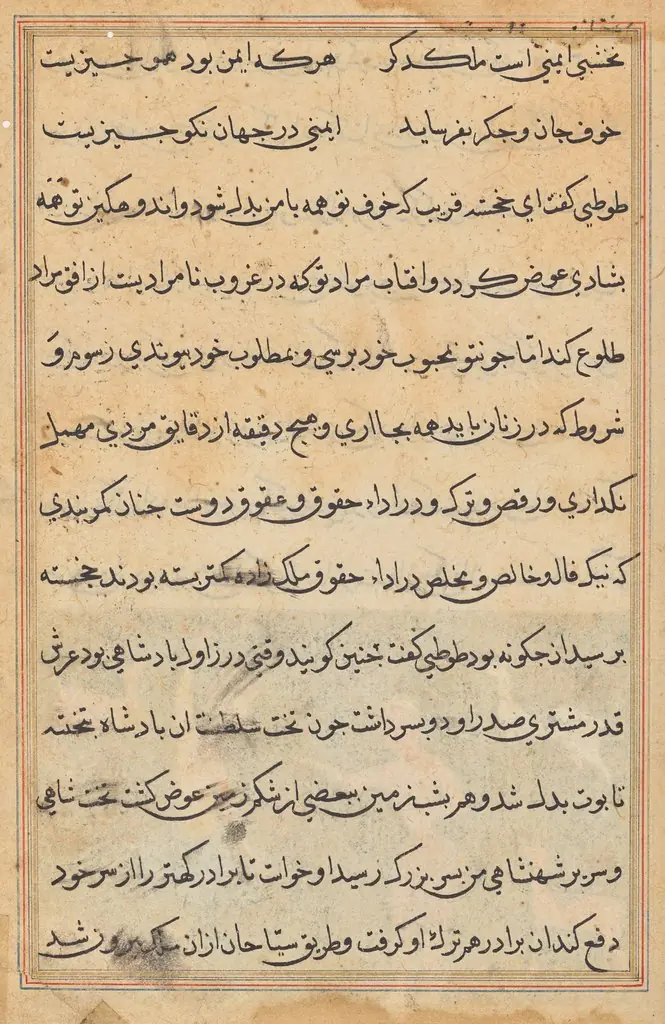
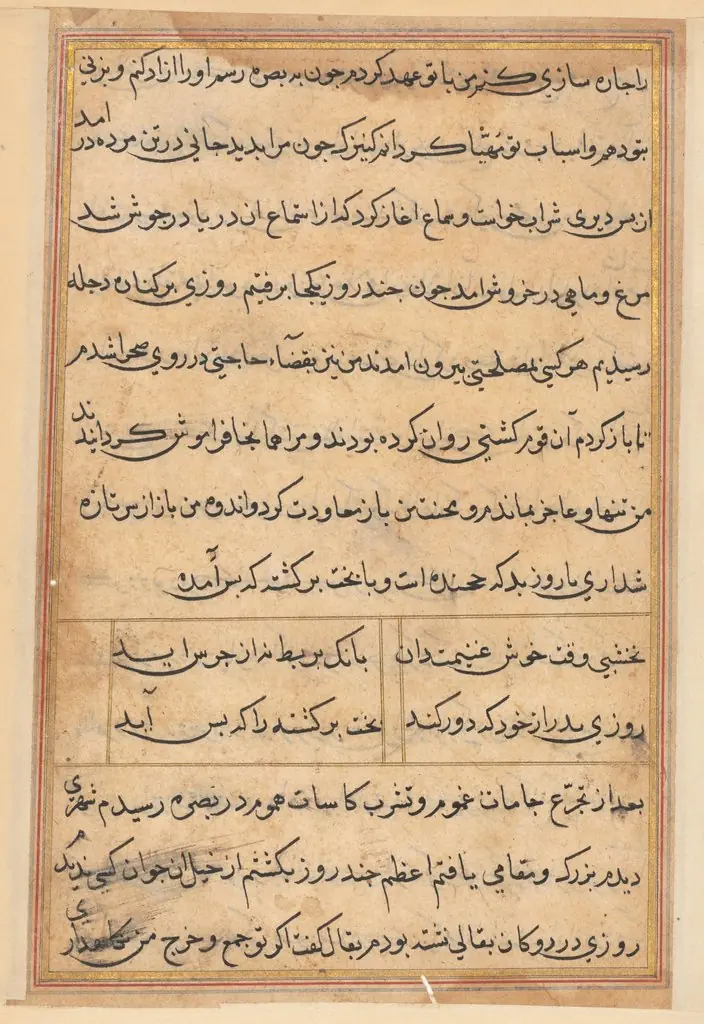
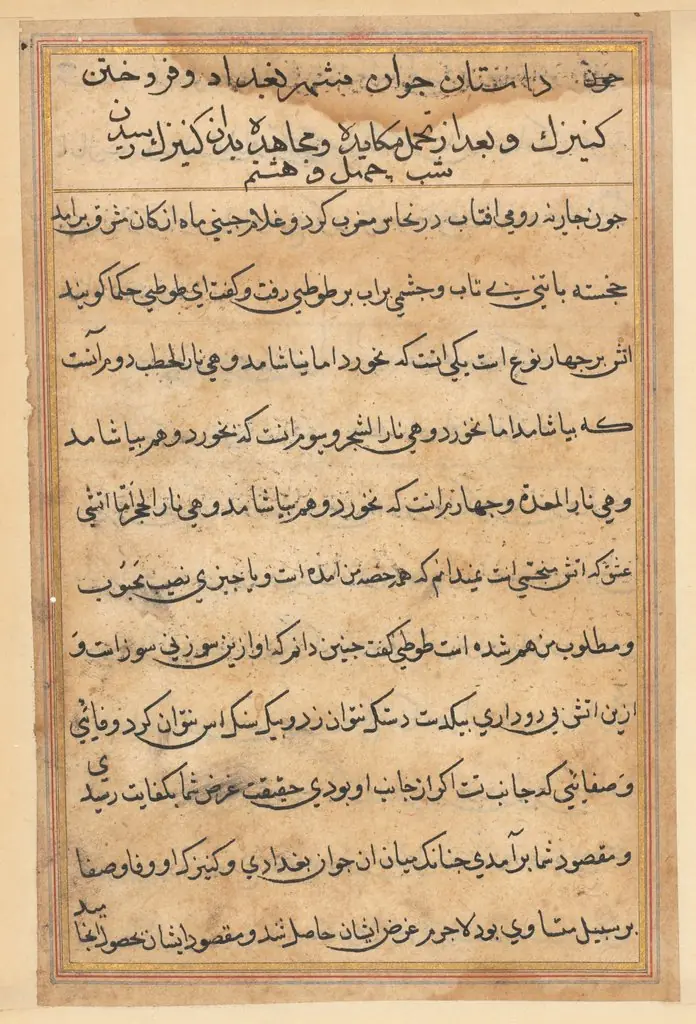
This object is a painted page from the illustrated manuscript known as *Tuti‑nama* (Tales of a Parrot). Executed with black ink on a light beige surface, the page is filled with continuous lines of text, framed by modest red and blue decorative borders that run along the margins. A small mark in one corner suggests a page number or a scribe’s annotation.
Subject & Meaning
The inscribed text appears to be a narrative segment, likely drawn from the collection of stories that give the manuscript its title. The orderly arrangement of the verses and the careful spacing indicate a literary purpose, intended to convey a moral or entertaining tale within the broader context of the work.
Technique & Style
The page was rendered with a single brush of black ink, the strokes varying in intensity to create a subtle visual rhythm. The calligraphic hand is precise, with uniform spacing and occasional darker lines that add emphasis. The marginal ornaments employ thin bands of red and blue pigment, applied in a restrained, geometric fashion that complements the text without overwhelming it.
History & Provenance
The manuscript was commissioned for Prince Salim, a member of the Mughal court, situating the work within the early modern period of South Asian patronage. Its creation reflects the courtly tradition of producing richly illustrated literary volumes for royal audiences.
Context
*Tuti‑nama* belongs to a genre of Persian‑influenced storytelling that blended moral instruction with entertainment. Such texts were often produced in royal workshops, where scribes and painters collaborated to produce integrated visual‑textual objects for elite consumption.
Legacy
Pages like this illustrate the convergence of literary and visual arts in Mughal manuscript culture, offering insight into the aesthetic preferences of princely patrons and the technical skill of courtly scribes. They continue to inform scholars about the transmission of narrative traditions across the Indian subcontinent.
Artist & collection

 Page from Tales of a Parrot (Tuti-nama): text page
 Page from Tales of a Parrot (Tuti-nama): text page
 Page from Tales of a Parrot (Tuti-nama): text page
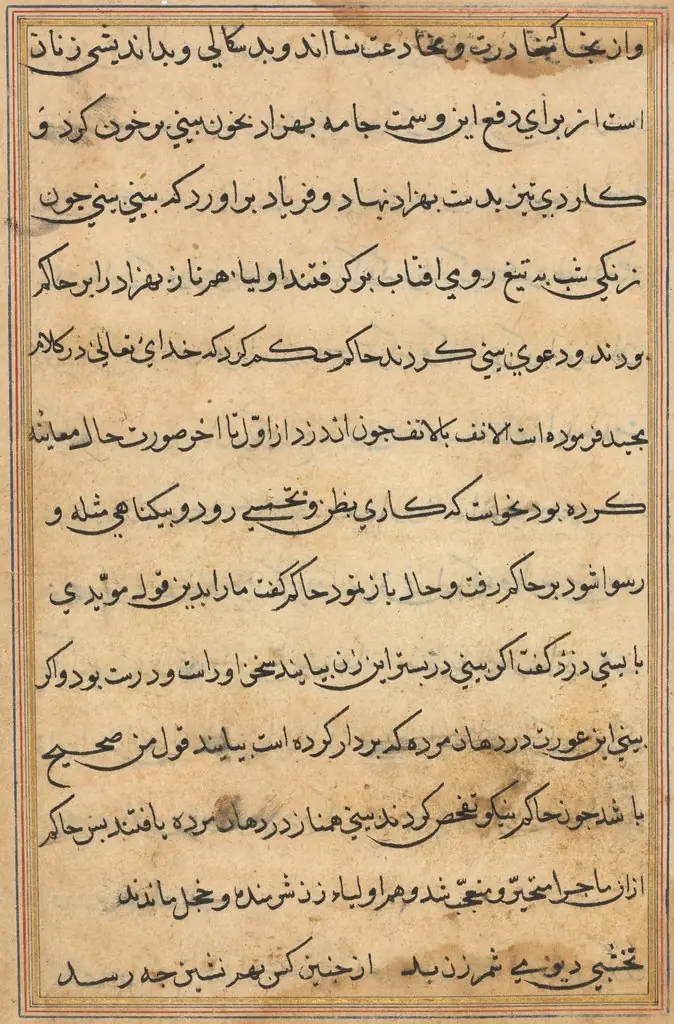 Page from Tales of a Parrot (Tuti-nama): text page
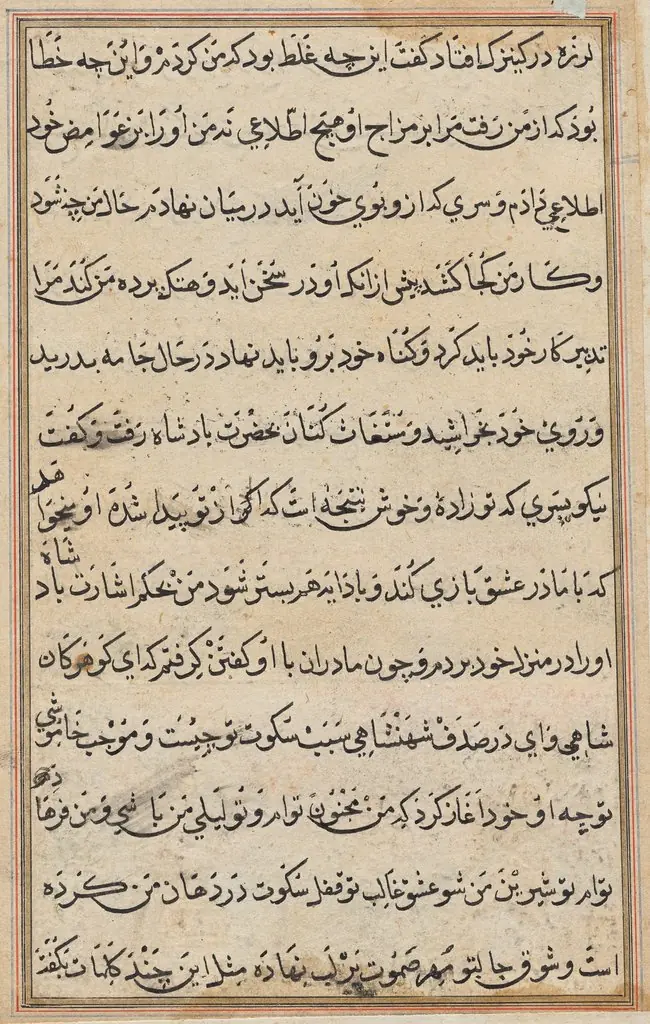 Page from Tales of a Parrot (Tuti-nama): text page
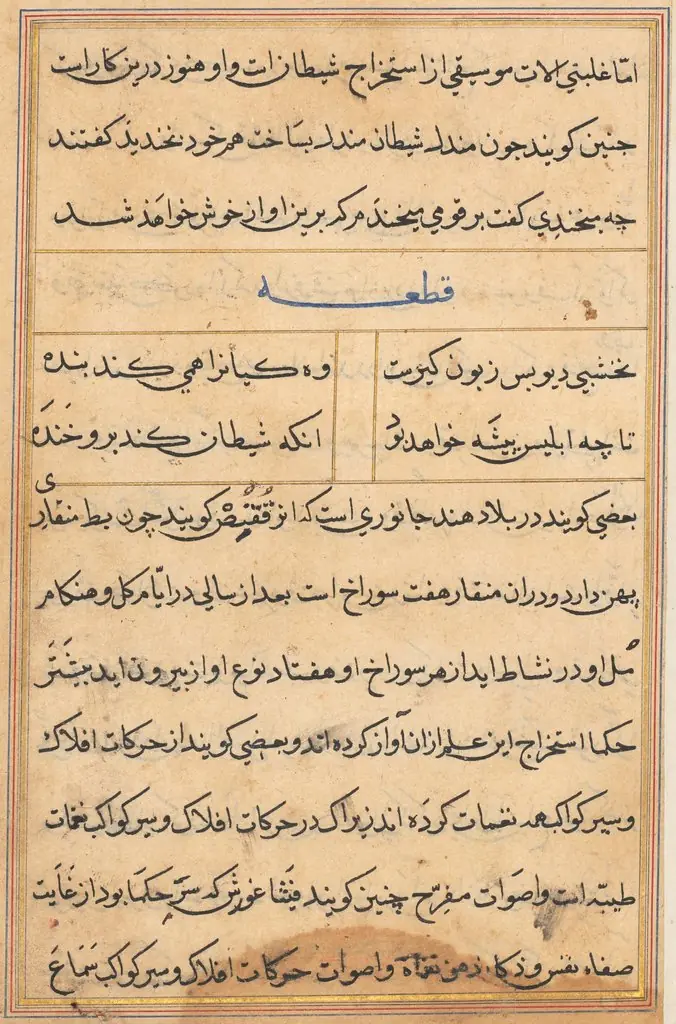 Page from Tales of a Parrot (Tuti-nama): text page
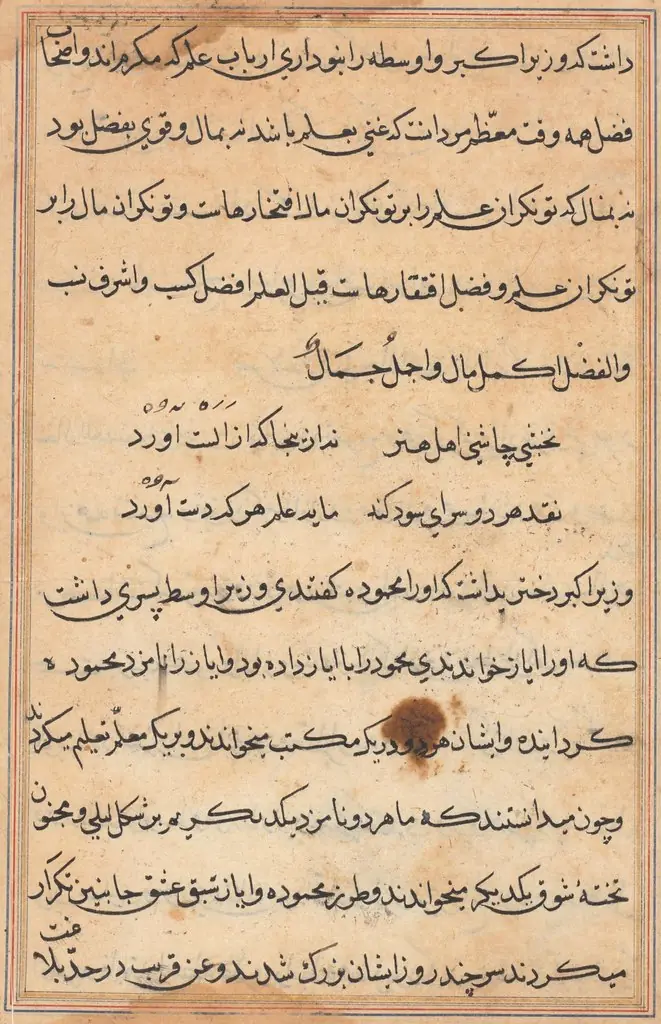 Page from Tales of a Parrot (Tuti-nama): text page
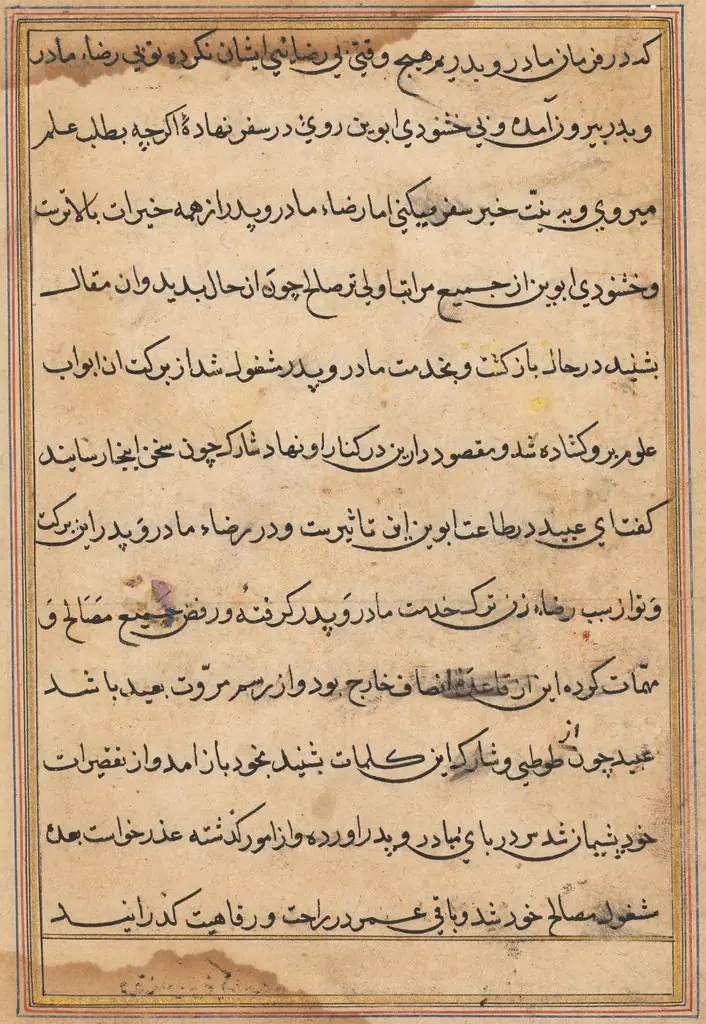 Page from Tales of a Parrot (Tuti-nama): text page
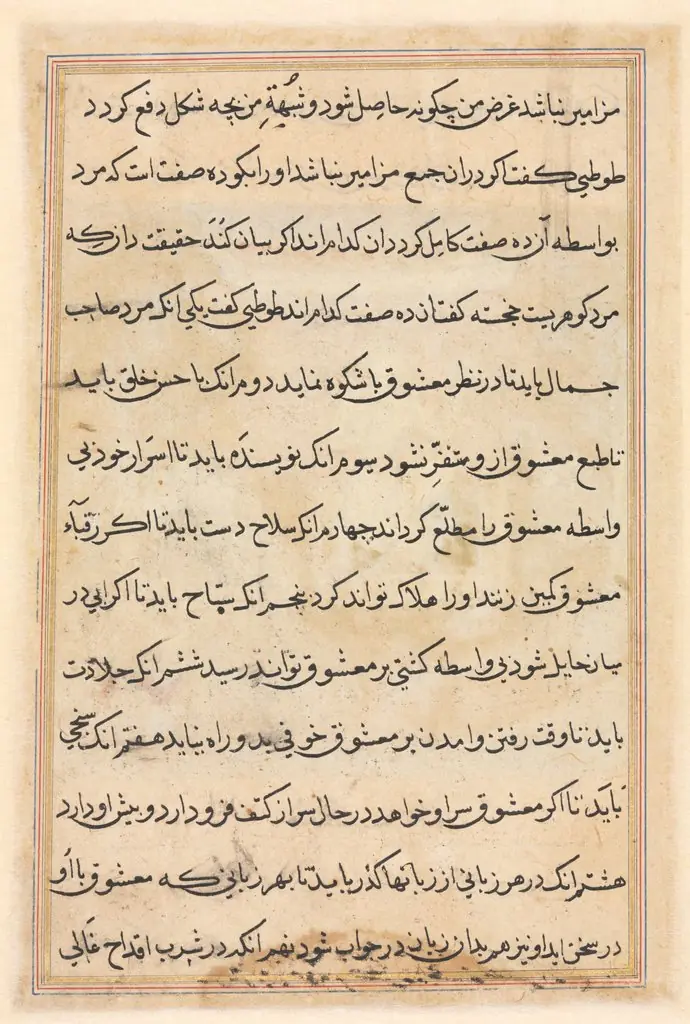 Page from Tales of a Parrot (Tuti-nama): text page
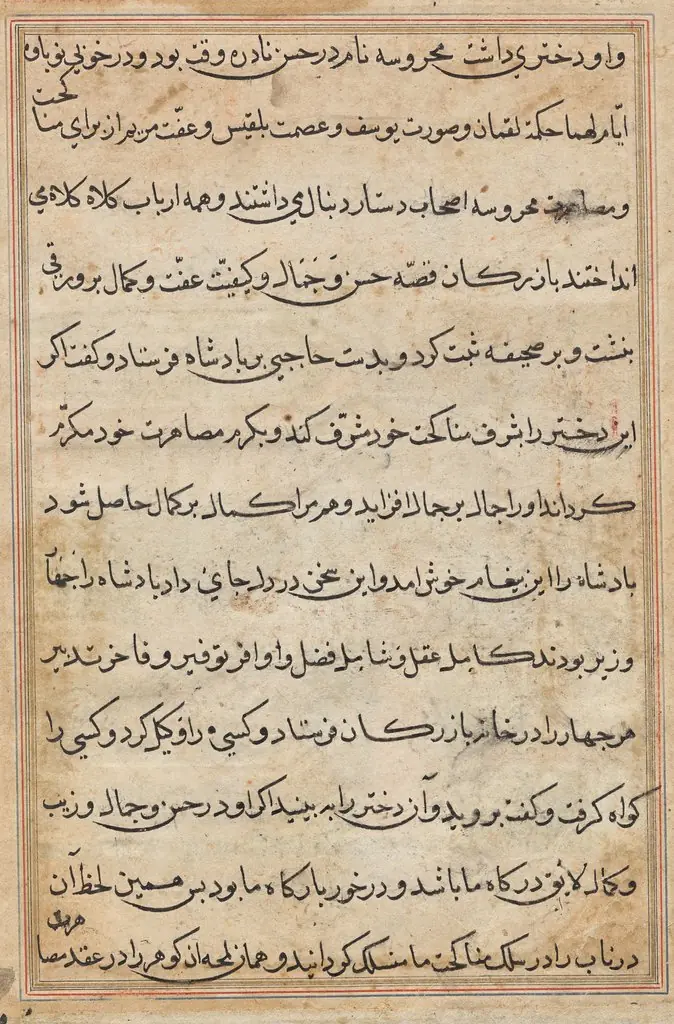 Page from Tales of a Parrot (Tuti-nama): text page
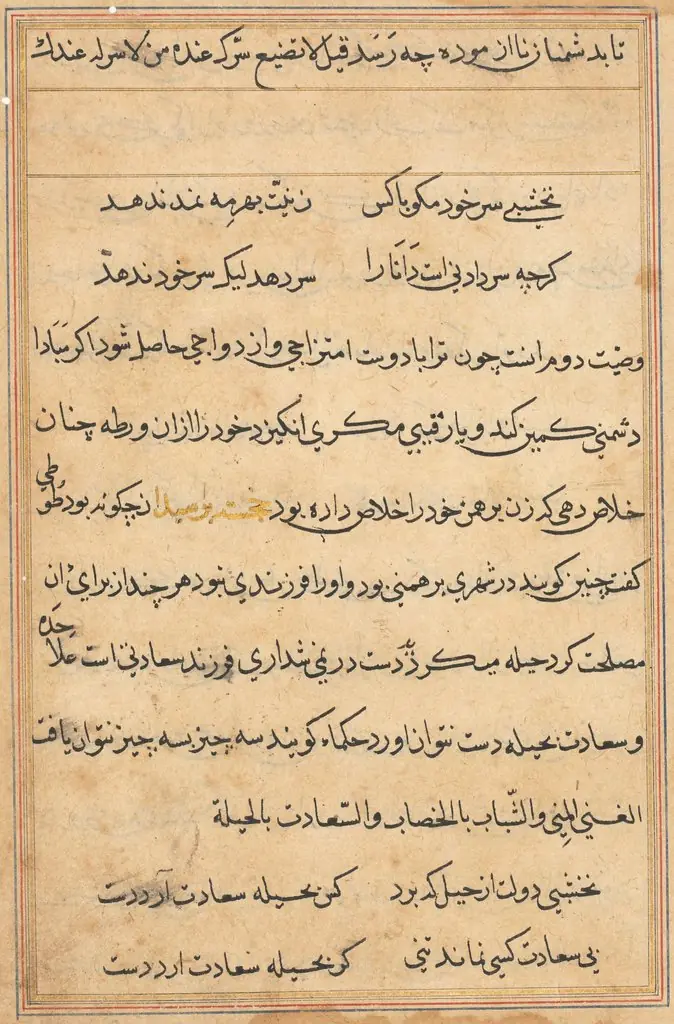 Page from Tales of a Parrot (Tuti-nama): text page