Artwork
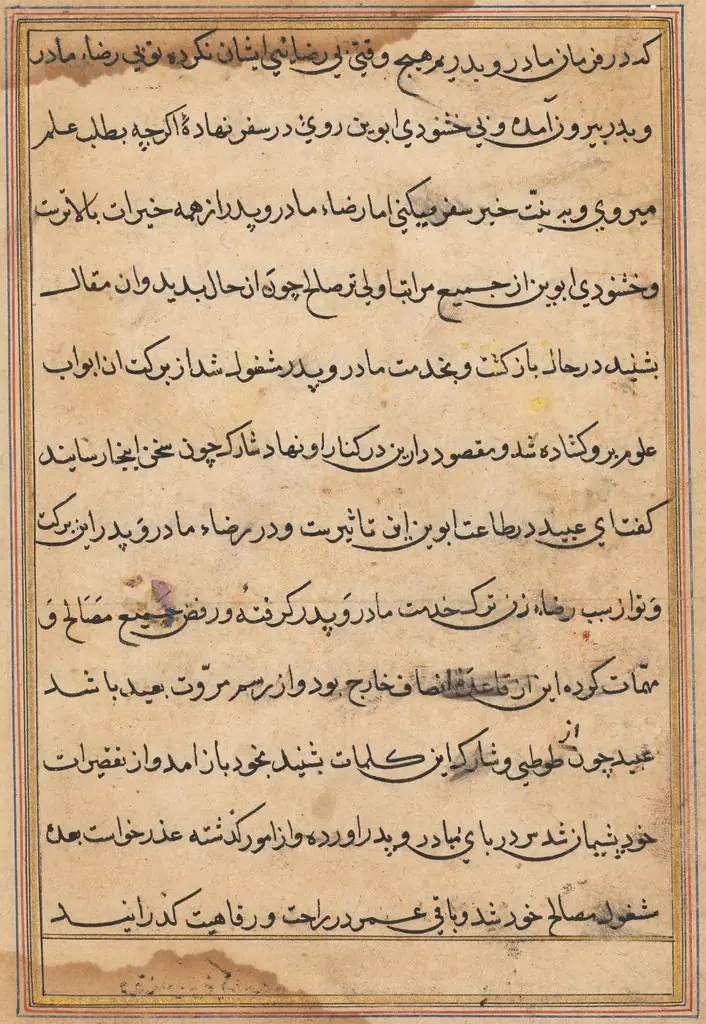
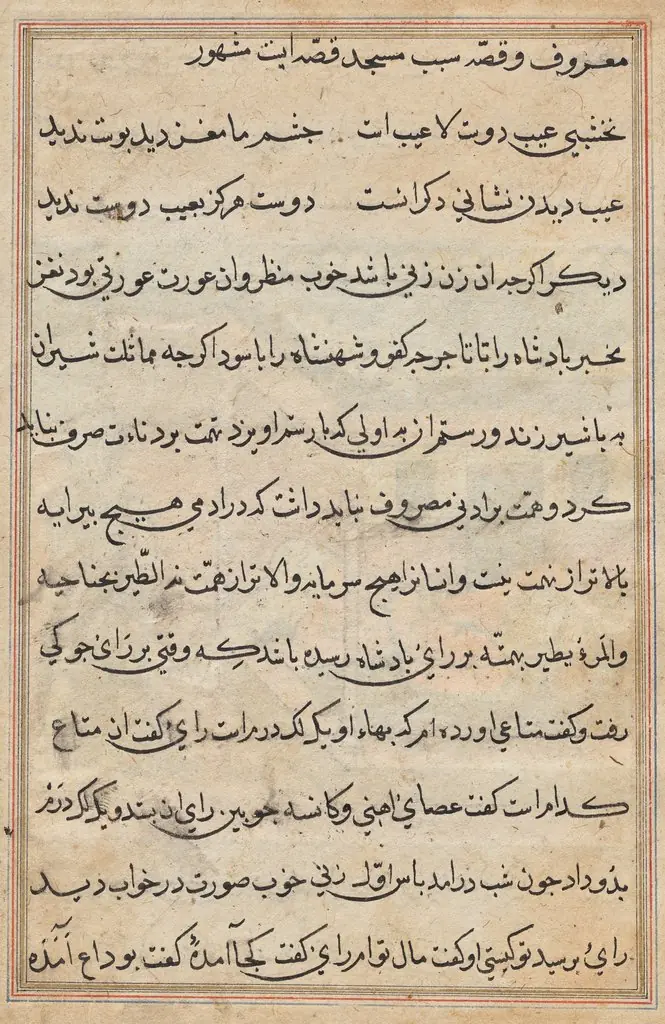
Page from Tales of a Parrot (Tuti-nama): text page
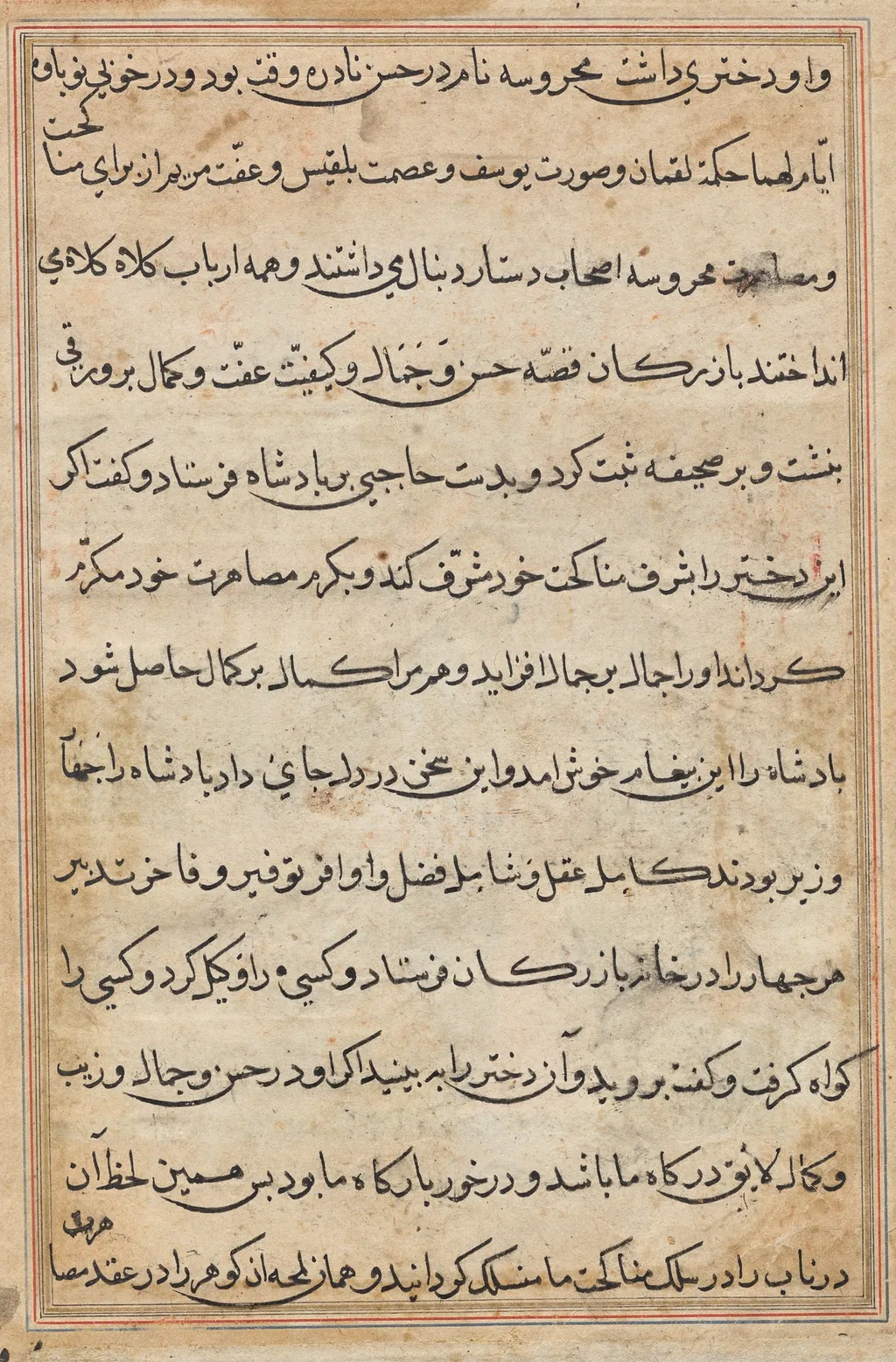
Page from Tales of a Parrot (Tuti-nama): text page is an unspecified painting. It dates from 1560 and is held in the collection of the Cleveland Museum of Art. The object is a single folio from the Persian manuscript known as the *Tuti‑nama* or *Tales of a Parrot*.
About this work
Overview
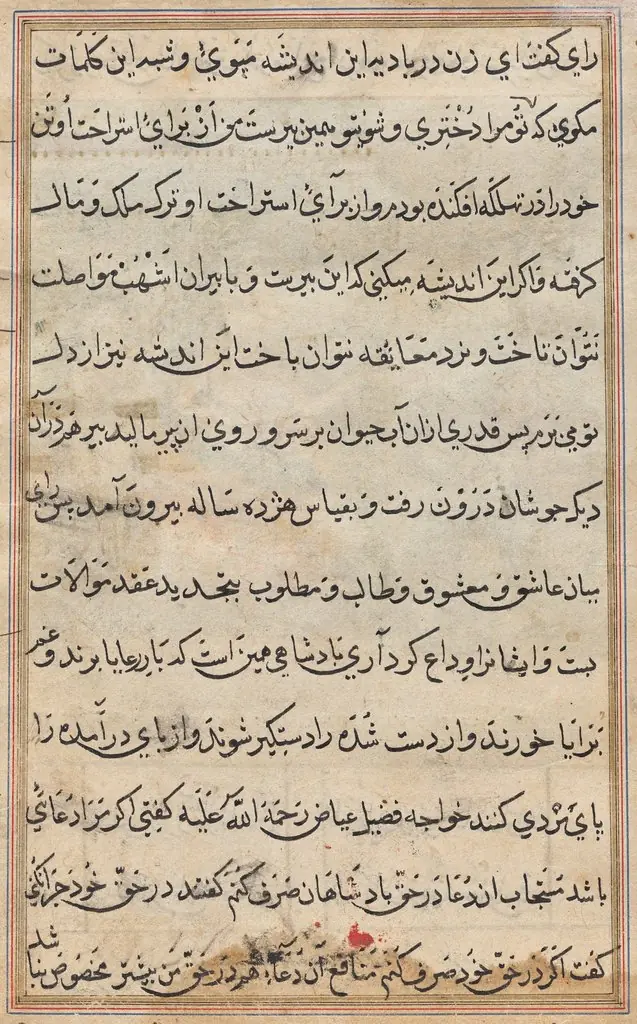
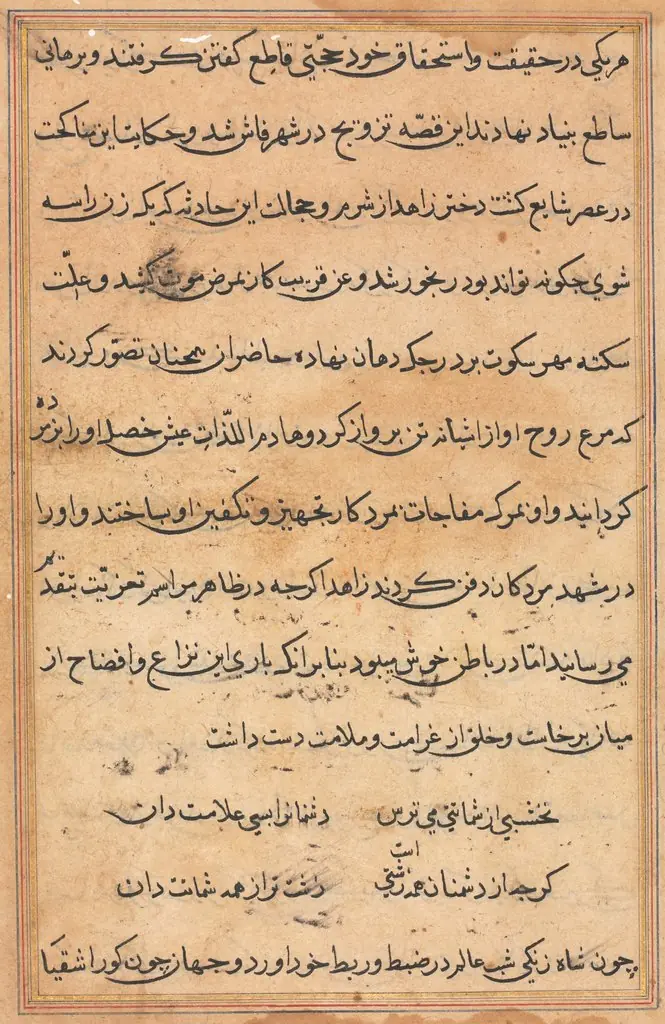
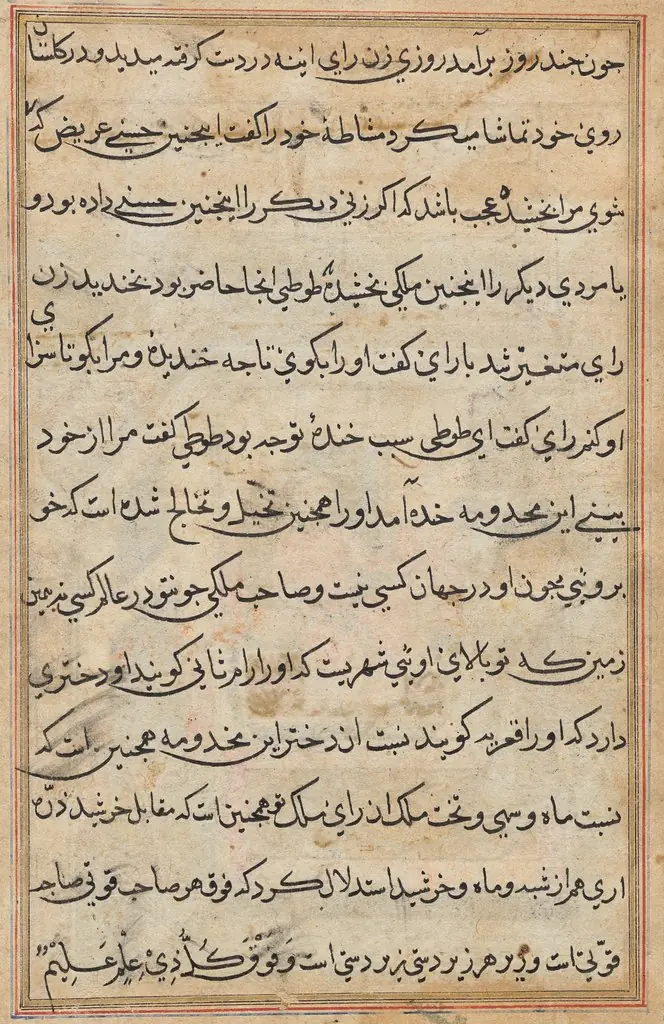
The object is a single folio from the Persian manuscript known as the *Tuti‑nama* or *Tales of a Parrot*. It consists of a text page framed by a modest border, with the script rendered in Arabic. The page is densely filled with narrative lines, leaving only narrow margins at the top and bottom, and appears to be part of a larger codex.
Subject & Meaning
The written content belongs to the *Tuti‑nama*, a collection of moral and romantic stories traditionally narrated by a parrot. While the specific passage on this leaf is not identified, the work as a whole conveys ethical teachings and courtly love themes that were popular in Safavid literary culture.
Technique & Style
The page is executed in an unknown medium, but the calligraphic hand follows the Arabic script conventions of Persian manuscript production. The border consists of a thin, continuous line that frames the text without decorative embellishment, emphasizing readability and the elegance of the script rather than pictorial illustration.
History & Provenance
Manuscript scholars suggest the *Tuti‑nama* was commissioned for Prince Salim, a Safavid royal figure. This particular leaf, therefore, likely originated in a courtly workshop in early‑17th‑century Persia, though its later ownership history remains undocumented.
Context
During the Safavid era, illustrated manuscripts often combined literary content with refined calligraphy. The *Tuti‑nama* reflects this tradition, aligning with other courtly texts that blended moral instruction with entertainment, and demonstrates the period’s preference for restrained decorative borders in favor of textual clarity.
Artist & collection

 Page from Tales of a Parrot (Tuti-nama): text page
 Page from Tales of a Parrot (Tuti-nama): text page
 Page from Tales of a Parrot (Tuti-nama): text page
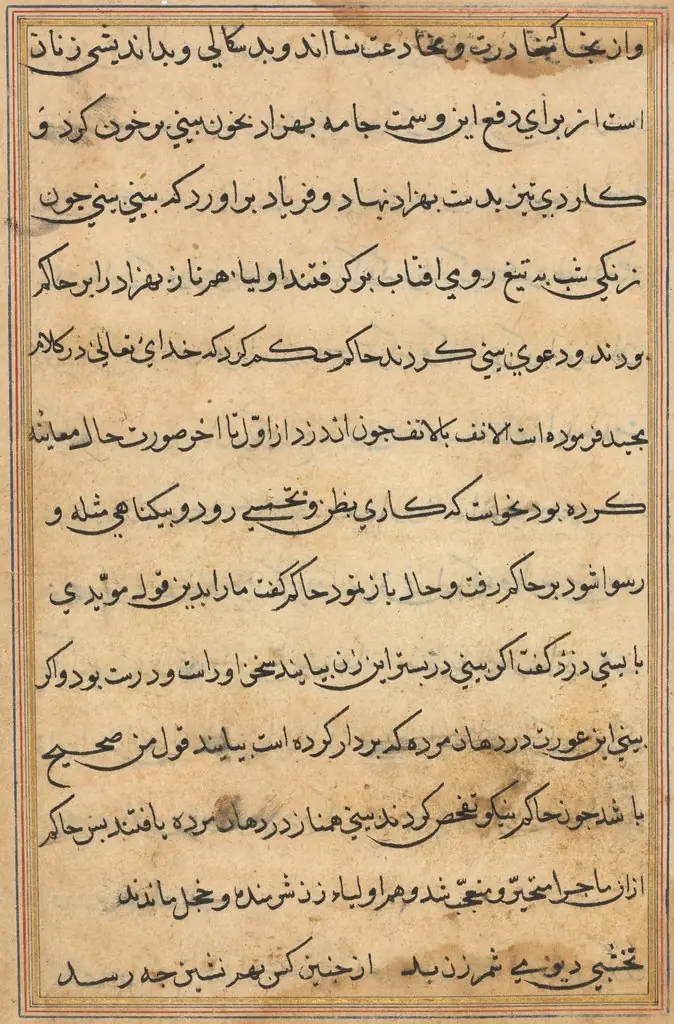 Page from Tales of a Parrot (Tuti-nama): text page
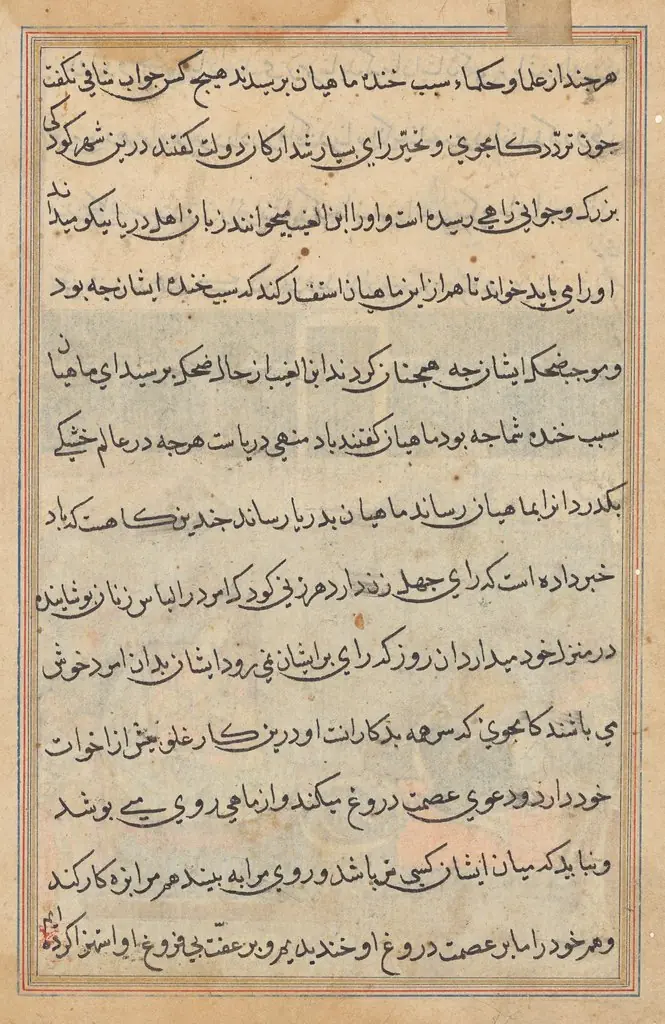 Page from Tales of a Parrot (Tuti-nama): text page
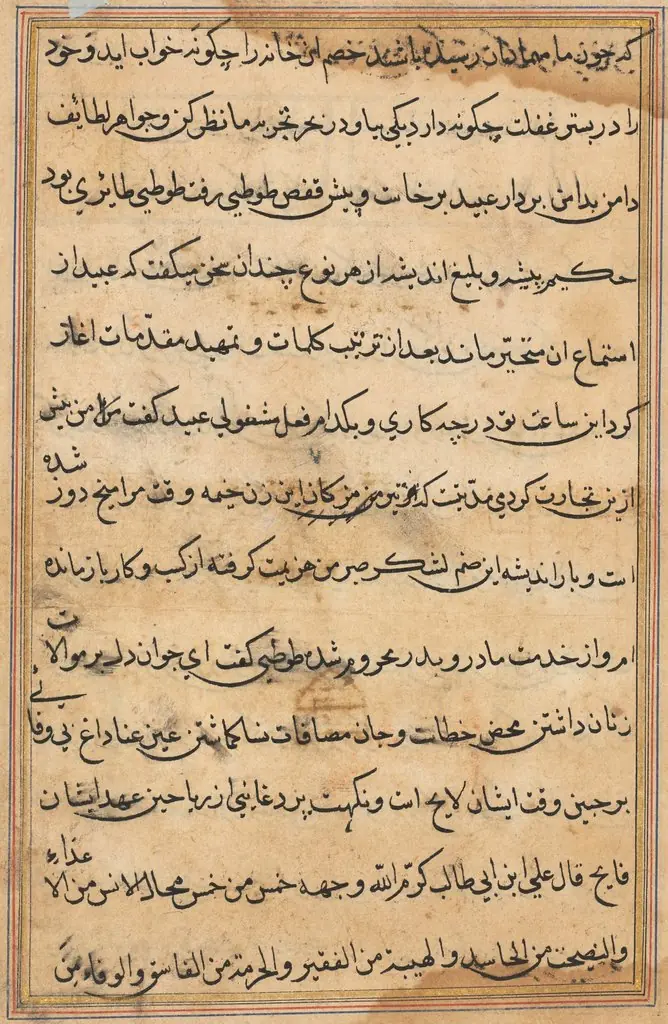 Page from Tales of a Parrot (Tuti-nama): text page
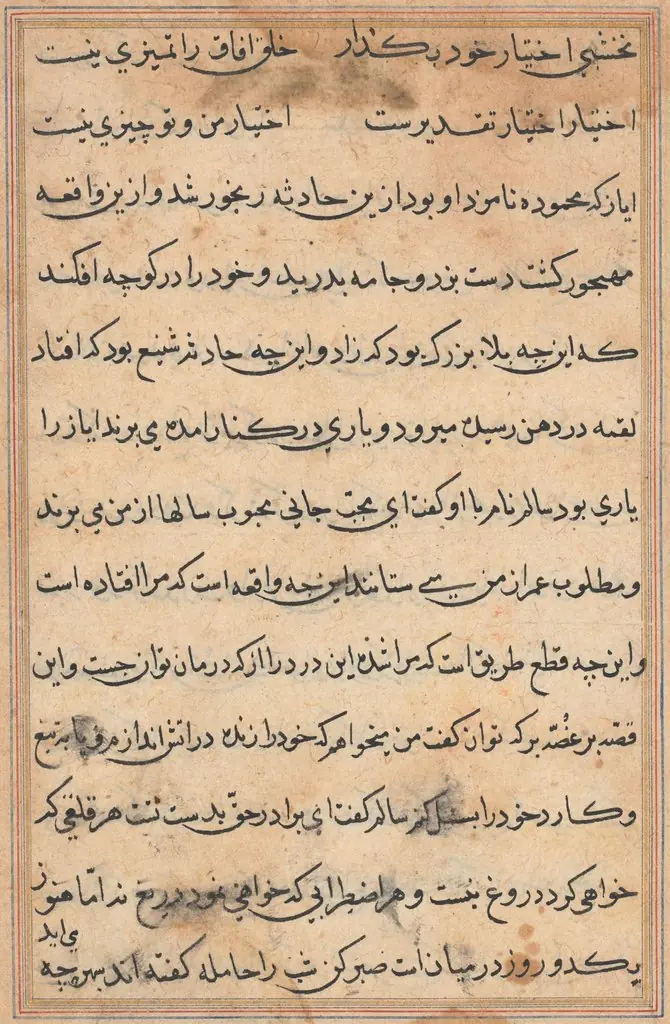 Page from Tales of a Parrot (Tuti-nama): text page
 Page from Tales of a Parrot (Tuti-nama): text page
 Page from Tales of a Parrot (Tuti-nama): text page