Artwork
Page from Tales of a Parrot (Tuti-nama): text page
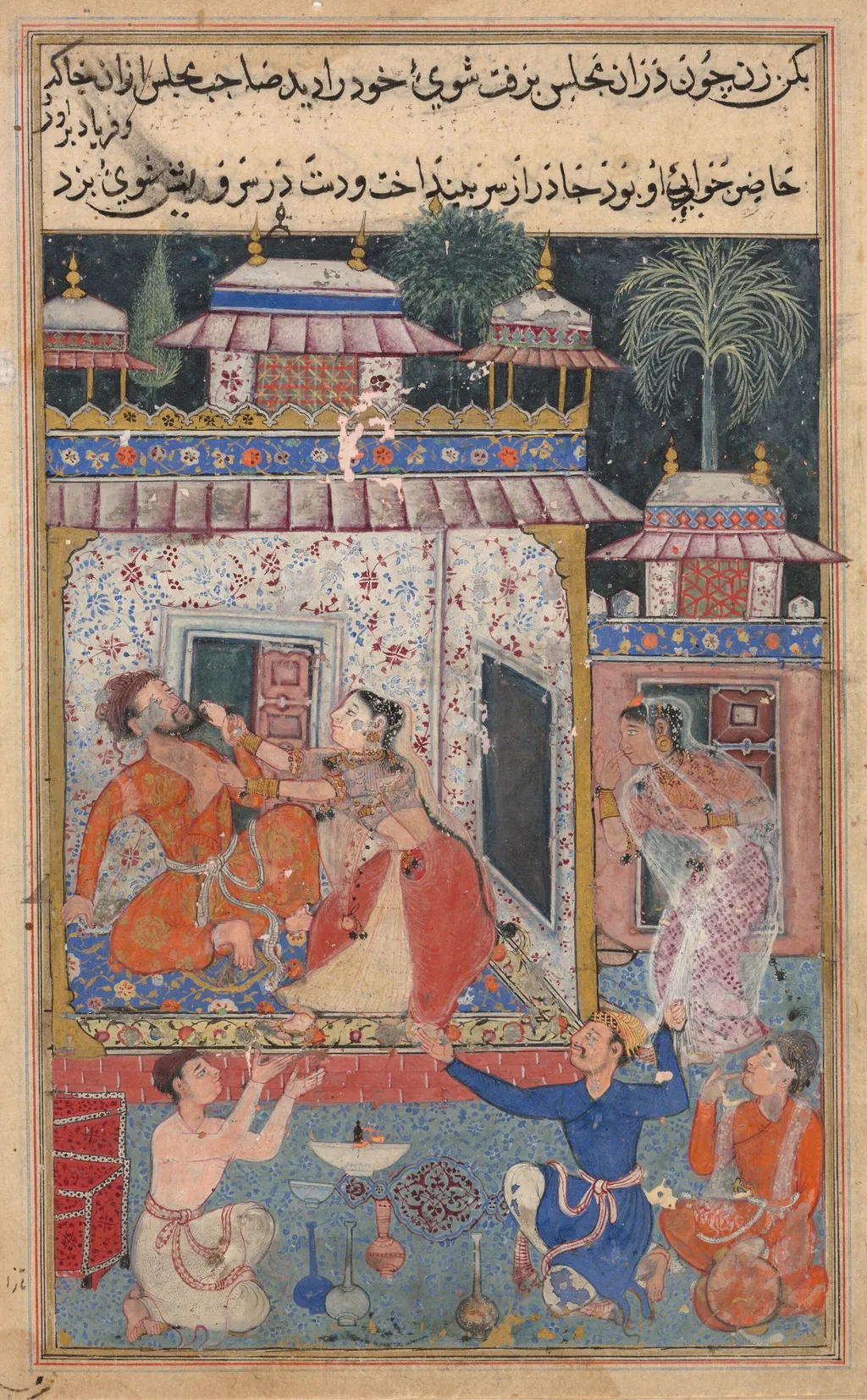
Page from Tales of a Parrot (Tuti-nama): text page is an unspecified painting. It dates from 1560 and is held in the collection of the Cleveland Museum of Art.
About this work
Overview
This illuminated page from the Persian manuscript *Tuti‑nama* (The Parrot’s Tale) presents a bustling domestic scene rendered in vivid pigments. The composition is divided into left and right sections populated by figures in richly colored garments, set against a backdrop of miniature pavilions, palm trees, and decorative gold detailing.
Subject & Meaning
The narrative depicts a courtly gathering: a man in an orange robe leans toward a seated woman in red, while a nude musician plays a stringed instrument.
The narrative depicts a courtly gathering: a man in an orange robe leans toward a seated woman in red, while a nude musician plays a stringed instrument. To the right, a woman in a patterned dress stands near a balcony, and a kneeling man in blue holds a cat. The arrangement of characters and the accompanying calligraphic text suggest a moment from the story, emphasizing themes of hospitality and entertainment within an aristocratic milieu.
Technique & Style
Executed with fine brushwork on paper, the page combines watercolor washes with intricate gold leaf application. The artist employs bold primary hues—reds, blues, and golds—alongside delicate floral motifs that decorate the walls and pavilions, characteristic of 16th‑century Persian miniature painting.
History & Provenance
The *Tuti‑nama* was produced in Persia during the Safavid period and later entered Western collections. The Cleveland Museum of Art acquired this particular page in the early 20th century, where it has been conserved as part of the museum’s Islamic art holdings.
Context
*Tuti‑nama* is a literary work that uses the parrot’s voice to relay moral tales. Illustrated copies were commissioned by elite patrons, reflecting the era’s taste for lavishly decorated books that combined poetry, prose, and visual storytelling.
Legacy
The page exemplifies the high level of artistic skill achieved in Persian manuscript illumination, influencing subsequent generations of miniature painters in the region. Its preservation allows scholars to study Safavid aesthetics, courtly culture, and the interplay of text and image in Islamic art.
Artist & collection

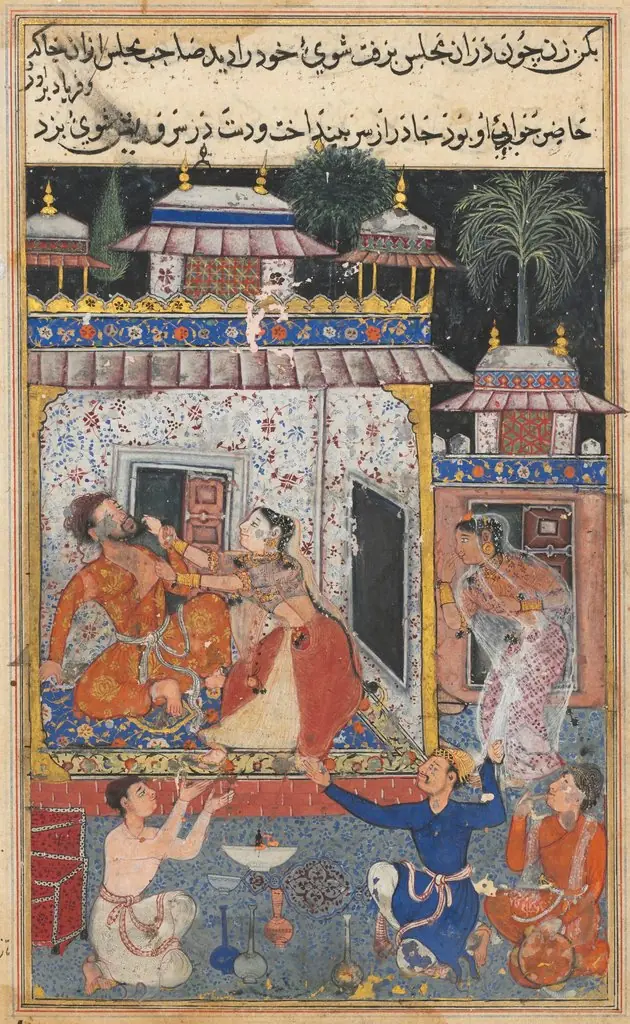 The deceitful wife assaults her erring husband, from a Tuti-nama (Tales of a Parrot): Eighth Night
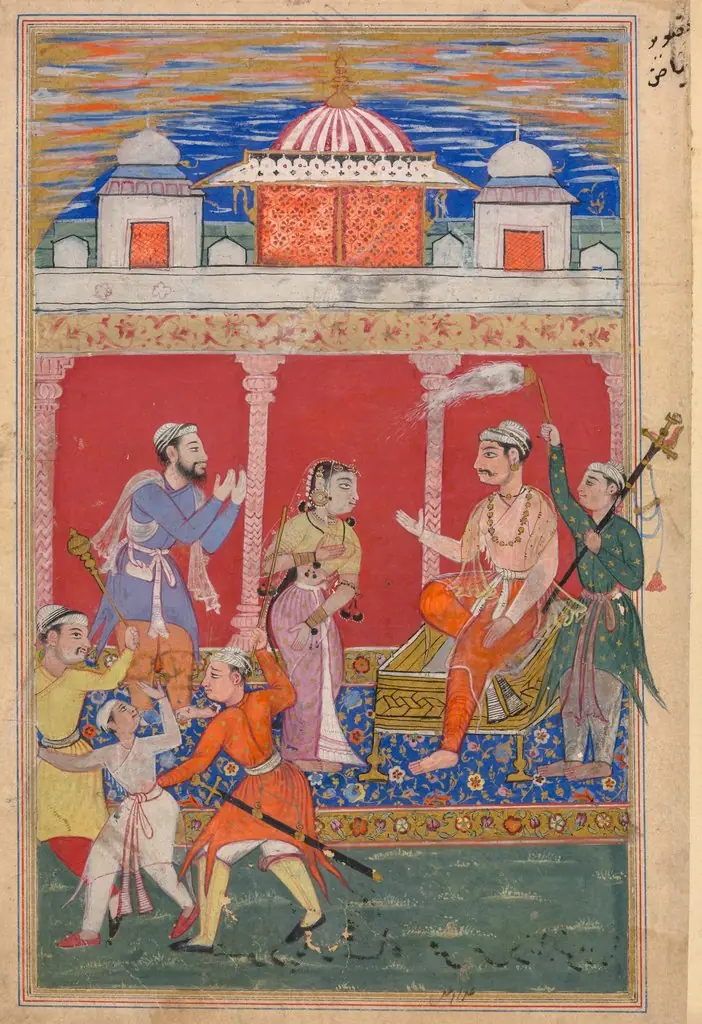 Page from Tales of a Parrot (Tuti-nama): text page
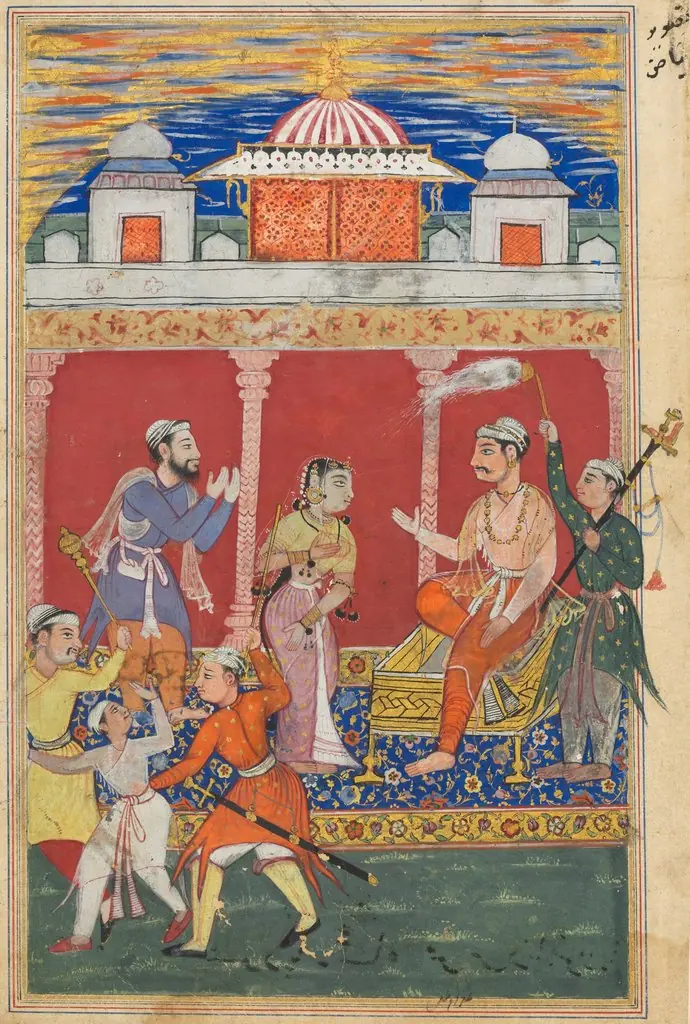 The prince’s ordeal continues, he is ordered away to be executed for the fifth time, from a Tuti-nama (Tales of a Parrot): Eighth Night
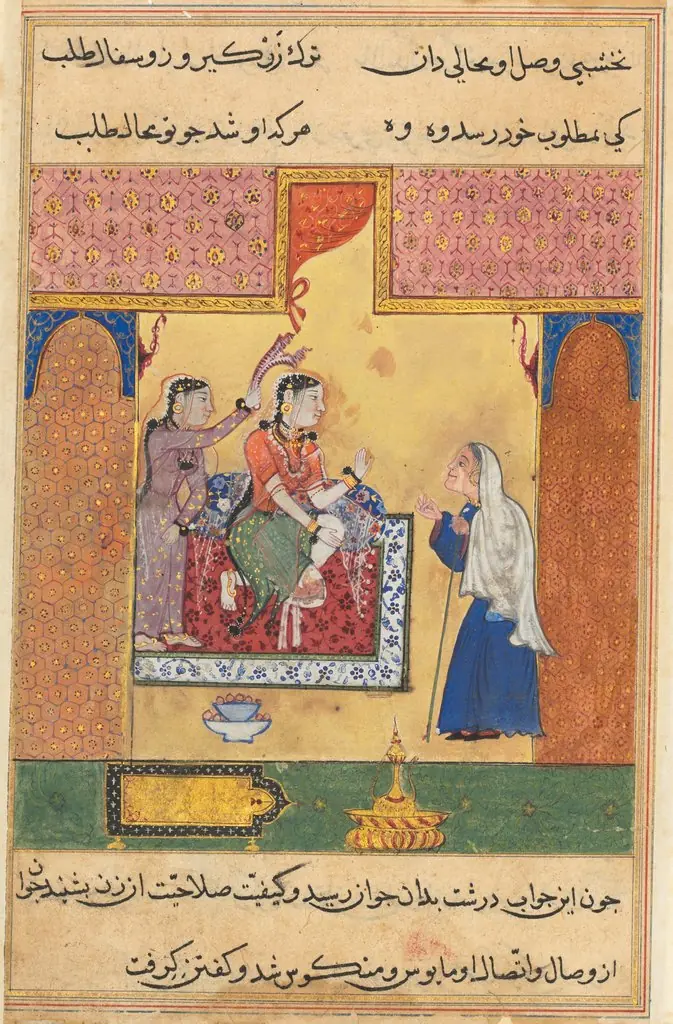 The old procuress conveys the young man’s message of love to Mansur’s wife, from a Tuti-nama (Tales of a Parrot: Seventeenth Night
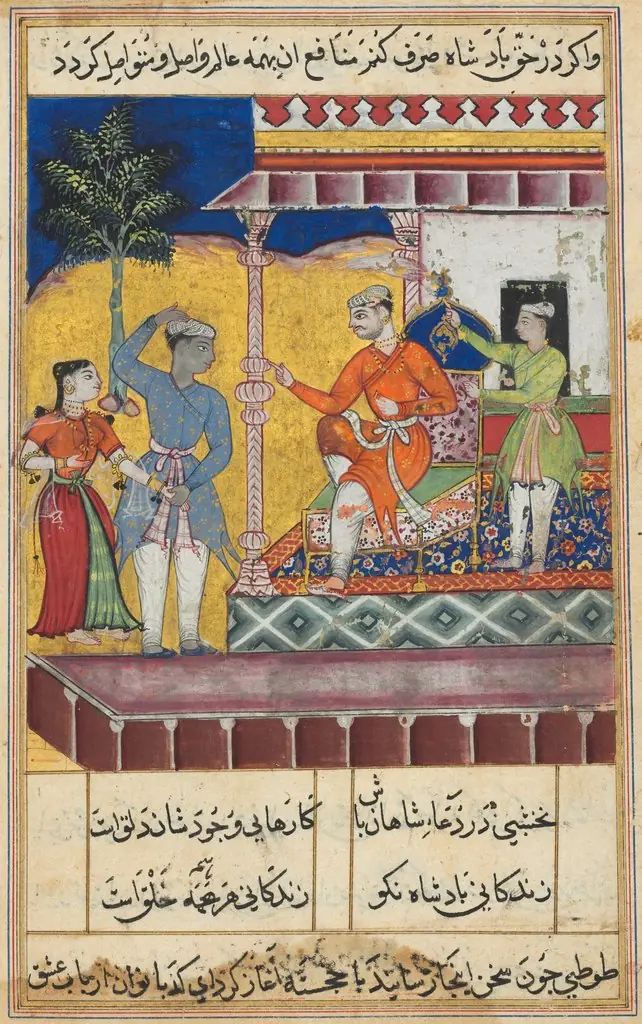 The rejuvenated old man and the daughter of the king of the jinns take leave of the King of Kings, from a Tuti-nama (Tales of a Parrot): Seventh Night
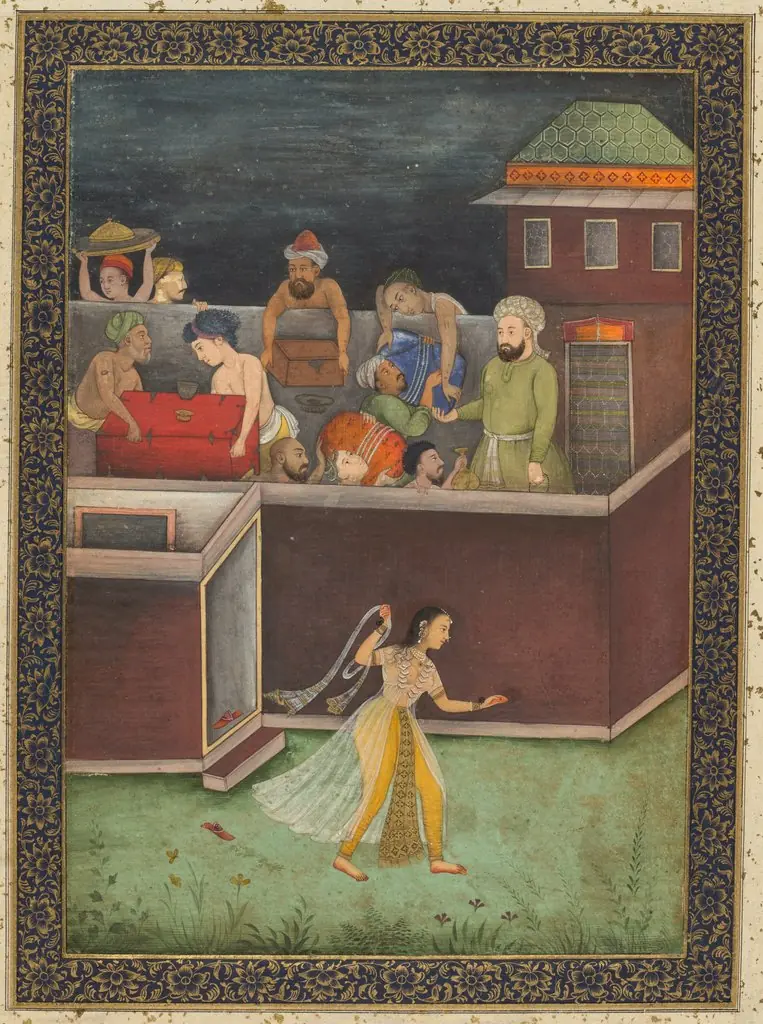 A House Burgled at Night
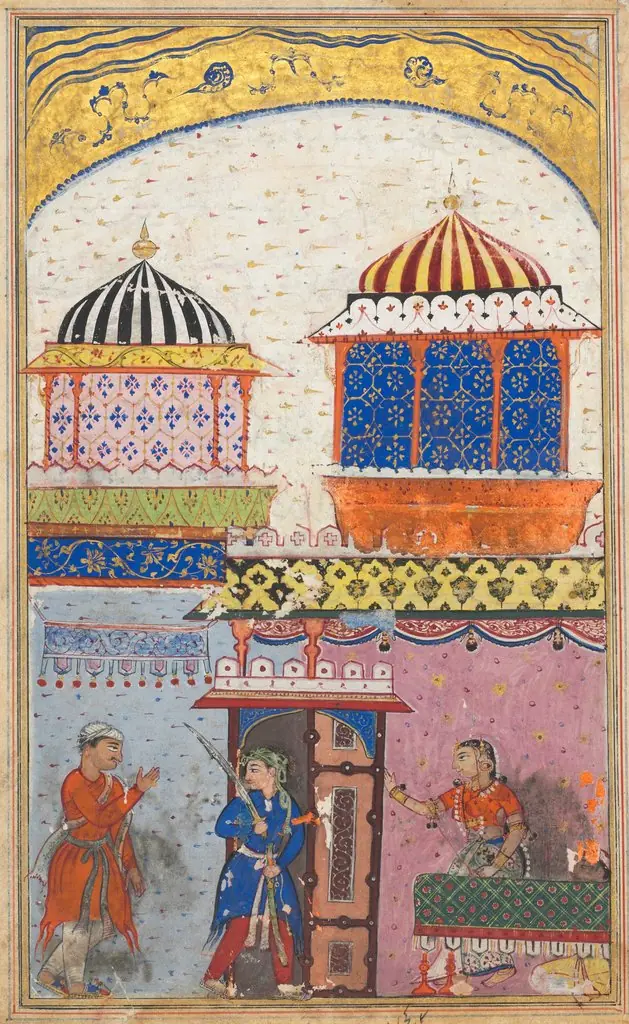 A woman asks her lover to leave her house, brandishing his sword and feigning rage in order to deceive her husband who has just arrived, from a Tuti-nama (Tales of a Parrot): Eighth Night
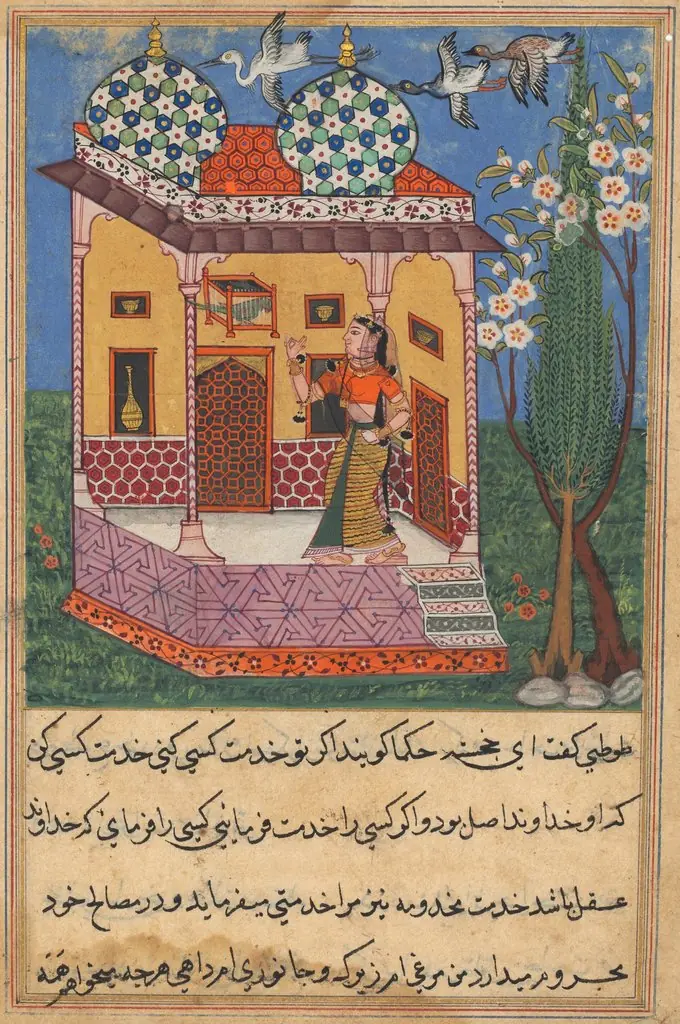 The Parrot Addresses Khujasta at the Beginning of the Twenty-sixth Night, from a Tuti-nama (Tales of a Parrot)