Artwork
The rejuvenated old man and the daughter of the king of the jinns take leave of the King of Kings, from a Tuti-nama (Tales of a Parrot): Seventh Night
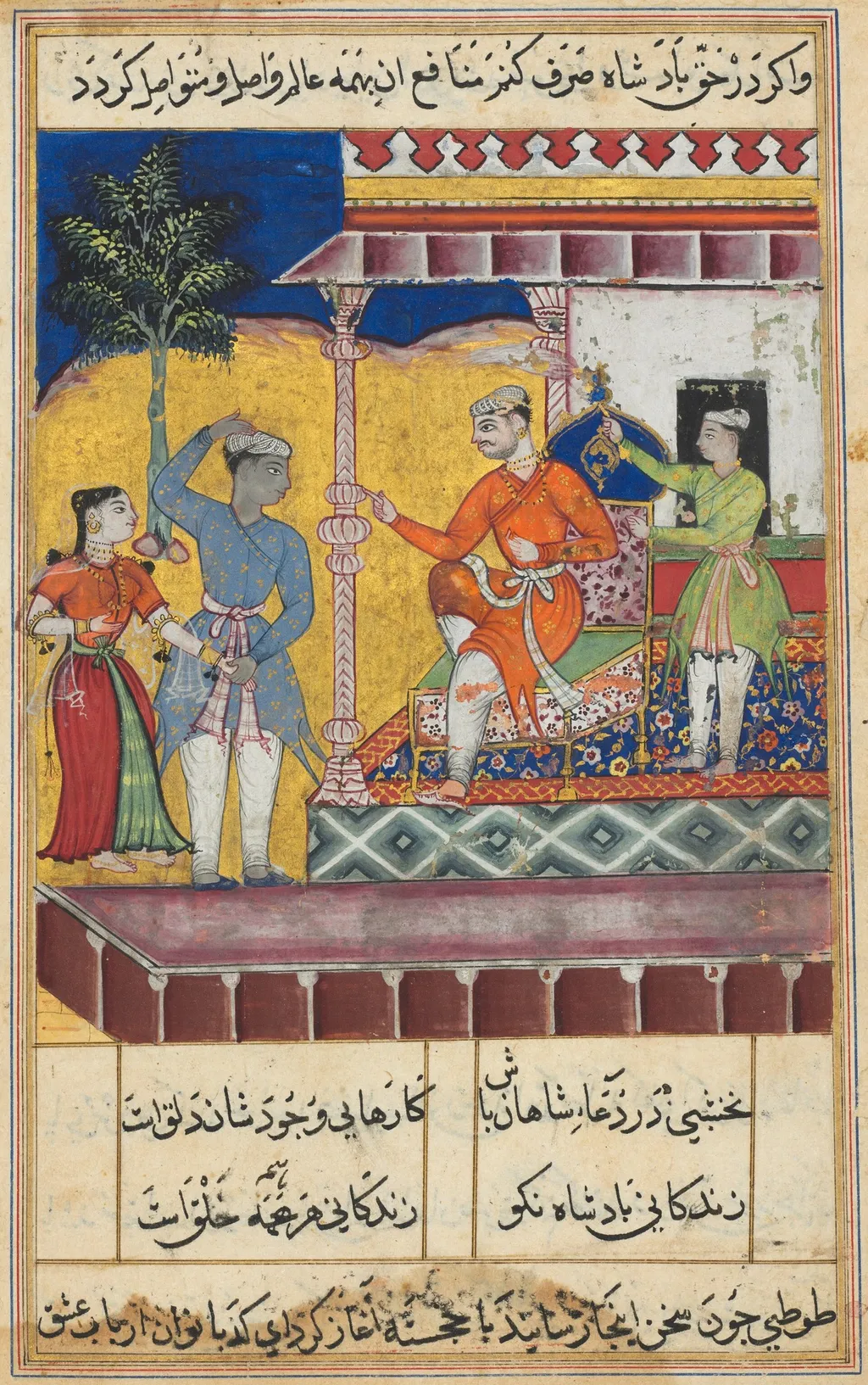
The rejuvenated old man and the daughter of the king of the jinns take leave of the King of Kings, from a Tuti-nama (Tales of a Parrot): Seventh Night is an unspecified painting. It dates from 1560 and is held in the collection of the Cleveland Museum of Art. The work depicts a lively rooftop encounter among four figures, rendered in vivid colors and intricate detailing.
About this work
Overview
The composition is framed by a striped wall, a palm tree, and bands of Arabic calligraphy along the top and bottom margins.
The work depicts a lively rooftop encounter among four figures, rendered in vivid colors and intricate detailing. Central to the scene is an orange‑clad man seated on a raised platform, his hand joined with a blue‑dressed companion. Flanking them are two women, one in green and red, the other in yellow and green, positioned near a doorway. The composition is framed by a striped wall, a palm tree, and bands of Arabic calligraphy along the top and bottom margins.
Subject & Meaning
The orange figure, crowned and seated, is identified as the rejuvenated old man, while the blue figure represents the daughter of the king of the jinns. Their departure with the two women suggests a narrative moment of farewell to the King of Kings, drawn from the seventh night of the Persian “Tuti‑nama” (Tales of a Parrot). The scene captures a moment of transition and parting within a mythic storyline.
Technique & Style
Executed in a flat, decorative manner, the painting employs bold, saturated pigments and stylized patterns typical of Persian miniature traditions. The use of linear perspective is minimal; instead, emphasis is placed on ornamental surfaces, intricate clothing folds, and the decorative arabesques that border the image. The composition balances narrative clarity with elaborate visual embellishment.
History & Provenance
The piece originates from a manuscript illustrating the “Tuti‑nama,” a collection of Persian tales. It reflects the artistic conventions of courtly book illustration, likely produced in the late medieval period for a wealthy patron. The work now forms part of the Cleveland Museum of Art’s collection of Persian miniatures, acquired through museum acquisition policies.
Context
Within the broader tradition of Persian illustrated manuscripts, scenes of royal and supernatural encounters were common, serving both decorative and didactic purposes. The inclusion of jinn royalty and the King of Kings aligns with the era’s fascination with mythic hierarchies and the moral themes embedded in the “Tuti‑nama.”
Artist & collection

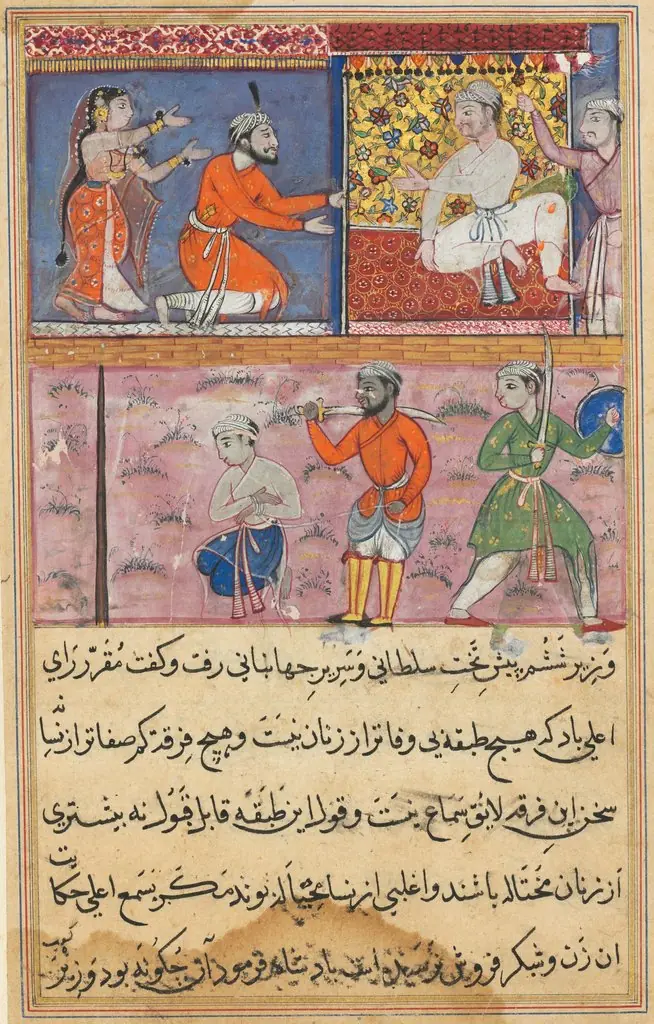 The prince sent back to the place of execution for the sixth time, from a Tuti-nama (Tales of a Parrot): Eighth Night
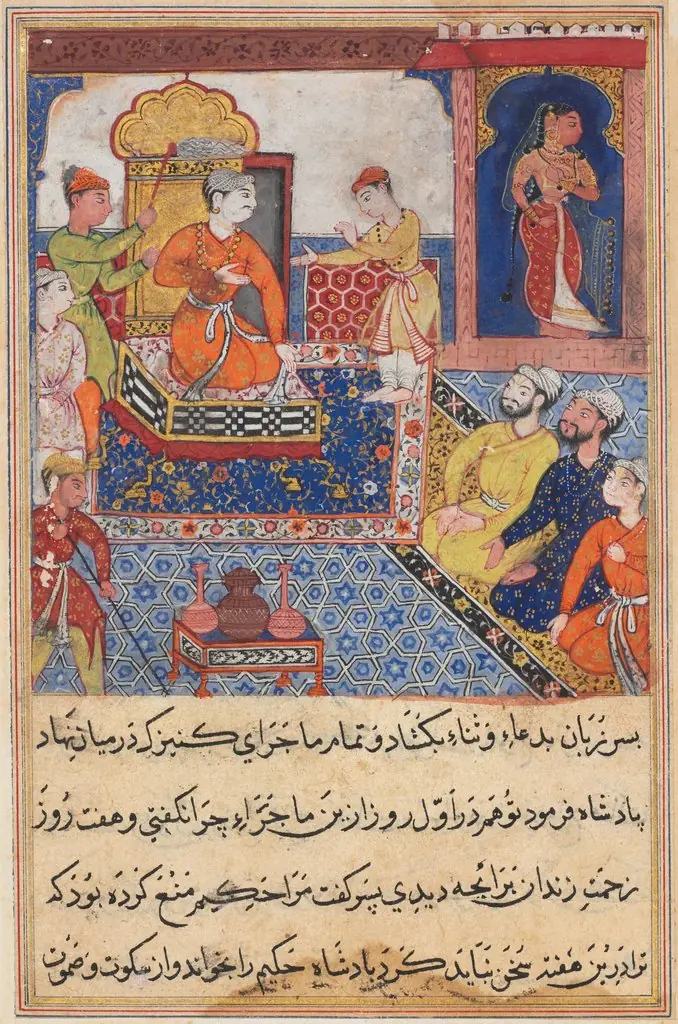 The young prince recounts his experiences to his father, the king, from a Tuti-nama (Tales of a Parrot): Eighth Night
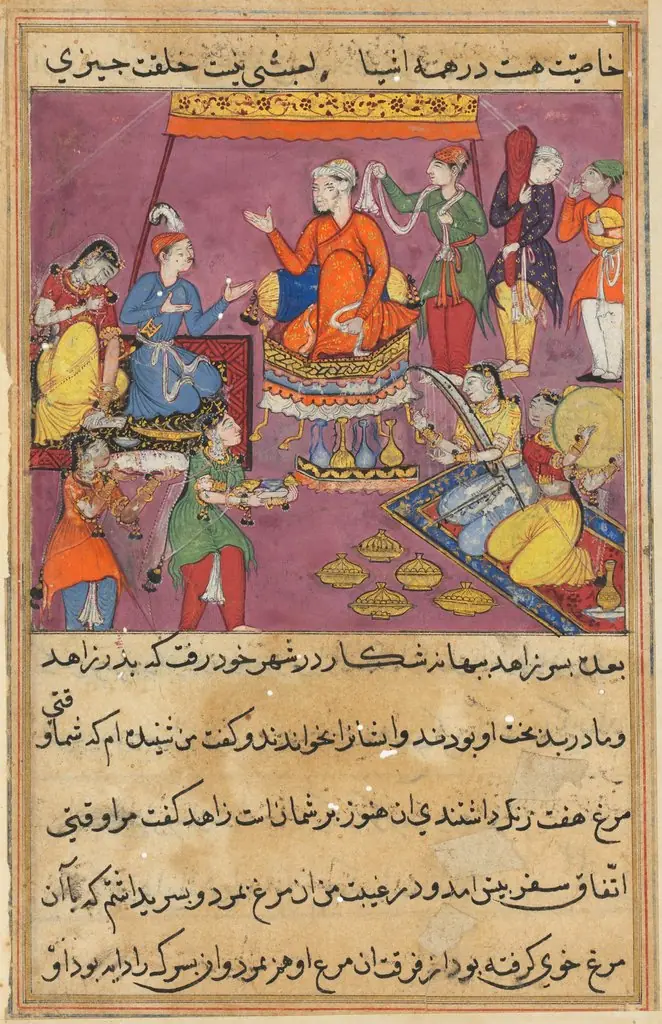 The king gives his daughter in marriage to the pious man’s son, from a Tuti-nama (Tales of a Parrot): Fifty-second Night
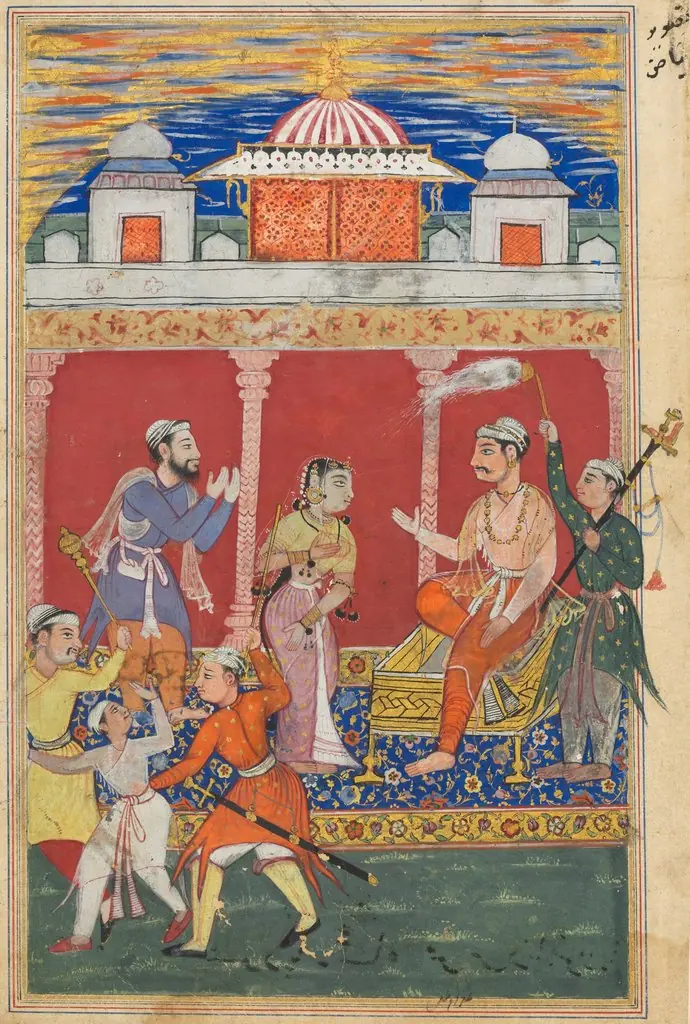 The prince’s ordeal continues, he is ordered away to be executed for the fifth time, from a Tuti-nama (Tales of a Parrot): Eighth Night
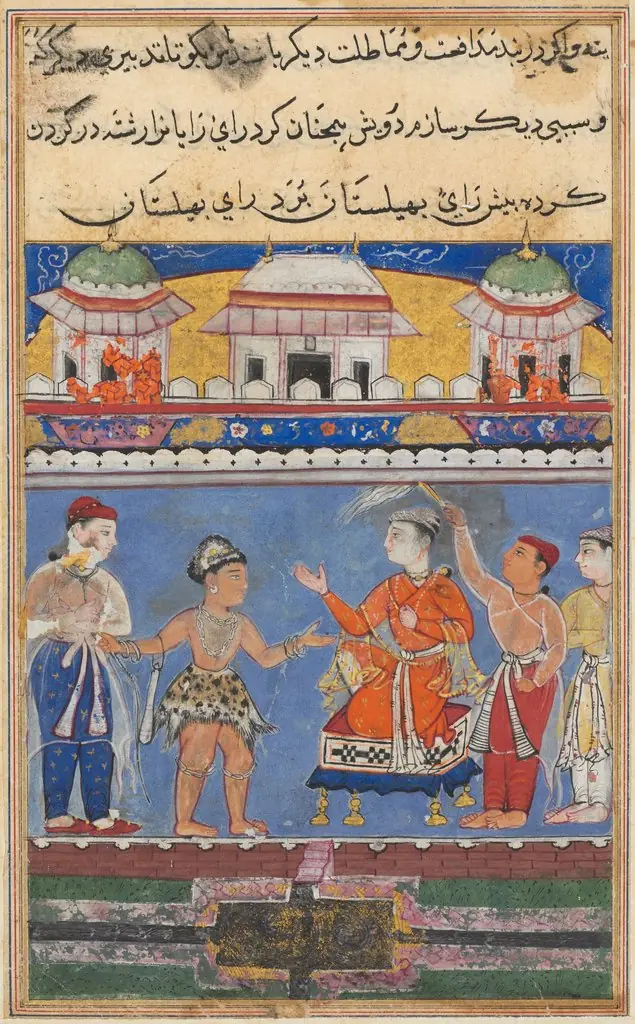 The dervish brings the King of Kings before the king of Bahilistan, from a Tuti-nama (Tales of a Parrot): Seventh Night
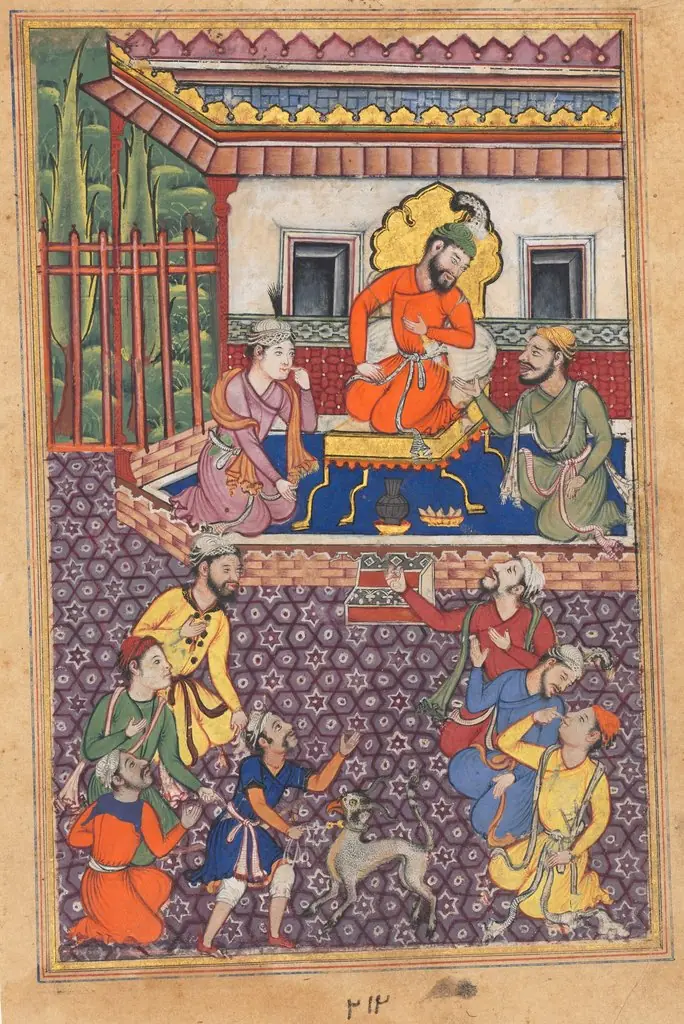 The court of the Raja of Ujjain, from a Tuti-nama (Tales of a Parrot): Forty-sixth Night
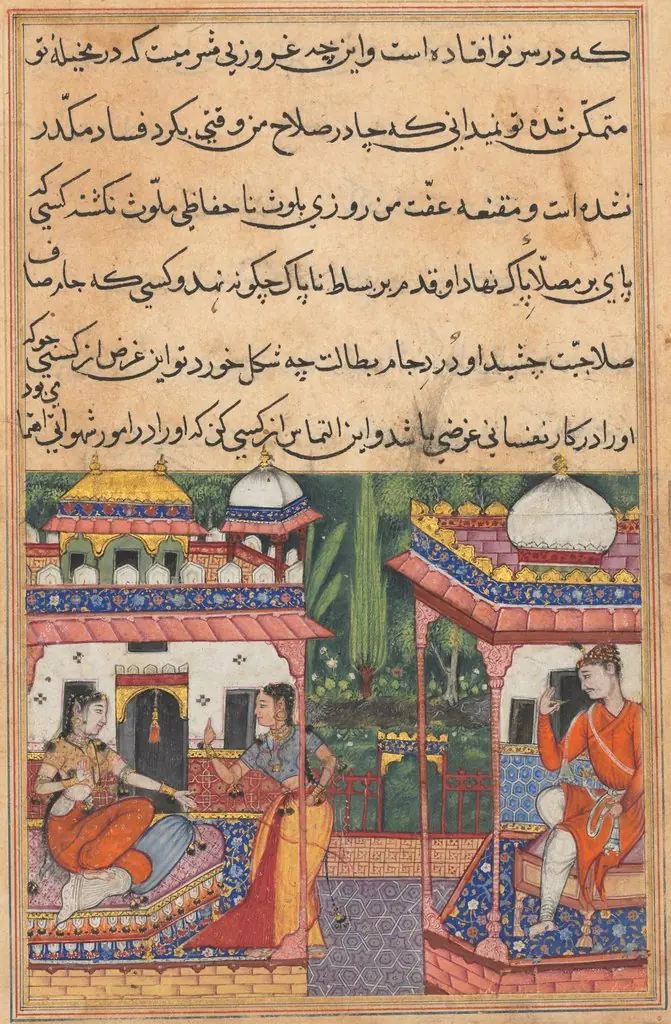 Kaiwan sends a message of love to Khurshid, wife of his brother Utarid who is away on a journey, from a Tuti-nama (Tales of a Parrot): Thirty-second Night
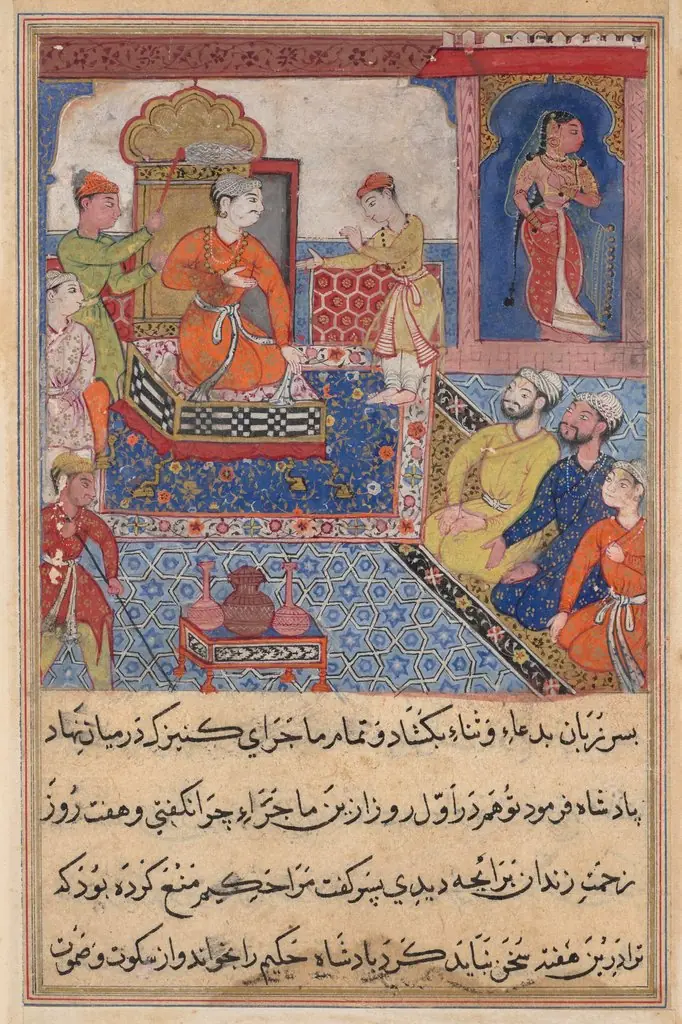 Page from Tales of a Parrot (Tuti-nama): text page
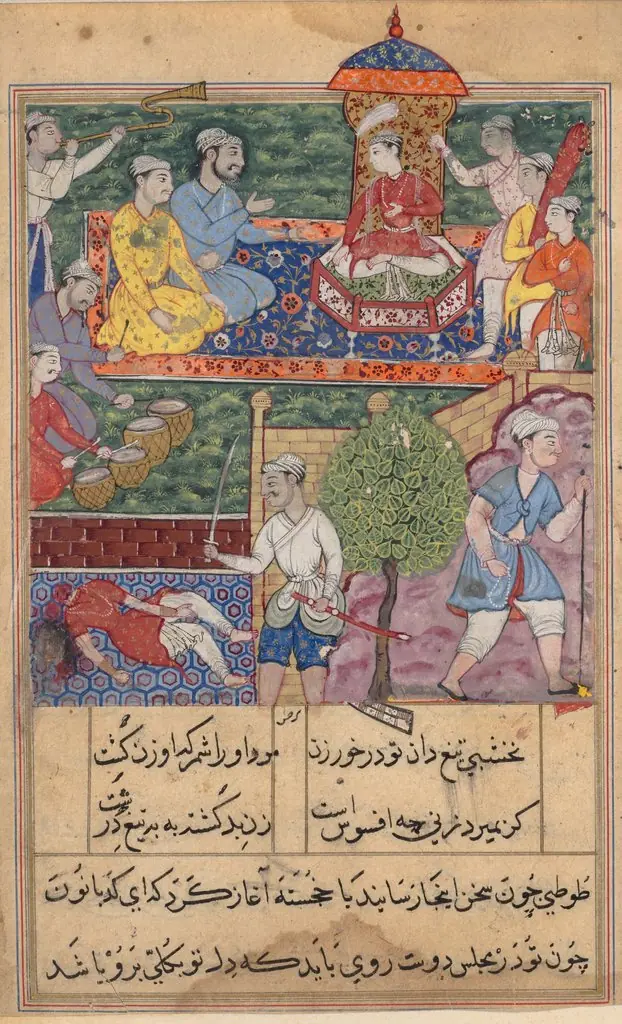 Page from Tales of a Parrot (Tuti-nama): text page
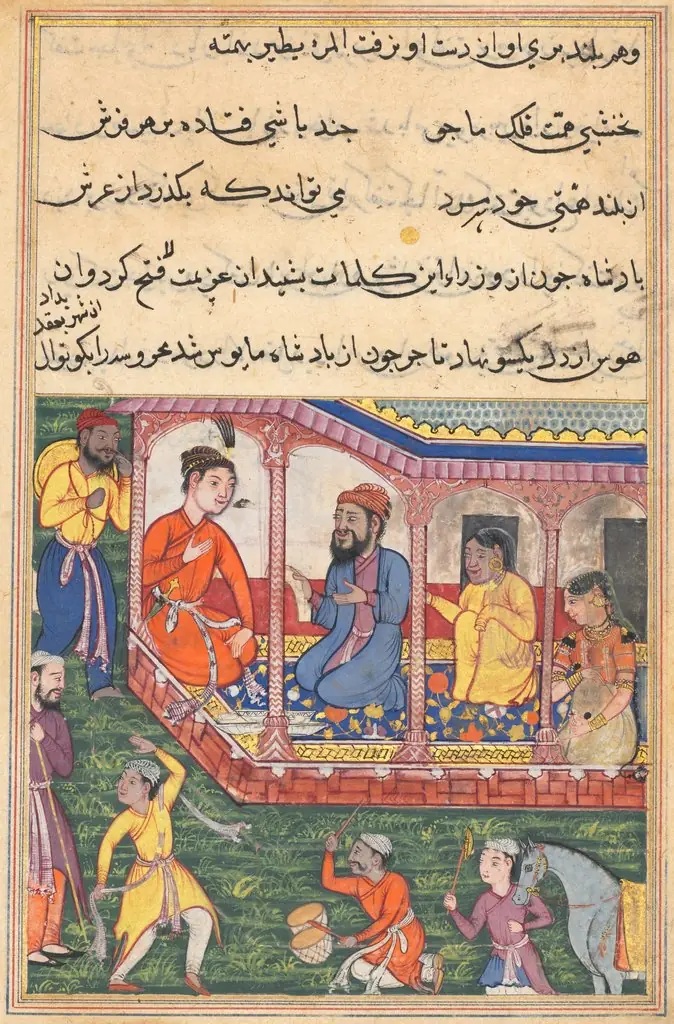 Mahrusa’s marriage to the prefect of the city, from a Tuti-nama (Tales of a Parrot): Thirty-sixth Night
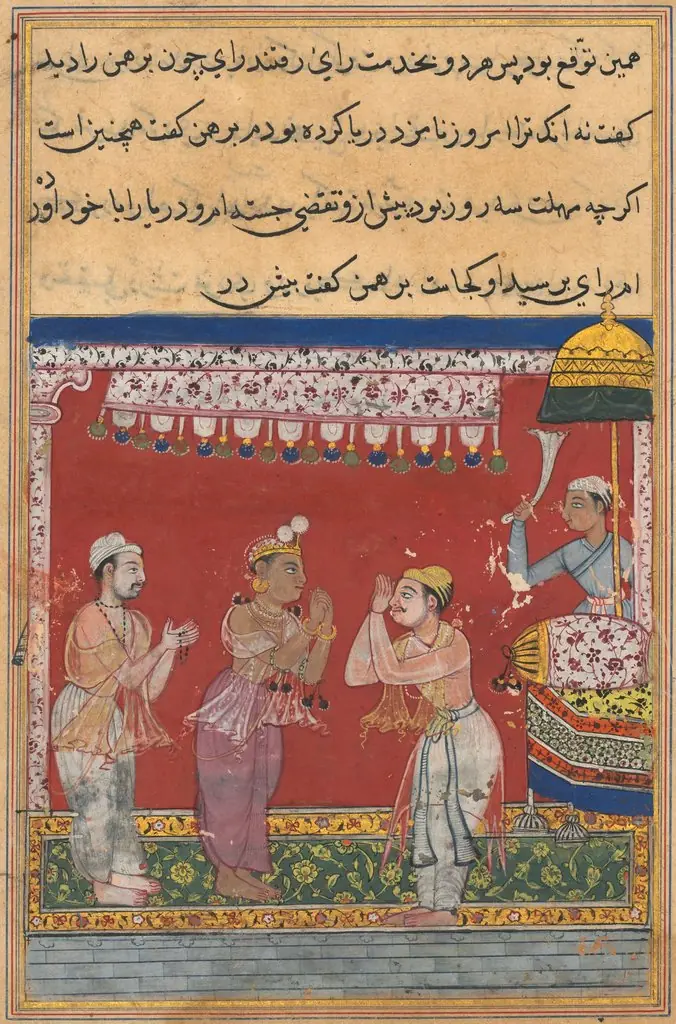 The king of the Ocean, having assumed human form, arrives at the court of the Raja, from a Tuti-nama (Tales of a Parrot): Eleventh Night
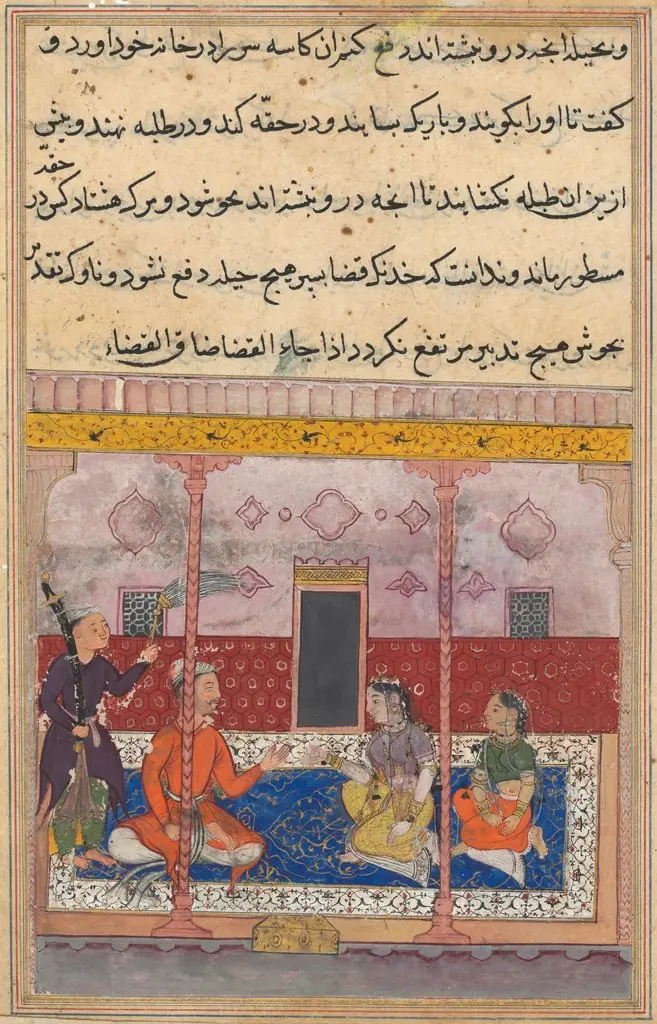 The merchant has the hateful skull ground and put into a box, from a Tuti-nama (Tales of a Parrot): Twenty-third Night
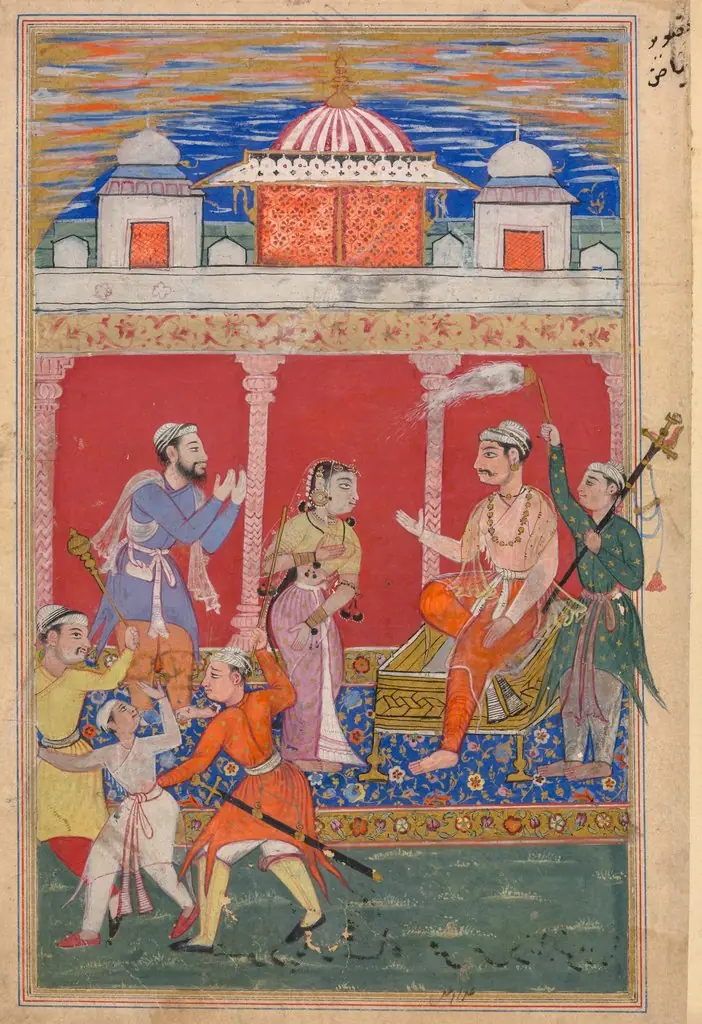 Page from Tales of a Parrot (Tuti-nama): text page
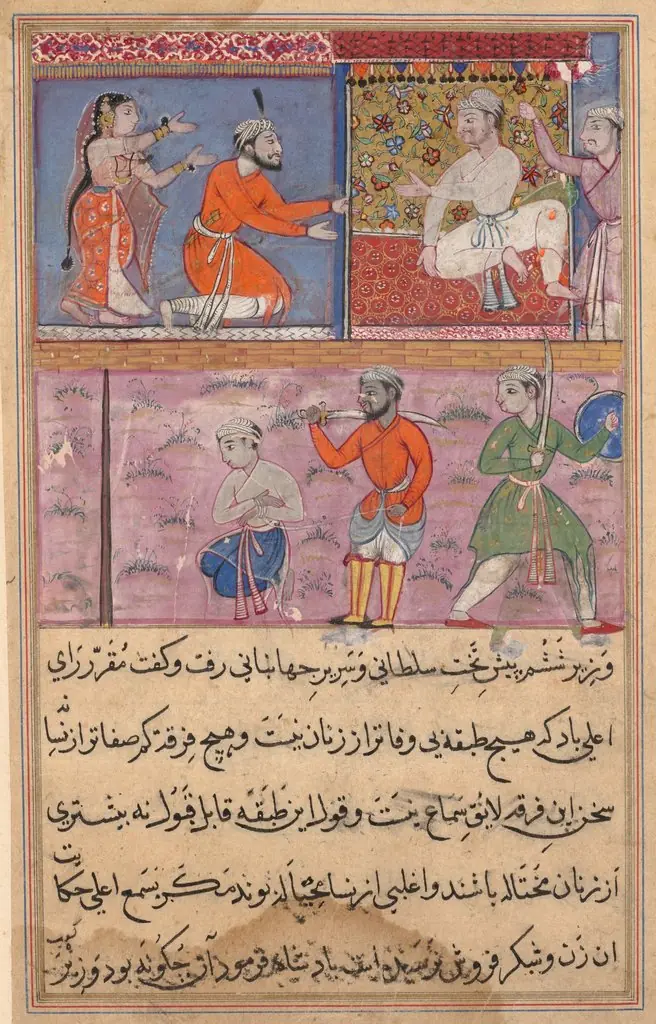 Page from Tales of a Parrot (Tuti-nama): text page