Artwork
The prince’s ordeal continues, he is ordered away to be executed for the fifth time, from a Tuti-nama (Tales of a Parrot): Eighth Night
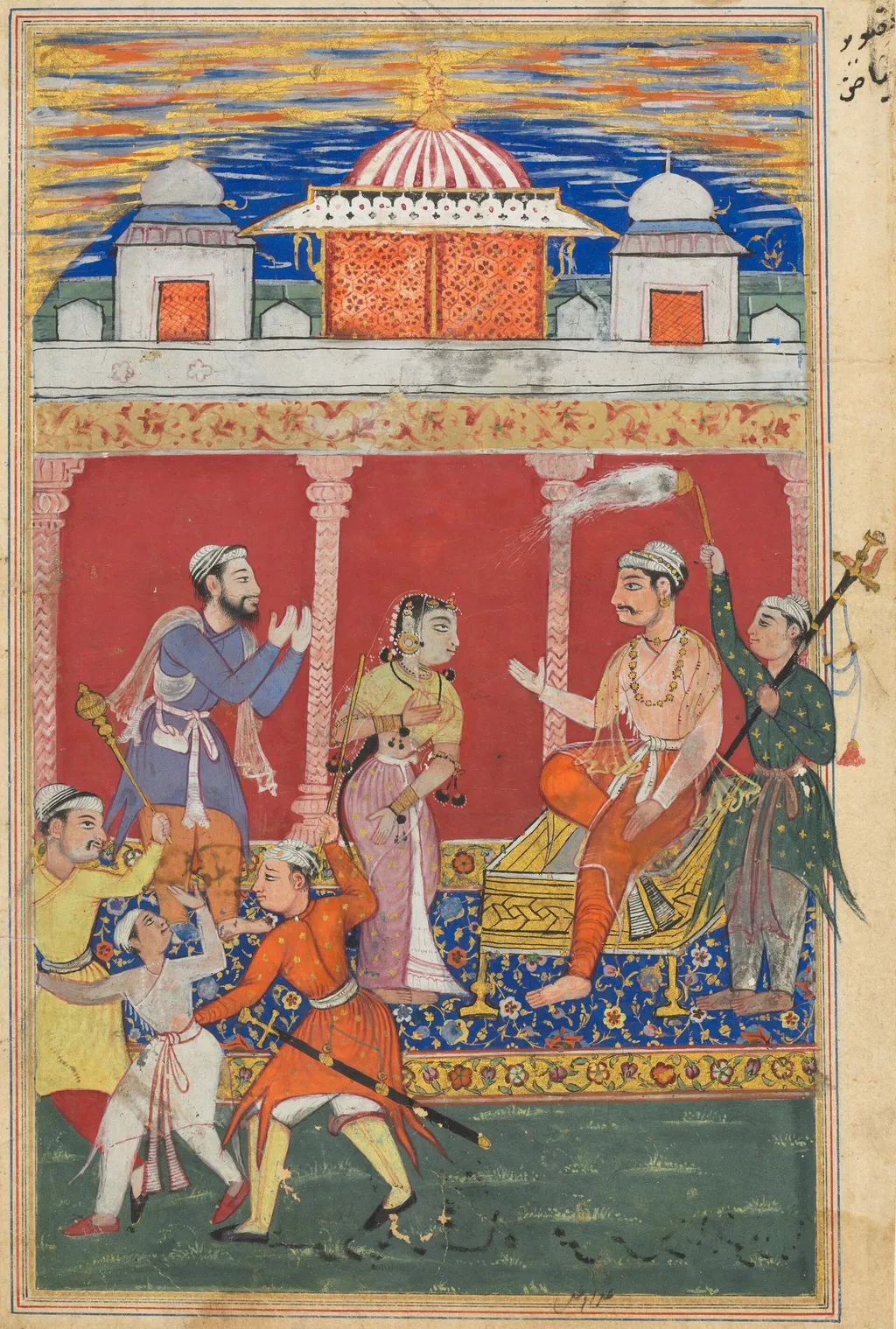
The prince’s ordeal continues, he is ordered away to be executed for the fifth time, from a Tuti-nama (Tales of a Parrot): Eighth Night is an unspecified painting. It dates from 1560 and is held in the collection of the Cleveland Museum of Art.
About this work
Overview
It depicts a young prince seated on an elevated, throne‑like chair, surrounded by a small court of five men and a woman, all rendered in vivid, saturated hues.
The work, titled *The prince’s ordeal continues, he is ordered away to be executed for the fifth time, from a Tuti‑nama (Tales of a Parrot): Eighth Night*, is a narrative painting that captures a dramatic episode from the Persian literary collection known as the Tuti‑nama. It depicts a young prince seated on an elevated, throne‑like chair, surrounded by a small court of five men and a woman, all rendered in vivid, saturated hues.
Subject & Meaning
The central figure, the prince, appears anxious as he confronts a repeated sentence of execution, a motif that underscores themes of fate and royal vulnerability. The surrounding attendants—one kneeling, another brandishing a sword—suggest both reverence and imminent danger, while the woman’s presence adds a layer of courtly intrigue to the scene.
Technique & Style
Executed in a richly colored palette of orange, blue, and red, the painting employs intricate patterning on garments and architectural elements. The detailed rendering of domed structures and a crimson canopy in the background reflects the decorative aesthetic typical of manuscript illustration, translating a textual episode into a visual tableau.
History & Provenance
The piece originates from the illustrated tradition of the *Tuti‑nama*, a 14th‑century Persian anthology of moral tales. Though specific commission details are unknown, the work has entered the collection of the Cleveland Museum of Art, where it is displayed alongside other examples of Persian narrative painting.
Context
Within the *Tuti‑nama*, the eighth night recounts the prince’s repeated sentencing, a narrative device that explores the tension between royal authority and the capriciousness of destiny. The painting’s composition mirrors the manuscript’s emphasis on moral instruction through vivid, emotionally charged scenes.
Legacy
As an example of Persian illustrative art, the painting illustrates how literary stories were visualized for elite audiences, influencing later manuscript production and informing contemporary understandings of medieval Persian narrative aesthetics.
Artist & collection

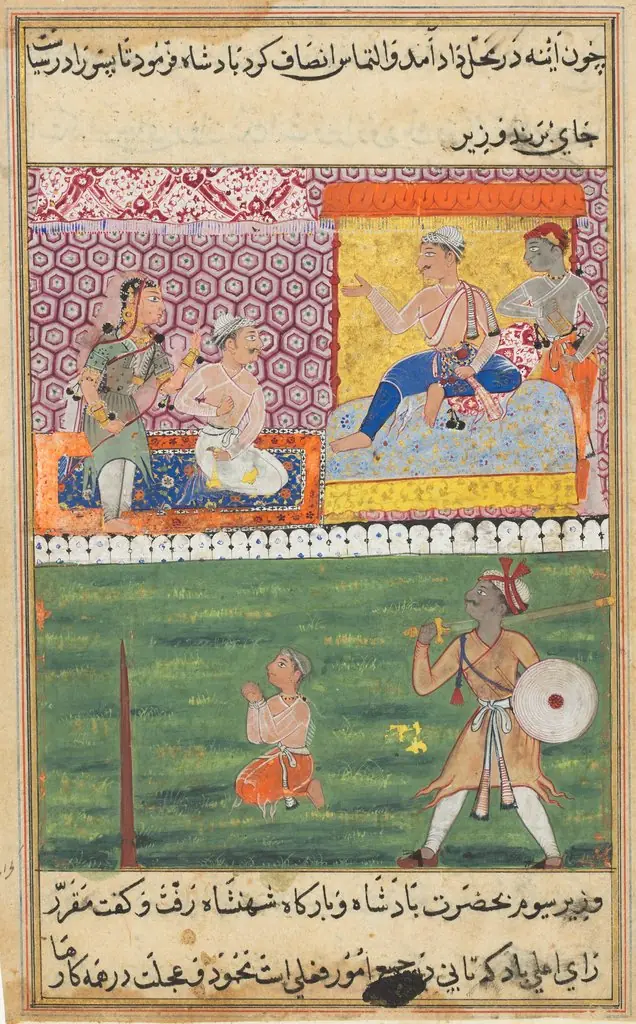 The handmaiden again appeals for justice and the prince is led to the place of execution for the third time, from a Tuti-nama (Tales of a Parrot): Eighth Night
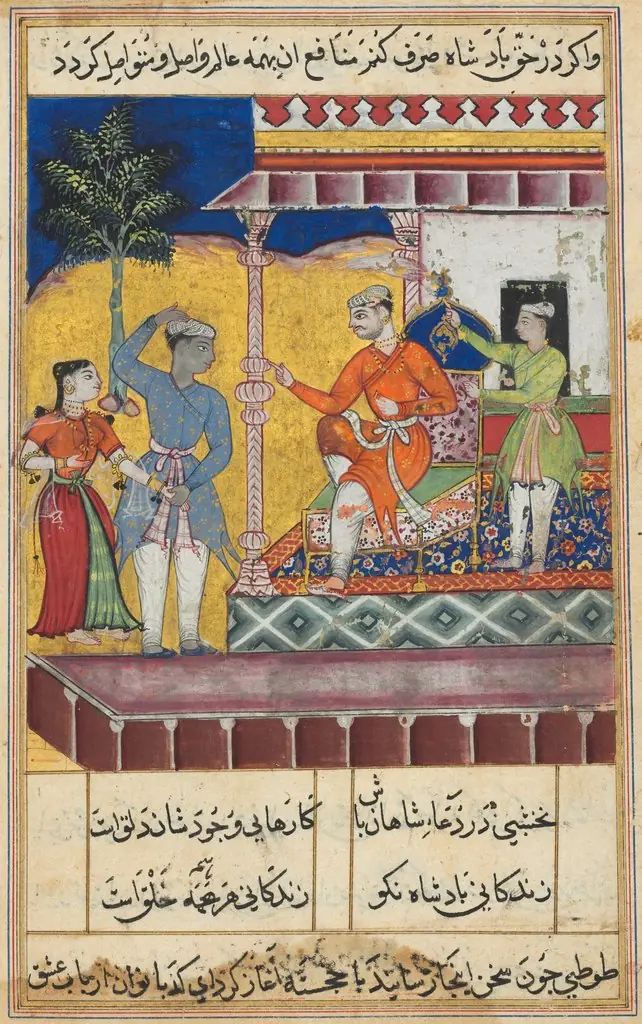 The rejuvenated old man and the daughter of the king of the jinns take leave of the King of Kings, from a Tuti-nama (Tales of a Parrot): Seventh Night
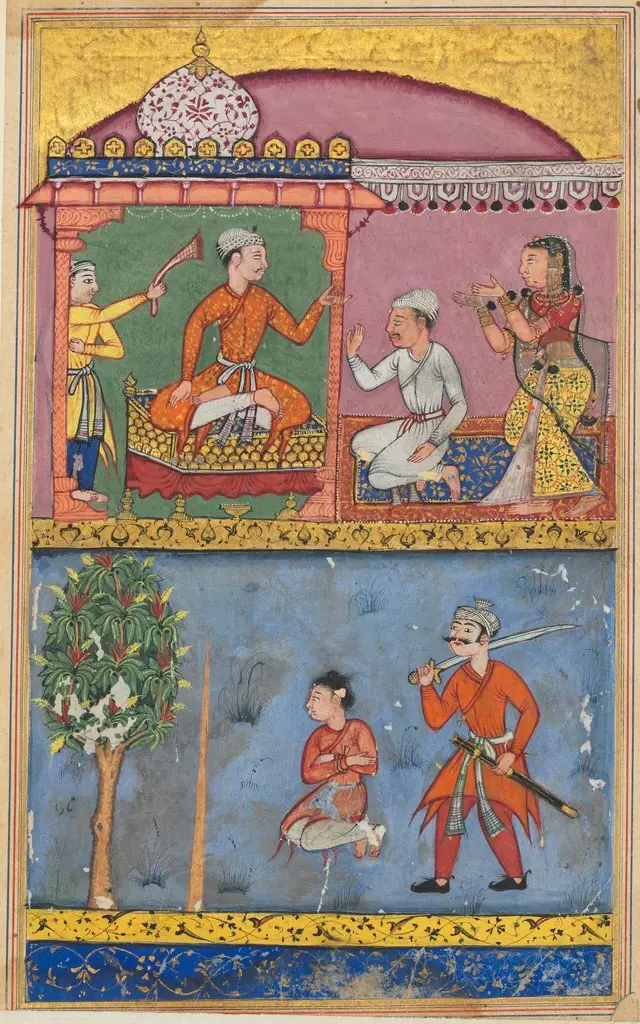 The handmaiden appeals for justice and the prince is taken to the execution site for the fourth time, from a Tuti-nama (Tales of a Parrot): Eighth Night
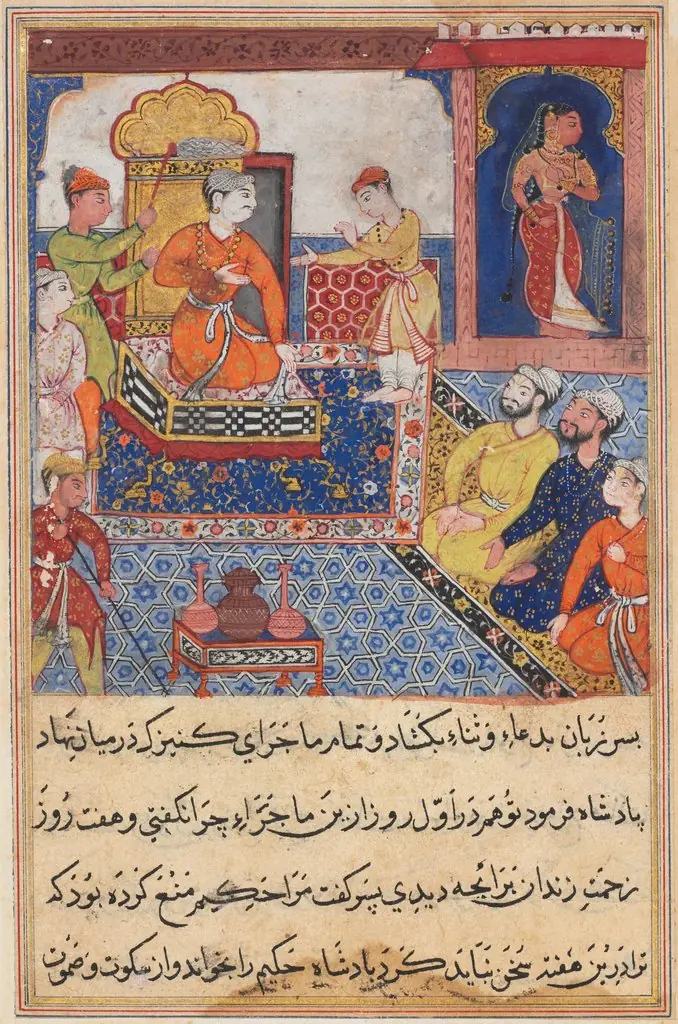 The young prince recounts his experiences to his father, the king, from a Tuti-nama (Tales of a Parrot): Eighth Night
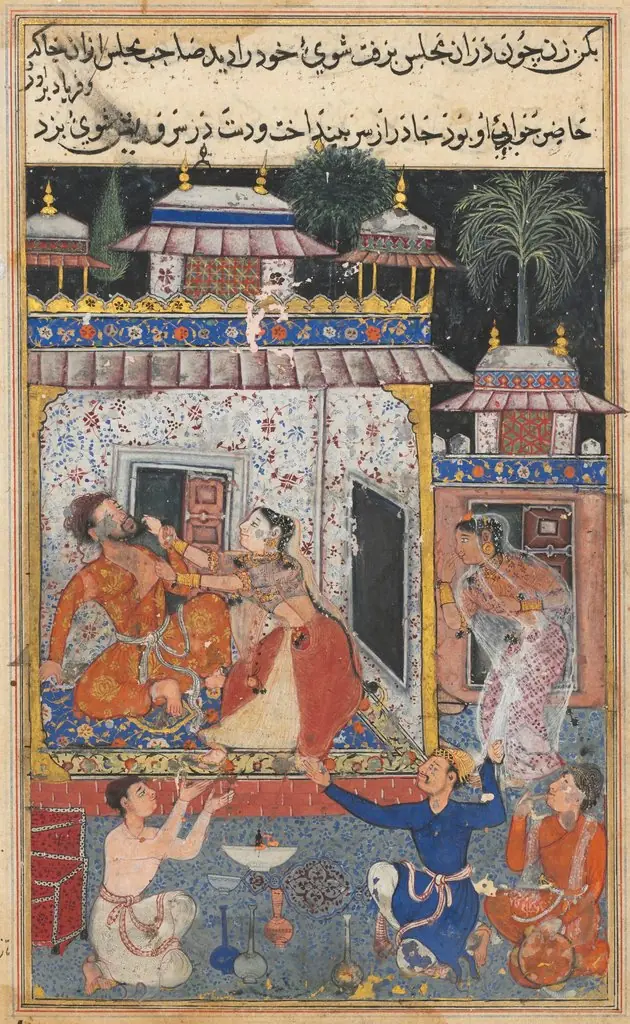 The deceitful wife assaults her erring husband, from a Tuti-nama (Tales of a Parrot): Eighth Night
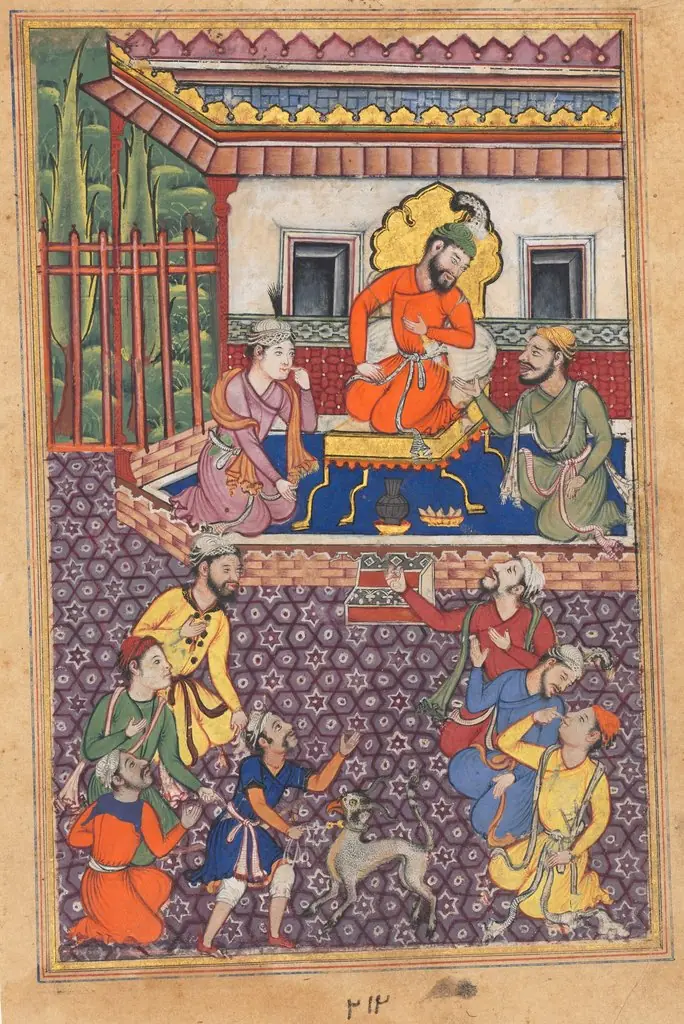 The court of the Raja of Ujjain, from a Tuti-nama (Tales of a Parrot): Forty-sixth Night
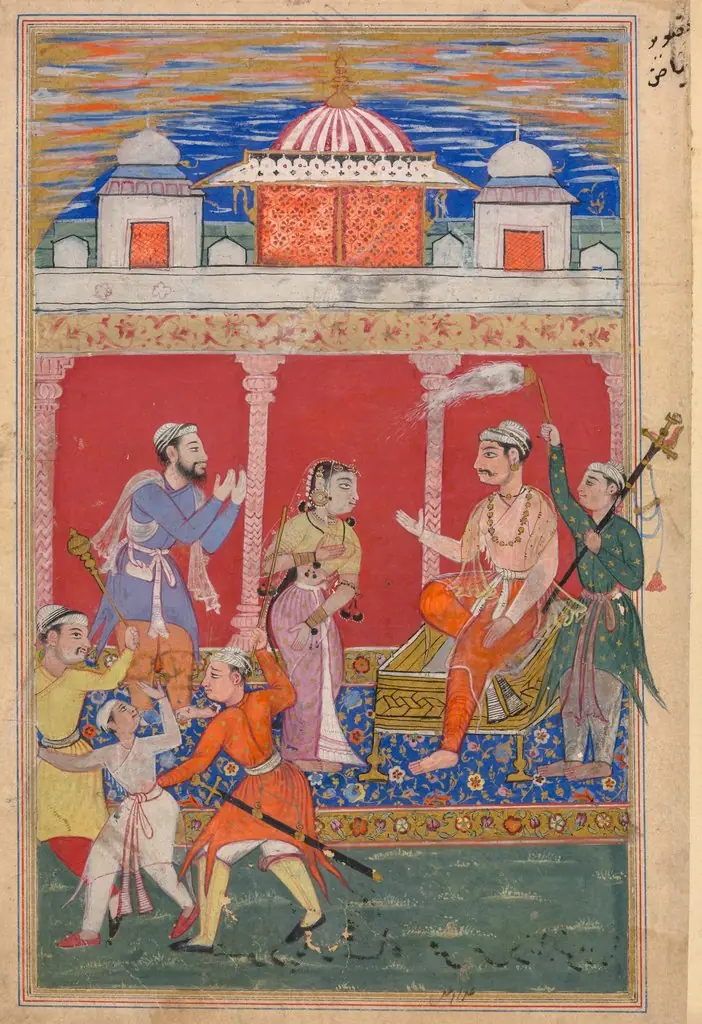 Page from Tales of a Parrot (Tuti-nama): text page
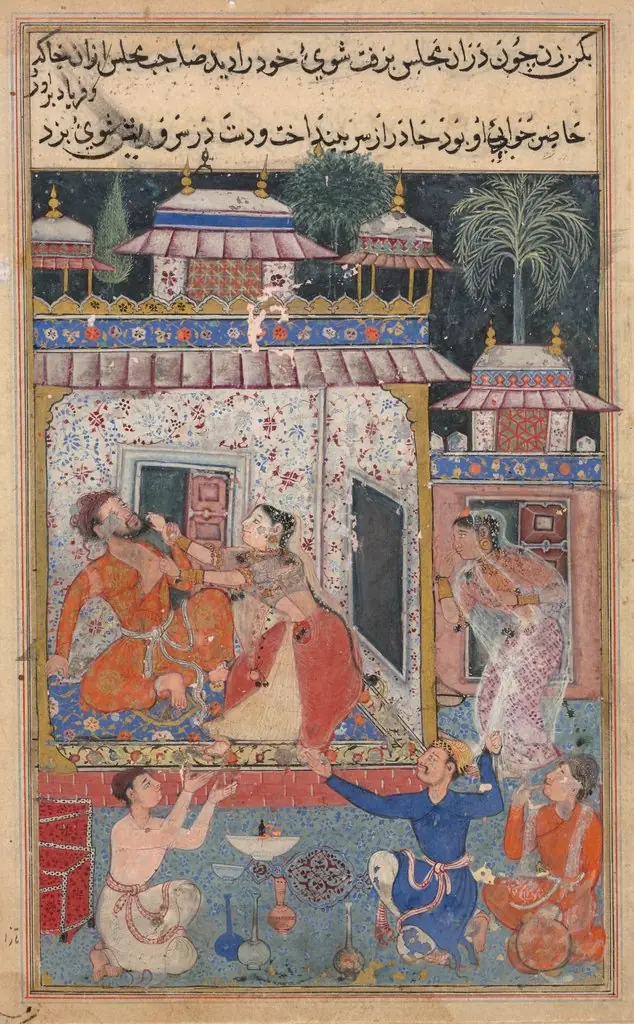 Page from Tales of a Parrot (Tuti-nama): text page
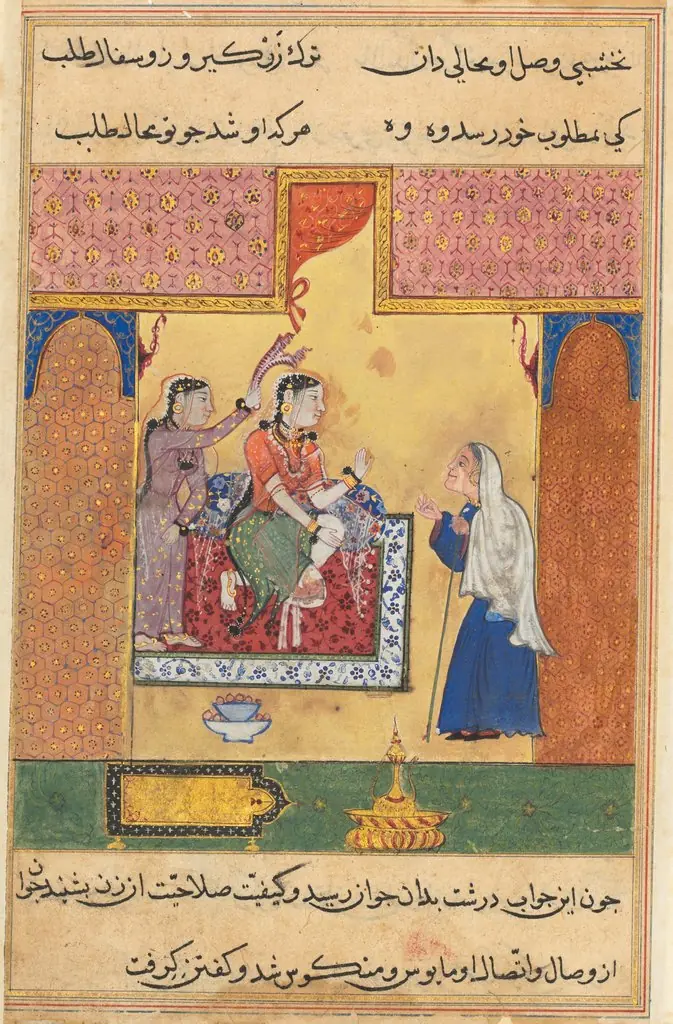 The old procuress conveys the young man’s message of love to Mansur’s wife, from a Tuti-nama (Tales of a Parrot: Seventeenth Night
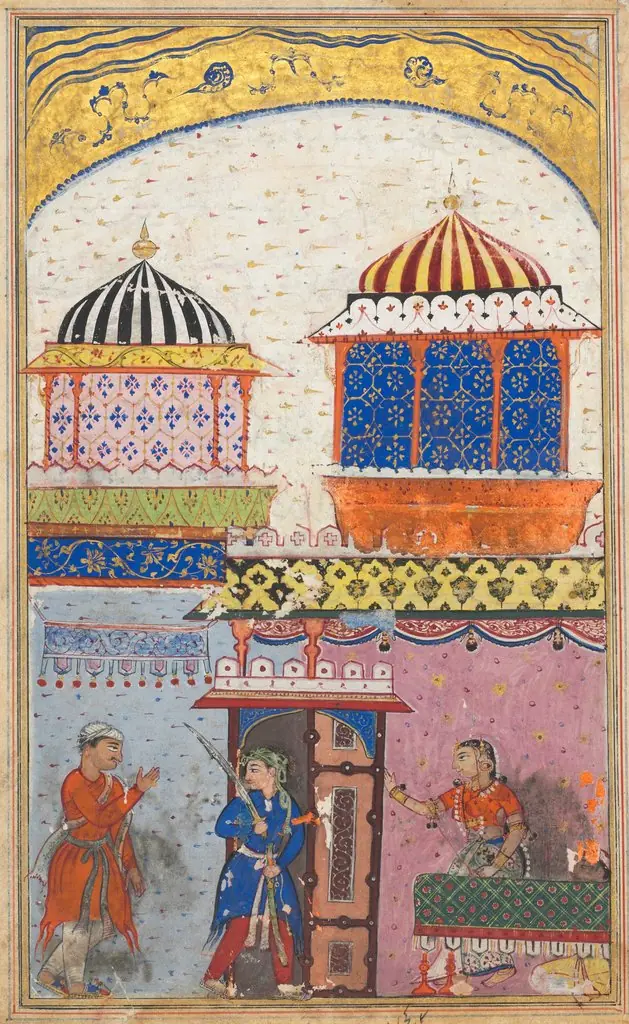 A woman asks her lover to leave her house, brandishing his sword and feigning rage in order to deceive her husband who has just arrived, from a Tuti-nama (Tales of a Parrot): Eighth Night
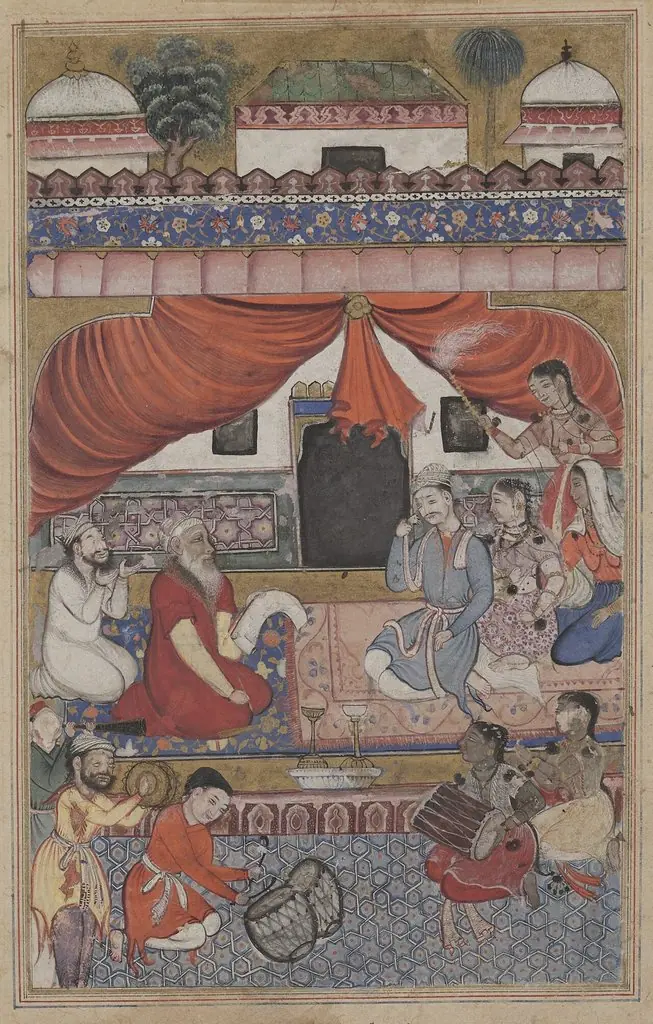 Preparation for the marriage of Mahmuda to the Young Vizier, from a Tuti-nama (Tales of a Parrot): Thirty-third Night