Artwork
Company Celebrating Bacchus
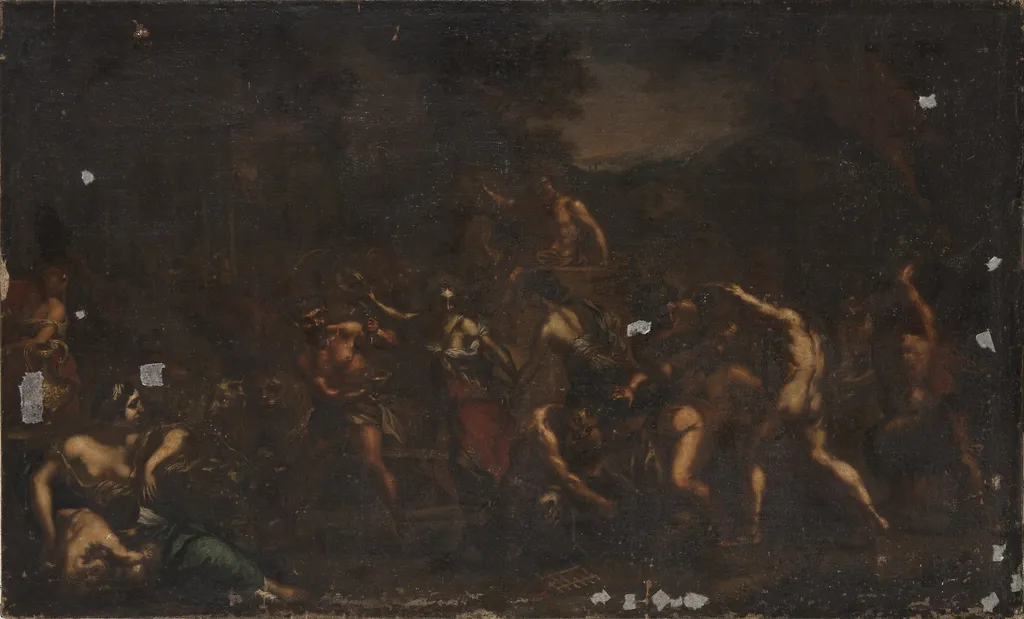
Company Celebrating Bacchus is an oil painting by the Early Baroque Italian artist Unknown. It dates from 1549 and is held in the collection of the Nationalmuseum. The oil painting depicts a festive gathering centered on a figure identified as Bacchus, the Roman deity of wine.
About this work
Overview
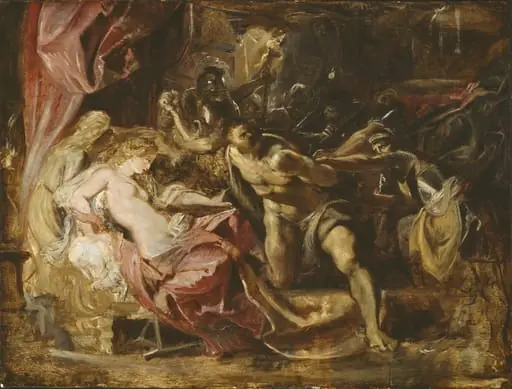
The oil painting depicts a festive gathering centered on a figure identified as Bacchus, the Roman deity of wine. Attired in classical garb, the participants hold wine cups and play musical instruments, creating a scene of communal merriment. A reclining woman occupies the foreground, while a standing man with a lyre adds a musical element, all set against a dimly lit background.
Subject & Meaning
The composition celebrates the themes of abundance and revelry associated with Bacchus, emphasizing the social bonds forged through wine and music. The inclusion of both male and female figures suggests a universal participation in the festivities, while the central deity underscores the mythological context of joyous excess and communal harmony.
Technique & Style
The overall style reflects a classical approach, with careful modeling of forms and a restrained palette that focuses attention on the central celebration.
The artist employs chiaroscuro, contrasting illuminated figures with a shadowy backdrop to create depth and dramatic emphasis. This handling of light enhances the three‑dimensionality of the bodies and highlights the textures of drapery and instruments. The overall style reflects a classical approach, with careful modeling of forms and a restrained palette that focuses attention on the central celebration.
History & Provenance
The work’s provenance is not fully documented, and its present condition shows signs of deterioration, obscuring details of the background landscape or architecture. Despite these challenges, the painting remains identifiable as a representation of Bacchic revelry, linking it to a broader tradition of mythological genre scenes in European art.
Context
Bacchic scenes were popular in European painting from the Renaissance through the Baroque, serving both decorative and moralizing purposes. This piece aligns with that tradition, drawing on classical motifs to explore themes of pleasure, community, and the transformative power of wine, while reflecting contemporary interest in antiquity and theatricality.
Artist & collection

 Domestic Scene
 Giacomo and Cardinal Marco, investing Andrea, Abbot of San Zeno, with his Benefice
 The Nymph of Fontainebleau
 Portrait of a Woman
 Madonna and Child with Saints in the Enclosed Garden
 Venus and Minerva
 Family Group of Four on Sofa
 Wall painting from Room H of the Villa of P. Fannius Synistor at Boscoreale
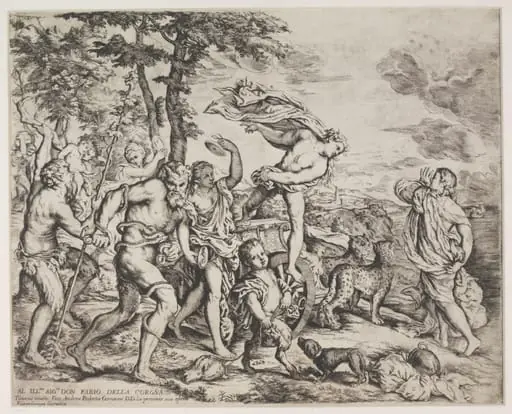 Bacchus and Ariadne
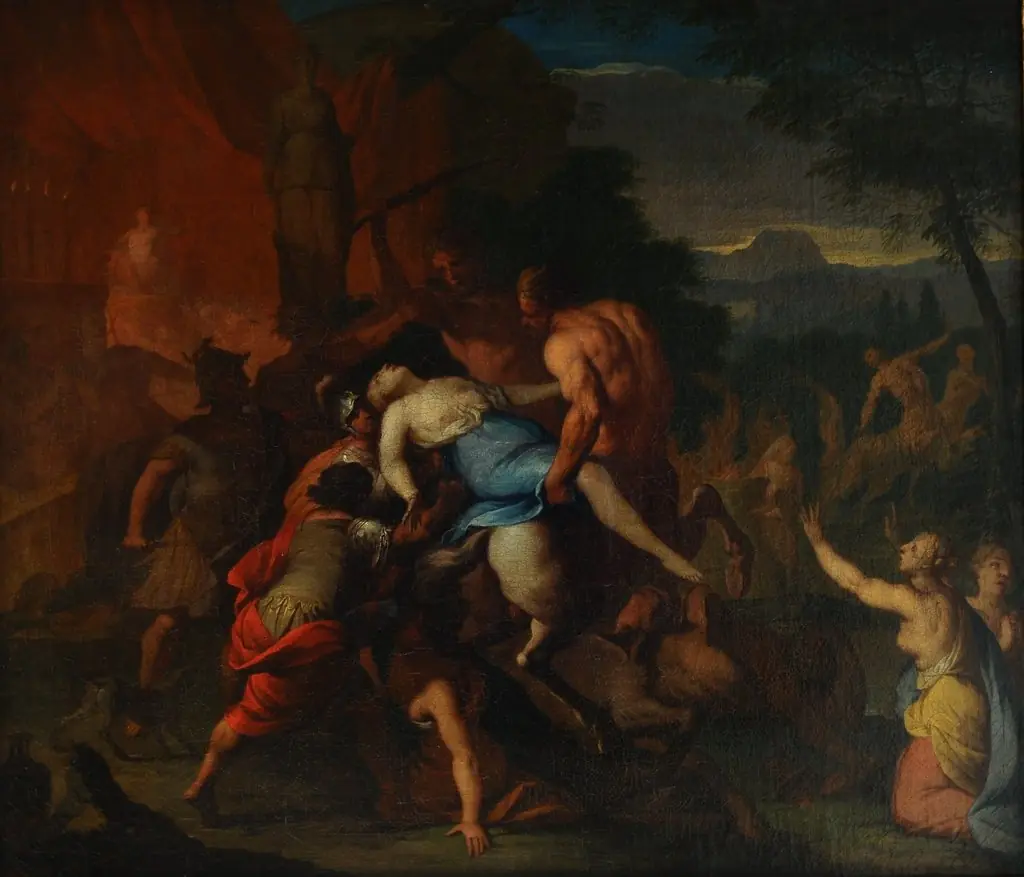 Combate de centauros y lapitas. (Tit. Ant.: Centauros e ilotas)
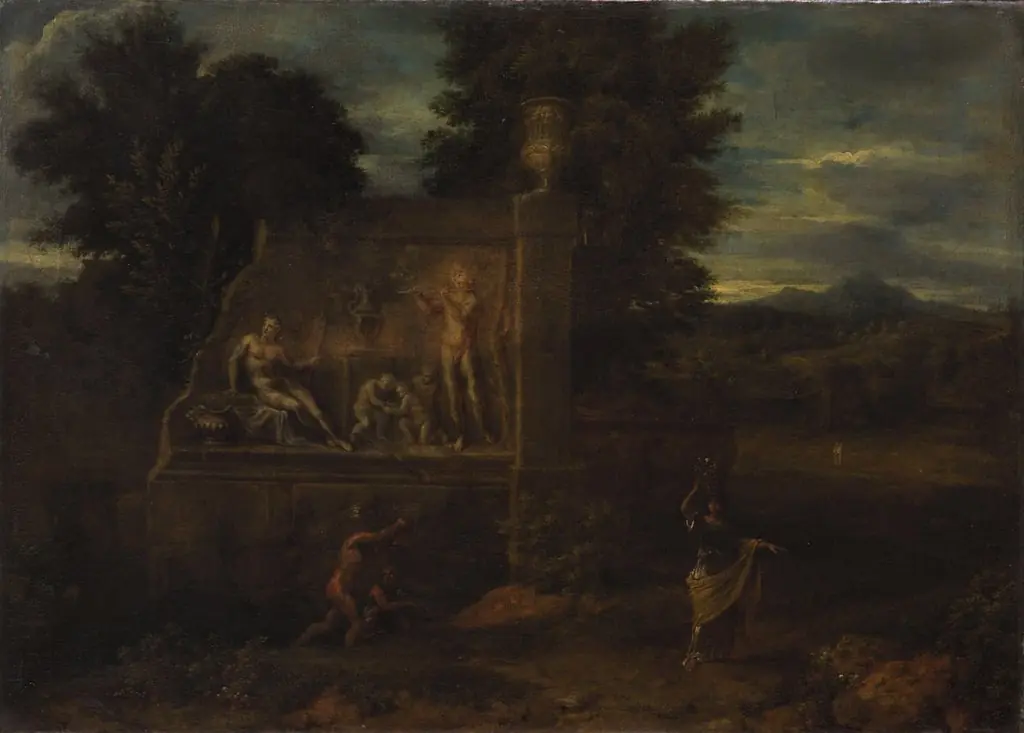 Landschaft mit einem Grabmal und Staffage
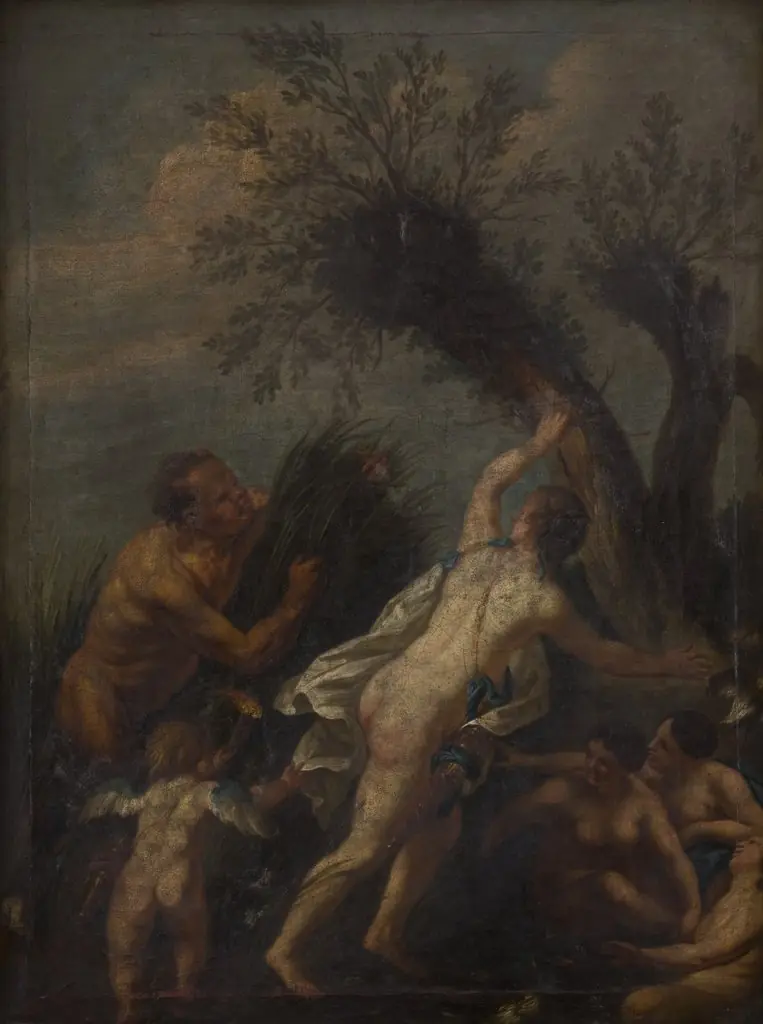 Diana and Her Nymphs Surprised by Satyr
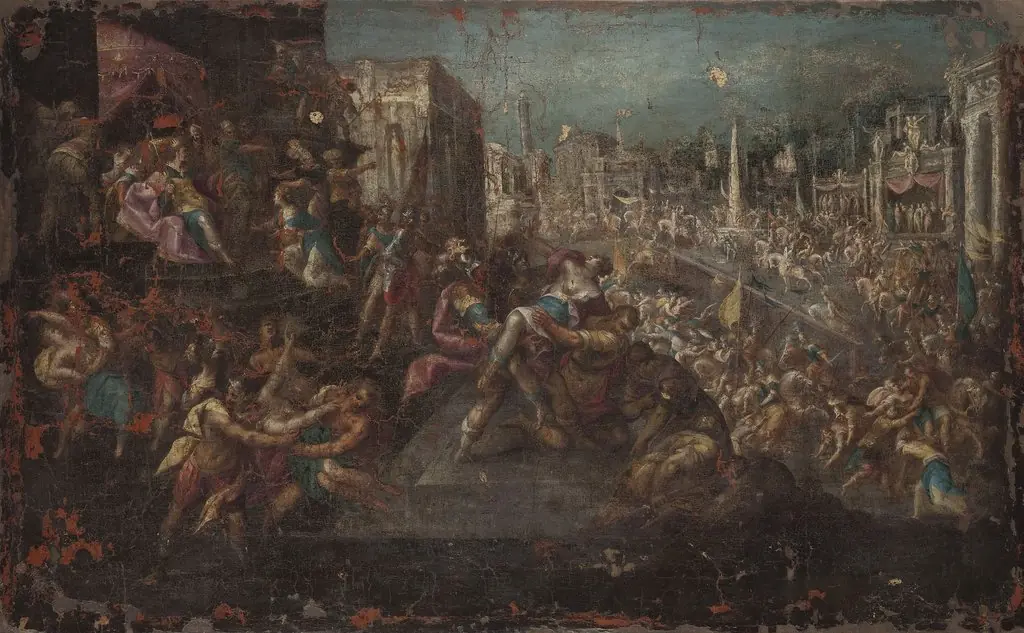 Abduction of the Sabine women
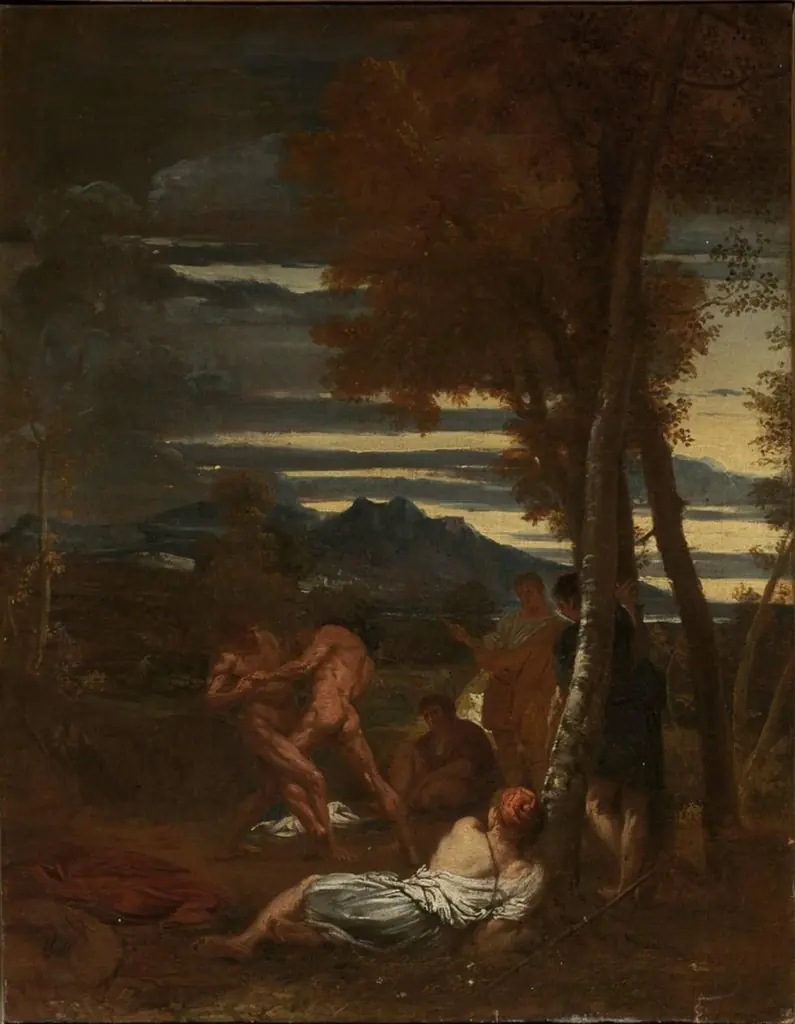 Wrestlers in a Landscape
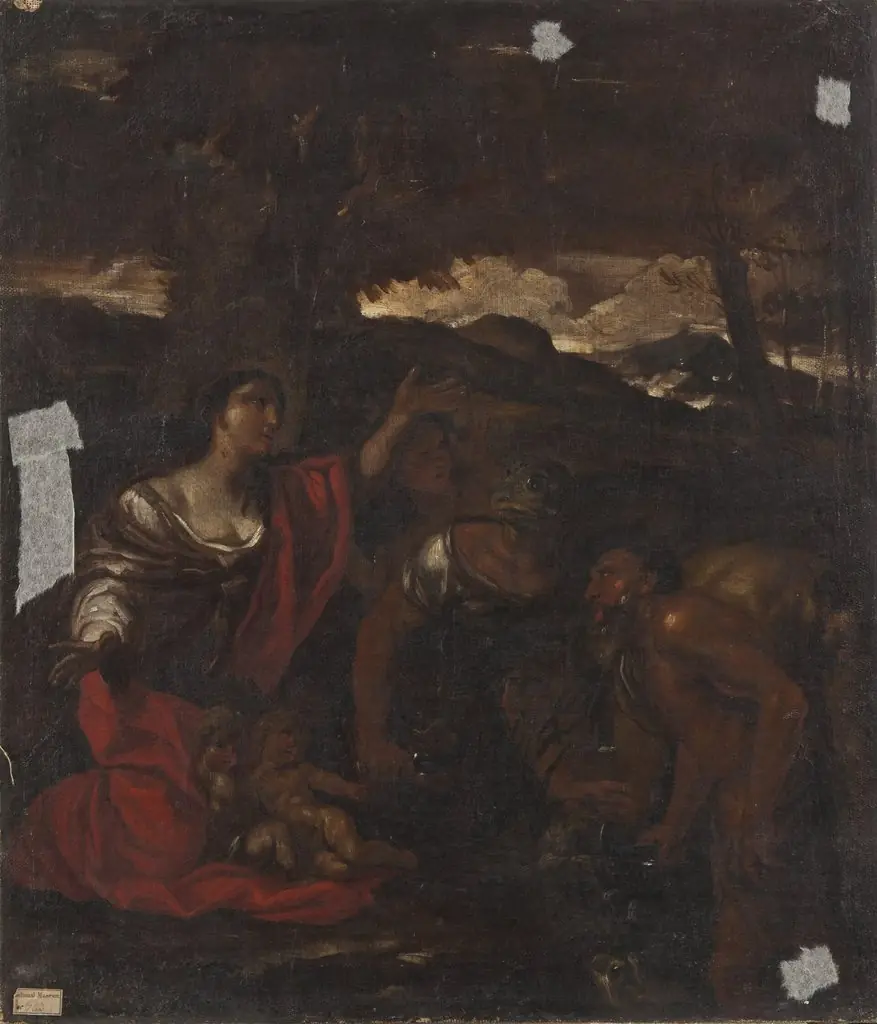 Landskap med figurer
 Landskap
 Früchte sammelnde Frauen (Kopie nach)
 The Capture of Samson
 Johannes Döparen
 The Capture of Samson