Artwork
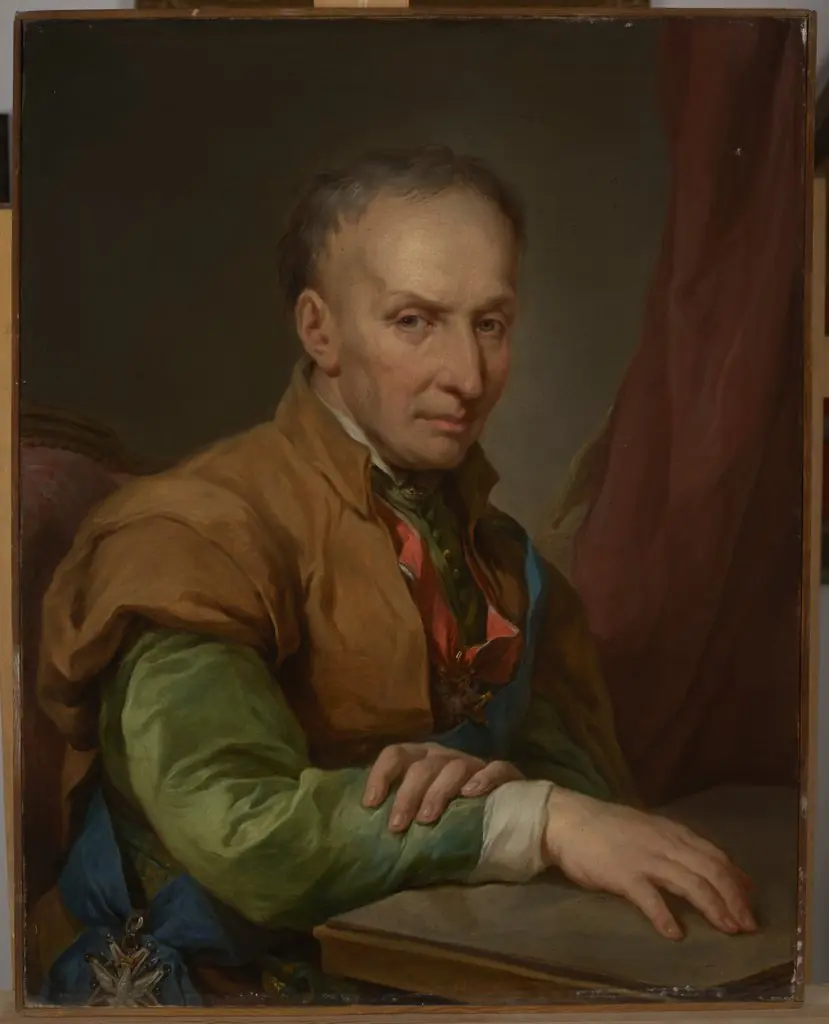
Portrait of Maciej Sobolewski
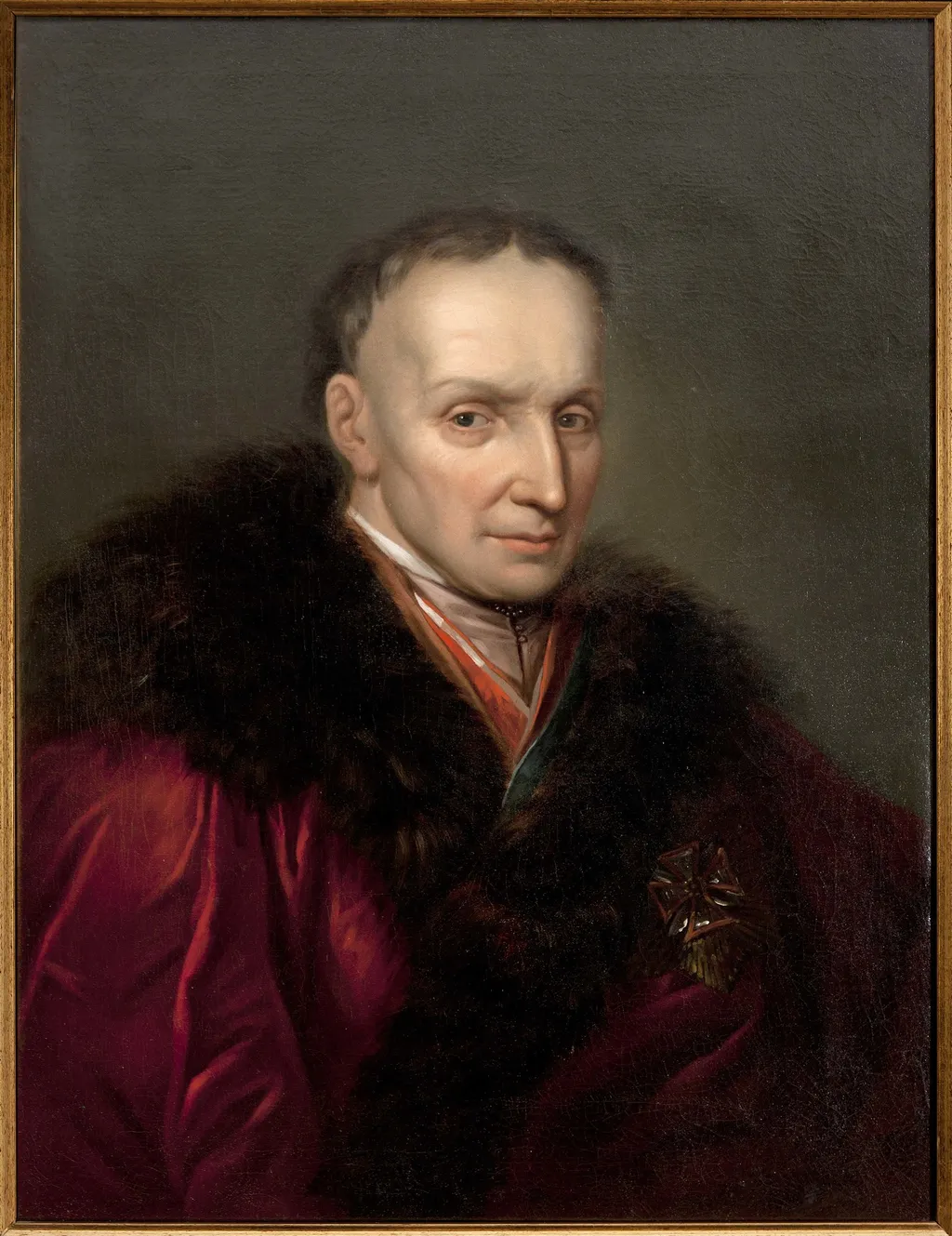
Portrait of Maciej Sobolewski is an oil painting by Unknown. It dates from 1850 and is held in the collection of the National Museum in Warsaw. This oil painting depicts Maciej Sobolewski, a Polish nobleman, rendered in a restrained, lifelike manner.
About this work
Overview
The work reflects 18th-century portraiture conventions, prioritizing dignity and social identity over decorative flourish.
This oil painting depicts Maciej Sobolewski, a Polish nobleman, rendered in a restrained, lifelike manner. The composition centers on his upright posture and direct gaze, creating an intimate yet formal presence. The dark gray background isolates the figure, emphasizing his attire and facial features without distraction. The work reflects 18th-century portraiture conventions, prioritizing dignity and social identity over decorative flourish.
Subject & Meaning
Maciej Sobolewski is portrayed in ceremonial dress, suggesting his status within the Polish nobility. The red robe with dark fur trim and the gold-and-red medal indicate rank, possibly tied to state or military service. His serious expression and steady gaze convey authority and composure, aligning with ideals of noble conduct. The portrait functions not as a personal likeness alone, but as a visual assertion of his position in society.
Technique & Style
The artist employed oil paint with careful attention to texture and light, capturing the sheen of silk, the depth of fur, and the metallic gleam of the medal. Brushwork is precise but not overly detailed, favoring clarity over ornamentation. The palette is muted except for the red elements, which draw focus without overwhelming. The style is grounded in realism, avoiding idealization to present a tangible, grounded figure.
History & Provenance
The painting is attributed to the late 18th century, likely created during Sobolewski’s lifetime. It remained within Polish noble circles before entering institutional collections. Documentation is limited, but its preservation suggests it was valued as a family or state portrait. No major alterations or restorations are recorded, preserving its original condition and intent.
Context
Created during a period of political upheaval in the Polish-Lithuanian Commonwealth, such portraits served to affirm aristocratic identity amid external pressures. The emphasis on regalia and solemn demeanor reflects a cultural reliance on visible symbols of status. Similar portraits by contemporaries in Warsaw and Kraków reveal shared conventions, linking this work to broader regional trends in elite representation.
Legacy
The portrait endures as a quiet example of Polish noble portraiture, valued for its restraint and historical specificity. It contributes to scholarly understanding of how aristocratic identity was visually constructed in the late Enlightenment. Though not widely exhibited, it remains a reference point in studies of 18th-century Polish material culture and social hierarchy.
Artist & collection

 Domestic Scene
 Giacomo and Cardinal Marco, investing Andrea, Abbot of San Zeno, with his Benefice
 The Nymph of Fontainebleau
 Portrait of a Woman
 Madonna and Child with Saints in the Enclosed Garden
 Venus and Minerva
 Family Group of Four on Sofa
 Wall painting from Room H of the Villa of P. Fannius Synistor at Boscoreale
 Portrait of a Nobleman
 Portrait of Adam Krasiński (1714–1800), bishop of Kamieniec
 Portrait of King Joseph I
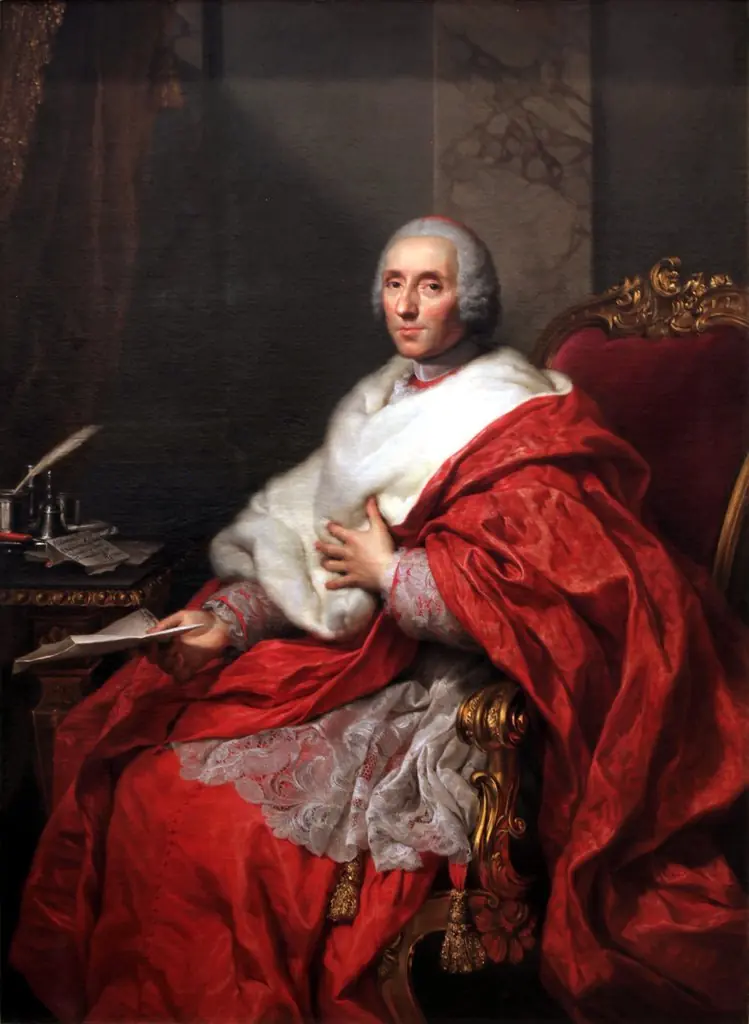 Portrait of cardinal Alberico Archinto (1698-1758)
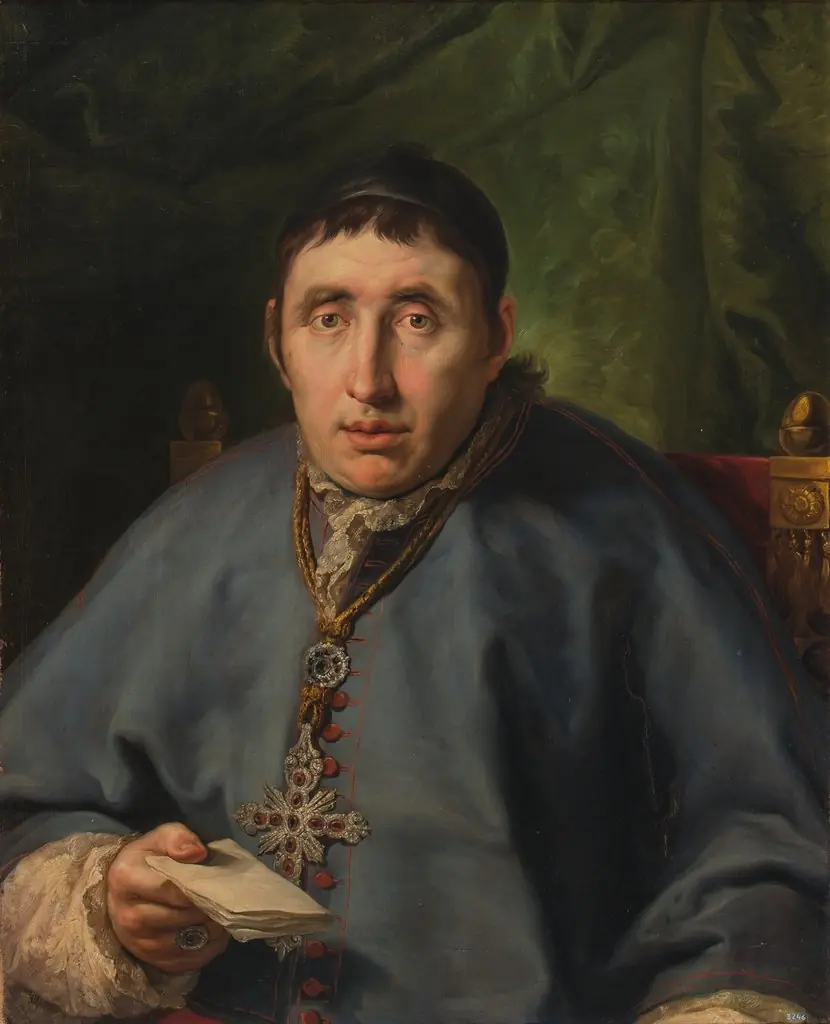 El obispo Pedro González Vallejo
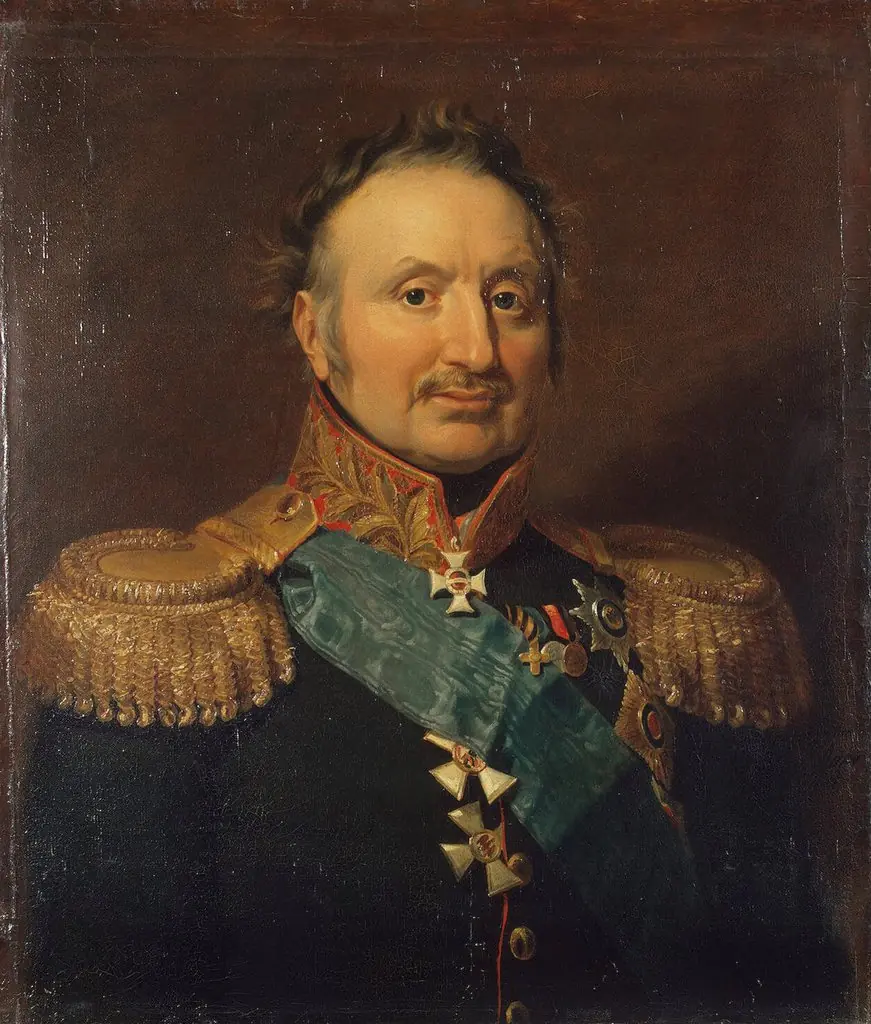 Portrait of Pyotr Kh. (Ludwig Adolf Peter) Wittgenstein (1768/69-1843)
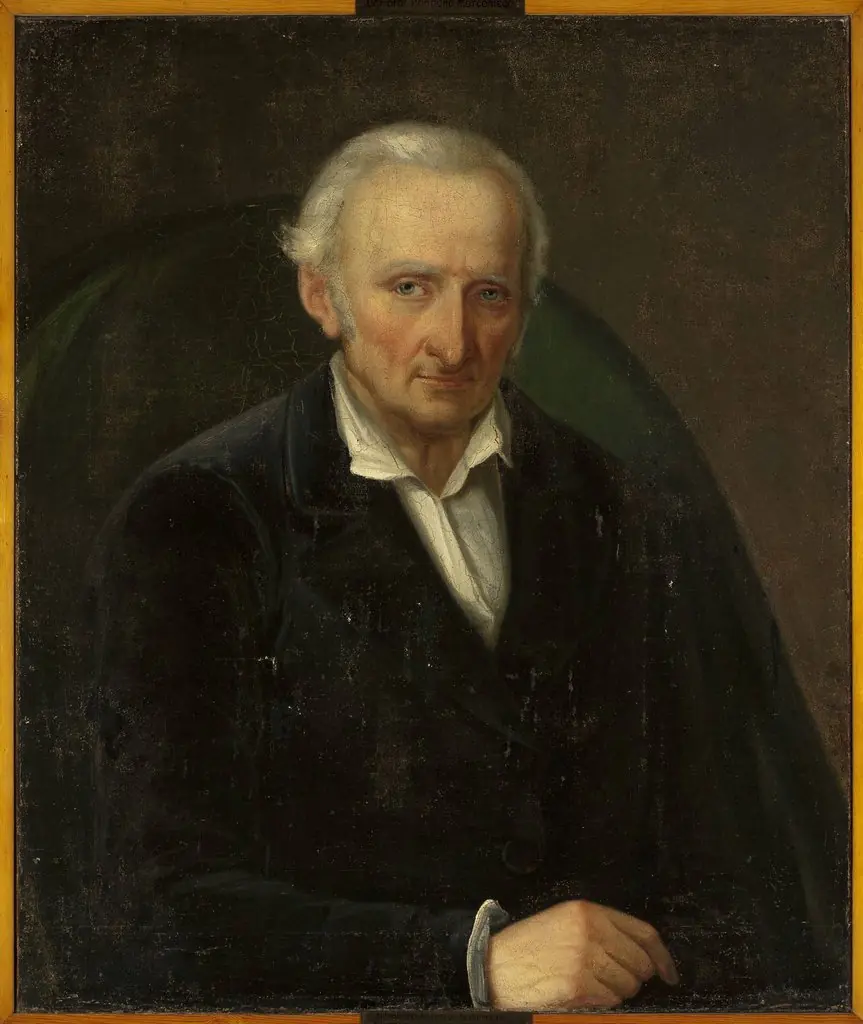 Self-portrait
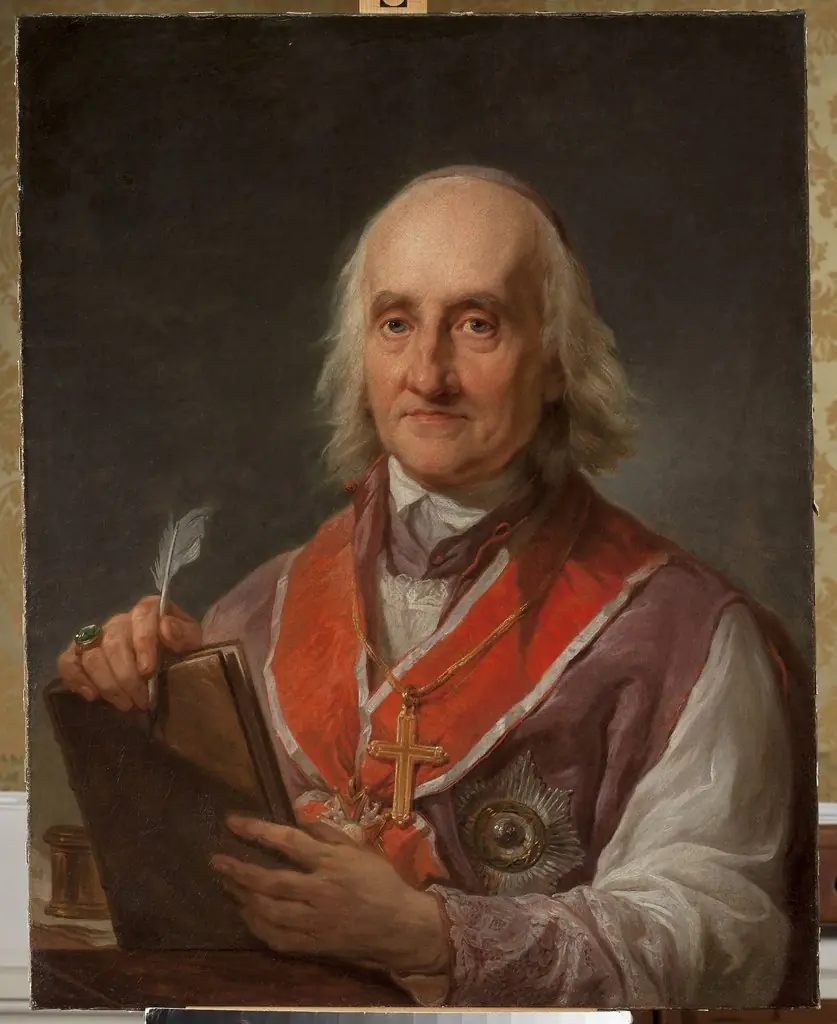 Portrait of Jan Albertrandi (1731–1808)
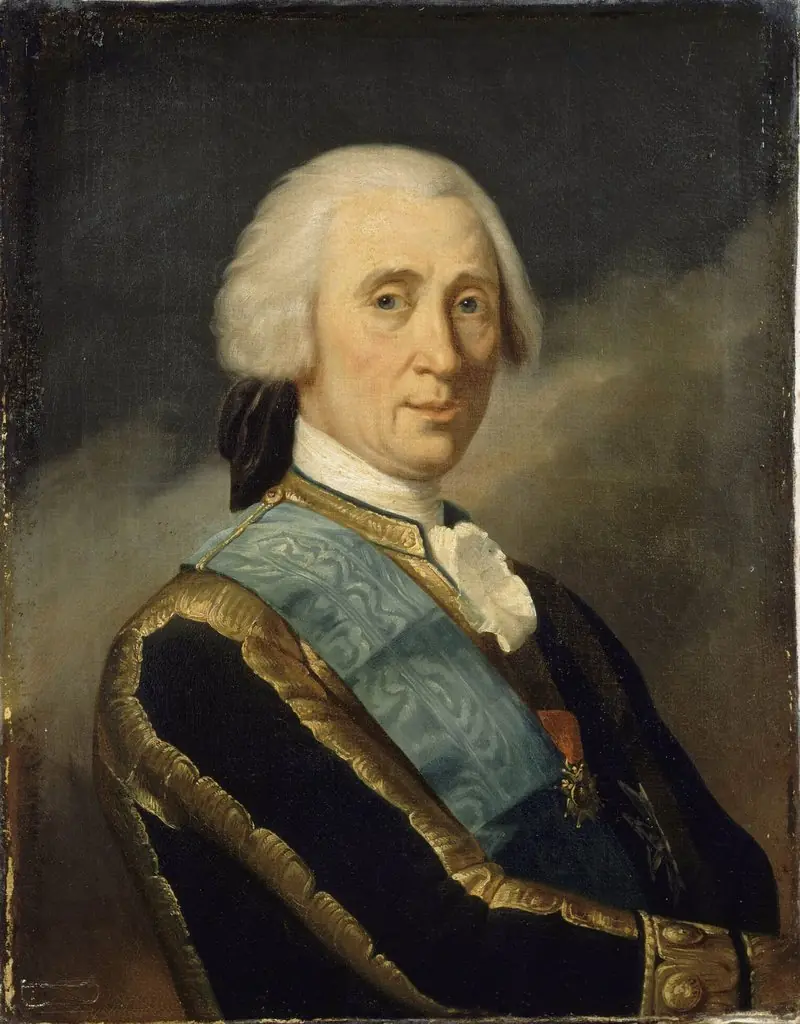 Emmanuel de Croy-Solre, Duke of Croy, Marshal of France (1718-1784)
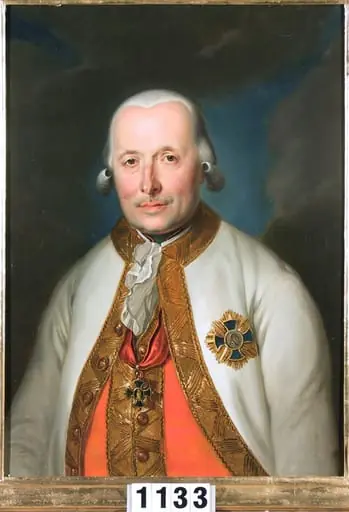 Baronul von Rall, general austriac (RI: Baronul Rall, general austriac)
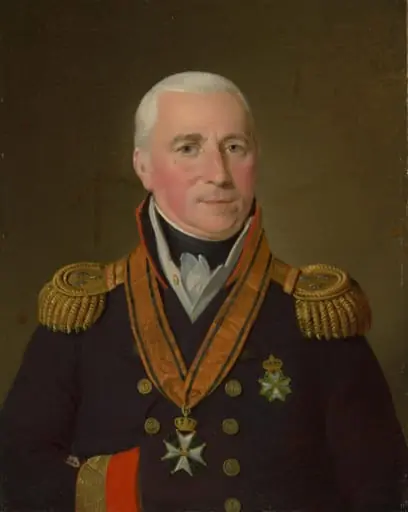 Portrait of Gerrit Verdooren (1757-1824), Vice-admiral
 Portrait of Walenty Sobolewski (1724–1800) or Maciej Leon Sobolewski (1724–1804)