Artwork
The Life of Saint Margaret of Antioch
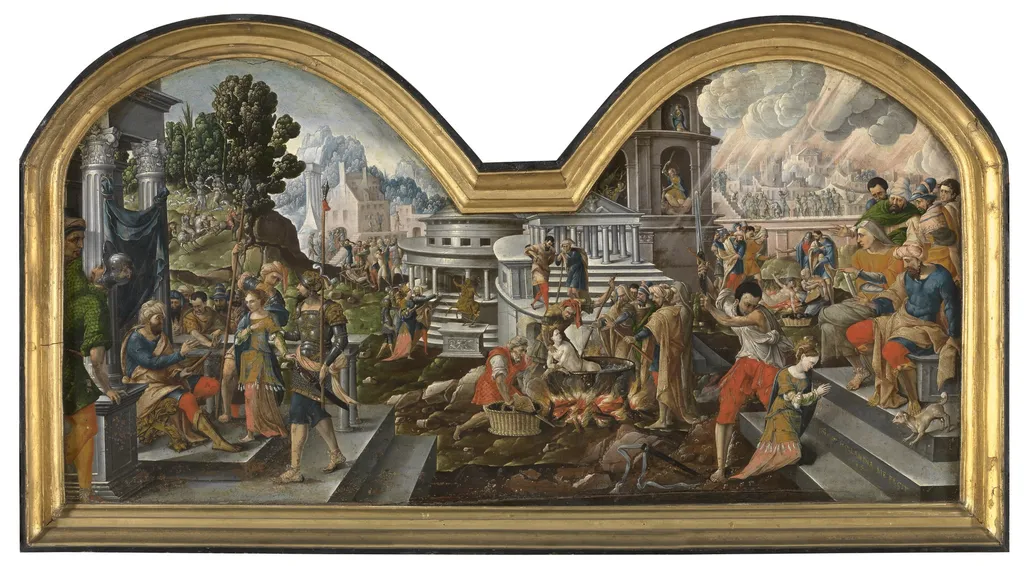
The Life of Saint Margaret of Antioch is an oil painting by Unknown. It dates from 1544 and is held in the collection of the Royal Museum of Fine Arts Antwerp.
About this work
Overview
Chiaroscuro is employed to model forms and direct attention, enhancing the emotional gravity of the narrative without overt dramatization.
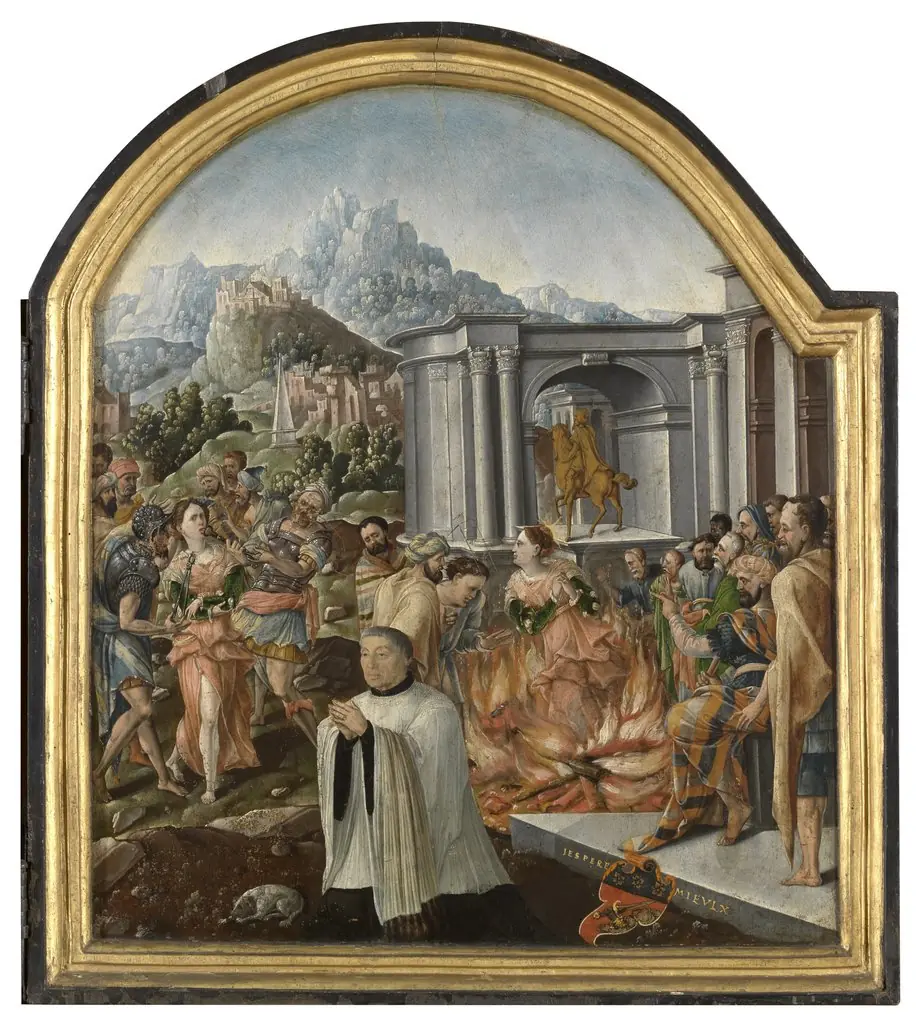
This oil-on-panel diptych illustrates episodes from the life of Saint Margaret of Antioch. Each panel presents a distinct moment: the left shows her before a magistrate, the right her martyrdom. The composition is divided horizontally, with architectural and natural elements framing both scenes. Chiaroscuro is employed to model forms and direct attention, enhancing the emotional gravity of the narrative without overt dramatization.
Subject & Meaning
The left panel depicts Saint Margaret, identified by her blue garment, in dialogue with a magistrate in green, symbolizing her refusal to renounce her faith. The right panel shows her torture amid a watching crowd, emphasizing her endurance. The white dress signifies purity, while the surrounding figures reflect societal judgment and divine witness. The scene conveys steadfast conviction in the face of persecution.
Technique & Style
The artist uses chiaroscuro to define volume and spatial depth, particularly in the figures' drapery and facial expressions. Brushwork is controlled, with subtle transitions between light and shadow. Background architecture and trees are rendered with simplified perspective, grounding the sacred events in a recognizable world. The diptych format allows for sequential storytelling without visual overlap.
History & Provenance
The painting likely originated in a devotional context, possibly commissioned for a private chapel or religious institution in late medieval Europe. Its survival suggests it was preserved due to local veneration of Saint Margaret. No definitive record of its early ownership exists, but its condition indicates careful handling and limited exposure to environmental damage.
Context
Saint Margaret was a widely venerated martyr in the Middle Ages, often depicted resisting pagan authorities. Her story, though likely legendary, resonated with communities facing religious persecution. This diptych aligns with regional traditions of narrative altarpieces, where multiple scenes were arranged to guide prayer and meditation. The inclusion of bystanders reflects contemporary views on public morality and divine justice.
Legacy
The painting contributes to a broader corpus of hagiographic art that prioritized moral instruction over naturalism. Its restrained use of emotion and focus on symbolic gesture influenced later devotional works in northern Europe. Though not attributed to a major master, it exemplifies the quiet, methodical craftsmanship of regional workshops dedicated to sacred narrative.
Artist & collection

 Domestic Scene
 Giacomo and Cardinal Marco, investing Andrea, Abbot of San Zeno, with his Benefice
 The Nymph of Fontainebleau
 Portrait of a Woman
 Madonna and Child with Saints in the Enclosed Garden
 Venus and Minerva
 Family Group of Four on Sofa
 Wall painting from Room H of the Villa of P. Fannius Synistor at Boscoreale
 Lot and His Daughters
 The Calling of James and John
 Triptych of the Adoration of the Magi
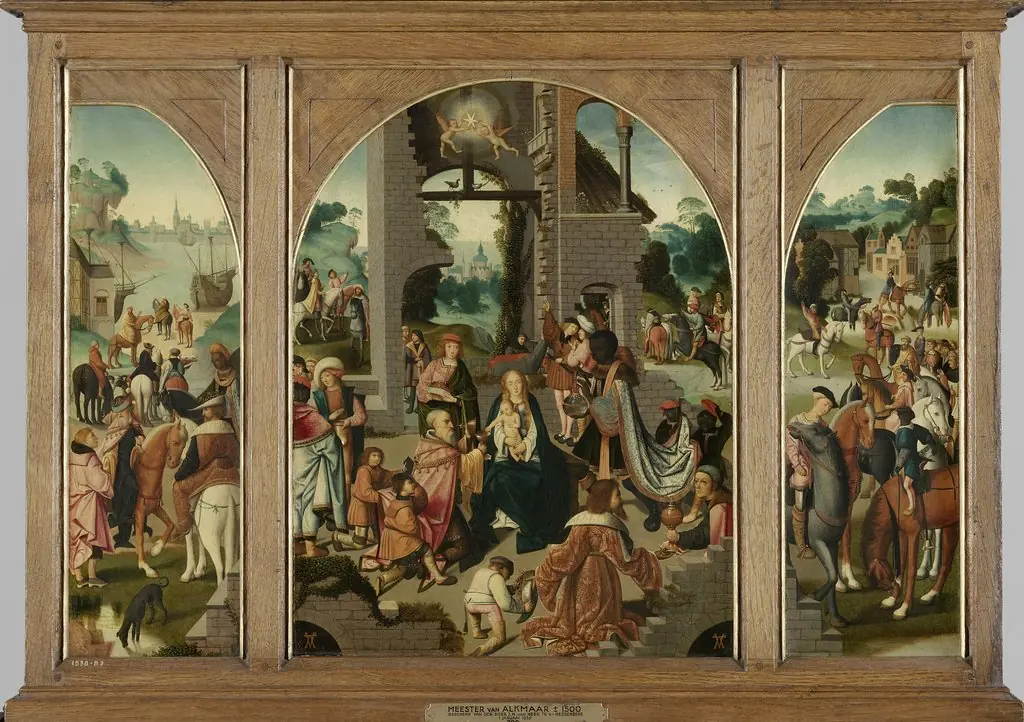 Triptych with the adoration of the Magi (centre panel and inner wings), St Antony Abbot (outer left wing) and St Adrian (outer right wing)
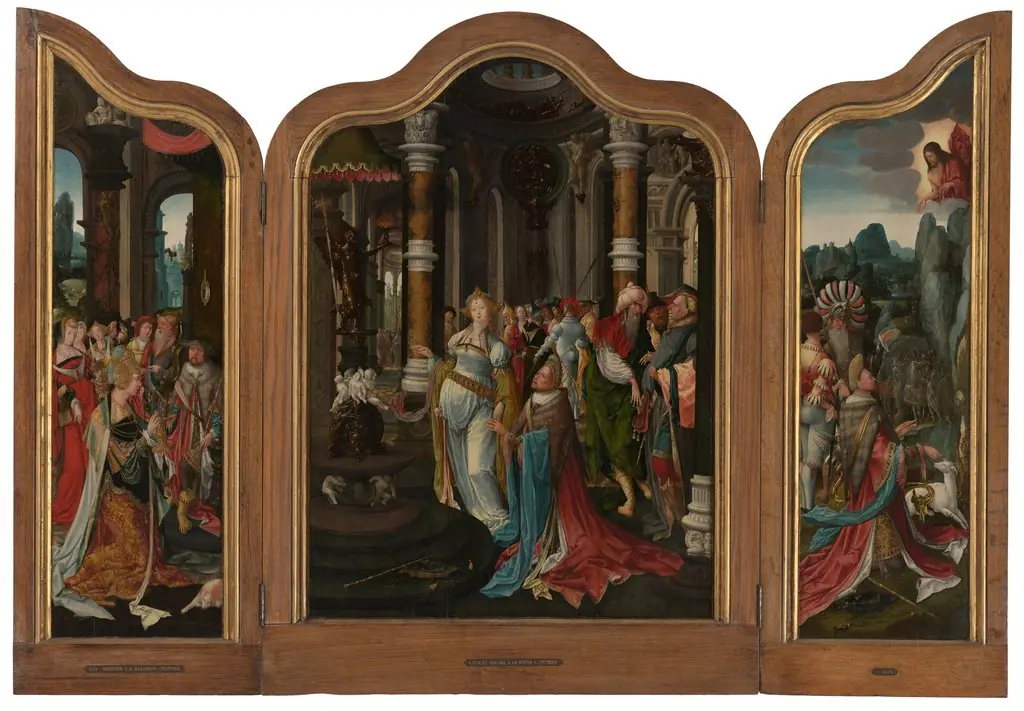 Triptych with the Life Story of Solomon
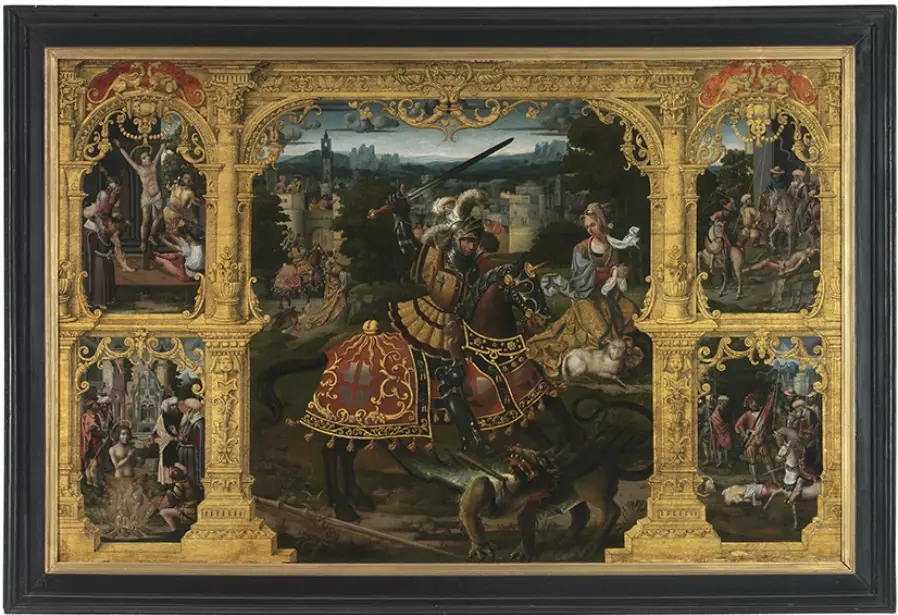 Legend of Saint George
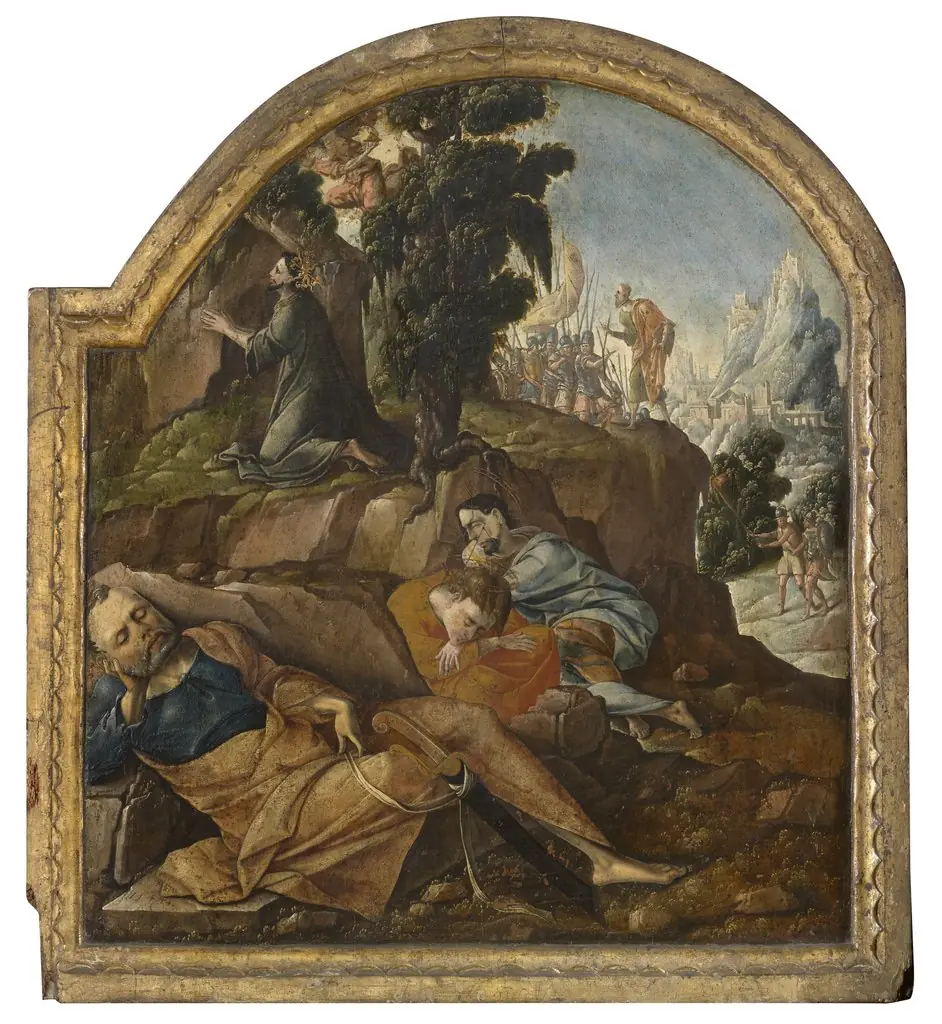 Christ at the Garden of Gethsemane at the Mount of Olives
 The Life of Saint Apollonia
 Job Triptych
 Triptych with adoration by the Magi