Artwork
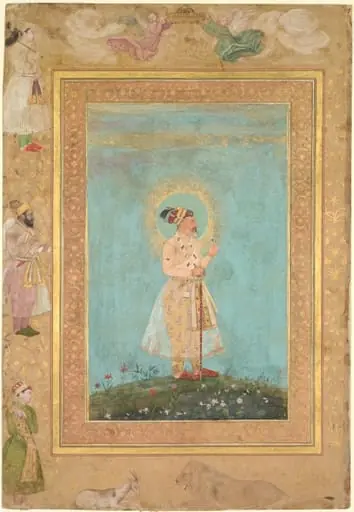
Portrait of an Aged Courtier
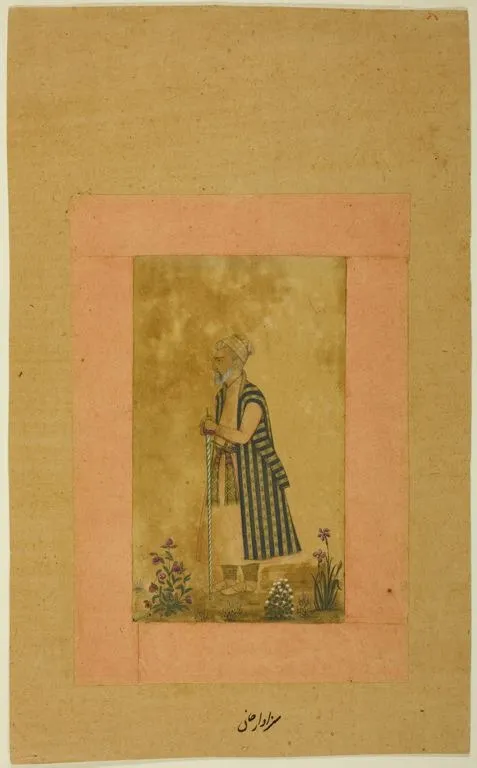
Portrait of an Aged Courtier is an unspecified painting by the Mughal Painting artist Unknown. It dates from 1690 and is held in the collection of the Art Institute of Chicago. This painting portrays an elderly man in a tranquil garden setting, rendered with quiet dignity.
About this work
Overview
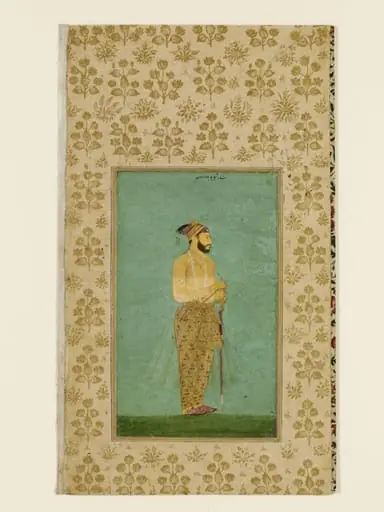
This painting portrays an elderly man in a tranquil garden setting, rendered with quiet dignity. He stands on a rocky ledge, clad in a long striped robe and turban, holding a staff. The warm golden background contrasts with the cooler hues of his attire, creating a calm visual rhythm. The scene avoids dramatic action, instead emphasizing stillness and introspection through composition and tone.
Subject & Meaning
The figure is likely a courtier of advanced age, his attire suggesting a position of status, possibly from a Persian or Mughal context.
The figure is likely a courtier of advanced age, his attire suggesting a position of status, possibly from a Persian or Mughal context. His posture and the staff imply authority tempered by time. The garden setting, rich with flora, may symbolize reflection or the passage of years. There is no overt narrative, but the atmosphere invites contemplation of wisdom, solitude, or the quiet end of a public life.
Technique & Style
The artist employs fine brushwork to render the textures of fabric and foliage with precision. The robe’s stripes and the rocky outcrop are carefully defined, while the background is softly modeled in warm tones to recede. Light falls evenly, avoiding strong shadows, which enhances the serene mood. The palette favors muted contrasts—cool textiles against golden air—creating harmony without theatricality.
History & Provenance
The painting’s origins are tied to late Mughal or post-Mughal courtly circles in northern India, likely from the 18th century. It was likely commissioned by a noble patron to honor an elder advisor or official. Its survival suggests it was preserved within a family or royal collection, though its early ownership records remain fragmentary. No major public exhibition history is documented prior to the 20th century.
Context
During the 18th century, Mughal imperial power waned, yet artistic traditions persisted in regional courts. Portraiture of elders, especially those in service, became a subtle way to affirm lineage and continuity. Gardens in such works often symbolized cultivated order amid political change. This portrait reflects a shift from grand imperial imagery to intimate, personal representations of dignity in decline.
Legacy
The painting contributes to a lesser-known strand of South Asian portraiture that values quietude over spectacle. It influenced later regional artists who sought to capture inner character through composition and tone rather than ornamentation. Though not widely reproduced, it remains a reference in studies of Mughal-era visual culture, valued for its restraint and emotional nuance.
Artist & collection

 Domestic Scene
 Giacomo and Cardinal Marco, investing Andrea, Abbot of San Zeno, with his Benefice
 The Nymph of Fontainebleau
 Portrait of a Woman
 Madonna and Child with Saints in the Enclosed Garden
 Venus and Minerva
 Family Group of Four on Sofa
 Wall painting from Room H of the Villa of P. Fannius Synistor at Boscoreale
 Untitled
 Rajah Birbar (Birbal)
 Raja Surjan Singh
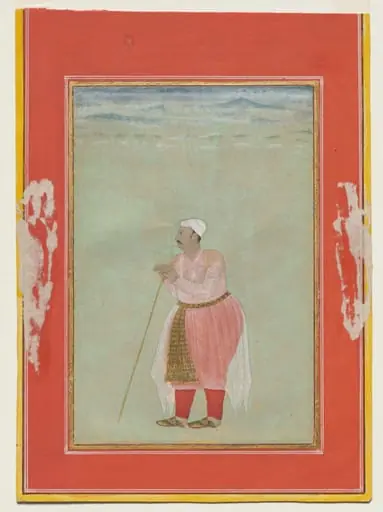 Portrait of Maharaja Rai Singh of Bikaner (reigned 1574–1612)
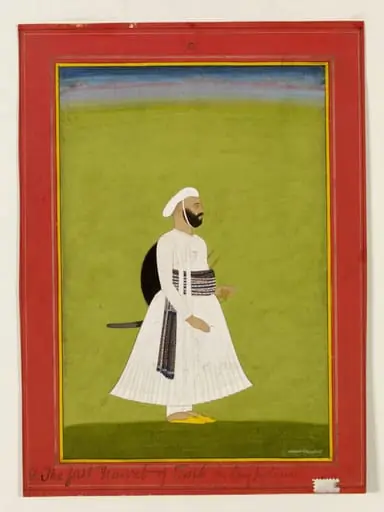 Nawab Amir Khan
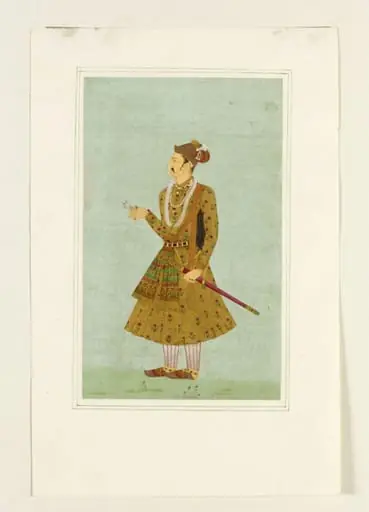 Raja Karan Singh
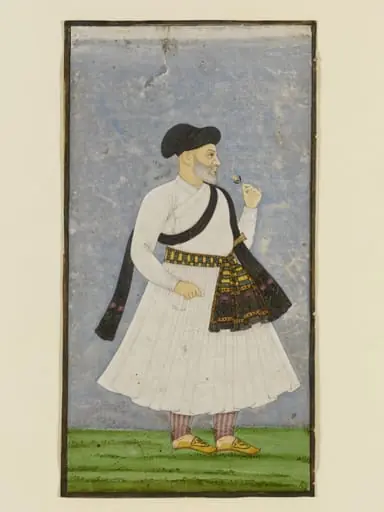 Abdus Samad
 Shah Shuja' Bahadur Khan
 Dara Shikoh
 Untitled
 A man in white robe and turban
 Shah Jahan holding a spinel and a long Deccan sword, from the Late Shah Jahan Album