Artwork
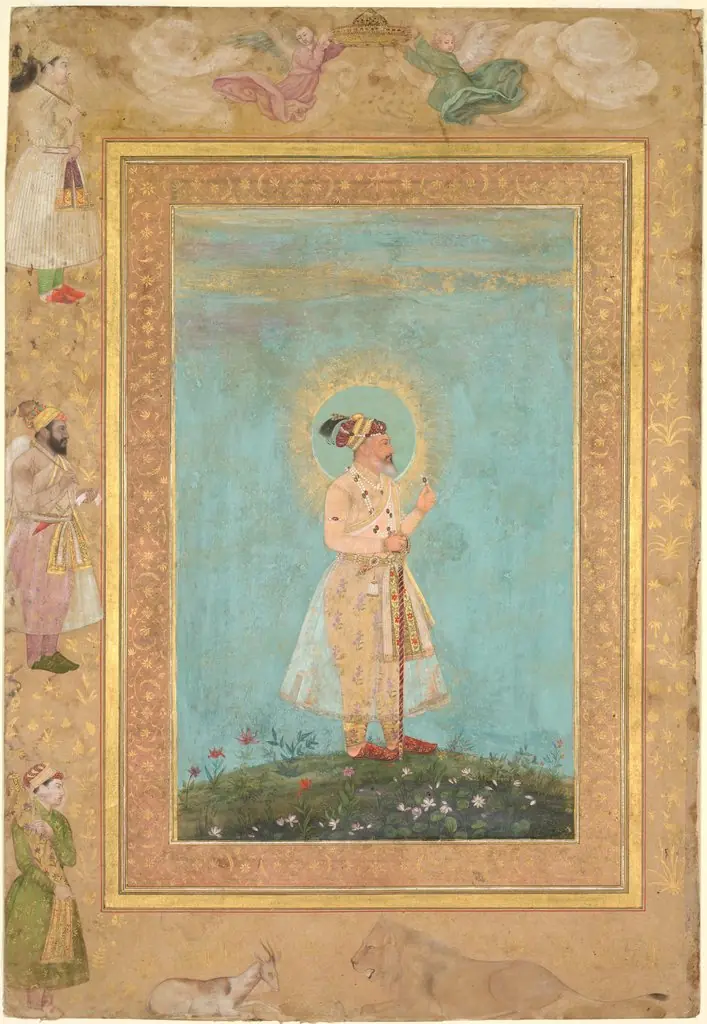
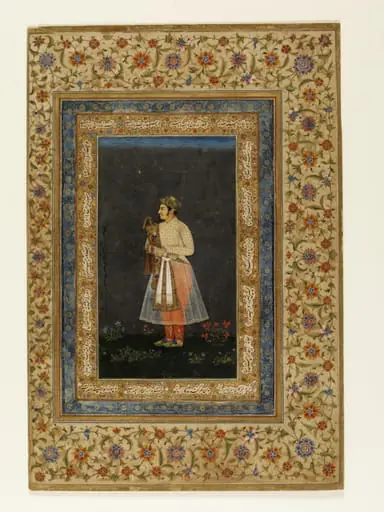
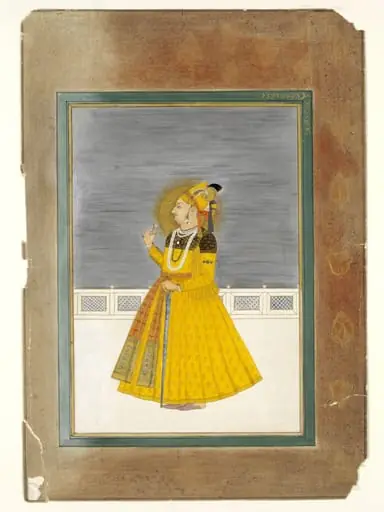
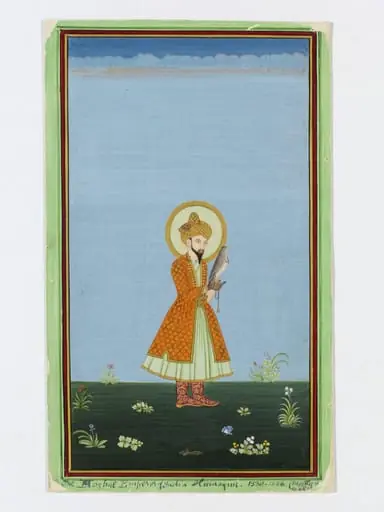
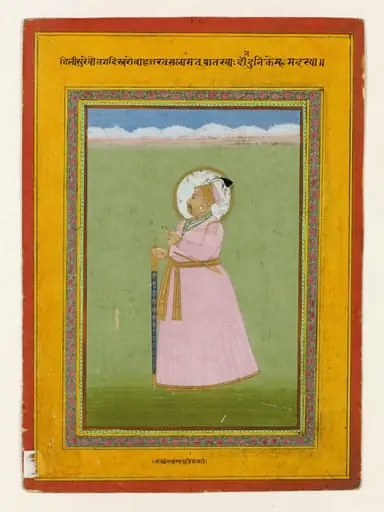
Shah Jahan holding a spinel and a long Deccan sword, from the Late Shah Jahan Album
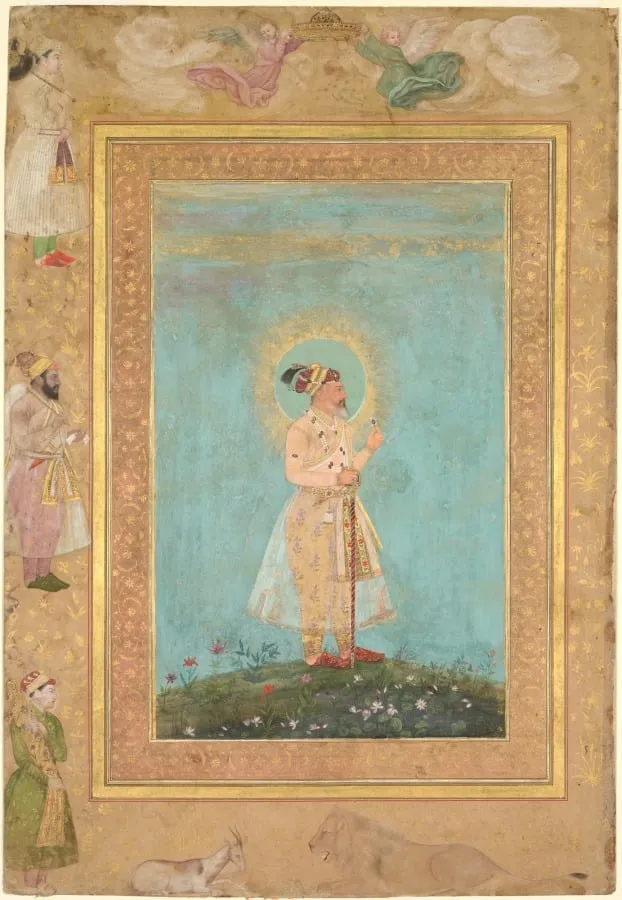
Shah Jahan holding a spinel and a long Deccan sword, from the Late Shah Jahan Album is an unspecified painting by the Baroque artist Hashim. It dates from 1650 and is held in the collection of the Cleveland Museum of Art. The miniature is a page from a royal album compiled for Emperor Shah Jahan near the close of his reign.
About this work
Overview
The miniature is a page from a royal album compiled for Emperor Shah Jahan near the close of his reign. It portrays the emperor seated in a richly dyed red garment, holding a deep‑red spinel and a curved Deccan sword, while a lion rests beside a lamb at his feet.
Subject & Meaning
Angelic figures hover above the turban’s crest, and a sun‑moon halo crowns the emperor’s head, linking his authority to celestial approval. The lion‑and‑lamb pairing below symbolizes the ruler’s capacity to combine strength with benevolence, a visual formula reserved for imperial portraits in this album.
Technique & Style
Mughal court painters achieved a high degree of refinement in this work, rendering the feathered turban plume, the sparkle of each jewel, the softness of the beard, and the translucency of the muslin robe with meticulous brushwork. The composition balances delicate detail with a formal, symmetrical layout typical of Shah Jahan’s court.
History & Provenance
The album was assembled for Shah Jahan himself, reflecting his personal taste for lavish visual documentation of his reign. The inclusion of specific iconography—angels, celestial bodies, and predator‑prey motifs—marks the piece as part of a limited series of imperial portraits produced in the mid‑17th century.
Context
During Shah Jahan’s rule, Mughal painting reached a zenith of courtly sophistication, emphasizing both aesthetic elegance and political symbolism. The spinel held by the emperor was valued for its supposed protective powers in battle, underscoring the intertwining of material wealth and martial confidence.
Artist & collection