Artwork
Abdus Samad
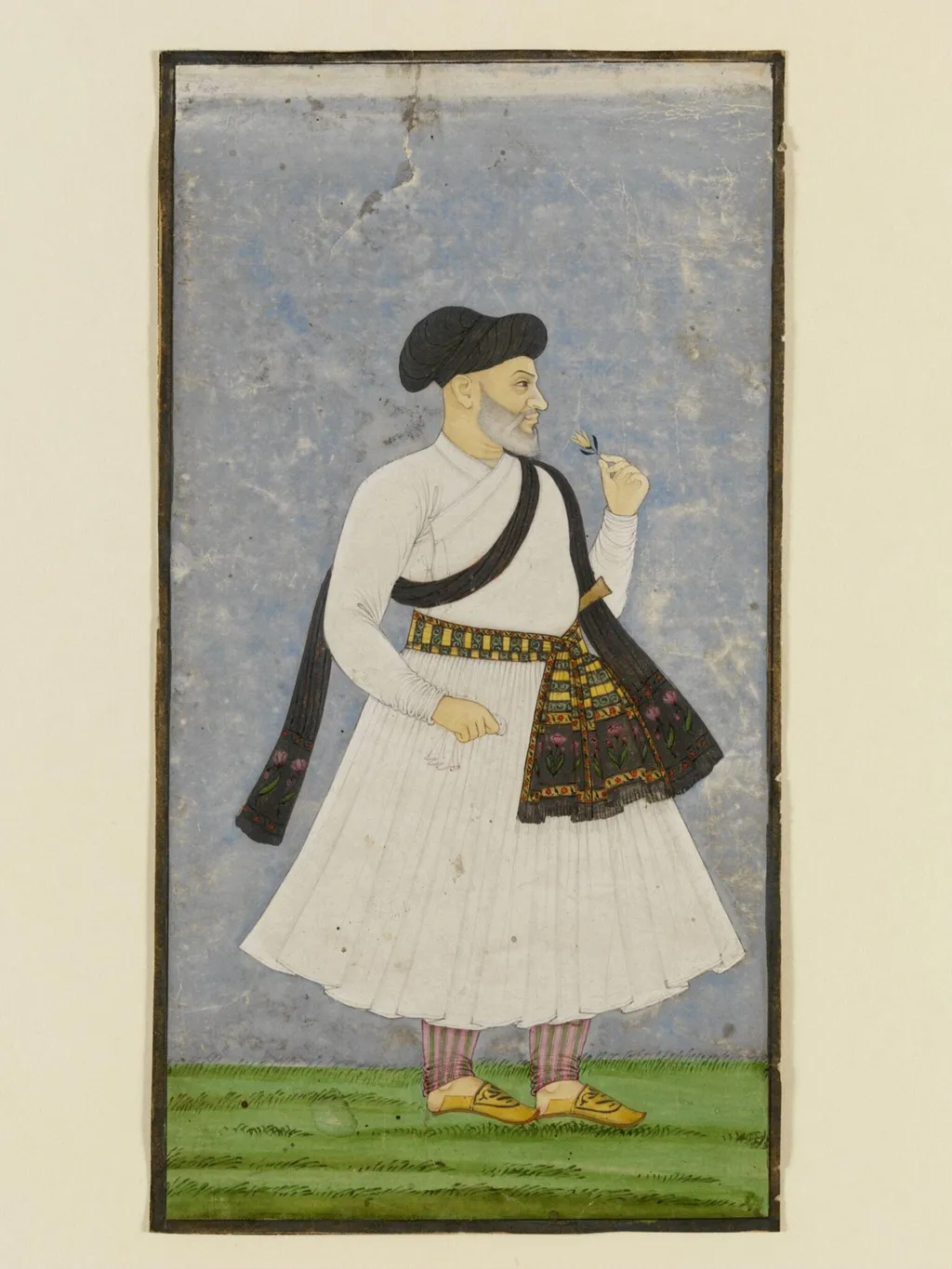
Abdus Samad is a paint painting by the Baroque artist Unknown. It dates from 1680 and is held in the collection of the Victoria and Albert Museum.
About this work
Overview
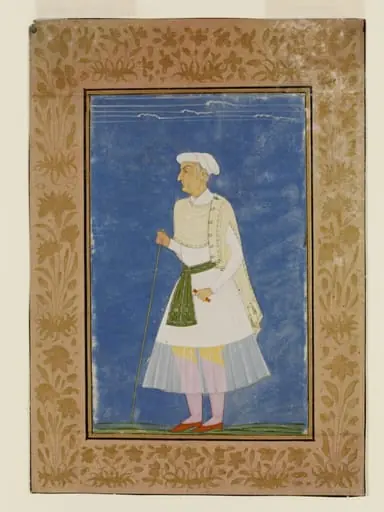
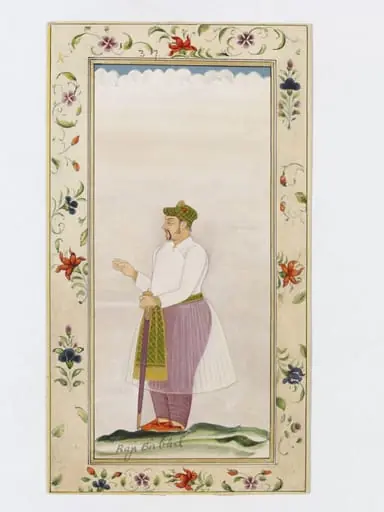
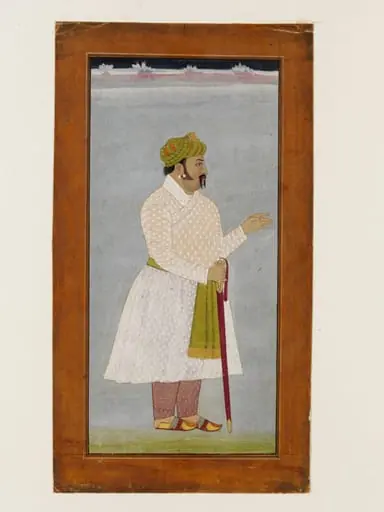
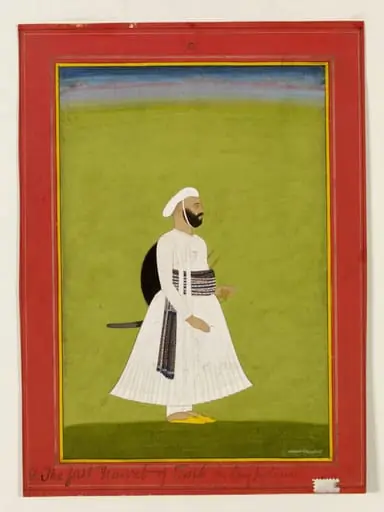
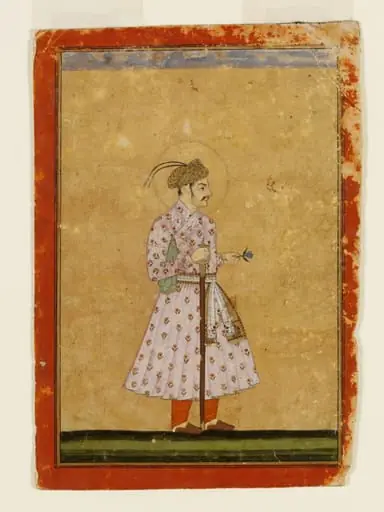
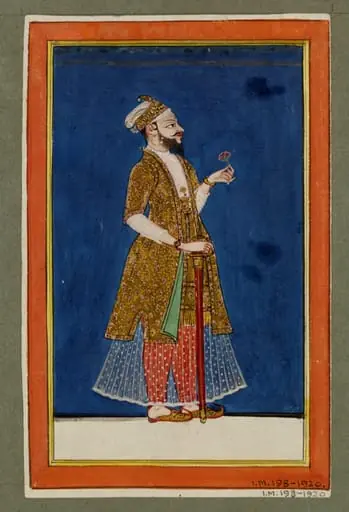
This opaque watercolor on paper, dated to 1680, portrays Abdus Samad, a minister in the court of Abdullah Qutb Shah of Golconda. Rendered in delicate pigments, the figure stands upright on a grassy expanse, facing right, with a flower held near his nose. The composition is restrained, emphasizing stillness and poise rather than dramatic motion, typical of Deccan court portraiture of the period.
Subject & Meaning
The flower, likely a jasmine or rose, signals refinement and personal cultivation, aligning with ideals of courtly demeanor in Deccan Islam.
Abdus Samad is depicted not in a ceremonial or martial role, but in a moment of quiet contemplation. The flower, likely a jasmine or rose, signals refinement and personal cultivation, aligning with ideals of courtly demeanor in Deccan Islam. His attire and gesture suggest an emphasis on inner grace over outward power, reflecting the cultural values of the Golconda court where intellectual and aesthetic pursuits were highly regarded.
Technique & Style
The painting employs fine brushwork and layered opaque watercolor to define textures: the smoothness of the white robe, the sheen of the black sash, and the intricate pattern of the belt. Colors are muted yet deliberate—yellow shoes and a black turban contrast subtly against pale fabric. The background is sparse, directing focus to the figure and enhancing the sense of calm, individual presence.
History & Provenance
The work originates from the Deccan region, likely produced in the royal atelier of Golconda during the late 17th century. It was probably commissioned to honor a high-ranking official, a practice common among Deccan sultanates. Its survival suggests it remained within courtly or aristocratic collections, though its specific provenance after the Mughal annexation of Golconda in 1687 remains undocumented.
Context
While often misattributed to Baroque traditions, this painting belongs to the Deccan school of miniature art, which developed independently of European styles. It reflects local aesthetics influenced by Persian, indigenous Indian, and Islamic traditions, emphasizing lyrical composition and symbolic gesture over naturalism or chiaroscuro. The portrait aligns with regional conventions of dignified, introspective representation.
Legacy
This portrait contributes to the understanding of Deccan court culture, where portraiture served not merely as likeness but as an expression of personal virtue and refined identity. Though not widely known outside specialist circles, it remains a representative example of how regional courts cultivated visual languages distinct from both Mughal grandeur and European trends.
Artist & collection

 Domestic Scene
 Giacomo and Cardinal Marco, investing Andrea, Abbot of San Zeno, with his Benefice
 The Nymph of Fontainebleau
 Portrait of a Woman
 Madonna and Child with Saints in the Enclosed Garden
 Venus and Minerva
 Family Group of Four on Sofa
 Wall painting from Room H of the Villa of P. Fannius Synistor at Boscoreale