Artwork
Hercules and the Stymphalian birds
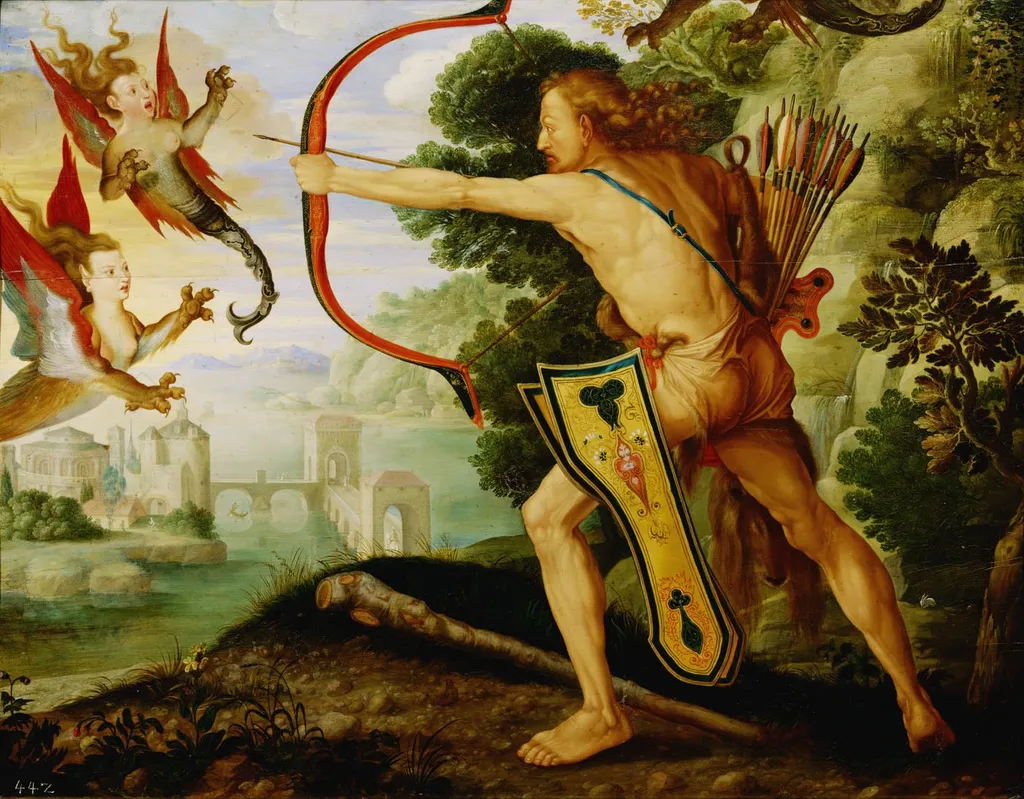
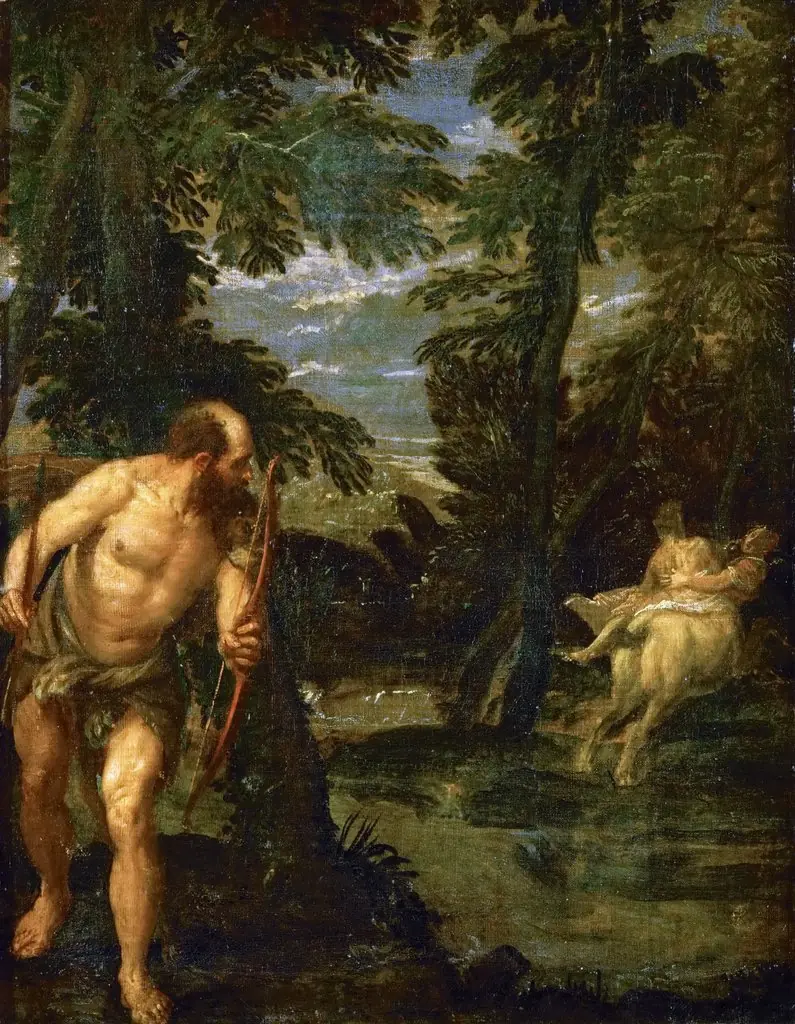
Hercules and the Stymphalian birds is an unspecified painting by the Early Baroque Italian artist Unknown. It dates from 1600 and is held in the collection of the Kunsthistorisches Museum. The canvas presents Hercules poised to release an arrow at two Stymphalian birds soaring overhead.
About this work
Overview
The canvas presents Hercules poised to release an arrow at two Stymphalian birds soaring overhead. The hero stands barefoot in a simple loincloth, a quiver of arrows strapped to his back, while his bow is drawn in a tense, forward‑leaning stance. Behind him, a tranquil landscape of trees, water and a bridge offers a calm contrast to the imminent action.
Subject & Meaning
The work illustrates the sixth of Hercules’ twelve labors, the defeat of the man‑eating Stymphalian birds. By capturing the moment before the strike, the painting emphasizes the hero’s courage and skill, while the peaceful background may suggest the restoration of order that follows the eradication of the threatening creatures.
Technique & Style
The artist employs strong chiaroscuro, using pronounced light and shadow to model Hercules’ muscular form and to give depth to the distant scenery. The contrast between the illuminated figure and the darker sky heightens the sense of drama, while the delicate rendering of the birds in flight adds a fleeting, kinetic quality.
History & Provenance
The painting is catalogued as a depiction of Hercules and the Stymphalian birds, though specific details about its creation date, artist, or ownership history are not provided in the source material.
Context
Set within the classical tradition of mythological subjects, the composition reflects a long‑standing interest in heroic narratives that combine human endeavor with natural threats. The inclusion of a serene landscape aligns the work with the baroque tendency to juxtapose dynamic figures against calm, idealized environments.
Artist & collection

 Domestic Scene
 Giacomo and Cardinal Marco, investing Andrea, Abbot of San Zeno, with his Benefice
 The Nymph of Fontainebleau
 Portrait of a Woman
 Madonna and Child with Saints in the Enclosed Garden
 Venus and Minerva
 Family Group of Four on Sofa
 Wall painting from Room H of the Villa of P. Fannius Synistor at Boscoreale