Artwork
The Buddhist Goddess Sita Tara (White Tara)
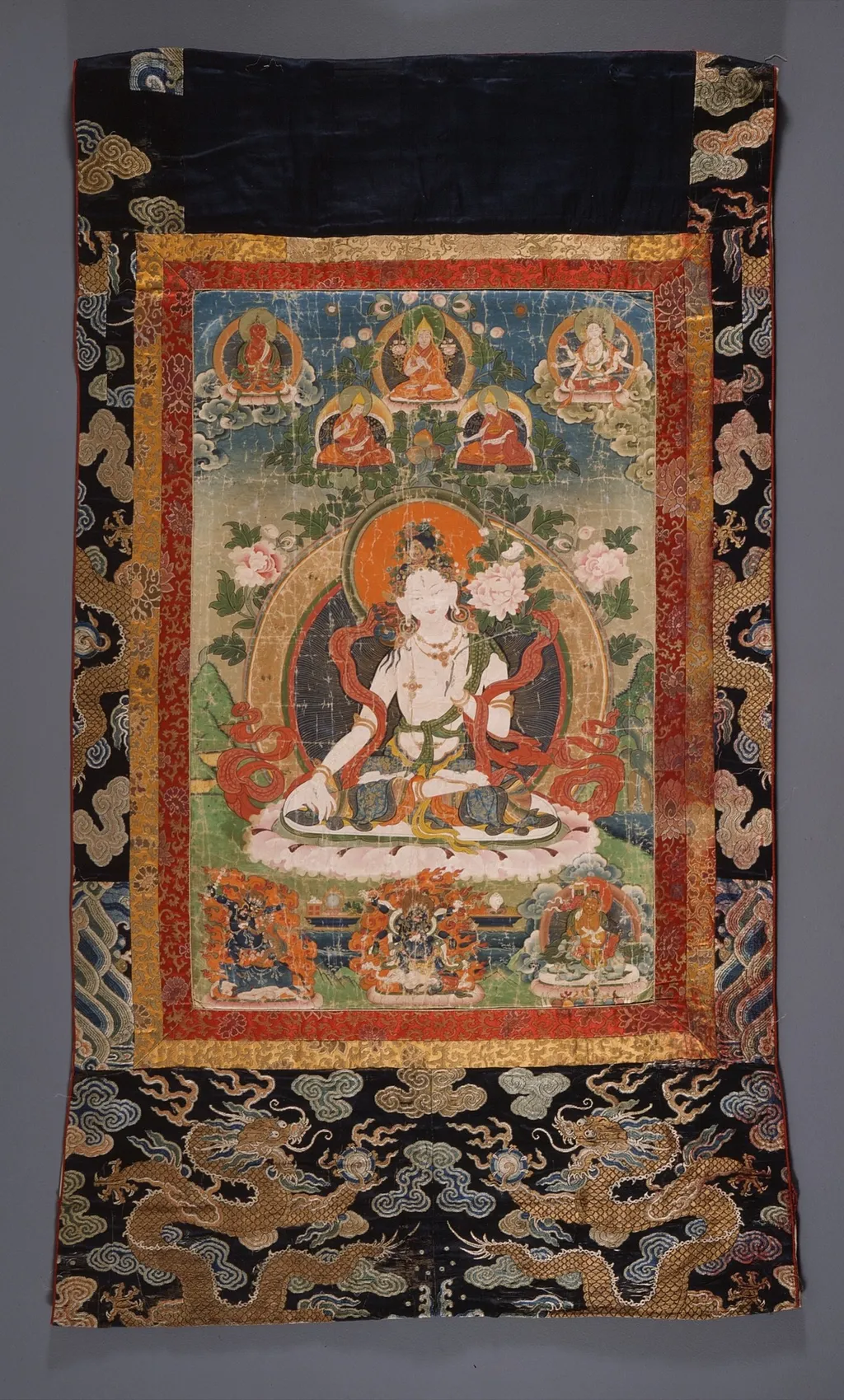
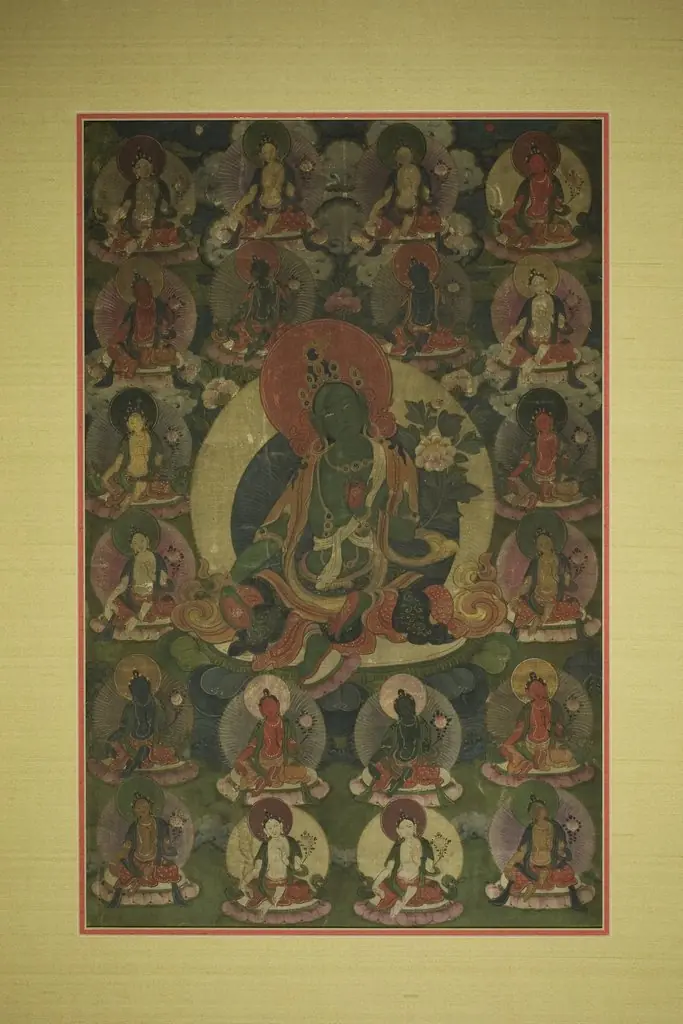
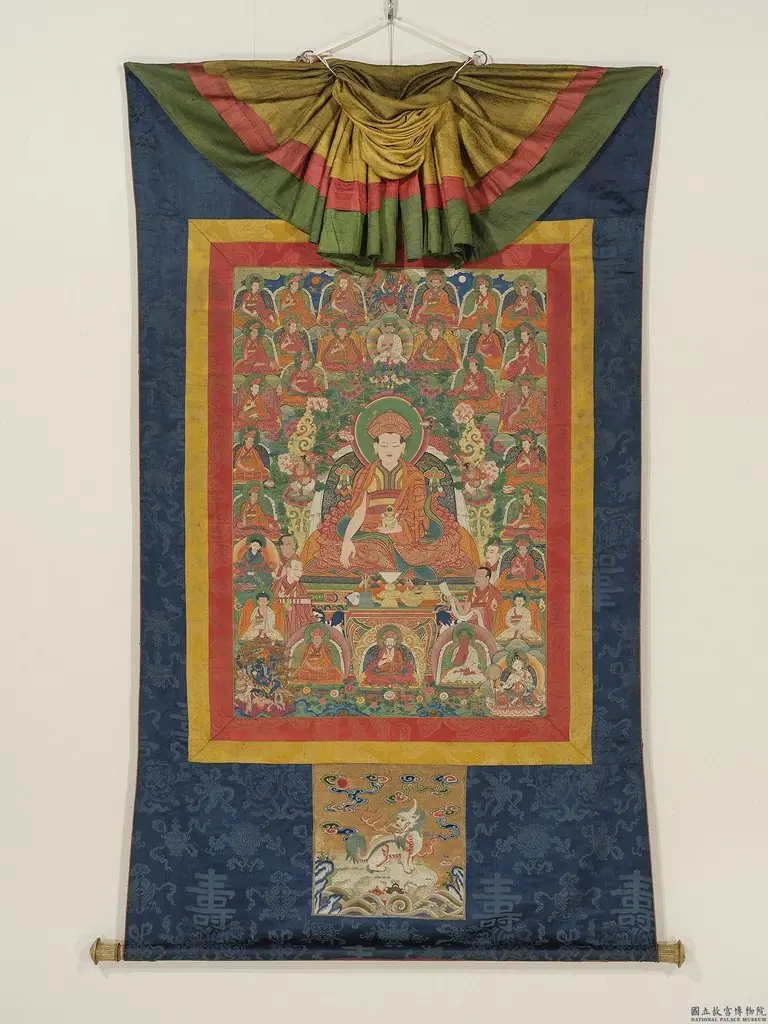
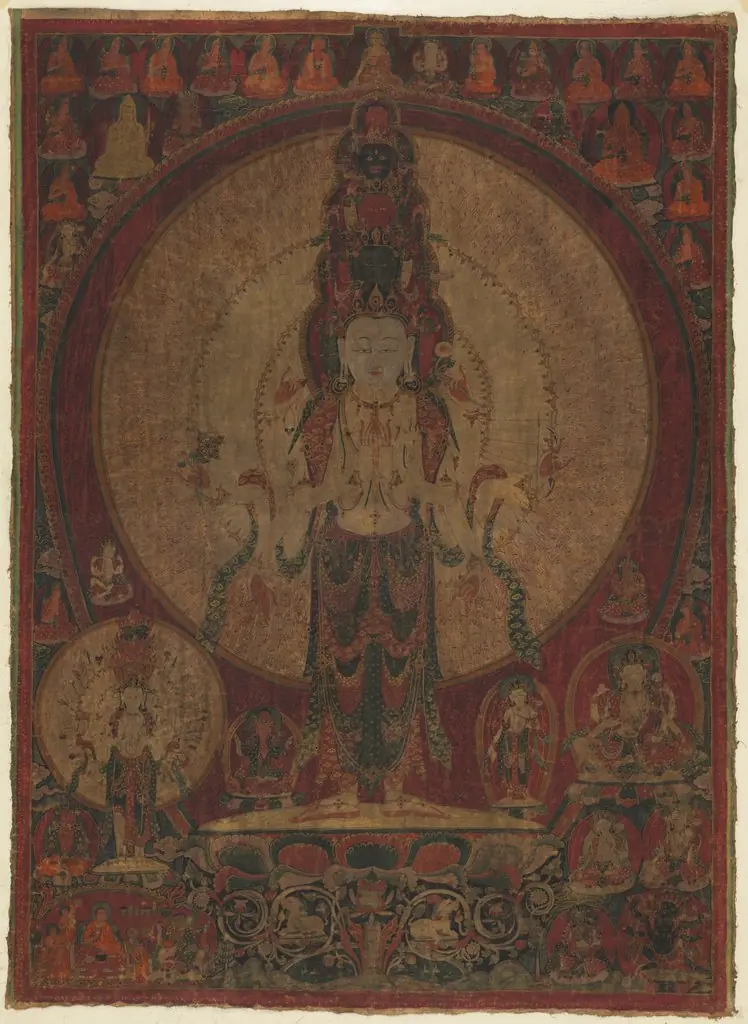
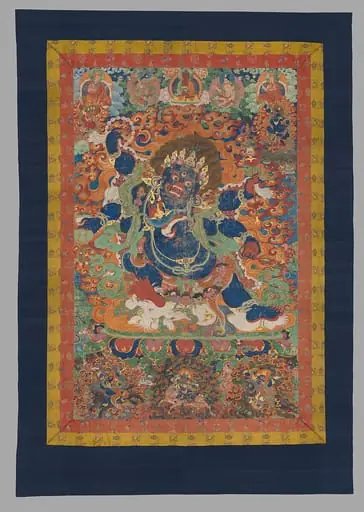
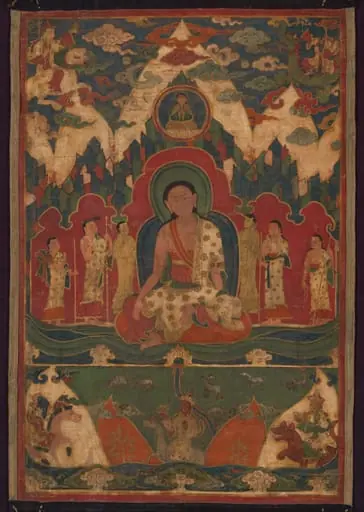
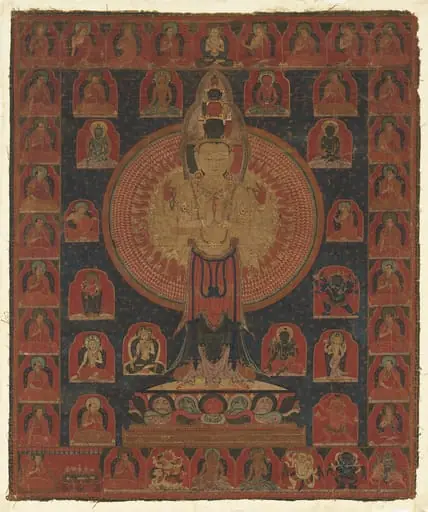
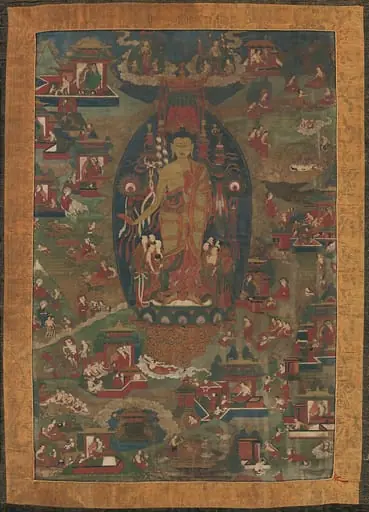
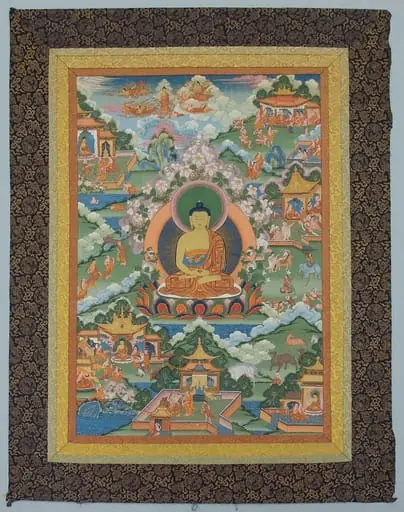
The Buddhist Goddess Sita Tara (White Tara) is an unspecified painting by Unknown. It dates from 1850 and is held in the collection of the Los Angeles County Museum of Art. The work depicts the Buddhist deity White Tara, seated in a lotus blossom with legs crossed.
About this work
Overview
The work depicts the Buddhist deity White Tara, seated in a lotus blossom with legs crossed. She is clothed in a flowing white garment, adorned with jewelry, and framed by a vivid red‑gold border. The composition includes surrounding figures such as a red dragon and a green serpent, set against a multicoloured backdrop that emphasizes the central figure’s serene expression.
Subject & Meaning
White Tara, a manifestation of compassion and longevity in Buddhist tradition, is presented with a calm countenance and a distinctive arrangement of seven eyes—one on the forehead and six on the hands and feet—symbolising her ability to perceive the suffering of all beings. The accompanying dragon and snake serve as protective guardians, reinforcing the goddess’s role as a benevolent saviour.
Technique & Style
Executed in a detailed painting technique, the piece employs fine line work to render intricate patterns on the robe and the elaborate jewelry. A rich palette of reds, golds, greens and whites creates depth, while the use of a decorative border draws focus to the central figure. The artist’s careful rendering of facial features conveys a tranquil mood.
Context
Paintings of White Tara were commonly produced for devotional use in Himalayan Buddhist communities, often serving as focal points for meditation and ritual. The inclusion of vibrant mythic creatures reflects the syncretic visual language of Tibetan thangka traditions that flourished from the 14th to the 18th centuries.
Artist & collection

 Domestic Scene
 Giacomo and Cardinal Marco, investing Andrea, Abbot of San Zeno, with his Benefice
 The Nymph of Fontainebleau
 Portrait of a Woman
 Madonna and Child with Saints in the Enclosed Garden
 Venus and Minerva
 Family Group of Four on Sofa
 Wall painting from Room H of the Villa of P. Fannius Synistor at Boscoreale