Artwork
不丹19世紀竹巴噶舉祖師藏巴甲熱·益西多杰及其相關傳承唐卡
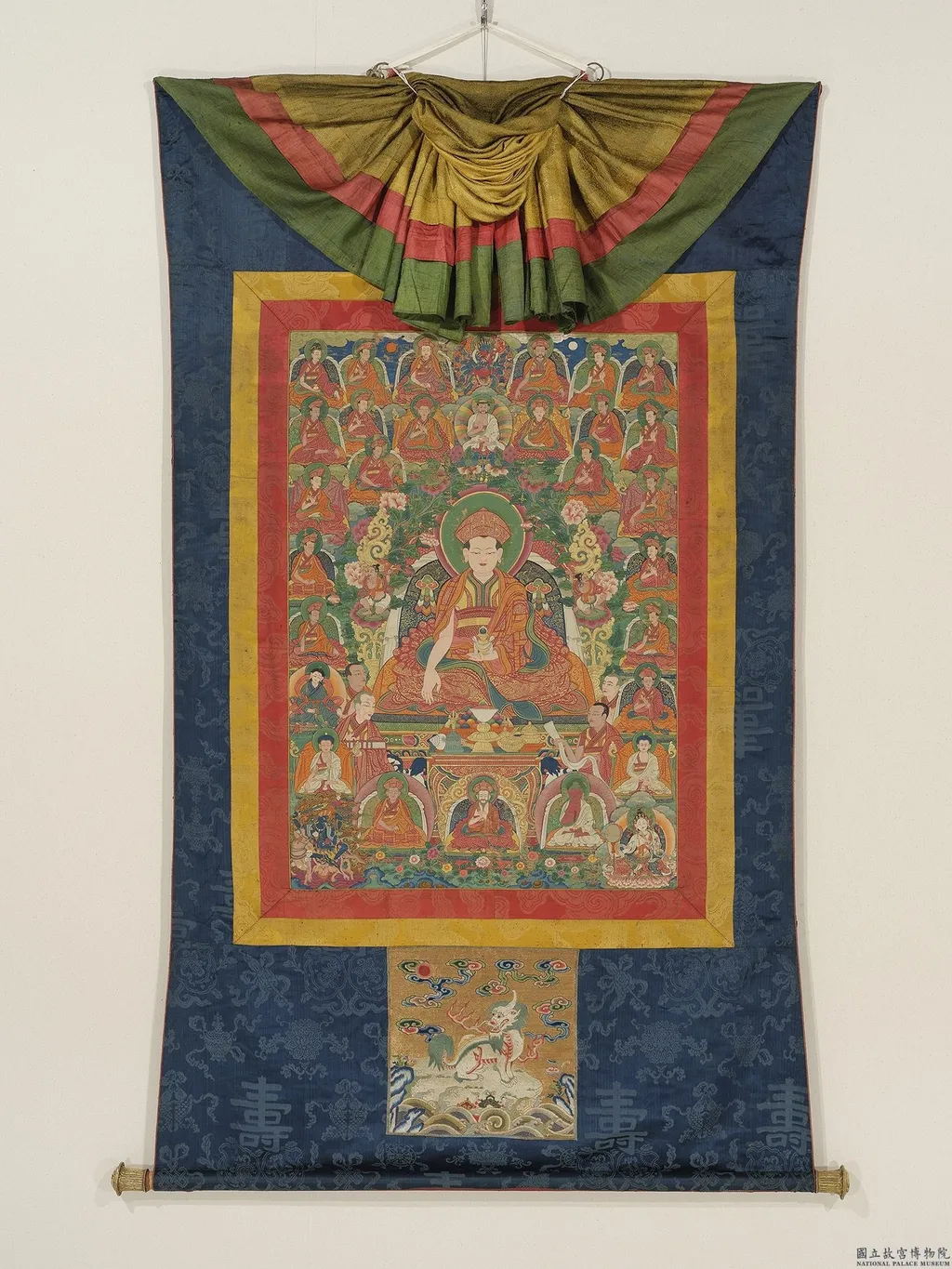
不丹19世紀竹巴噶舉祖師藏巴甲熱·益西多杰及其相關傳承唐卡 is an unspecified painting by the Post-Impressionist artist Unknown. It dates from 1900 and is held in the collection of the National Palace Museum.
About this work
Overview
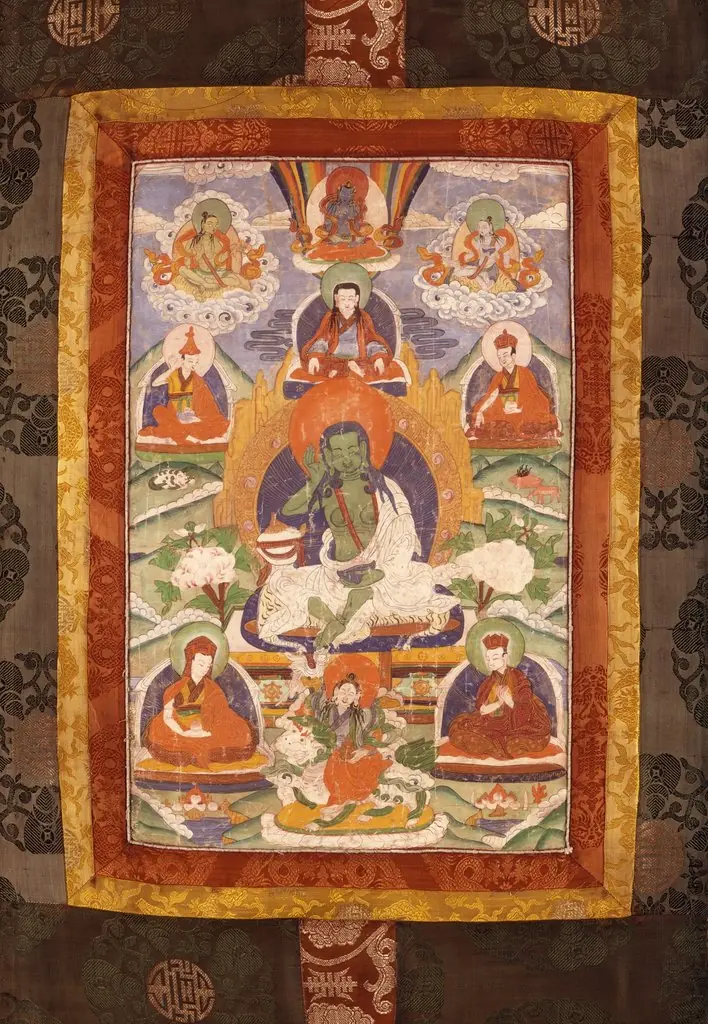
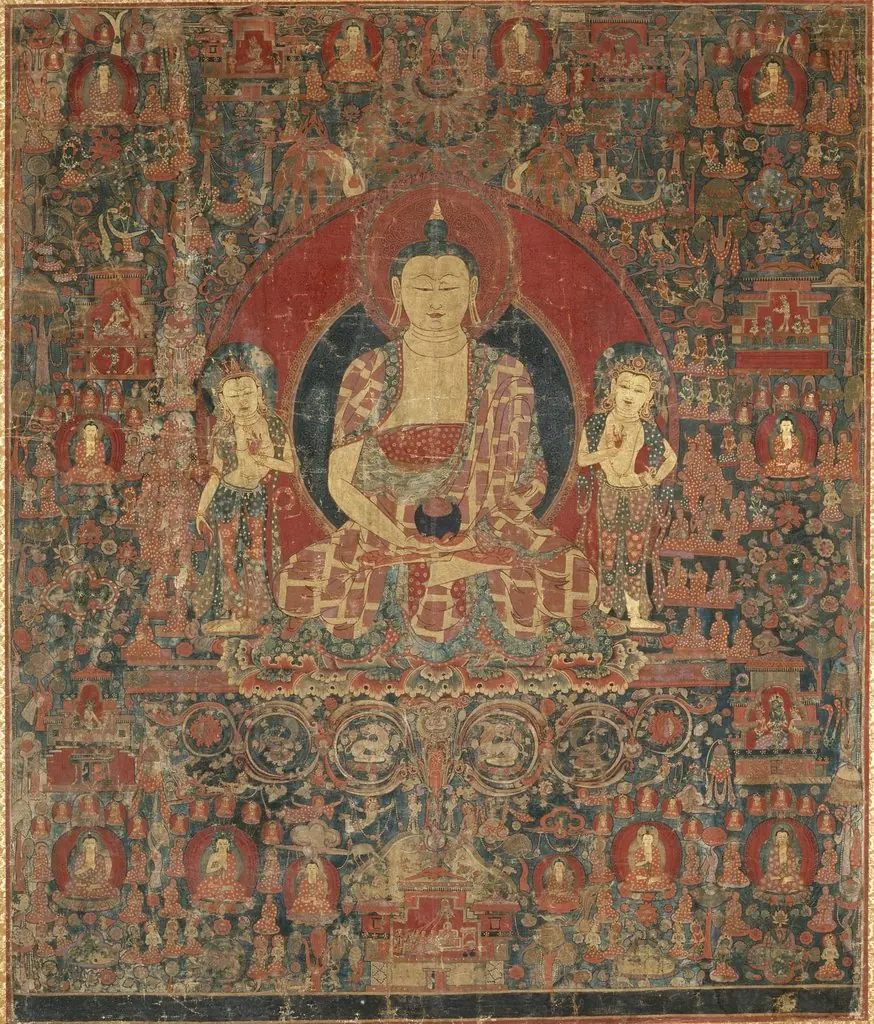
This 19th-century Tibetan Buddhist thangka depicts the lineage founder Takpa Jigme Dorje of the Drukpa Kagyu tradition, seated in meditation on a ornate throne.
This 19th-century Tibetan Buddhist thangka depicts the lineage founder Takpa Jigme Dorje of the Drukpa Kagyu tradition, seated in meditation on a ornate throne. Surrounded by disciples and spiritual figures, the composition follows traditional iconographic conventions of Himalayan religious art. Rendered in mineral pigments on cotton, the painting is characterized by vivid reds, yellows, greens, and blues against a deep blue background, typical of monastic wall hangings used in ritual contexts.
Subject & Meaning
The central figure is Takpa Jigme Dorje, a key transmitter of the Drukpa Kagyu lineage, identified by his red and yellow monastic robes and green halo, symbolizing spiritual attainment. He holds a begging bowl, representing renunciation and monastic discipline. The surrounding figures include his principal disciples and lineage holders, arranged hierarchically to illustrate the unbroken transmission of teachings from master to student, reinforcing the authority and continuity of the tradition.
Technique & Style
Executed in the traditional thangka style, the painting uses mineral pigments applied with fine brushes on a cotton substrate. Details are rendered with precision, particularly in the facial features and textile patterns of the robes. The dark blue background enhances the luminosity of the figures, while the use of gold outlines and rich color contrasts follows Tibetan Buddhist artistic norms, emphasizing sacred presence over naturalistic space.
History & Provenance
The thangka entered the collection of the National Palace Museum in Taiwan, likely through the migration of Tibetan Buddhist artifacts following political upheavals in the mid-20th century. Its 19th-century origin aligns with a period of active thangka production in Bhutan and eastern Tibet, where Drukpa Kagyu monasteries commissioned devotional imagery for ritual use and lineage veneration.
Context
Created within the Drukpa Kagyu tradition, this thangka served as a visual aid for meditation and teaching, reinforcing doctrinal lineage and spiritual authority. Such images were displayed in monastic chapels and used during ceremonies to invoke the presence of ancestral masters. The composition reflects the integration of Himalayan artistic practices with Tibetan Buddhist cosmology, where every element carries symbolic meaning.
Legacy
As a preserved example of 19th-century Himalayan religious art, this thangka contributes to the understanding of Drukpa Kagyu iconography and monastic culture. It remains a reference for scholars studying the transmission of Buddhist lineages and the role of visual media in sustaining spiritual traditions across generations in Bhutan and neighboring regions.
Artist & collection

 Domestic Scene
 Giacomo and Cardinal Marco, investing Andrea, Abbot of San Zeno, with his Benefice
 The Nymph of Fontainebleau
 Portrait of a Woman
 Madonna and Child with Saints in the Enclosed Garden
 Venus and Minerva
 Family Group of Four on Sofa
 Wall painting from Room H of the Villa of P. Fannius Synistor at Boscoreale
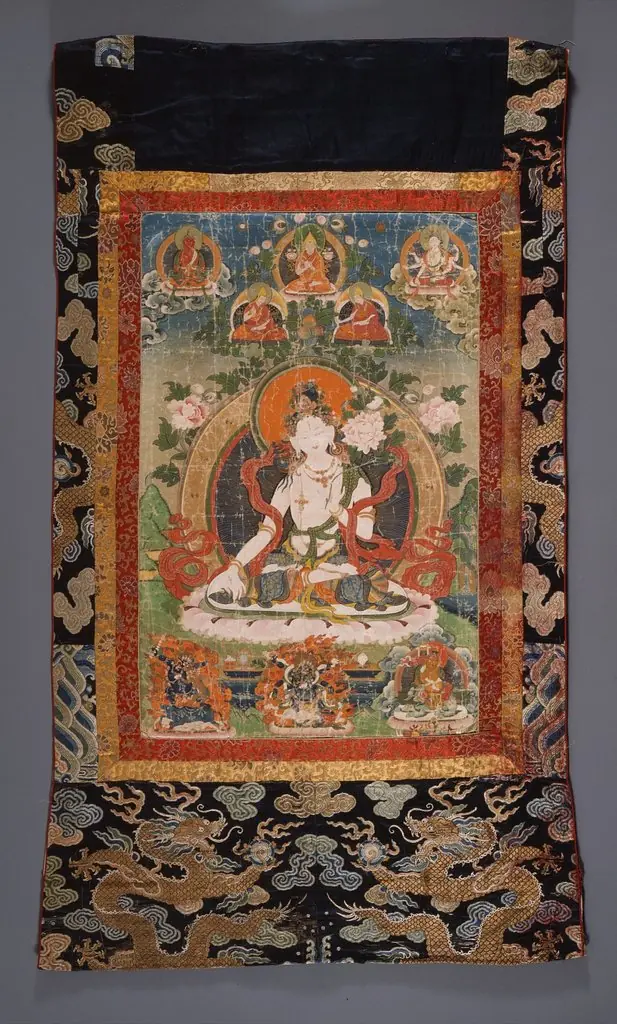 The Buddhist Goddess Sita Tara (White Tara)
 Untitled
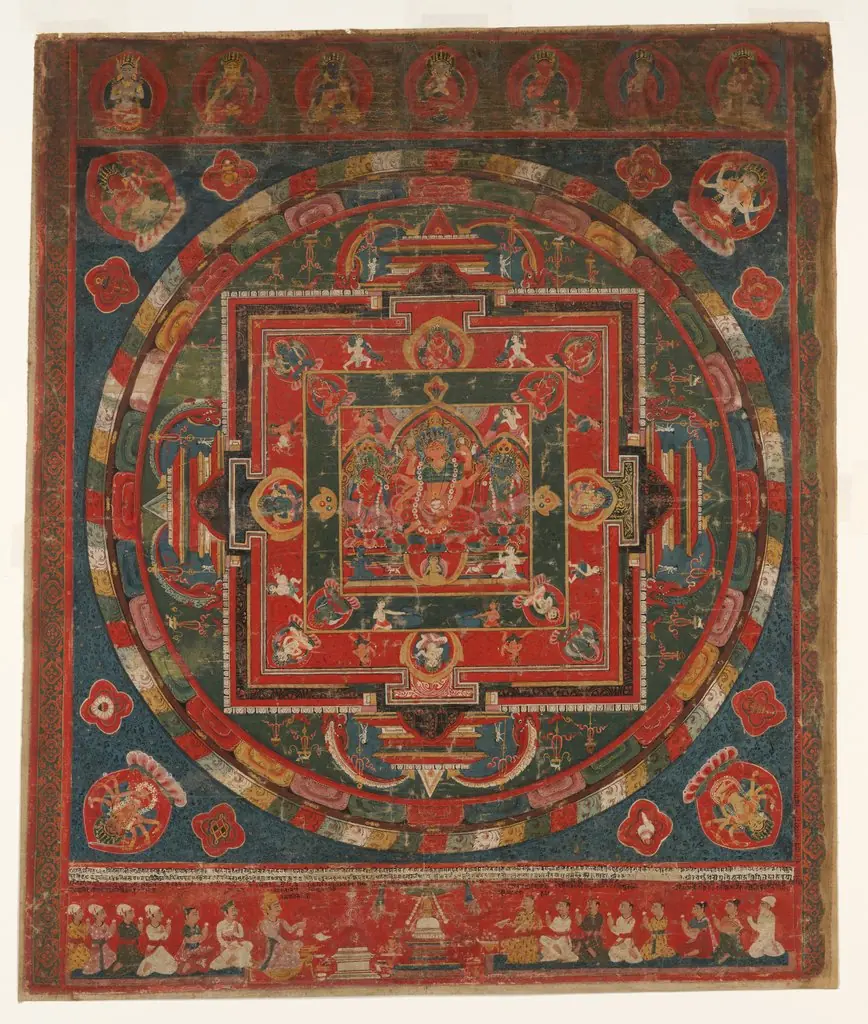 Vasudhara Mandala
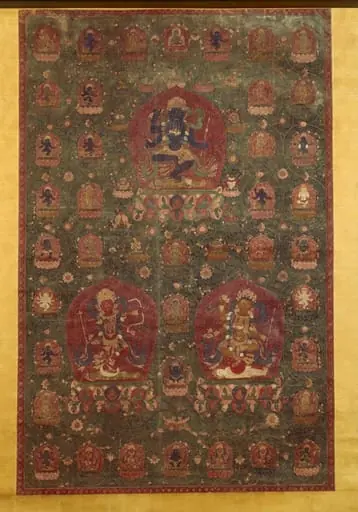 Mandala
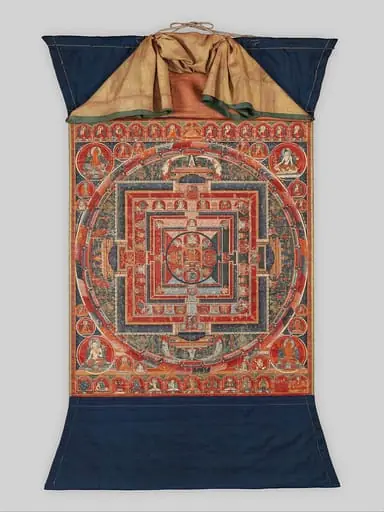 Untitled
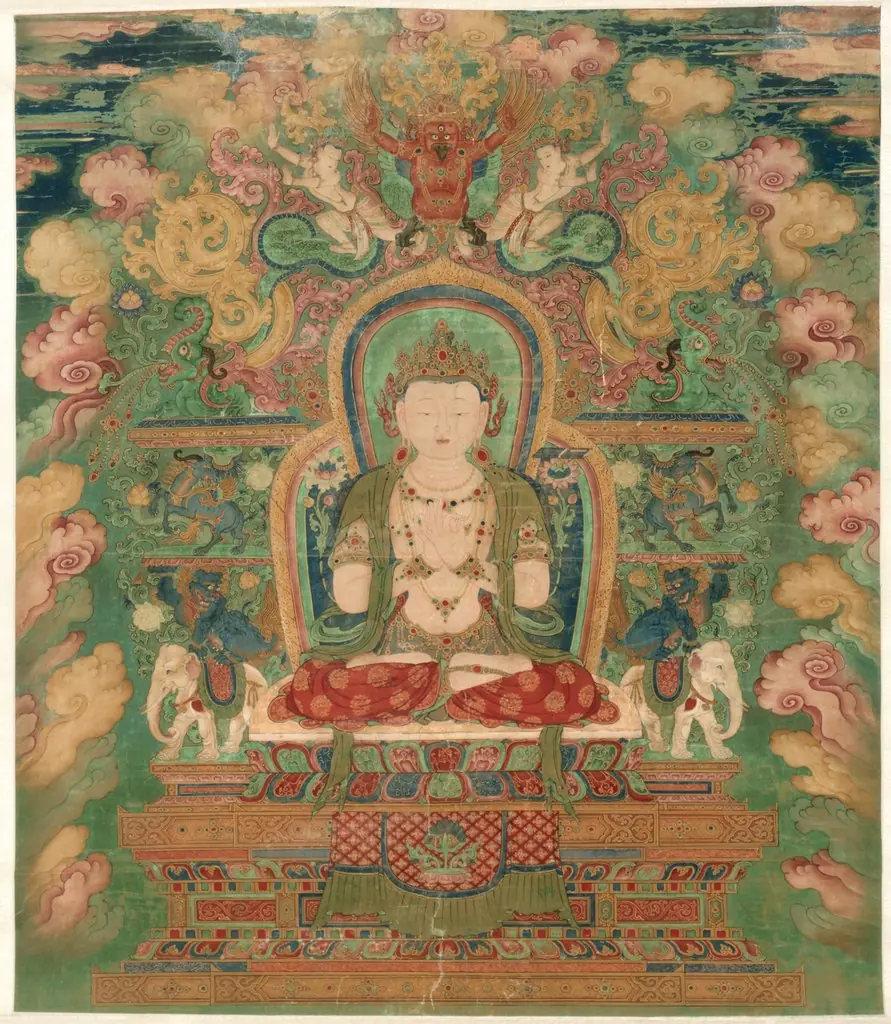 Manjushri
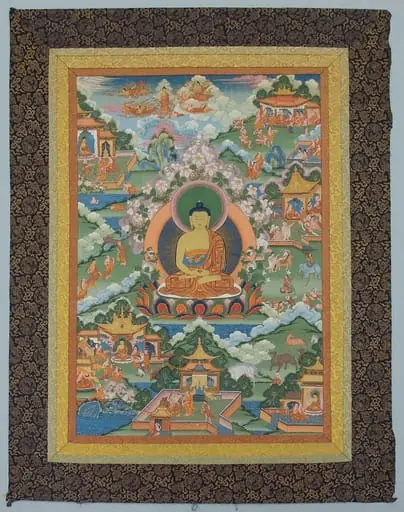 Untitled
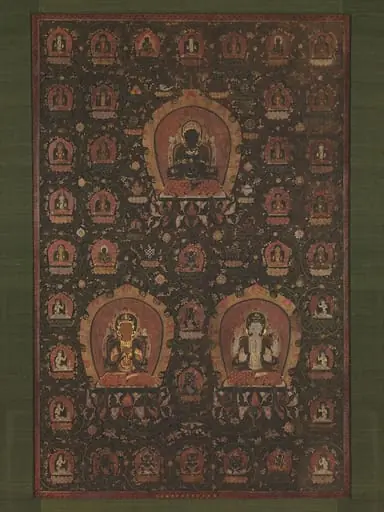 明 佚名 釋教三尊曼陀羅圖 軸|Mandala of Vajradhara, Manjushri and Sadakshari -Lokeshvara
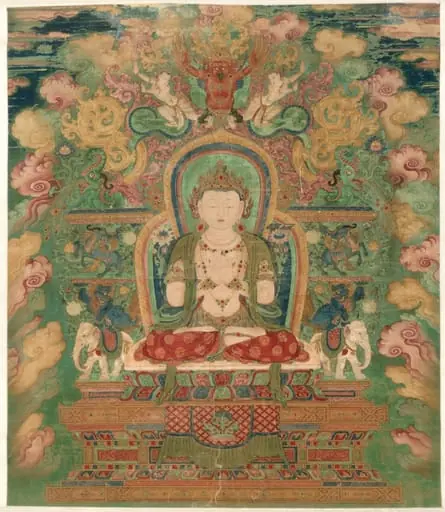 Manjushri
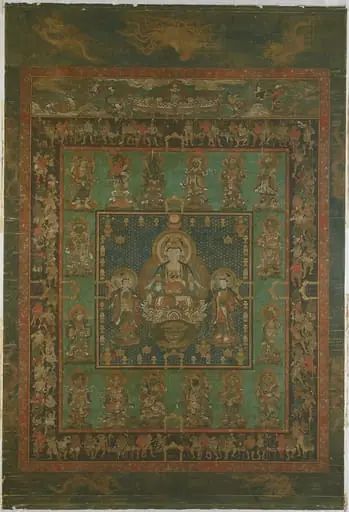 般若菩薩曼荼羅図|Mandala of the Bodhisattva Hannya (Prajnaparamita)
 Milarepa (1040-1123)
 The Jina Buddha of Infinite Light (Amitabha) in His Pure Land Paradise (Sukhavati)