Artwork
Eleven-Headed, Thousand-Armed Bodhisattva of Compassion (Avalokiteshvara)
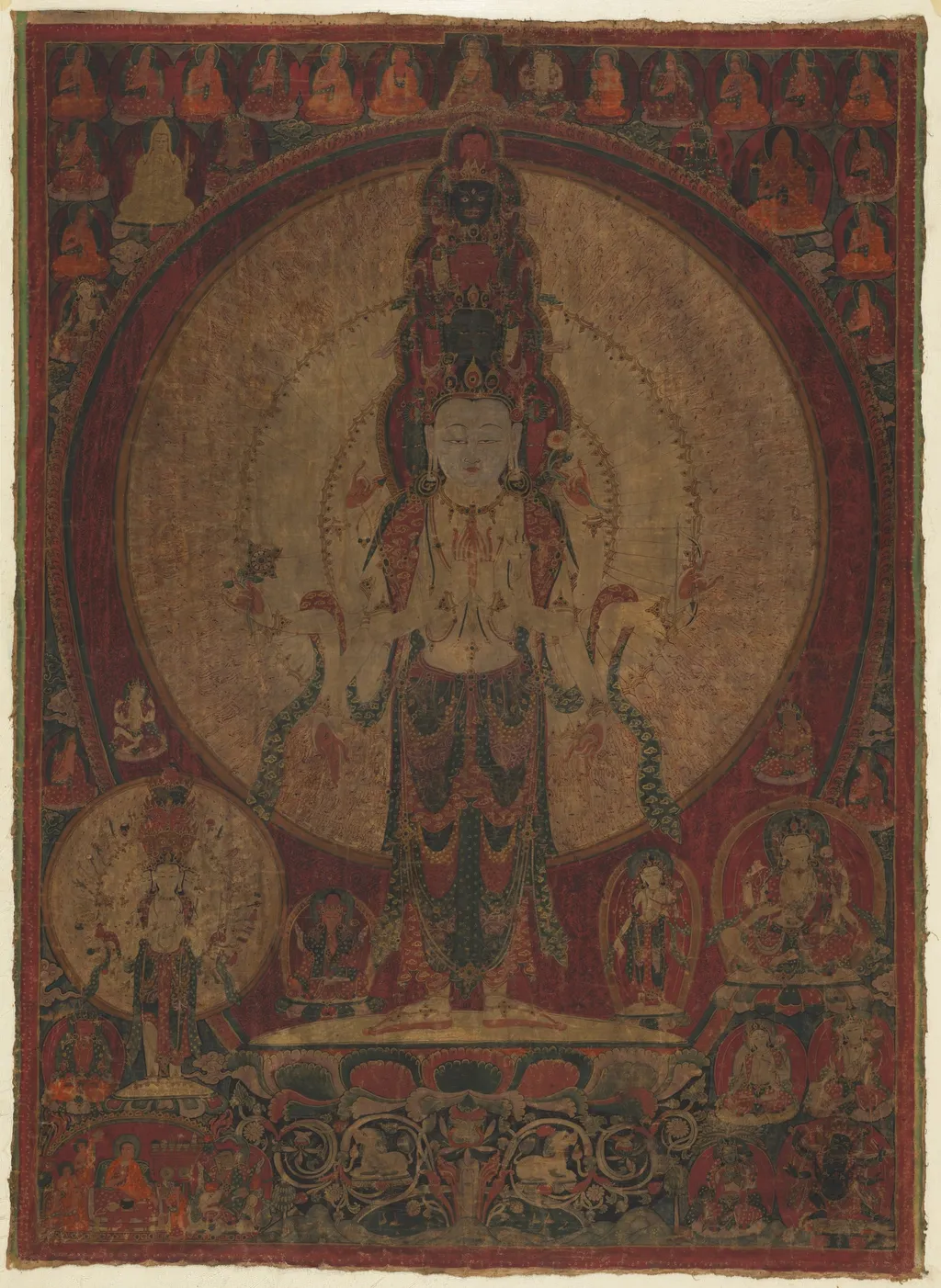
Eleven-Headed, Thousand-Armed Bodhisattva of Compassion (Avalokiteshvara) is an unspecified painting. It dates from 1500 and is held in the collection of the Cleveland Museum of Art.
About this work
Overview
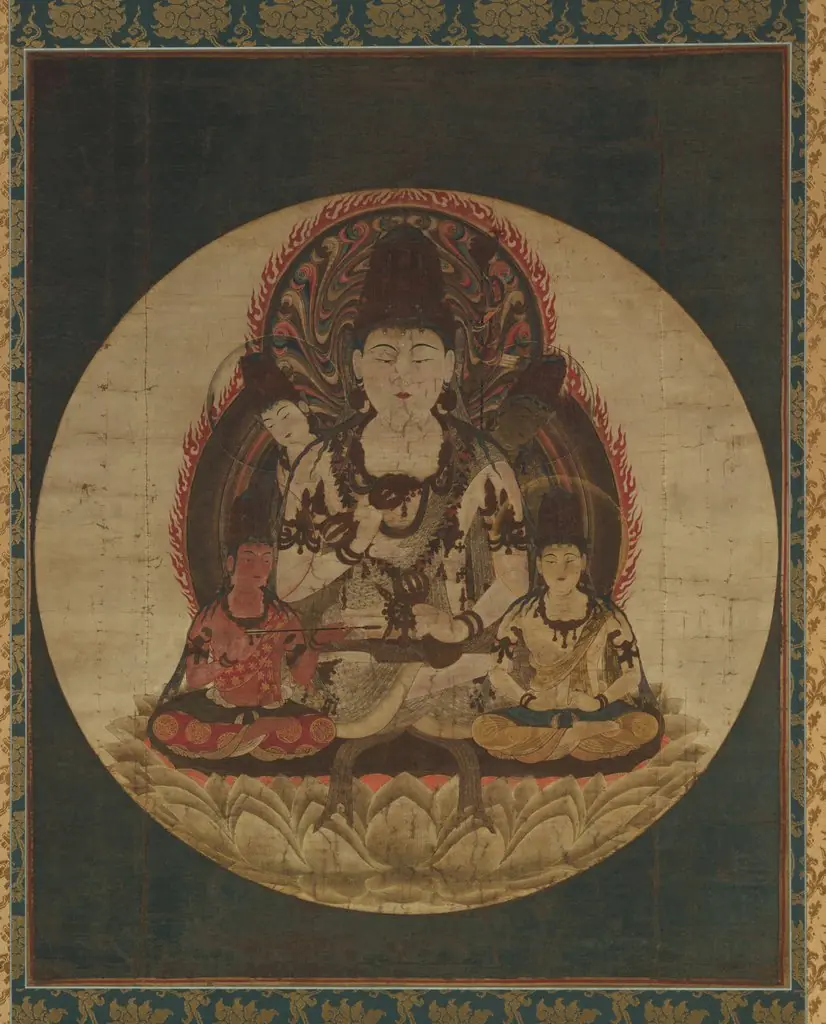
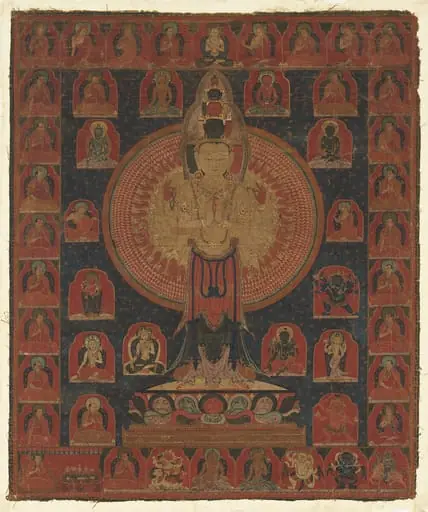
The work titled *Eleven‑Headed, Thousand‑Armed Bodhisattva of Compassion (Avalokiteshvara)* is a painted panel that places a monumental deity at its core.
The work titled *Eleven‑Headed, Thousand‑Armed Bodhisattva of Compassion (Avalokiteshvara)* is a painted panel that places a monumental deity at its core. The central figure dominates a circular composition, surrounded by a decorative red border and a field of dense patterned motifs. Smaller, round‑framed figures populate the surrounding space, creating a rhythmic visual field that emphasizes the central presence.
Subject & Meaning
The central deity is Avalokiteshvara, the bodhisattva associated with compassion in Buddhist tradition. The eleven heads and a thousand arms are conventional iconographic symbols: multiple heads convey omniscient perception, while the myriad arms represent the ability to aid countless beings simultaneously. The surrounding figures likely serve as attendants or devotees, reinforcing the theme of universal benevolence.
Technique & Style
Executed in a palette of faded gold, deep red, and earthy brown, the painting employs flat areas of color delineated by bold outlines. Intricate background patterns—often floral or geometric—are rendered in fine brushwork, creating a dense decorative surface. The use of concentric framing and a strong red border reflects a stylized, symbolic aesthetic common to devotional Buddhist art.
History & Provenance
The panel’s precise origin and date are not recorded in the supplied data, but its iconography aligns with traditional Tibetan and Himalayan representations of Avalokiteshvara that flourished from the 12th to 18th centuries. The work’s material qualities and compositional format suggest it was intended for a shrine or monastic setting, where it would function as an object of veneration.
Artist & collection