Artwork
Young Man with a Sword (dummy board)
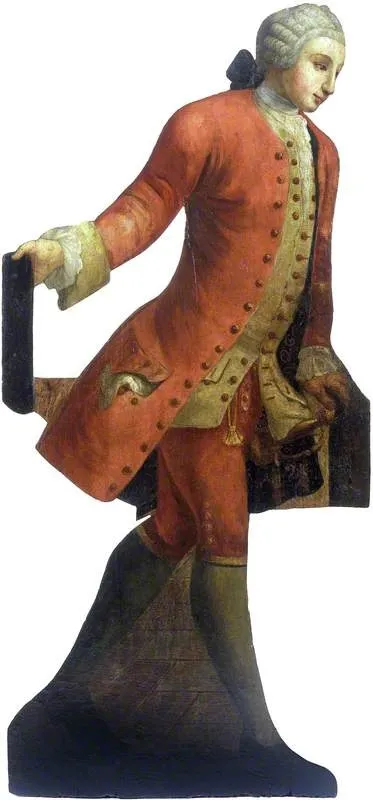
Young Man with a Sword (dummy board) is an unspecified painting by the Rococo painting artist Unknown. It dates from 1745 and is held in the collection of the Victoria and Albert Museum.
About this work
The subject's right hand rests on the hilt of a sword, while his left hand holds a black object, possibly a cane or a sword scabbard.
This painting depicts a young man dressed in 18th-century attire, standing in a confident pose. He wears a vibrant red coat with gold accents, a white shirt, and a black tricorn hat, set against a plain white background. The subject's right hand rests on the hilt of a sword, while his left hand holds a black object, possibly a cane or a sword scabbard.
The painting's style and the subject's clothing suggest it was created in the mid-18th century. The use of bold colors and the subject's dynamic pose draw the viewer's attention.
The Victoria and Albert Museum holds this artwork, offering a glimpse into the fashion and art of the 18th century.
Overview
This painting portrays a young man in mid-18th-century dress, rendered on a wooden panel likely used as a preparatory study or display board. The figure stands upright, facing the viewer with composed assurance, his attire and posture suggesting social status. The plain white background isolates him, emphasizing costume and gesture over environment. The work is held by the Victoria and Albert Museum, where it contributes to the study of portraiture and material culture of the period.
Subject & Meaning
The subject, dressed in a rich red coat with gold trim and a black tricorn hat, appears as a gentleman of means. His hand resting on a sword hilt, paired with a dark object in his left—possibly a cane or scabbard—conveys a sense of dignity and readiness. The absence of a named identity or narrative context leaves the figure as a symbol of aristocratic bearing rather than a specific individual, reflecting the era’s interest in visual representation of social role.
Technique & Style
The artist employs bold, flat areas of color with minimal shading, focusing on the texture and pattern of fabric rather than anatomical depth. Brushwork is precise but not overly detailed, suggesting a functional purpose—perhaps a model for tailoring or a study for a larger portrait. The stark white background enhances the vibrancy of the red coat and metallic accents, creating a striking visual contrast typical of preparatory works in this context.
History & Provenance
The painting is preserved on a wooden board, a common support for studies or display pieces in the 18th century. It entered the Victoria and Albert Museum’s collection as part of its broader holdings in decorative arts and fashion-related materials. Its origin as a studio piece or commercial sample remains undocumented, but its survival indicates its value as a record of contemporary dress and artistic practice.
Context
In mid-18th-century Europe, portraits of young men often emphasized military or aristocratic identity through attire and accoutrements. This work aligns with a tradition of visual documentation used by tailors, artists, or patrons to convey status. The simplified composition suggests it may have served practical purposes—such as a template for costume design or a display piece in a merchant’s workshop—rather than as a formal commission.
Legacy
Today, the painting offers insight into how clothing functioned as a visual language of class and identity. Its preservation in a museum dedicated to design and applied arts underscores its role as a historical artifact beyond mere portraiture. It continues to inform scholarship on 18th-century fashion, studio practices, and the intersection of art and material culture in everyday life.
Artist & collection

 Domestic Scene
 Giacomo and Cardinal Marco, investing Andrea, Abbot of San Zeno, with his Benefice
 The Nymph of Fontainebleau
 Portrait of a Woman
 Madonna and Child with Saints in the Enclosed Garden
 Venus and Minerva
 Family Group of Four on Sofa
 Wall painting from Room H of the Villa of P. Fannius Synistor at Boscoreale
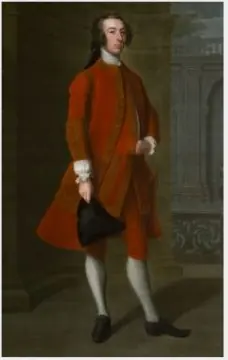 Portrait of Joseph Leeson, later 1st Earl of Milltown (1711-1783)
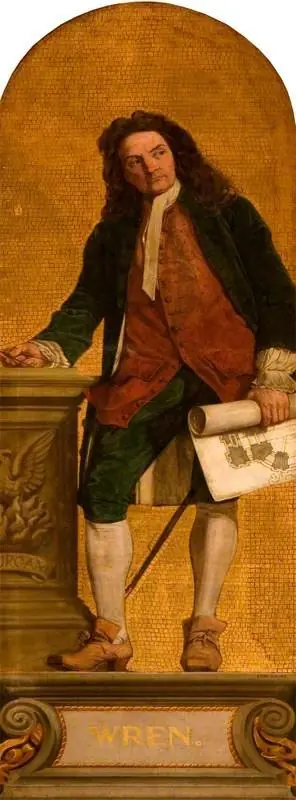 Sir Christopher Wren (1623–1723) (design for a mosaic in the Victoria and Albert Museum)
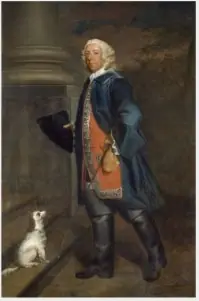 Portrait of Charles Tottenham in his Boots
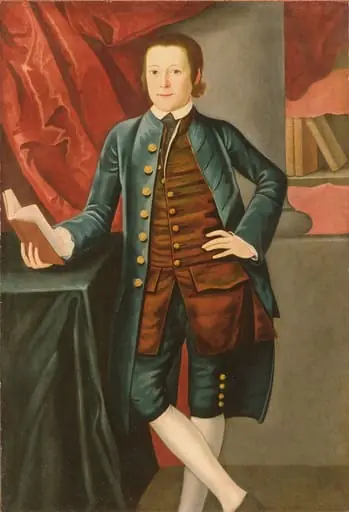 Boy of the Crossfield Family (Possibly Richard Crossfield)
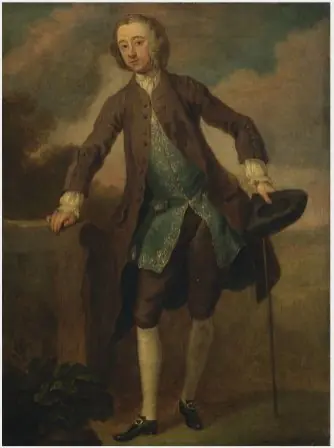 Portrait of Gustavus Hamilton, 2nd Viscount Boyne (1639-1723)
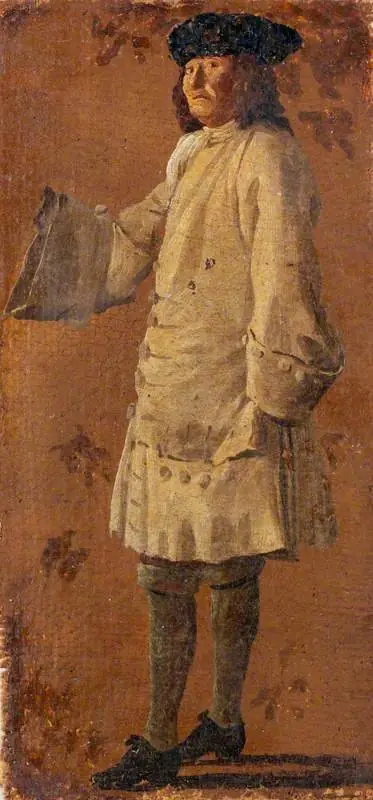 A Gentleman Wearing a White Coat
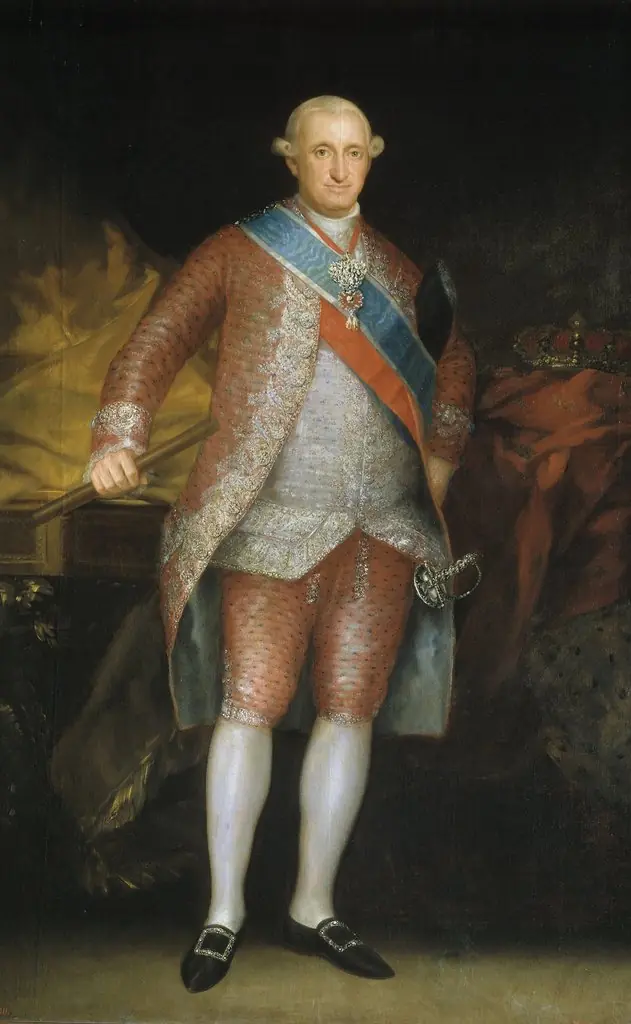 Charles IV in Court Dress
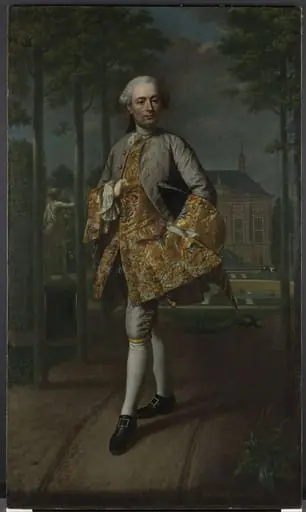 Portrait of Gerard Cornelis van Riebeeck
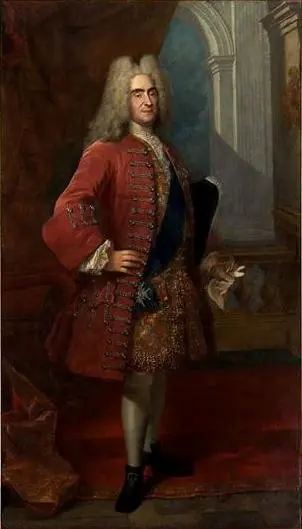 Portrait of Augustus II of Poland (1670-1733)
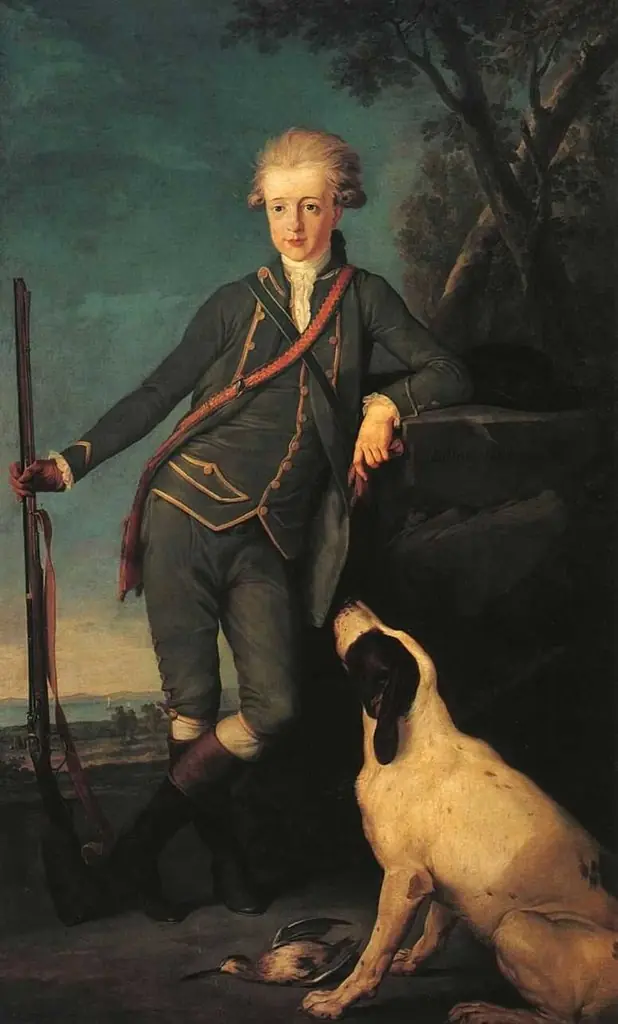 Portrait of Nikita Petrovich Panin (1770-1837)