Artwork
The Good Samaritan
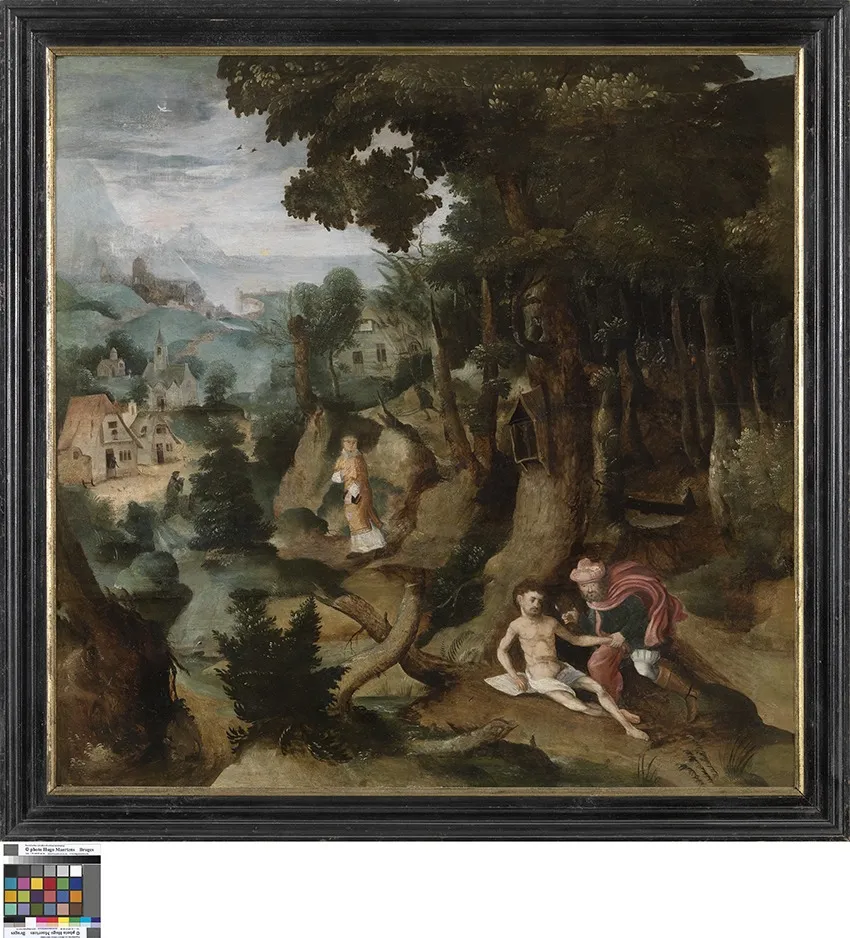
The Good Samaritan is an oil painting by the Mannerist artist Unknown. It dates from 1551 and is held in the collection of the Groeningemuseum.
About this work
Overview
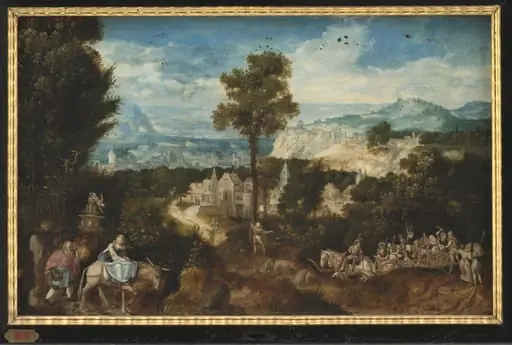
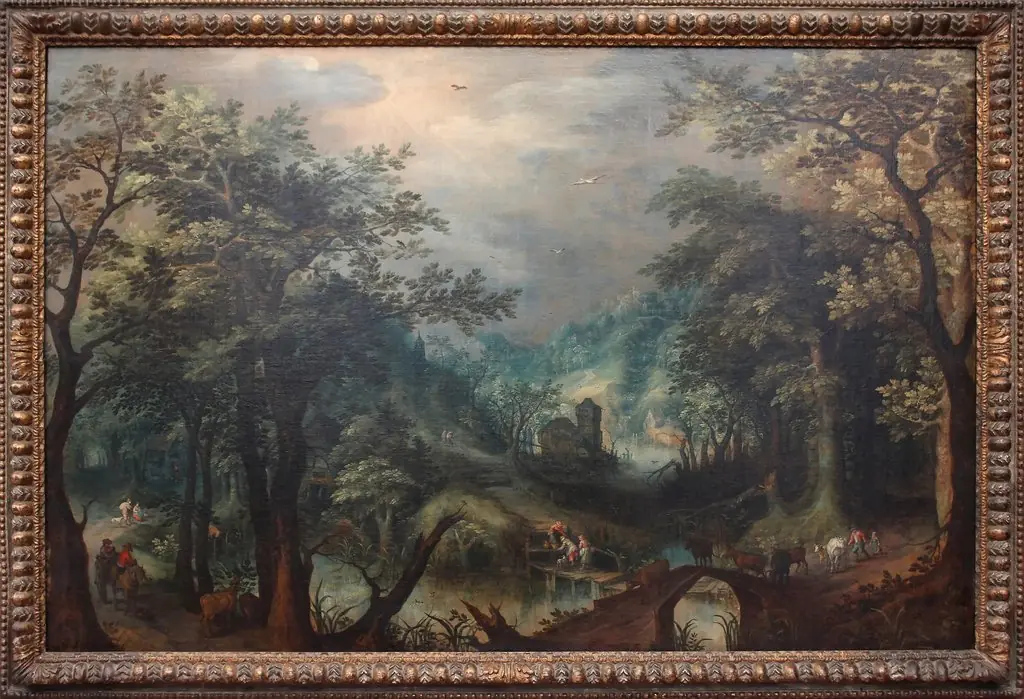
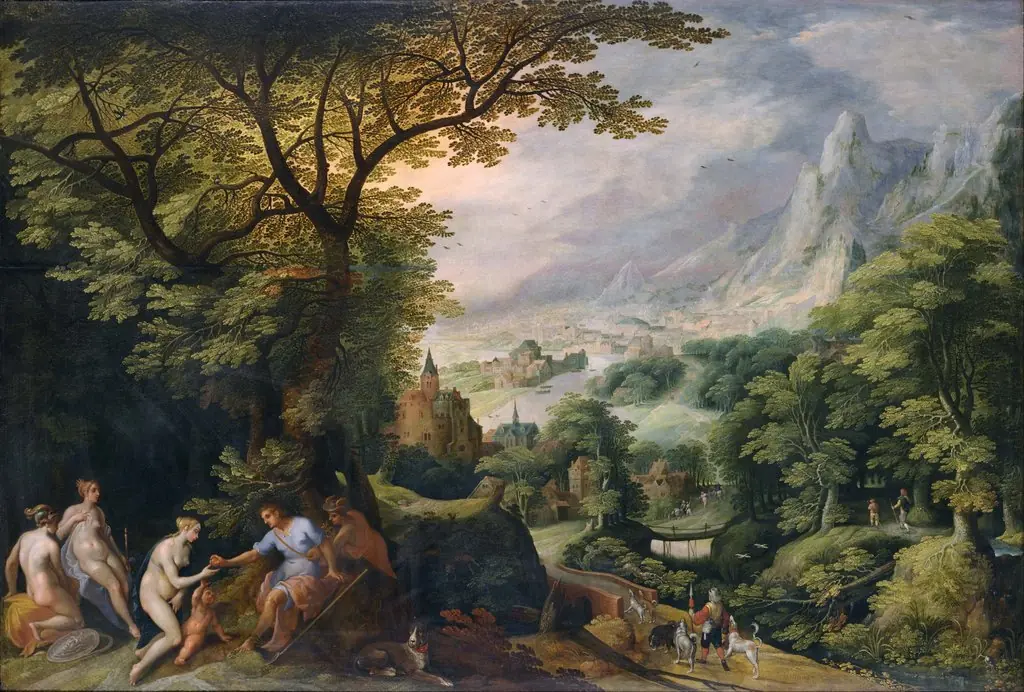
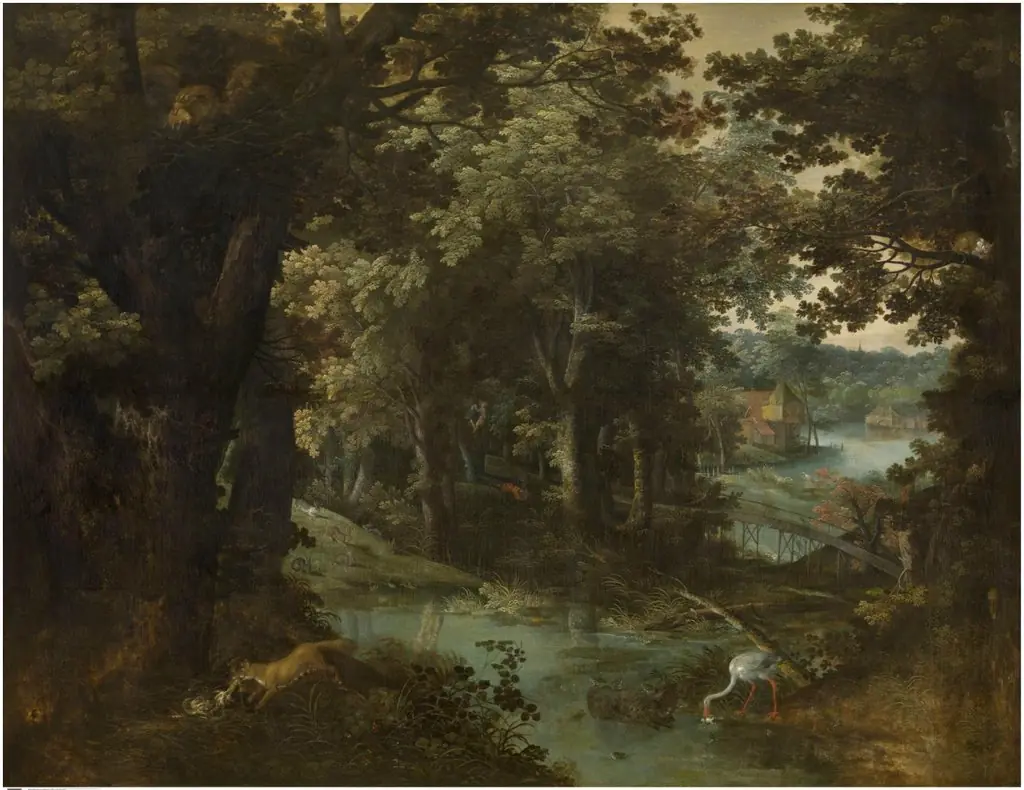
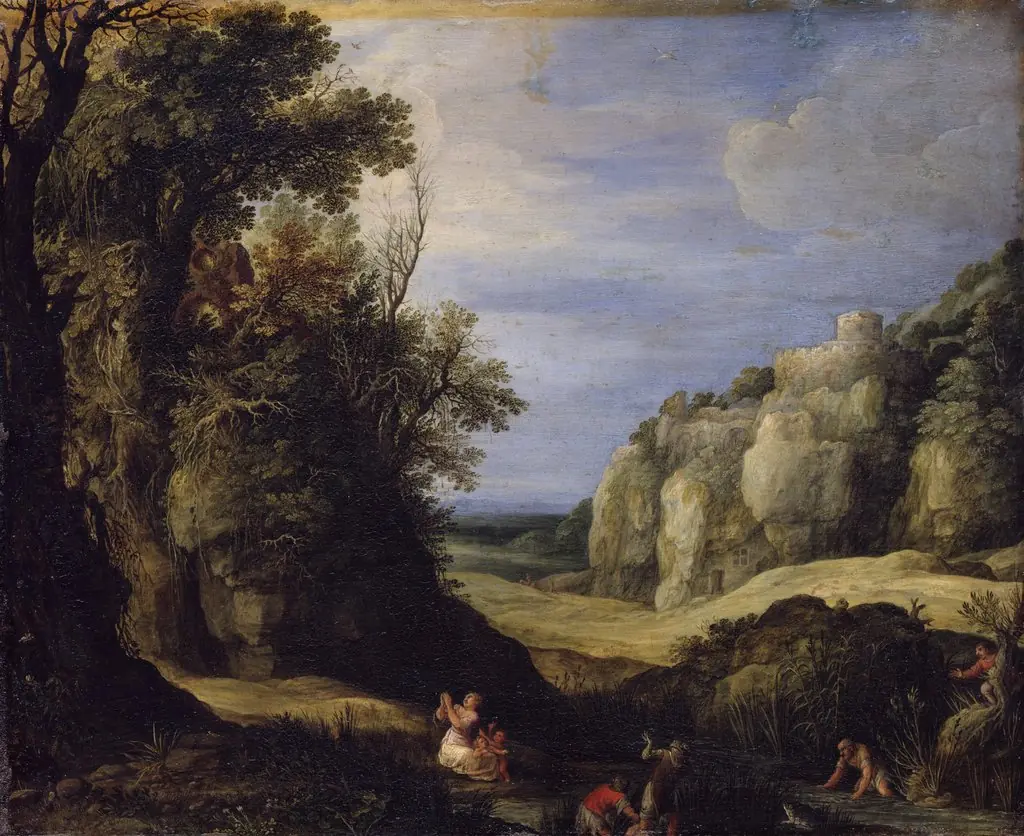
The work titled “The Good Samaritan” is an oil painting that depicts a tranquil forest setting intersected by a modest stream. In the distance a village with clustered houses and a church crowns a hill, while a figure in white advances toward it. A second figure in a red cloak assists a wounded man lying on the ground, creating a focal narrative within the natural landscape.
Subject & Meaning
The composition draws on the biblical parable of the Good Samaritan, emphasizing compassion across social boundaries. The white‑dressed individual appears to be moving toward safety, whereas the red‑cloaked helper tends to the injured stranger, underscoring themes of charity and human solidarity amid an otherwise serene environment.
Technique & Style
The artist employs chiaroscuro, using strong contrasts of light and shadow to separate the figures from the surrounding foliage. The bright red cloak and the exposed chest of the wounded man are rendered in luminous tones that cut through the dominant greens and browns, while subtle shading gives the forest a sense of depth and three‑dimensionality.
Context
Set within a pastoral landscape, the painting reflects a tradition of integrating moral narratives into idyllic natural scenes, a practice common in European art of the 17th–18th centuries. By situating the biblical episode in a familiar countryside, the work invites viewers to contemplate ethical action as part of everyday life.
Artist & collection

 Domestic Scene
 Giacomo and Cardinal Marco, investing Andrea, Abbot of San Zeno, with his Benefice
 The Nymph of Fontainebleau
 Portrait of a Woman
 Madonna and Child with Saints in the Enclosed Garden
 Venus and Minerva
 Family Group of Four on Sofa
 Wall painting from Room H of the Villa of P. Fannius Synistor at Boscoreale