Artwork
Crucifixion
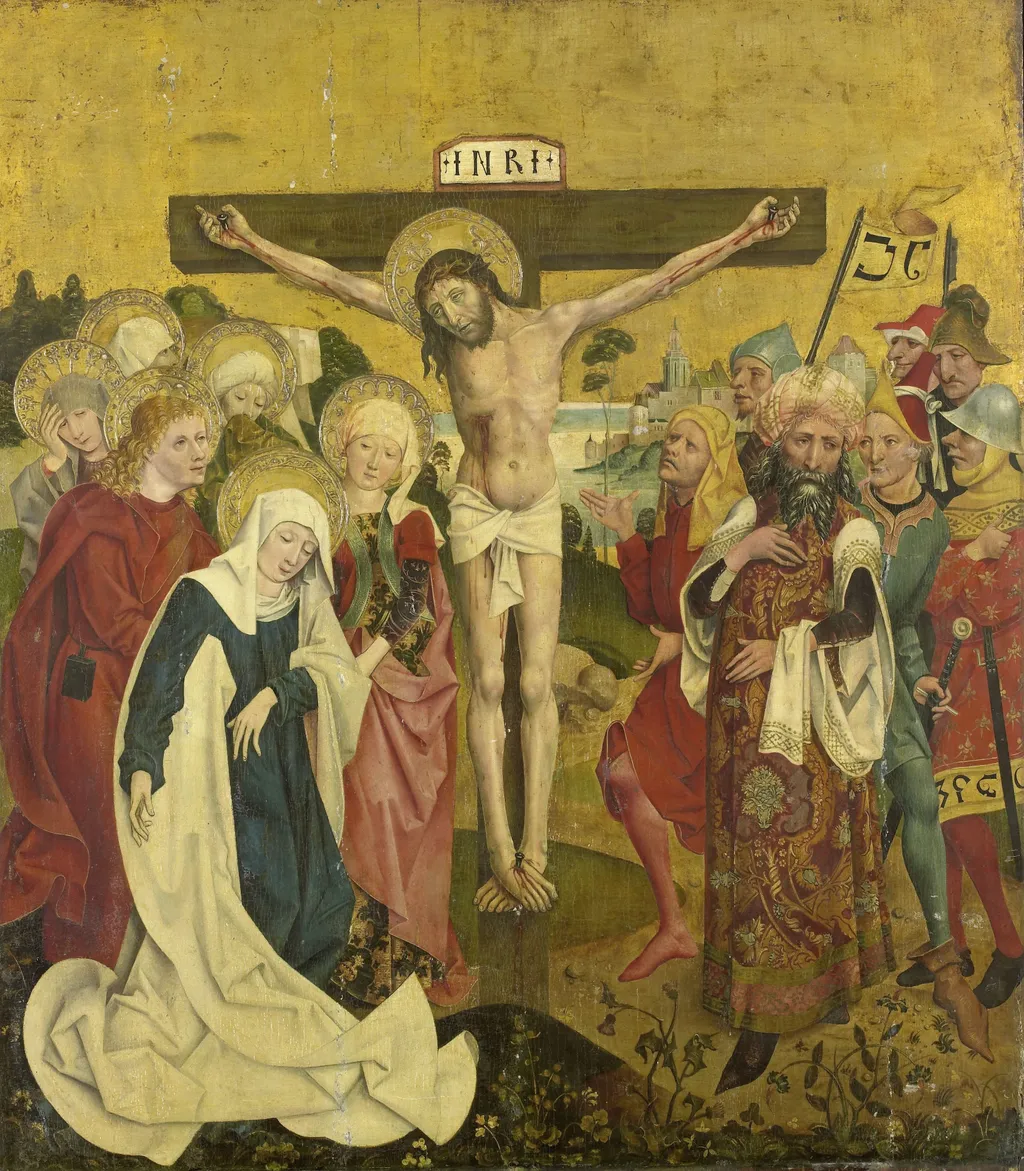
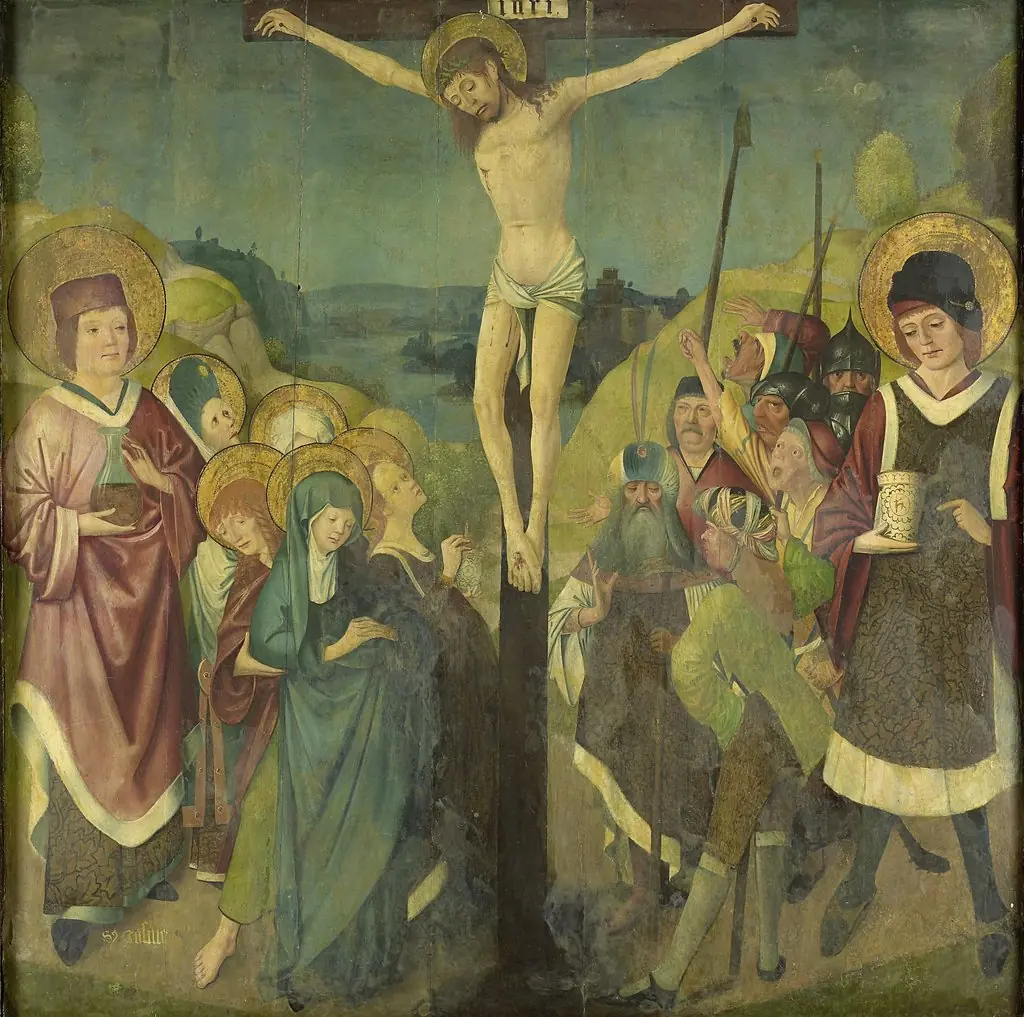
Crucifixion is an oil painting by the Northern Renaissance artist Sigmund Gleismüller. It dates from 1500 and is held in the collection of the Rijksmuseum.
About this work
Overview
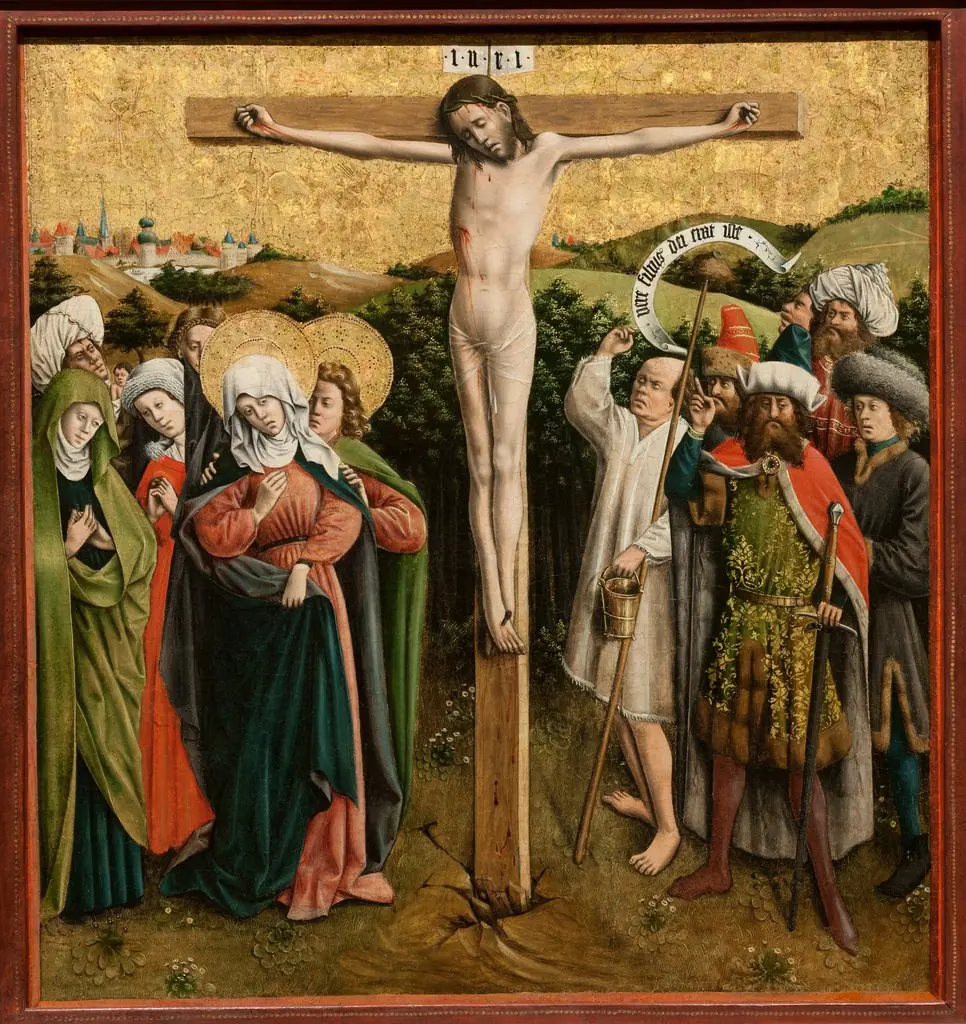
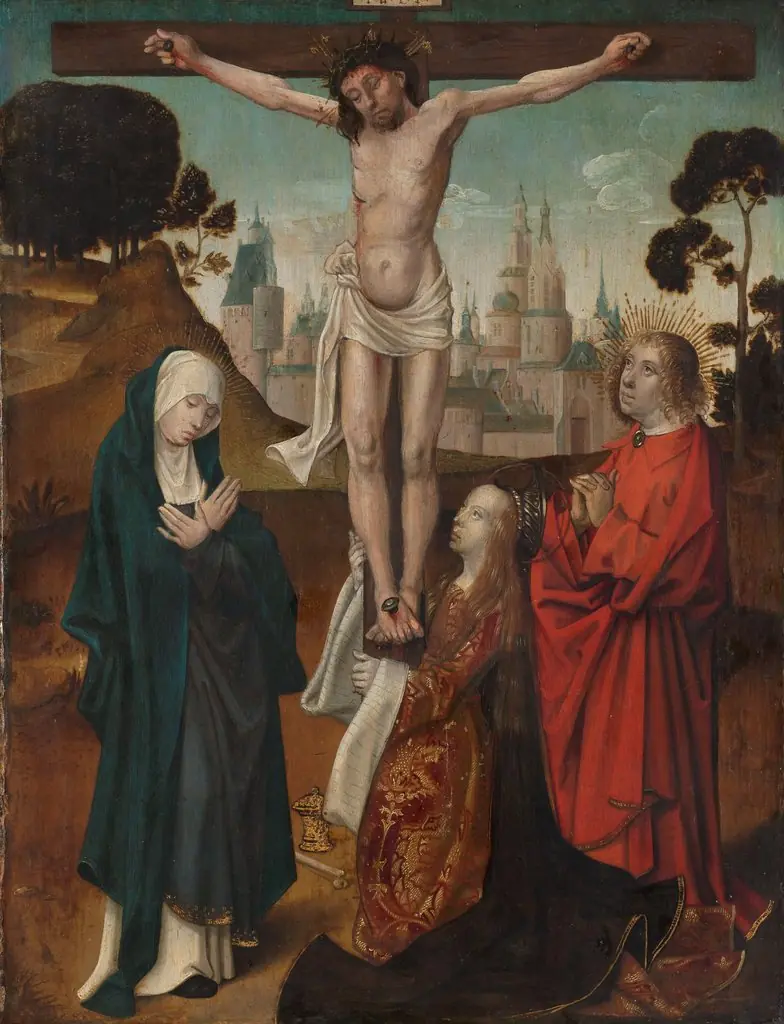
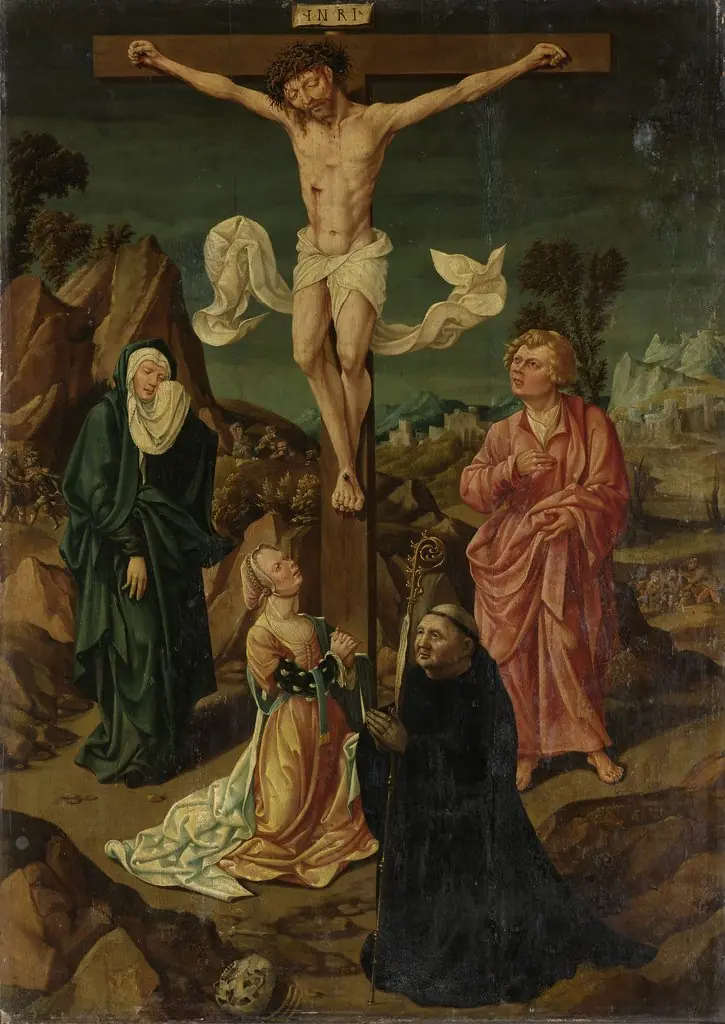
Created around the year 1500, this oil on canvas work by Sigmund Gleismüller presents the crucifixion of Jesus Christ. The central figure is affixed to a cross, his arms outstretched, while a surrounding group of onlookers occupies the foreground. The painting is part of the collection of the Rijksmuseum, where it remains on display.
Subject & Meaning
The composition focuses on the moment of Christ’s execution, emphasizing the solemnity of the event rather than overt suffering. The surrounding figures—some kneeling, others standing—observe the scene with composed expressions, suggesting a contemplative response to the theological significance of the crucifixion within the Christian tradition.
Technique & Style
Gleismüller employs a vivid palette of reds, blues, and golds, applied with confident, thick brushwork that accentuates the folds of the garments. Light and shadow are modeled in a manner reminiscent of chiaroscuro, lending depth to the figures and heightening the dramatic contrast between the illuminated central cross and the muted background townscape.
History & Provenance
The painting was produced in the early sixteenth century, a period marked by transition between late Gothic and emerging Renaissance sensibilities in Central Europe. After changing hands over several centuries, it entered the Rijksmuseum’s holdings, where it has been catalogued as an example of Northern European devotional art from the turn of the 16th century.
Artist & collection
Artist
This German painter made religious scenes in oil around 1500, right when the Renaissance was reshaping art north of the Alps.