Artwork
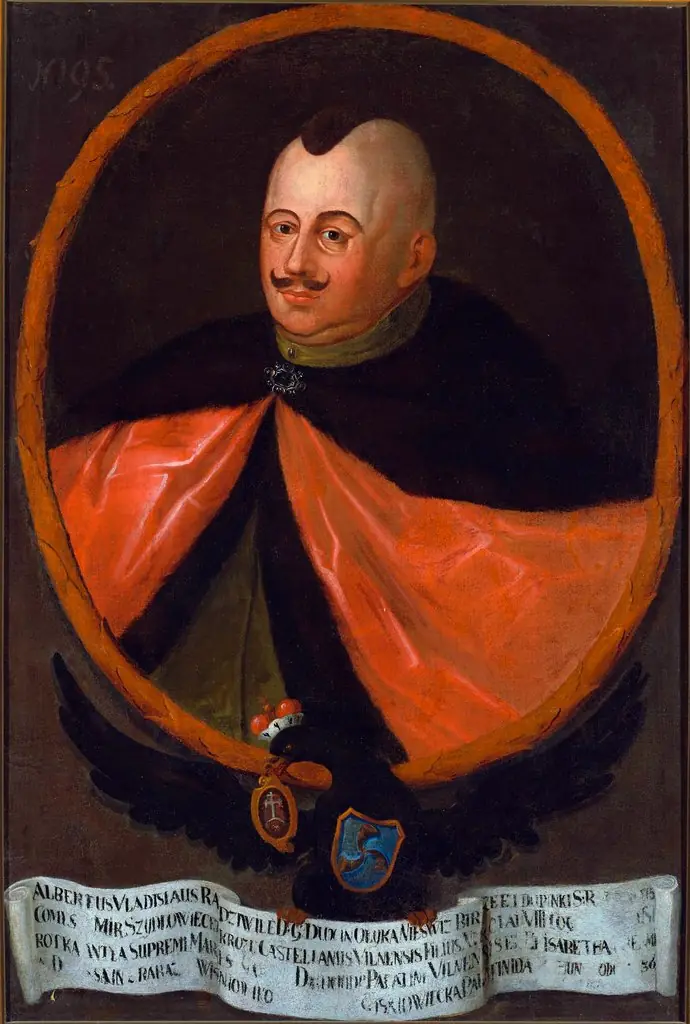
Portrait of Leonard Pociej (1632–1695), Voivode of Vitebsk
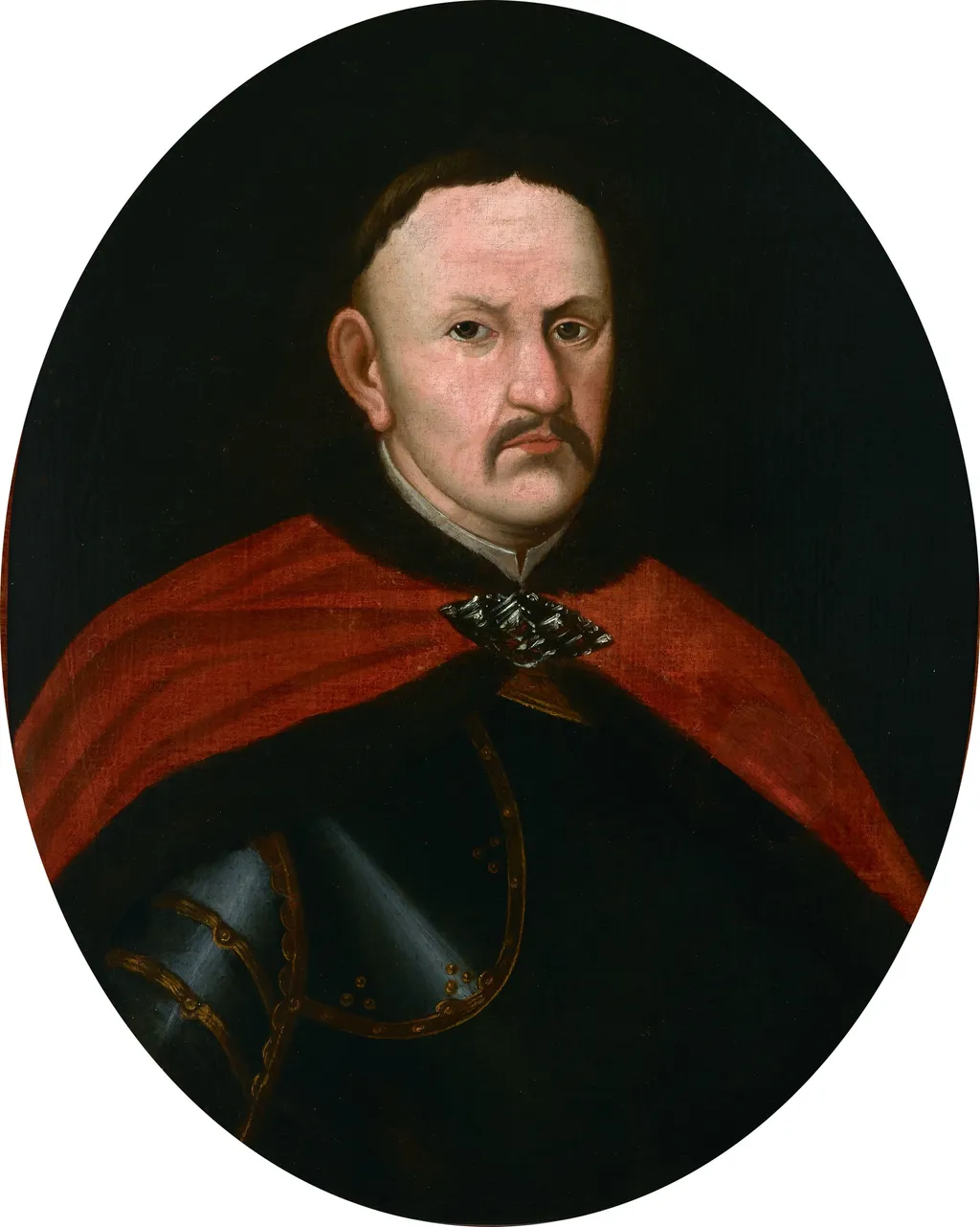
Portrait of Leonard Pociej (1632–1695), Voivode of Vitebsk is an oil painting by the Rococo painting artist Unknown. It dates from 1770 and is held in the collection of the National Museum in Kraków. This 17th-century oil painting depicts Leonard Pociej, a Polish-Lithuanian noble and military official, rendered with restrained formality.
About this work
Overview
The composition isolates the figure against a dark, unmodulated background, emphasizing his presence through careful lighting and minimal detail.
This 17th-century oil painting depicts Leonard Pociej, a Polish-Lithuanian noble and military official, rendered with restrained formality. The composition isolates the figure against a dark, unmodulated background, emphasizing his presence through careful lighting and minimal detail. His attire and accoutrements signal high rank, while the absence of elaborate surroundings focuses attention on his demeanor and status.
Subject & Meaning
Leonard Pociej, Voivode of Vitebsk, is portrayed not as a celebratory figure but as a man of duty. His bald head, mustache, and direct gaze convey stern authority. The black helmet resting on his shoulder suggests readiness for command, while the red cape and dark collar reflect noble rank. The image avoids ornamentation, instead projecting gravitas through stillness and gaze, aligning with ideals of leadership in the Polish-Lithuanian Commonwealth.
Technique & Style
The artist employs chiaroscuro to model the face and shoulders, using subtle contrasts between light and shadow to define form without dramatic intensity. Brushwork is precise but unobtrusive, particularly in the rendering of fabric and metal. The dark background enhances the three-dimensionality of the figure, a technique common in Northern European portraiture of the period, prioritizing psychological presence over narrative context.
History & Provenance
Commissioned during Pociej’s tenure as Voivode, the portrait likely served to affirm his status within the Commonwealth’s aristocratic hierarchy. It remained in family collections until the 19th century, after which it entered a public collection. Its survival through political upheavals reflects its value as a personal and institutional artifact of noble identity in early modern Eastern Europe.
Context
In the mid-17th century, Polish-Lithuanian nobility commissioned portraits to assert political legitimacy and military responsibility. Unlike Western European counterparts, these works often avoided allegory and grandeur, favoring sober realism. Pociej’s portrait aligns with this regional tradition, where authority was conveyed through restraint, attire, and bearing rather than symbolic props or landscapes.
Legacy
The portrait endures as a representative example of elite portraiture in the Polish-Lithuanian Commonwealth. Its understated power and technical discipline reflect a broader aesthetic preference for dignity over spectacle. It continues to inform scholarly understanding of how nobility visualized authority in a multi-ethnic, decentralized state during a period of military and political strain.
Artist & collection

 Domestic Scene
 Giacomo and Cardinal Marco, investing Andrea, Abbot of San Zeno, with his Benefice
 The Nymph of Fontainebleau
 Portrait of a Woman
 Madonna and Child with Saints in the Enclosed Garden
 Venus and Minerva
 Family Group of Four on Sofa
 Wall painting from Room H of the Villa of P. Fannius Synistor at Boscoreale
 Portrait of Paweł Benoe, Castellan of Warsaw (? -1755)
 Portrait of Michał Tyszkiewicz, Leliwa coat of arms (?–after 1549), field hetman of the Grand Duchy of Lithuania
 Portret Jana III Sobieskiego (1629-1696), króla Polski
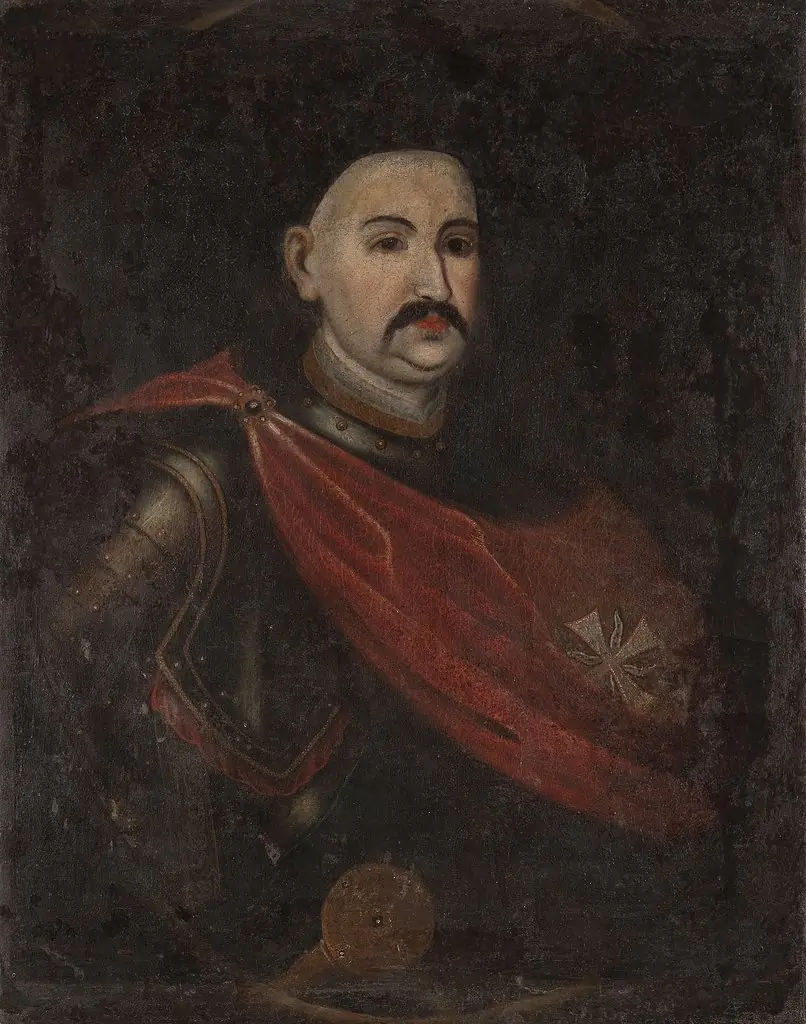 Portrait of Mikołaj Hieronim Sieniawski
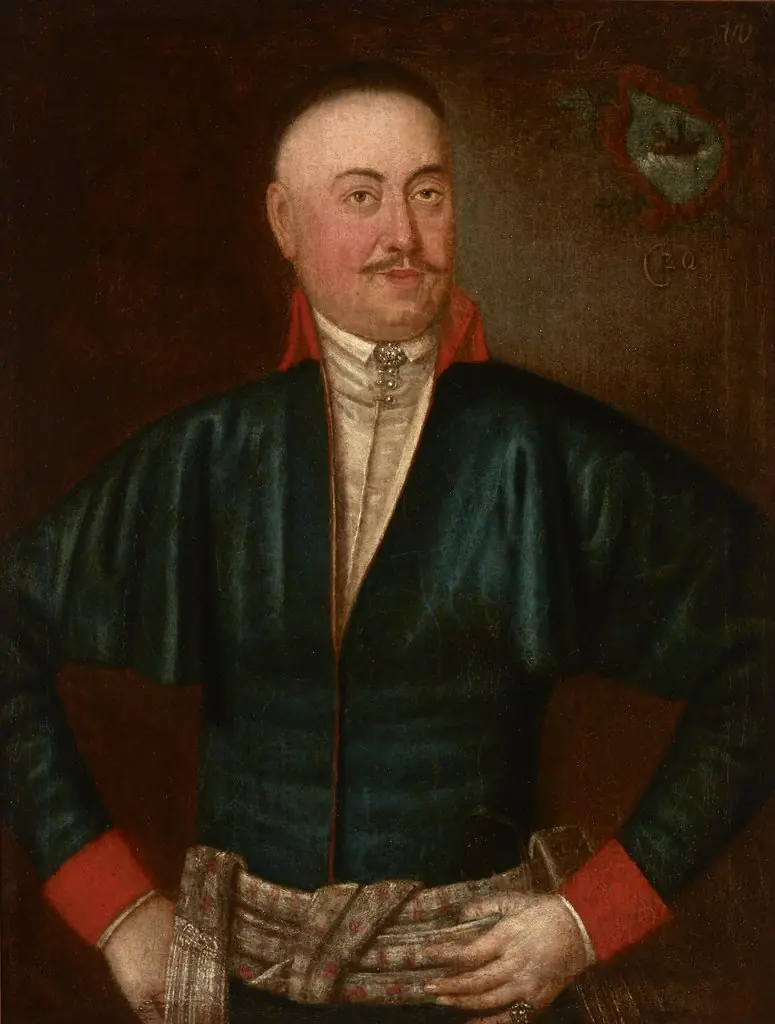 Portrait of an unknown man
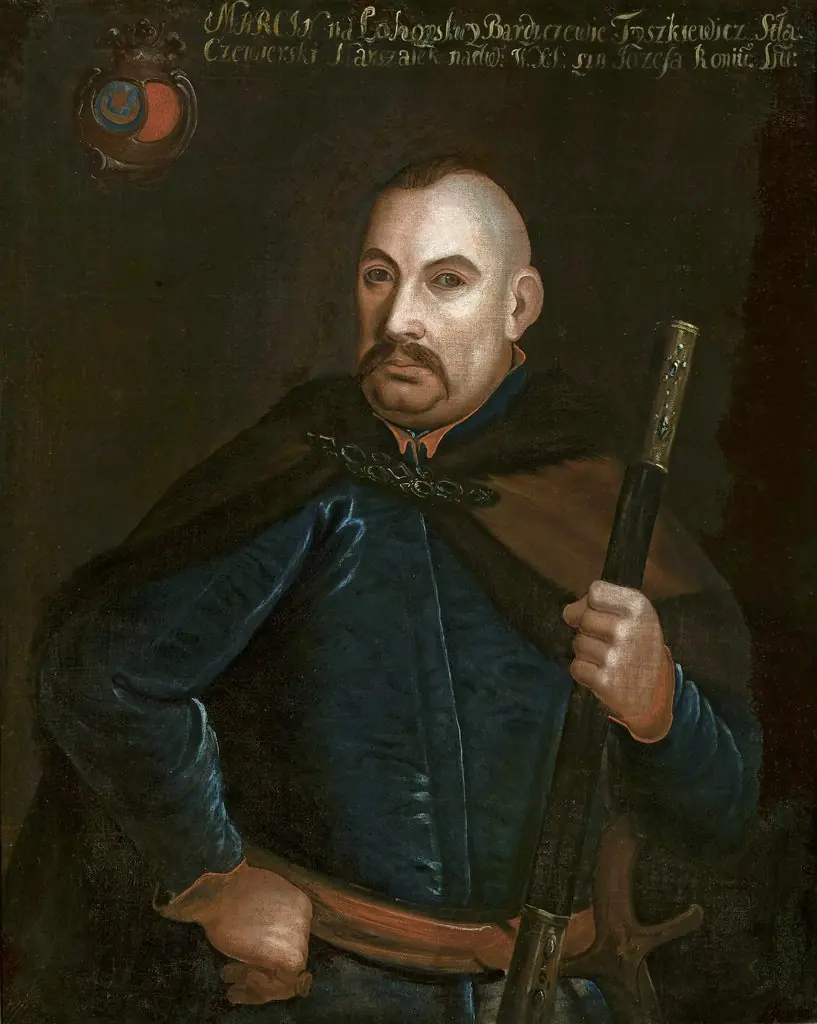 Portrait of Marcin Tyszkiewicz, Leliwa coat of arms (?–after 1631), court marshal of the Grand Duchy of Lithuania
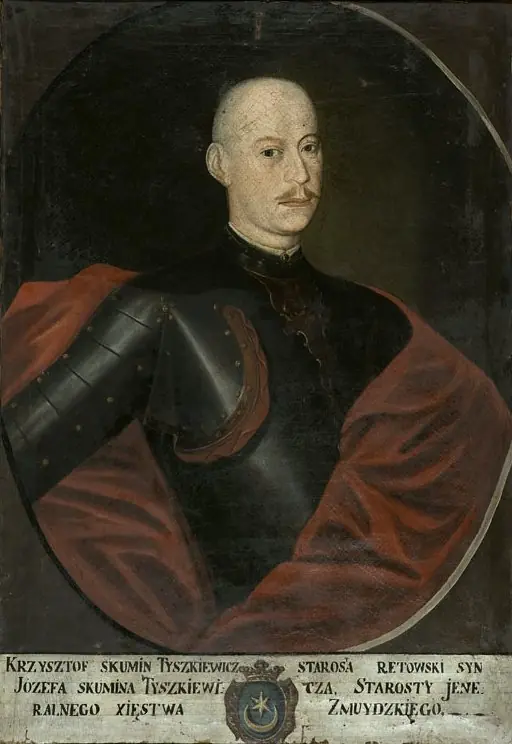 Portrait of Krzysztof Skumin Tyszkiewicz (1729–1762), starosta of Rietavas
 Portrait of Albert III Władysław Radziwiłł (1589–1636)