Artwork
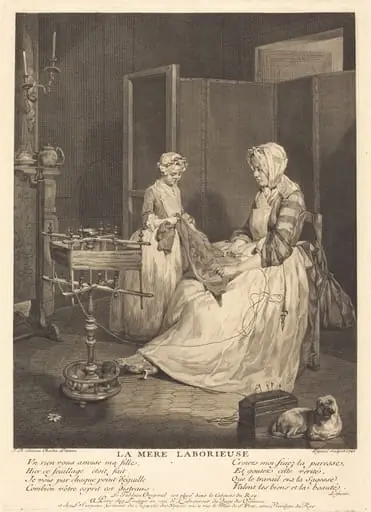
The Diligent Mother
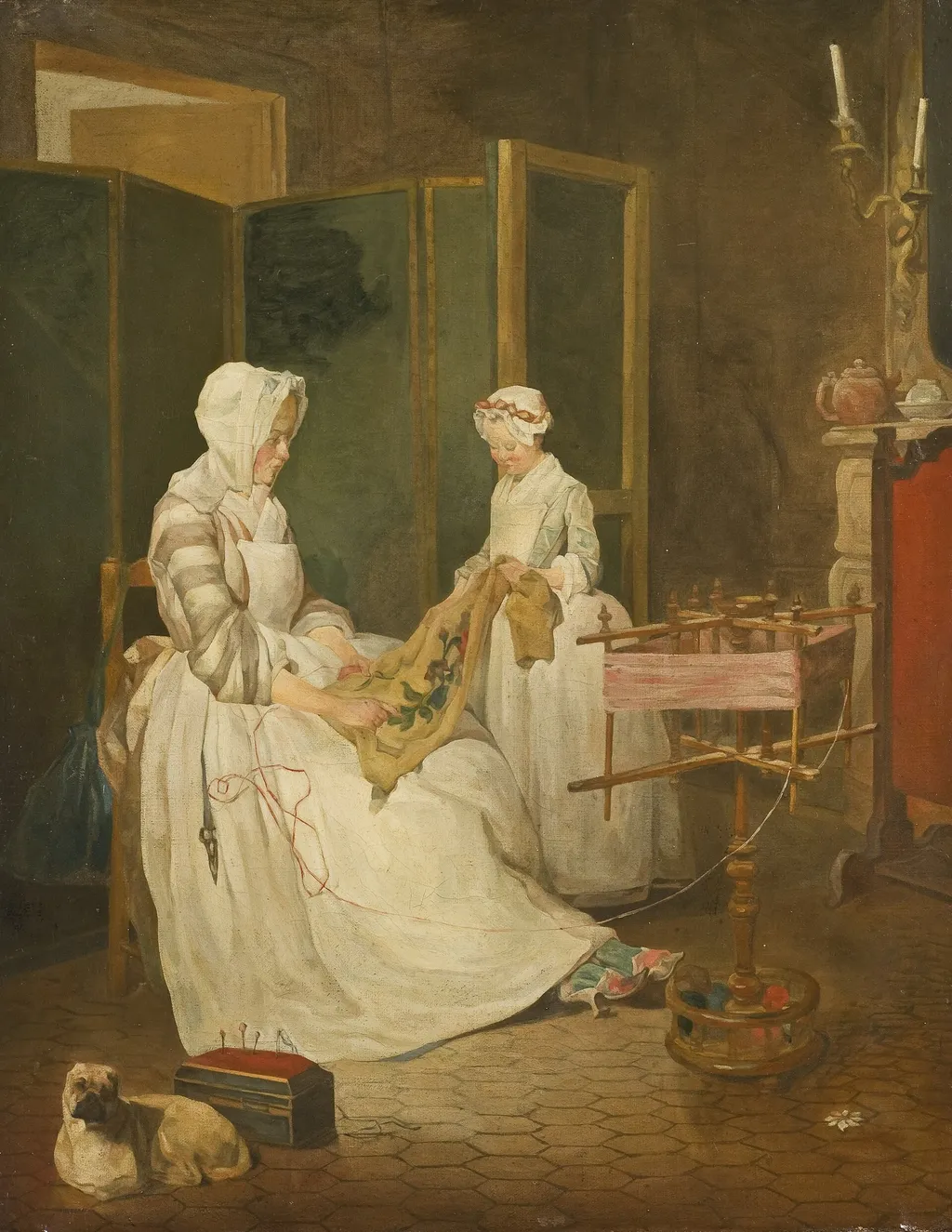
The Diligent Mother is an oil painting by Unknown. It is held in the collection of the Nationalmuseum.
About this work
Overview
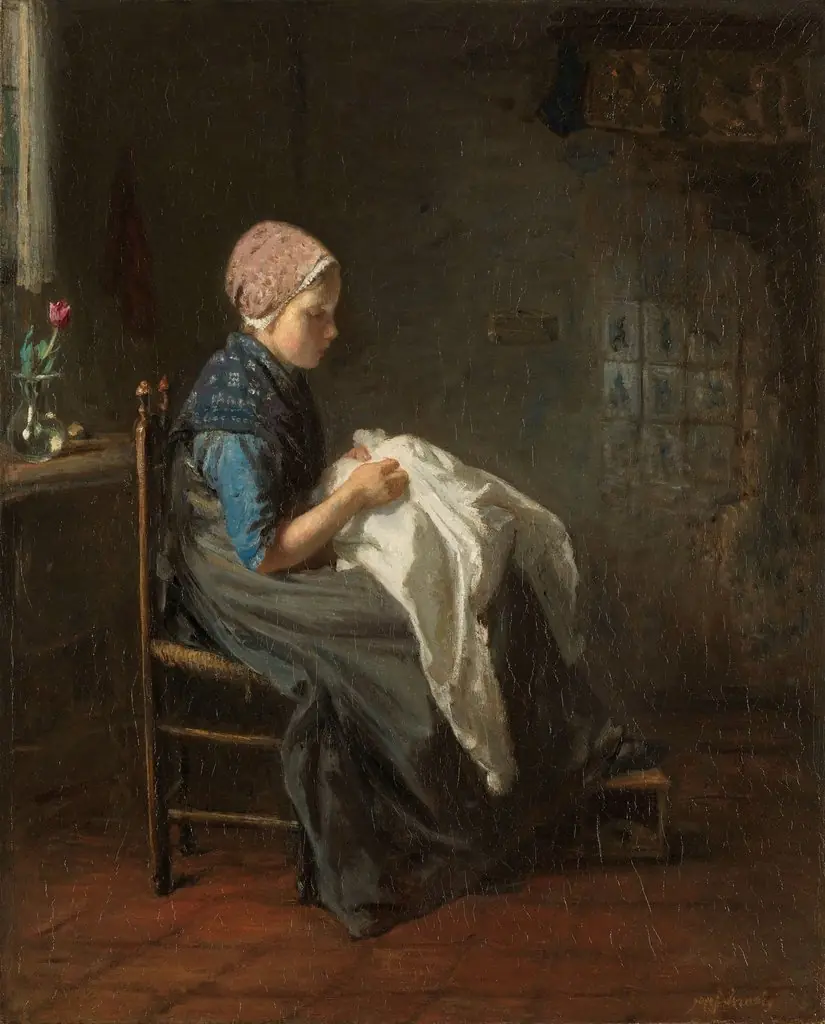
A small dog rests at their feet, and domestic details—a tiled floor, a fireplace with a teapot—anchor the scene in everyday life.
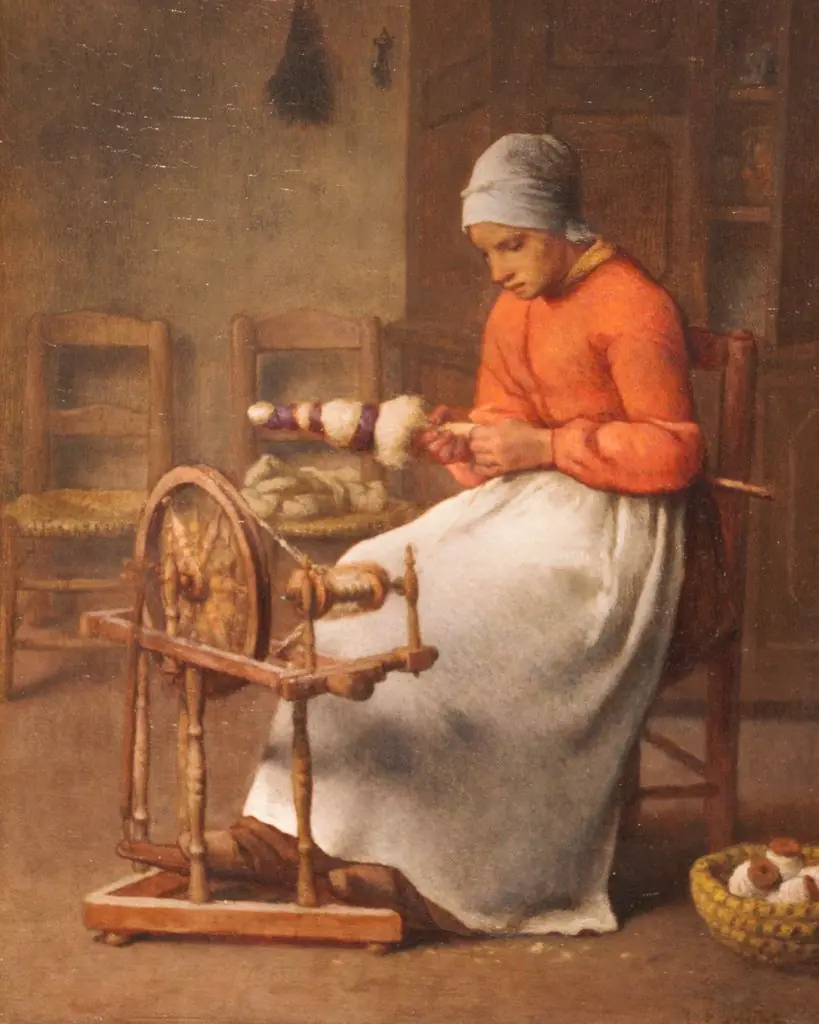
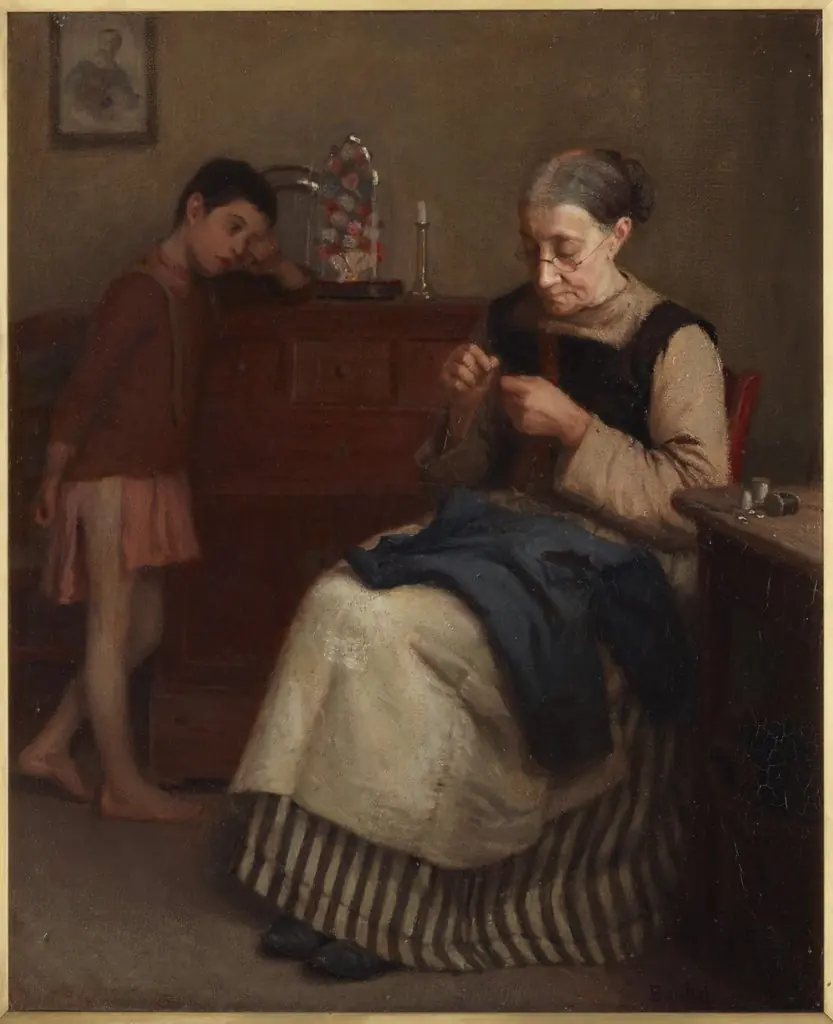
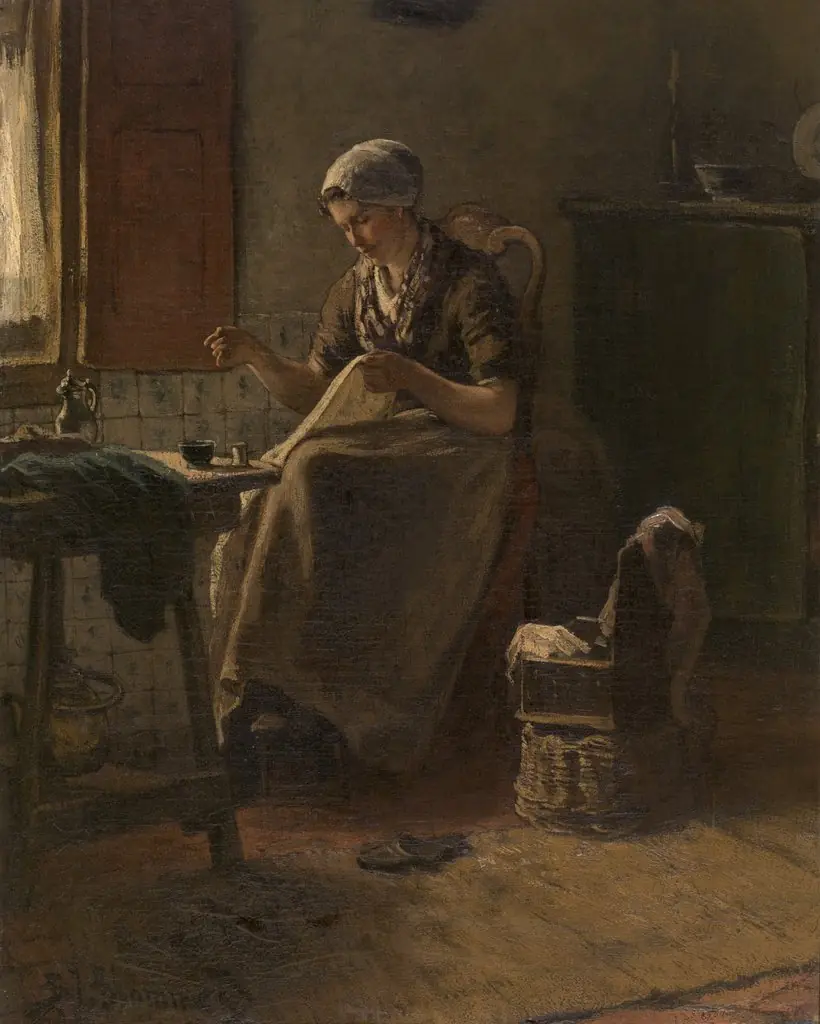
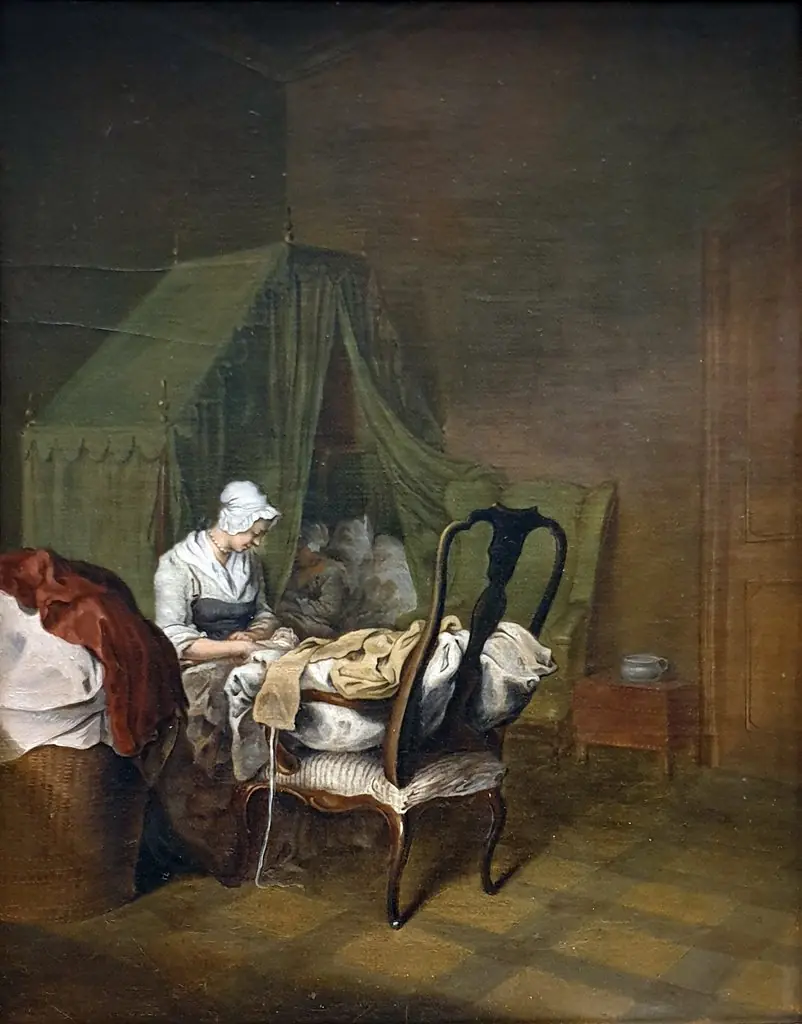
This oil painting depicts two women in a modest interior, one seated in quiet concentration as she works with needle and fabric, the other standing nearby in silent observation. A small dog rests at their feet, and domestic details—a tiled floor, a fireplace with a teapot—anchor the scene in everyday life. The composition emphasizes stillness and routine, drawing attention to the quiet labor of the seated figure.
Subject & Meaning
The seated woman’s focused engagement with embroidery suggests themes of diligence and domestic duty. Her white attire and head covering imply modesty and perhaps religious or cultural norms of the time. The standing woman’s gaze, neither intrusive nor dismissive, may reflect companionship or quiet accountability. Together, they convey an unspoken social rhythm, where work and presence are intertwined in private life.
Technique & Style
The artist employs chiaroscuro to model forms with subtle gradations of light and shadow, lending volume to the figures and objects without dramatic contrast. Light falls gently on the fabric and faces, highlighting texture and gesture. The muted palette and restrained brushwork reinforce the scene’s intimacy, avoiding theatricality in favor of observed realism.
History & Provenance
The painting’s origins are not fully documented, but its style and subject align with 17th-century Dutch genre scenes, where domestic interiors were rendered with quiet precision. It likely emerged from a regional workshop or artist’s studio focused on everyday life, though its early ownership and exhibition history remain unclear.
Context
In the Dutch Golden Age, depictions of women engaged in needlework were common, reflecting ideals of female virtue and household order. Such scenes were not merely decorative but carried moral weight, valuing industriousness and restraint. The inclusion of a teapot and fireplace situates the moment within a familiar, unidealized home environment.
Legacy
Though not widely known today, the painting contributes to a broader tradition of Dutch genre painting that elevated ordinary moments into subjects of quiet dignity. Its understated composition and attention to detail reflect a cultural preference for sincerity over spectacle, influencing later realist approaches to domestic life.
Artist & collection

 Domestic Scene
 Giacomo and Cardinal Marco, investing Andrea, Abbot of San Zeno, with his Benefice
 The Nymph of Fontainebleau
 Portrait of a Woman
 Madonna and Child with Saints in the Enclosed Garden
 Venus and Minerva
 Family Group of Four on Sofa
 Wall painting from Room H of the Villa of P. Fannius Synistor at Boscoreale